BAE Systems To Cut Almost 2,000 Jobs In Military, Maritime & Intelligence
BAE Systems is planning to cut almost 2,000 jobs in its military, maritime and intelligence services under moves to streamline its business and have a "sharper" competitive edge.
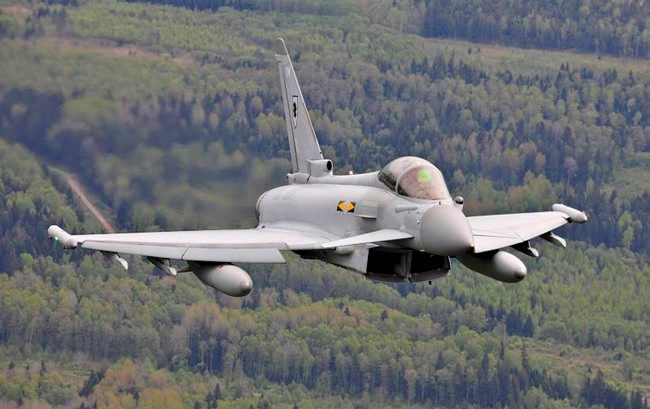
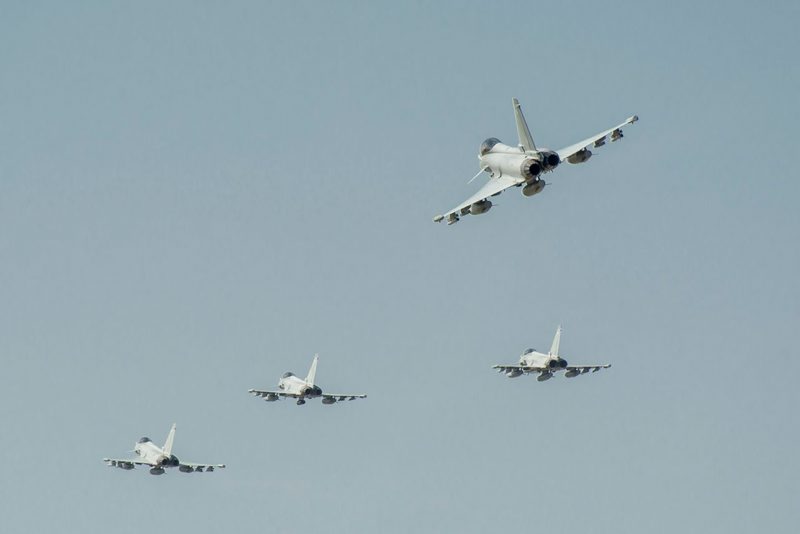
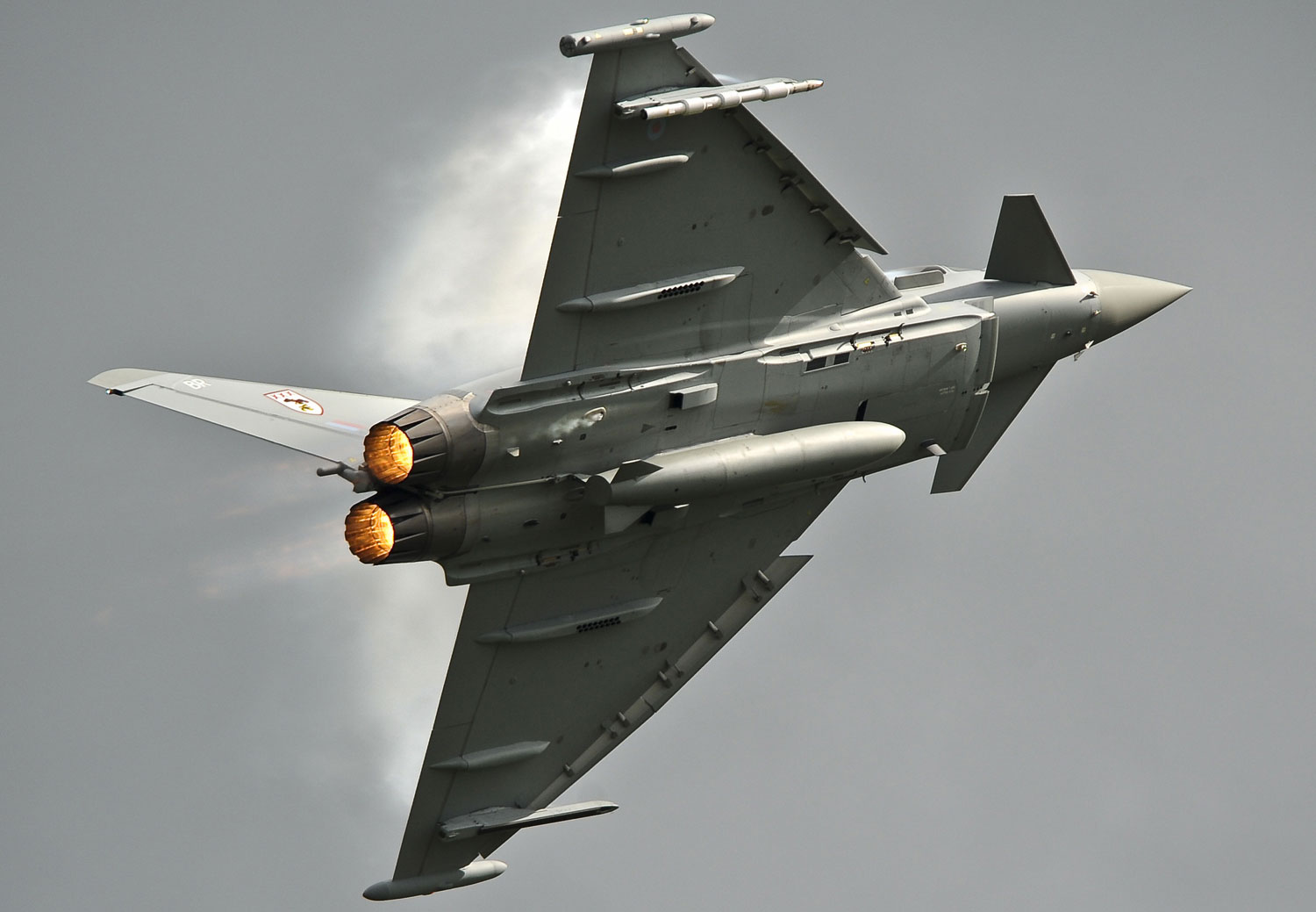
The biggest cutback will be in the military air business, with 1,400 jobs set to be axed across five sites over the next three years, including Warton and Samlesbury in Lancashire, where the Eurofighter Typhoon aircraft assembly takes place.
Jobs will also be cut at Brough in East Yorkshire and at RAF bases in Marham, Norfolk, and Leeming in North Yorkshire.
Around 375 proposed redundancies were announced in BAE's maritime servicing and support business, mainly affecting Portsmouth.
Some jobs will also go from the company's cyber intelligence business in London and Guildford.
Chief executive Charles Woodburn said: "The organisational changes we are announcing today accelerate our evolution to a more streamlined, de-layered organisation, with a sharper competitive edge and a renewed focus on technology.
"These actions will further strengthen our company as we deliver our strategy in a changing environment."
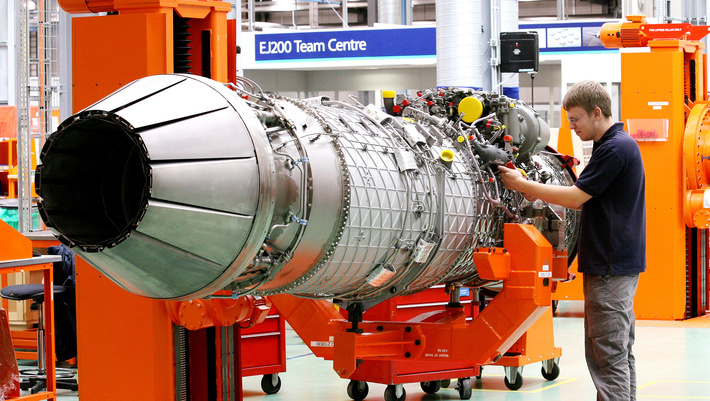
BAE is facing an order gap for the Typhoon so production is being slowed ahead of an expected order from Qatar.
Production of the Hawk jet aircraft is ending in the next few years, affecting the Brough site, although Qatar could place a new order which would keep production going until 2010.
Around 400 redundancies are being planned at Brough.
Most of the military air job cuts will go in 2018 and 2019, with some planned for 2020 and BAE said its goal is to achieve as many voluntary redundancies as possible.
Around 375 job losses are planned for the maritime servicing and support business, with 340 in Portsmouth.
BAE's cyber intelligence business will cut 150 jobs, split between sites in London, Guildford in Surrey, and overseas.
The total number of proposed redundancies is 1,915.
Unite assistant general secretary Steve Turner said: "These planned job cuts will not only undermine Britain's sovereign defence capability but devastate communities across the UK who rely on these skilled jobs and the hope of a decent future they give to future generations.
"These devastatingly short-sighted cuts will harm communities, jobs and skills.
"These are world-class workers with years of training and expertise on which an additional four jobs rely upon in the supply chain.
"The UK government must take back control of our nation's defence and with it, play its part in supporting UK defence manufacturing jobs.
"Too much taxpayers' money earmarked for defence spending is going to factories overseas. By 2020, 25p of every pound spent on UK defence spending will find its way to American factories alone rather than being spent here in the UK.
"This state of affairs is not only hollowing out Britain's sovereign defence capability and British manufacturing but leaving the nation's defence exposed to the whim of foreign powers and corporate interests.
"The British government can and should do more to defend UK defence jobs by investing in Britain and committing that long-term projects, such as the next generation jet fighter, future support vessels and Type 31e frigate are built here in the UK.
"A failure to do so and take back control of our own defence needs will be a complete betrayal of the Government's primary responsibility to defend our nation and destroy decent jobs, skills and the communities that support them in the process."
Mr Woodburn said when he was appointed in July that he wanted to look at making efficiencies and streamline the business.
He said on Tuesday the company's diverse portfolio provides a strong platform for future growth.
"We are announcing actions at some of our UK sites to align our workforce capacity more closely with near-term demand and enhance our competitive position to secure new business.
"Those actions are necessary and the right thing to do for our company, but unfortunately includes proposed redundancies at a number of operations.
"I recognise this will be difficult news for some of our employees and we are committed to do everything we can to support those affected."
BAE said in a statement:
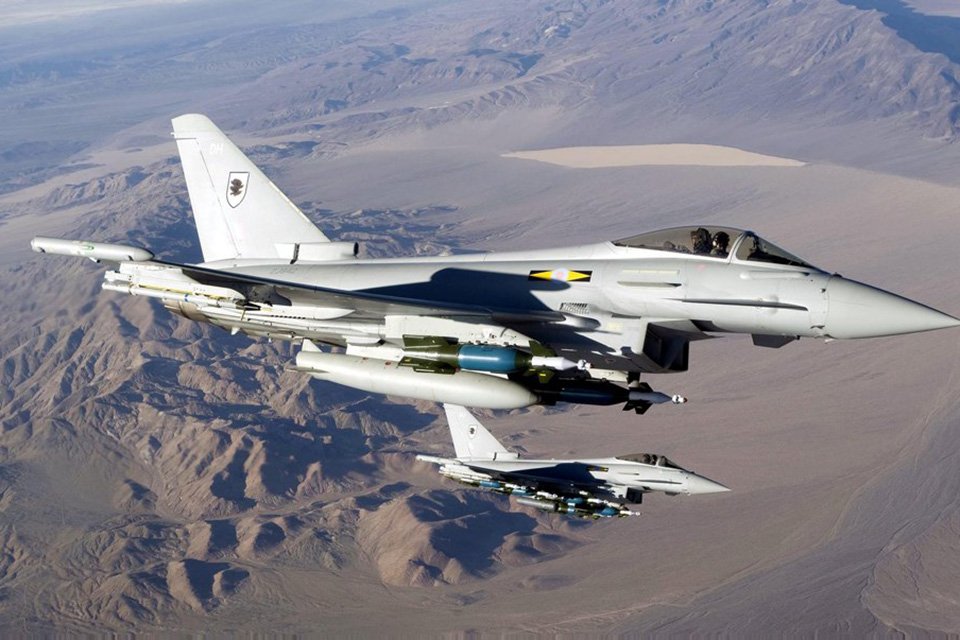
"Discussions with current and prospective customers continue to support our expectations for additional Typhoon and Hawk orders, including the recently announced Statement of Intent by Qatar to purchase 24 Typhoon aircraft.
"Negotiations are progressing to agree a contract with the government of Qatar, which, if secured, would sustain Typhoon production jobs, and manufacturing well into the next decade.
"However, the timing of future orders is always uncertain and, to ensure production continuity and competitive costs between the completion of current contracts and anticipated new orders, we now plan to reduce Typhoon final assembly and Hawk production rates.
"The recently announced Statement of Intent from Qatar also included the intention to purchase six Hawk aircraft.
While this is also subject to agreeing a contract between BAE Systems and the Qatar government, we have taken the decision to include this potential future order in production planning, extending Hawk manufacturing for a further 12 months at a reduced production rate.
"We are actively pursuing additional orders which, if secured in the next year, would further extend Hawk manufacturing.
"Following the UK Government's confirmation that the RAF's Tornado fleet will be taken out of active service in 2019, Tornado support and sustainment activities at RAF Marham and RAF Leeming are progressively winding down and will cease at that time. Longer term, our presence at RAF Marham is underpinned by F-35 sustainment activities."
Shadow defence secretary Nia Griffith said: "This is truly appalling news for BAE's workers and for communities across the UK.
"The jobs that BAE are cutting are highly skilled and their loss will be felt in areas that have a strong tradition of defence manufacturing.
"It is time for the Government to address the clear uncertainty that is felt by the industry and come forward with an urgent plan to save these jobs.
"This must include the possibility of bringing forward orders to provide additional work for BAE's employees, such as replacing the Red Arrows' fleet of Hawk aircraft that are approaching the end of their service life."
Related topics
Join Our Newsletter