Special forces chief made 'conscious' choice to cover up war crimes, probe told

Two former heads of UK special forces have been accused of suppressing evidence of war crimes.
The claims were made at the public inquiry examining allegations of unlawful killings by the SAS in Afghanistan.
A senior officer, who can't be named, told the hearing that the unit's leadership knew there was a problem but did nothing.
The Afghanistan inquiry released summaries of closed hearings in which members of the special forces have given evidence about the alleged murders in the nation between 2010 and 2013.
Statistics didn't seem credible
A senior officer, known only to the inquiry as N1466, said he believed statistics from the deliberate detention operations (DDOs), including the number of weapons found compared to enemies killed in action, "didn't seem credible", a view he believed was shared by the director of UK special forces (UKSF).
N1466, who was the assistant chief of staff for operations in UKSF headquarters when he became concerned about the statistics in February 2011, accused the director of UKSF of controlling the information about the alleged murders "in a way that I think indicated a desire to keep it low profile".
The senior officer said that UKSF had "a lot of quite difficult interactions with the rest of Whitehall" after events in another country, meaning the director of UKSF, who was given the cipher N1802 by the inquiry, controlled the information about Afghanistan in a "way which limited the spread of the damage outside the headquarters".
He told the inquiry that there was a failure on the director of UKSF's part to "ever talk about possible criminal activity", and his focus was instead on the tactics, techniques and procedures (TTPs) used by the sub-unit in question – with the director of UKSF initiating a TTP review after a meeting with N1466 in April 2011.
In his witness statement, N1466 said: "I felt at the time that N1802 intended that the TTP review would have the effect of firing a warning shot across the bows of the sub-unit to encourage them to change their behaviour.
"I was sure at the time, and I remain sure, that N1802 knew what was happening on the ground.
"The speed of N1802's response and the absence of any further mention or investigation of unlawful activity only fortified my belief that he was aware of what was going on."
Counsel to the inquiry, Oliver Glasgow KC, asked N1466 why he had not raised concerns about the TTP review with the director of UKSF.
The senior officer replied: "Me trying to argue the case with the director, who has clearly, in my view, made a conscious decision that he is going to suppress this, cover this up and do a little fake exercise to make it look like he's done something, that's a charade.
"But it was obvious that it was a charade, and it was obviously his attempt to do it in his way and send this warning shot and…
"At the time, I thought that probably was going to stop things, and it wasn't the right way to deal with it, but it was his decision that he wanted to do it, and there was no way that I was going to…
"Be able to sort of change that perspective because he'd clearly come to that decision, and so the order would stay simply without changing the outcome."
Afghan families accuse MOD
Afghan families have accused UK special forces of conducting a "campaign of murder" against civilians, while suggesting that senior officers and personnel at the Ministry of Defence "sought to prevent adequate investigation".
N1466 told the inquiry about an incident in which an Afghan man burst into a meeting between a UKSF sub-unit and their Afghan partner unit before pointing a pistol at a senior UKSF officer and saying, "these guys are all murdering our people".
Concluding his evidence, N1466 said the alleged murders by members of UKSF in Afghanistan did not help conventional forces, adding that it was "a stain against their sacrifice and their service".
No charges were brought under Operation Northmoor, a £10m investigation set up in 2014 to examine allegations of executions by special forces, including those of children.
A further Royal Military Police investigation, codenamed Operation Cestro, resulted in three soldiers being referred to the Service Prosecuting Authority, but none of them were prosecuted.
Unbalanced to release selected statements
Speaking to Radio 4's Today programme, Lieutenant Colonel (Ret'd) Richard Williams, former Commander 22 SAS between 2005 and 2008, said that it is unbalanced to release selected statements.
"I find it extraordinary that this select release of specific statements, which are clearly critical of the action on the ground, aren't accompanied by the statement made by the commanders on the ground that are also available now," he said.
"It all seems a bit one-sided to me this release, and I'm curious about why that is."
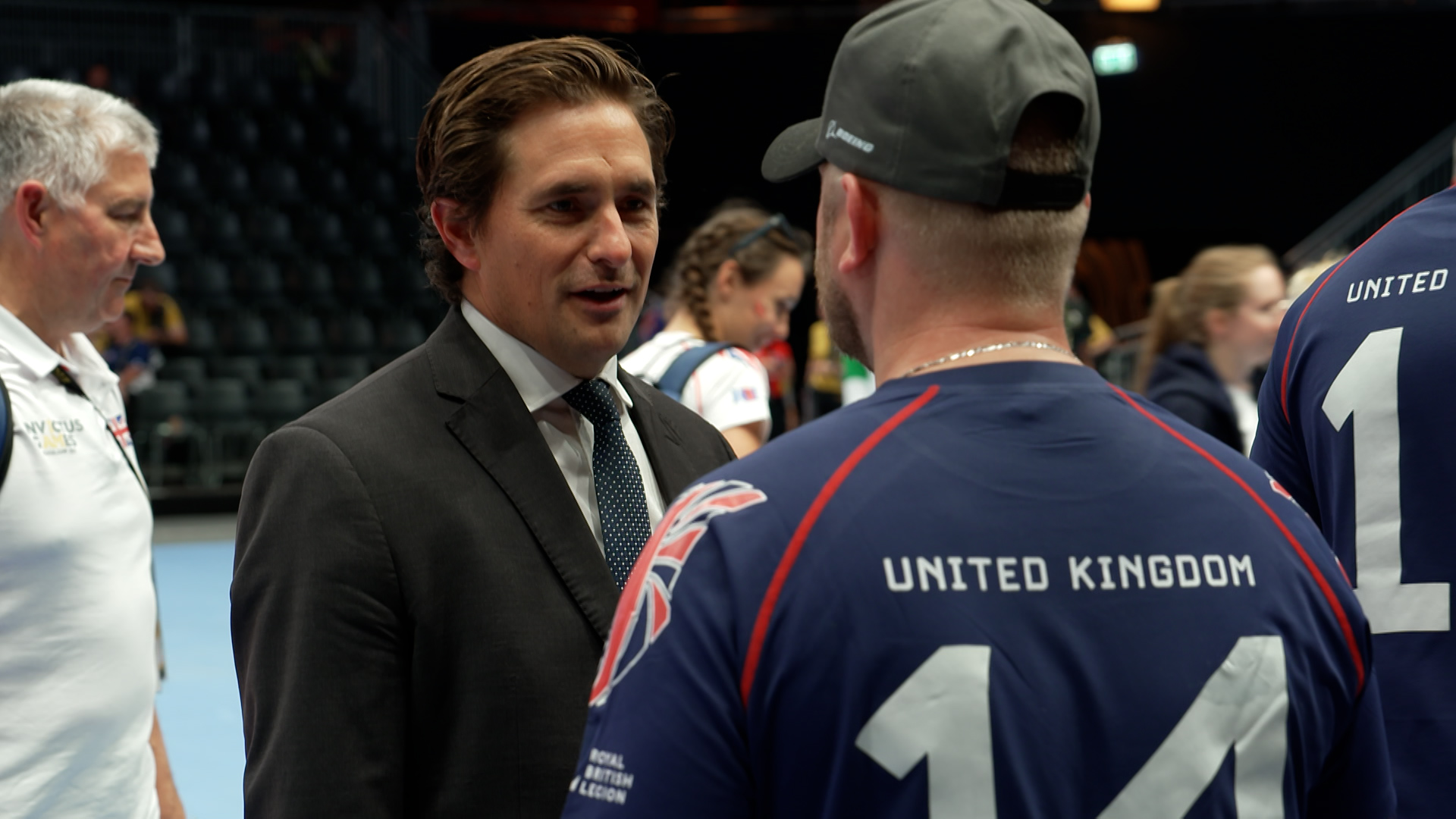
Johnny Mercer, the former Veterans Minister and British Army officer, also questioned why this information had been released to the public in this manner.
"I think that you can see what should be happening in private playing out in public," Mr Mercer told the BBC.
"I don't really understand why these things are pushed out, and this information is released in this way because it drives into this narrative that we seem to have in this country that soldiers behave badly and that these investigations should go on for years afterwards.
"Clearly, there are questions to be answered, and I think the context of these statements is missing."
The ex-Plymouth Moor View MP called for people to be cautious when reading only one side of the statements.
'Government has your back'
Defence Secretary John Healey has written to special forces personnel recognising their professionalism and sacrifice and telling them the Government "has your back", it is understood.
A Ministry of Defence spokesperson said: "The Government is fully committed to supporting the independent inquiry relating to Afghanistan as it continues its work, and we are hugely grateful to all former and current defence employees who have so far given evidence.
"We also remain committed to providing the support that our special forces deserve, whilst maintaining the transparency and accountability that the British people rightly expect from their armed forces.
"It is appropriate that we await the outcome of the inquiry’s work before commenting further."
The inquiry continues.
Related topics
Join Our Newsletter