Pimp My Ship: Dazzle, dragons and disguise – warships that turned heads with paint
When HMS Stirling Castle cheekily asked followers whether it should stick to traditional grey or rock a Batch‑2 OPV dazzle scheme, it ignited a surprisingly vibrant conversation about ship aesthetics.
The vessel, recently commissioned into the Royal Navy as the first dedicated mine countermeasures "mothership", currently wears a civilian-style blue and white livery.
But its future look remains up for grabs – prompting a lively exchange on social media and some strong opinions on what a Royal Navy vessel should look like.
- Fifty shades: Why are Royal Navy ships painted grey?
- What are dazzle ships?
- Navy's HMS Tamar gets dazzle camouflage makeover
Should Stirling Castle go traditional with grey, opt for the modern dazzle sported by offshore patrol vessels like HMS Tamar, or try something completely new?
The debate got us thinking – what are the best warship paint jobs of all time? We've rounded up 10 of our favourites, from bold statement pieces to surprisingly subtle camo.
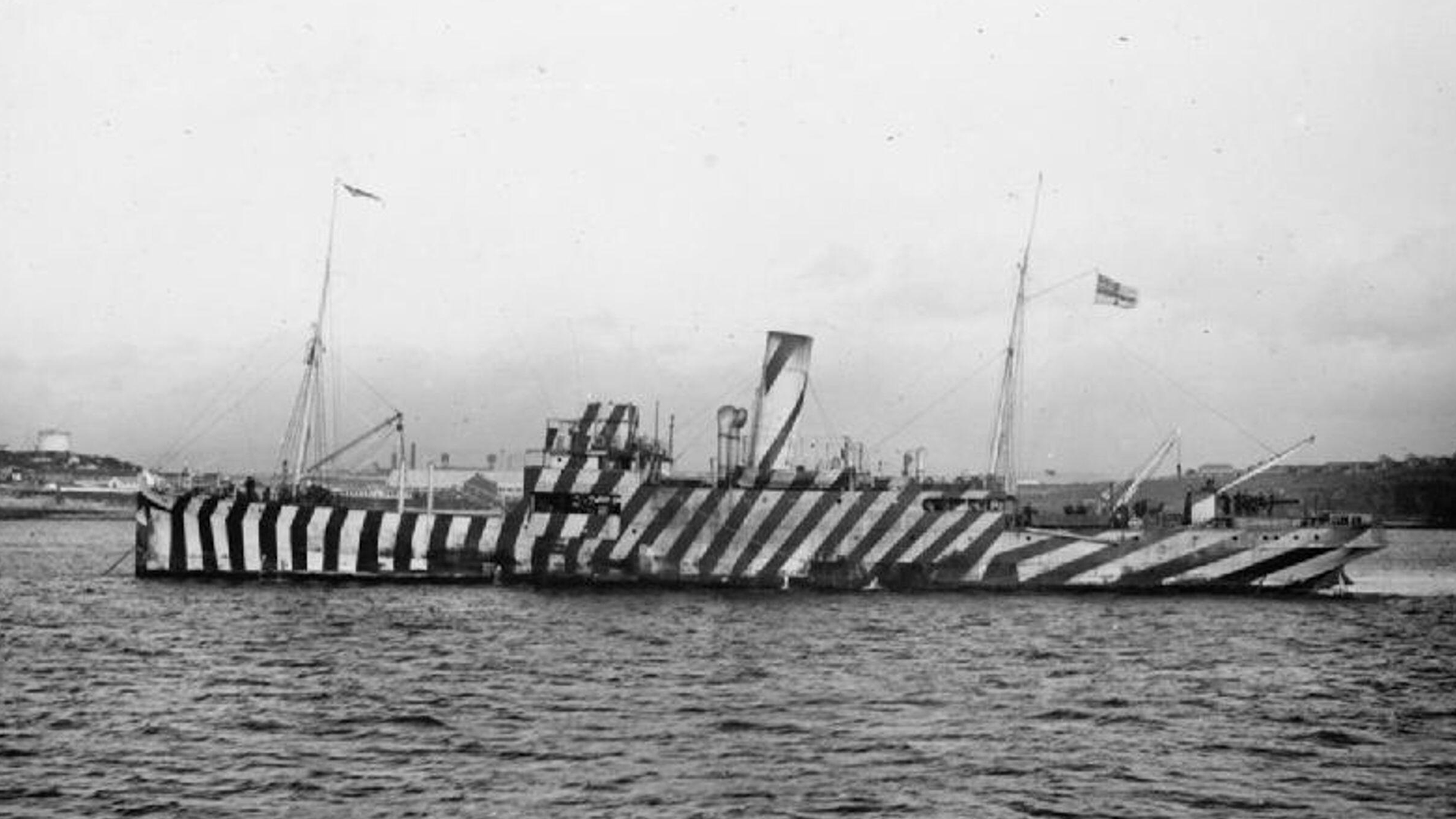
USS West Mahomet
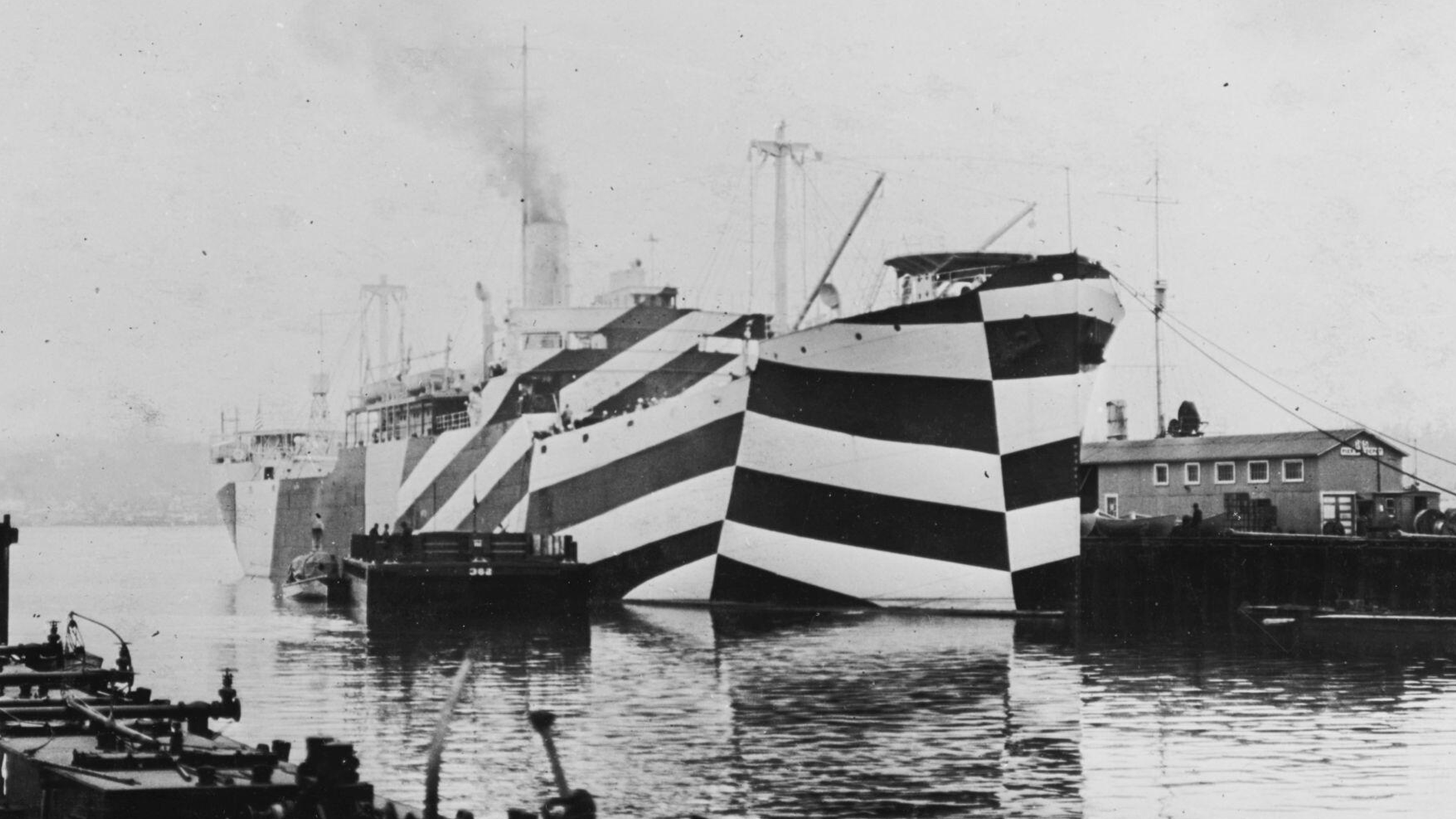
SS West Mahomet was a US steel‑hulled cargo ship swiftly built in 1918 for the Shipping Board's emergency wartime programme and briefly commissioned as USS West Mahomet.
Despite its last‑minute delivery, it took part in post‑war relief missions around Europe.
In November 1918, she wore a bold dazzle camouflage – an array of geometric shapes designed, not to hide, but to confuse enemy periscopes about her speed and where she was heading. Dazzle was about breaking up a ship's visual outline.
British artist Norman Wilkinson, credited as its creator, believed that disruption was more useful than concealment.
USS Nebraska
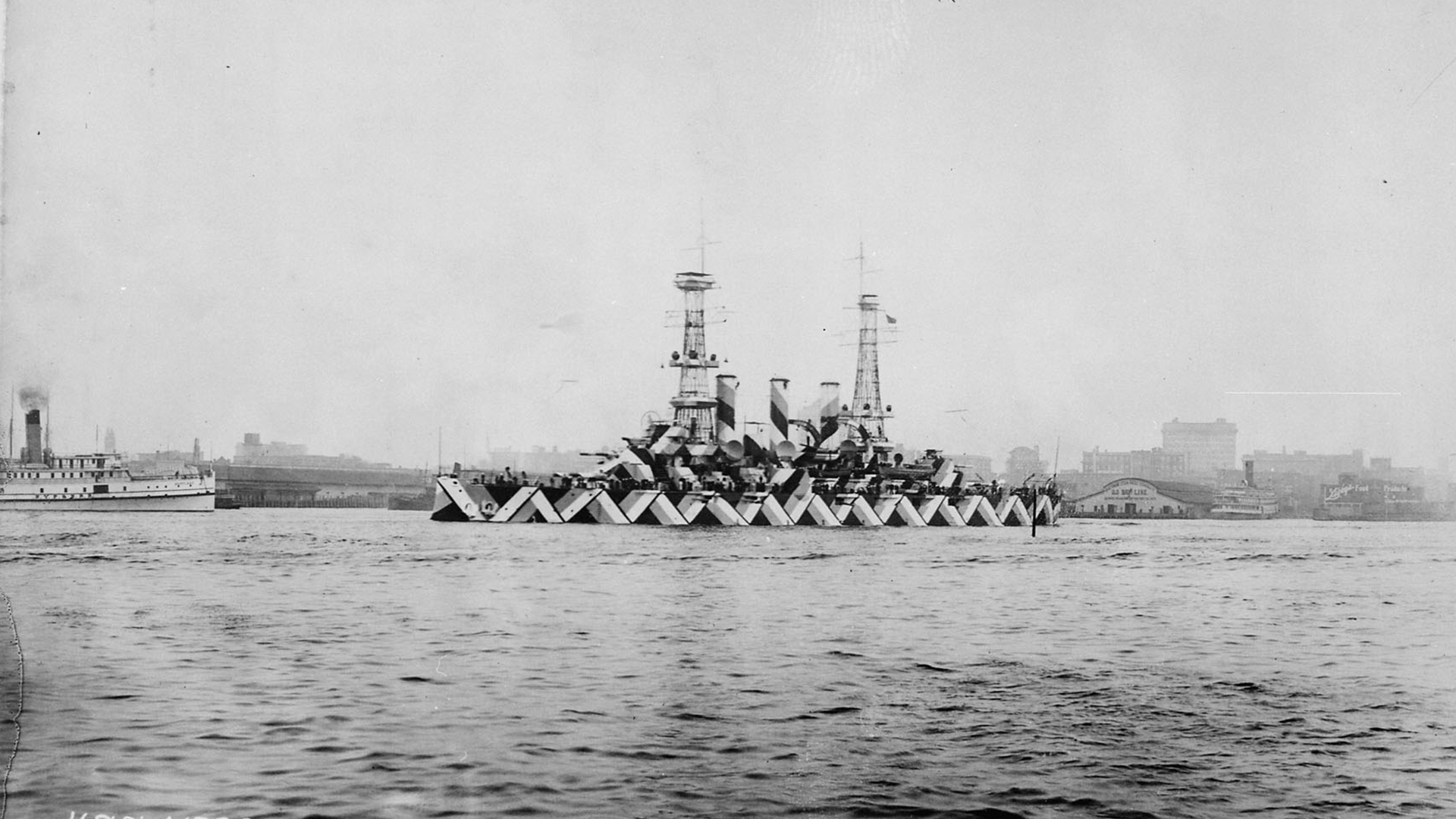
American cargo ships from the First World War were among those splashed with bold, geometric dazzle patterns to foil German U‑boat rangefinders.
Rather than blend in, they stood out – in shape, colour, and confusion factor. This "confuse‑not‑conceal" strategy turned them into seafaring optical illusions.
USS Nebraska (BB‑14), recommissioned in 1917, took on roles as a training and escort ship.
In 1918, she received striking dazzle paint – zigzag and checkerboard patterns crafted by F M Watson of Norfolk Navy Yard – creating a warped 3‑D effect intended to throw off enemy targeting.
HMS Severn
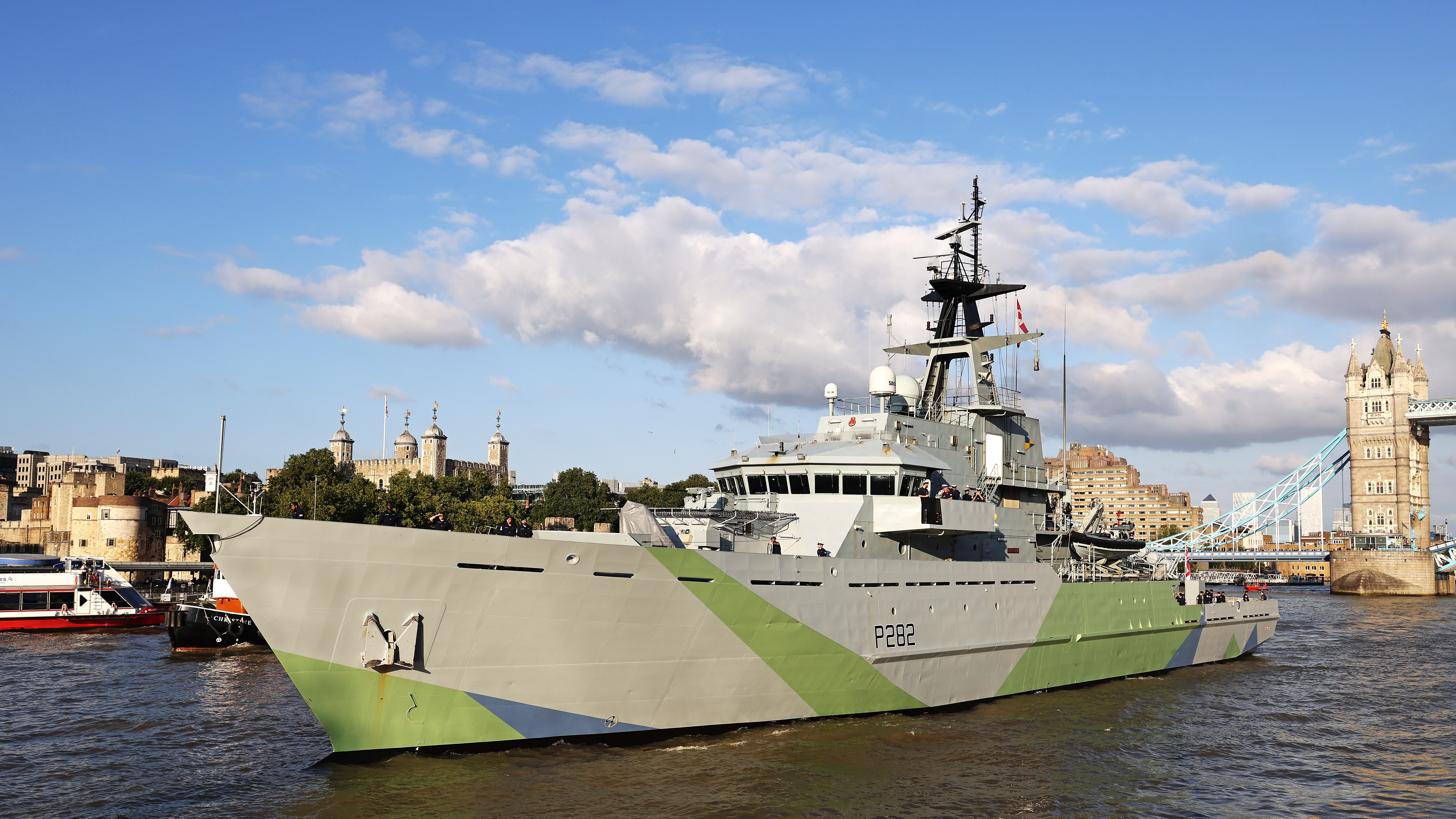
Unlike her dazzle-painted sisters, HMS Severn returned to service boasting the Western Approaches camouflage – a nod to her Second World War predecessors.
Used originally on destroyers against U-boat threats, this pattern isn't about optical chaos; it's homage – a tribute to the sailors of the Battle of the Atlantic.
HMS Belfast
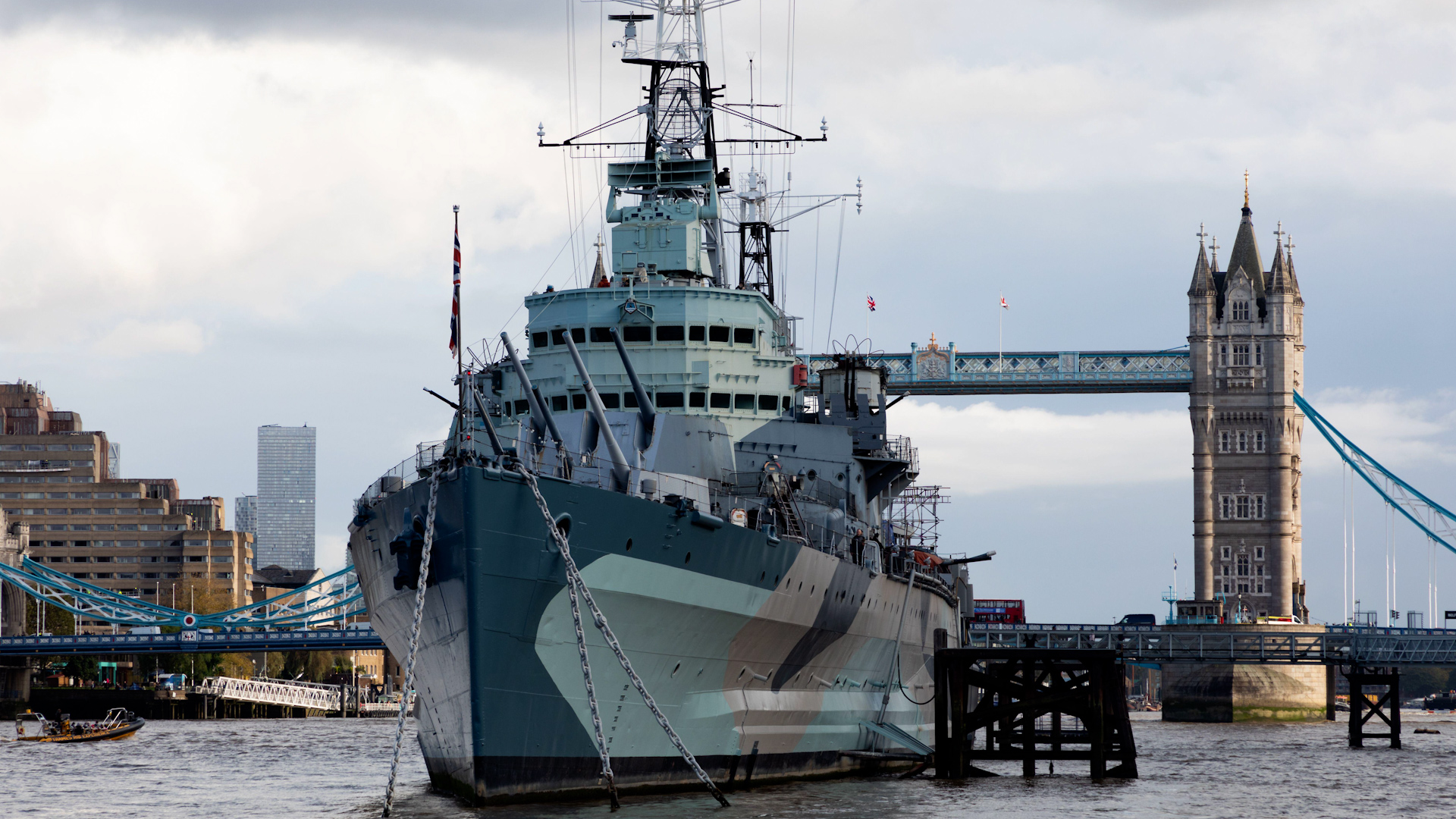
Now docked as a museum ship, HMS Belfast is dressed in her original WW2 Arctic camouflage – swathes of blue, white, and grey engineered to blend into frigid sea and sky.
HMS Belfast is a floating time capsule, a reminder that historical functionality can be visually striking in the present.
French cruiser Gloire
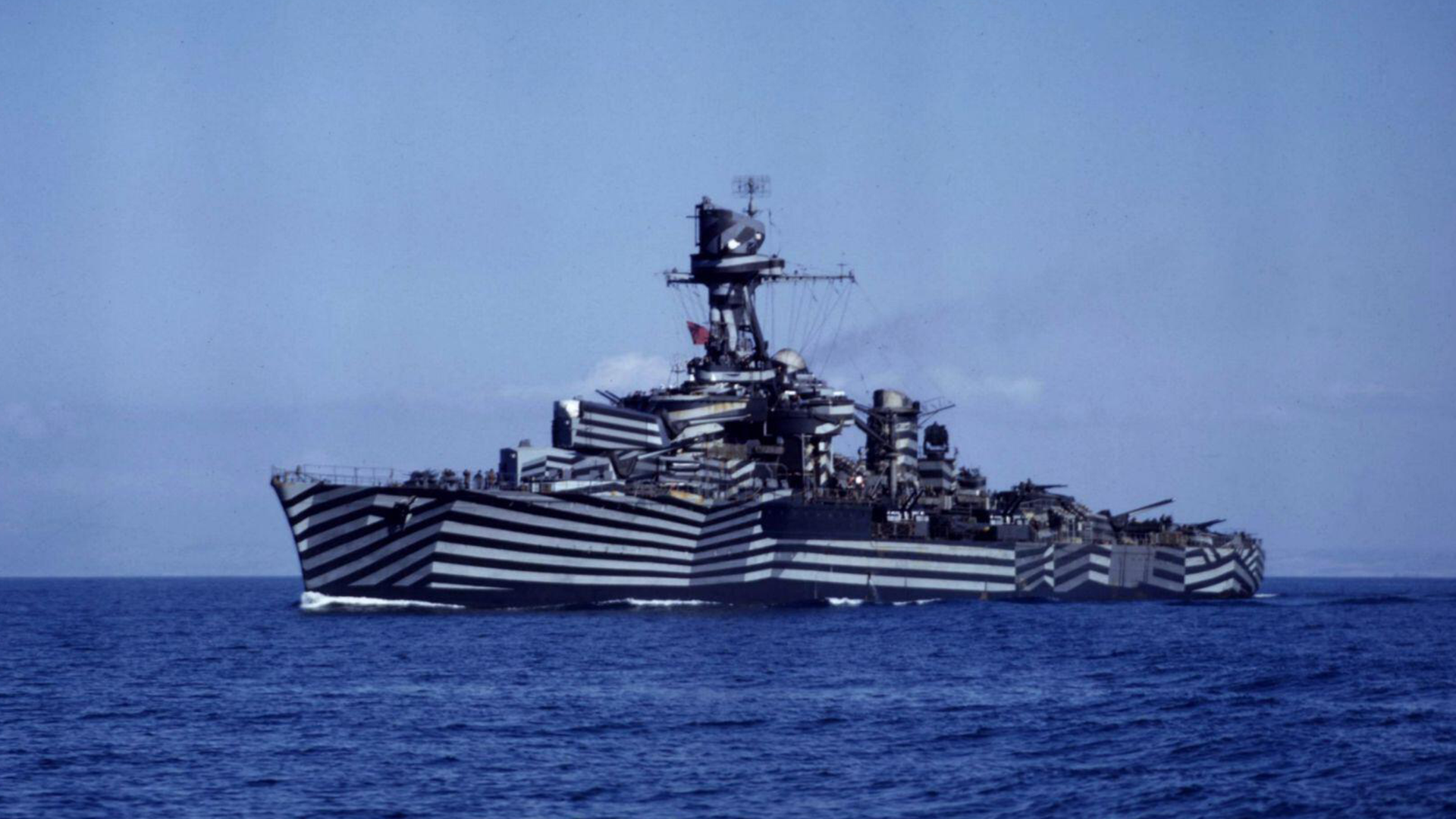
The French cruiser Gloire reportedly sported disruptive paint during the Second World War - an echo of WW1 dazzle.
The scheme is believed to have been used to break visual patterns and confound rangefinders, a seldom-recognised example of French adoption of optical deception at sea.
HMS Dragon
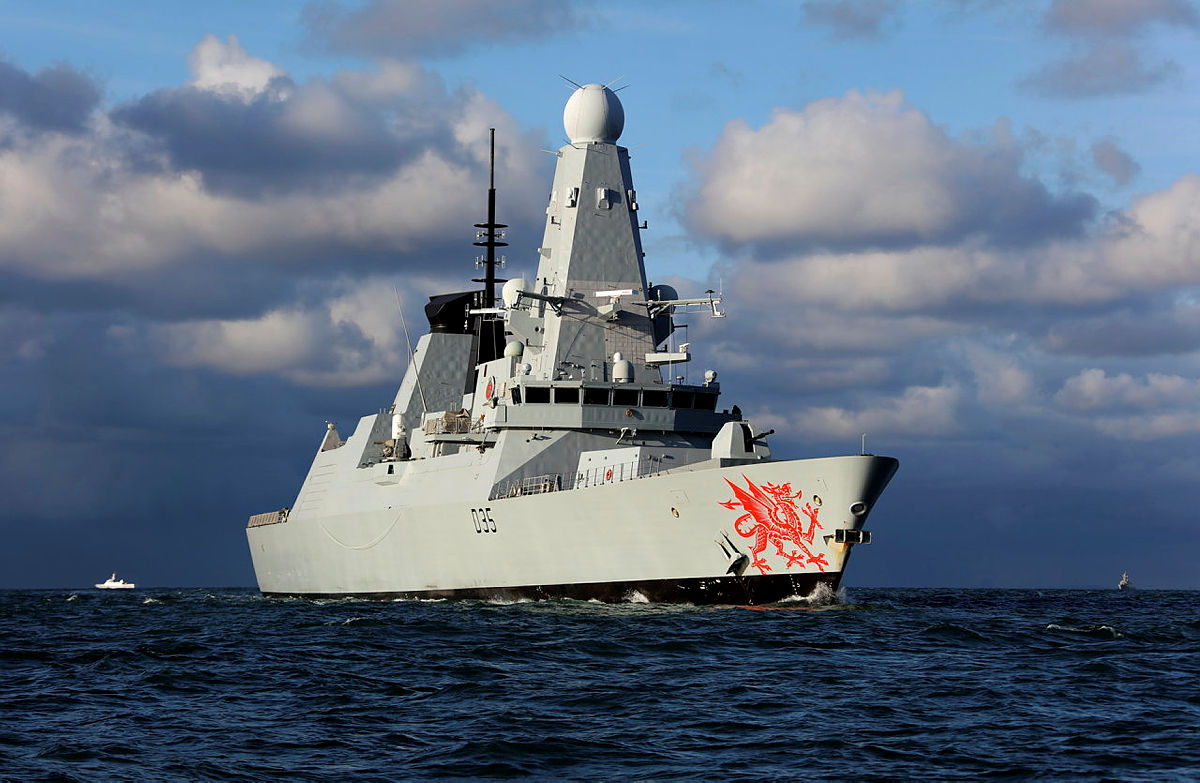
HMS Dragon is a Type 45 destroyer known not for bold camouflage, but for a striking symbol on her bow: a large red Welsh dragon.
It's the only Royal Navy warship to feature such prominent artwork, and is a nod to her name and her strong Welsh ties.
Commissioned in 2012, HMS Dragon has deployed to the Gulf and the Mediterranean and has played key roles in anti-air warfare and escort missions.
While her hull remains standard Royal Navy grey, the dragon motif has become instantly recognisable.
HMS Tamar
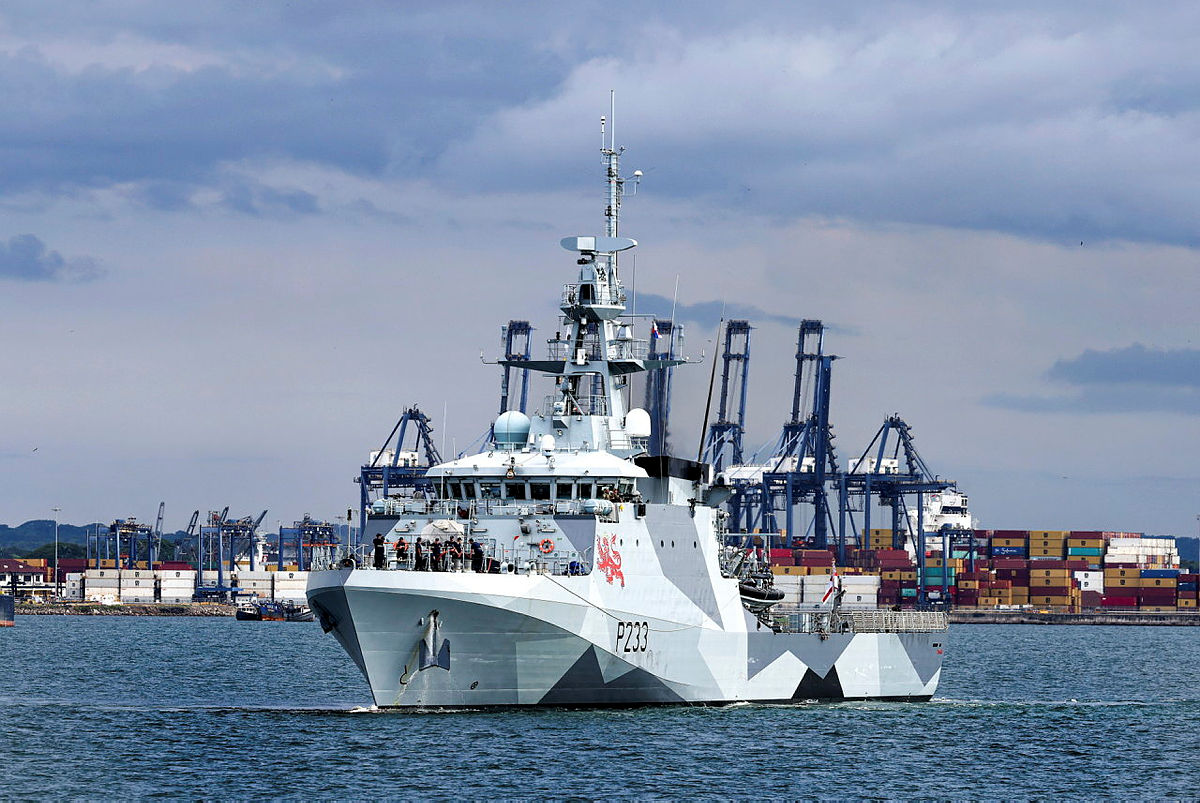
Commissioned in December 2020 as a Batch 2 River‑class offshore patrol vessel, HMS Tamar made waves in April 2021 when she became the first Royal Navy warship since WW2 to receive a dazzle camouflage livery.
It took 200 litres of paint in black and four shades of grey to cover the ship.
Tamar retained bold red lion emblems – the Lion Rampant of Cornwall and Devon – on her superstructure, making her instantly recognisable.
HMS Spey
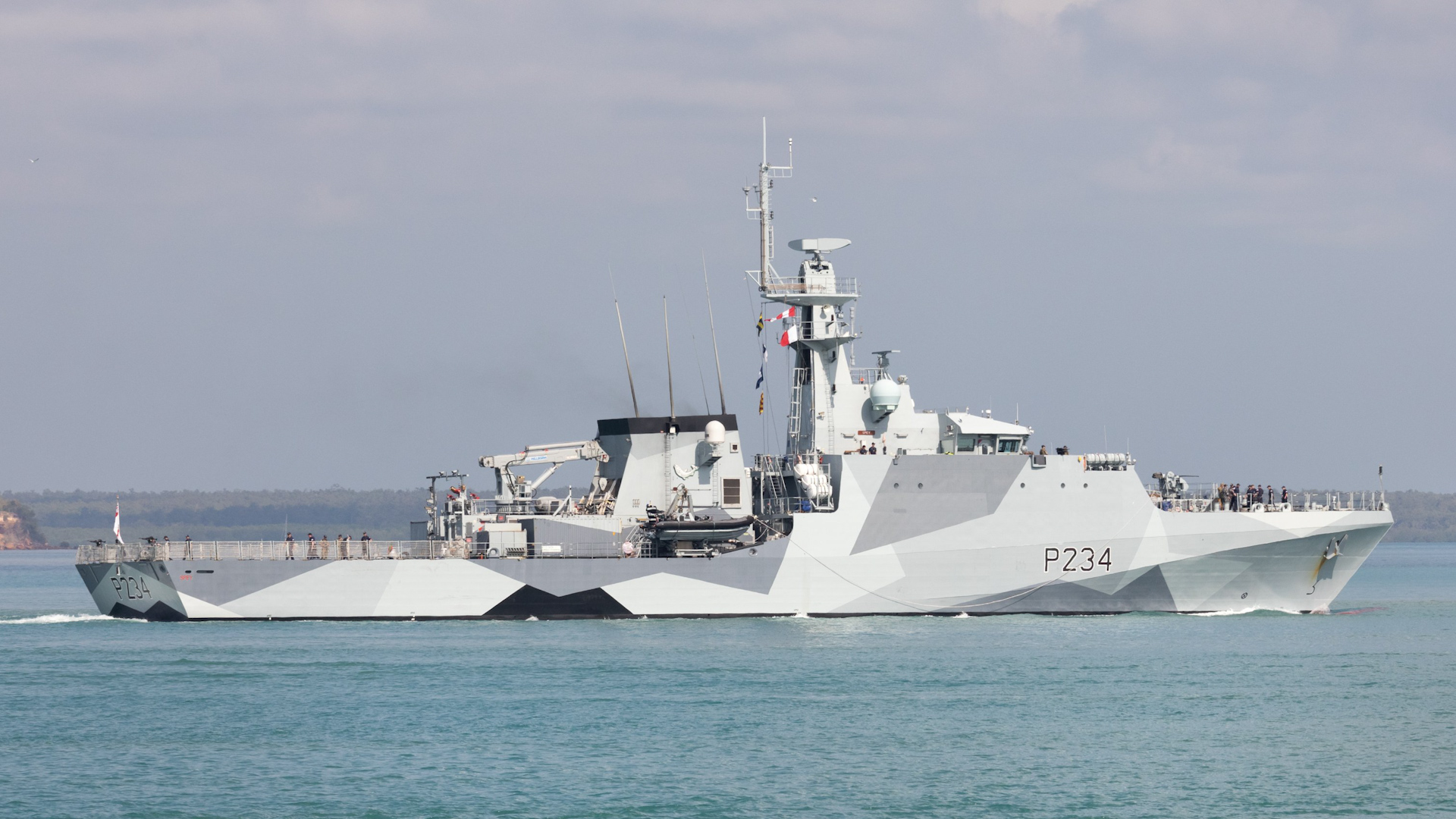
HMS Spey is one of the Royal Navy's newest Batch 2 River-class offshore patrol vessels.
She was painted in a dazzle camouflage scheme shortly after entering service in 2021, ahead of her long-term deployment to the Indo-Pacific.
The angular grey pattern was inspired by First World War designs intended to confuse enemy targeting systems.
Spey's livery sets her apart visually from other Royal Navy ships, but her role remains straightforward: supporting security and defence partnerships across the region.
HSwMS Visby
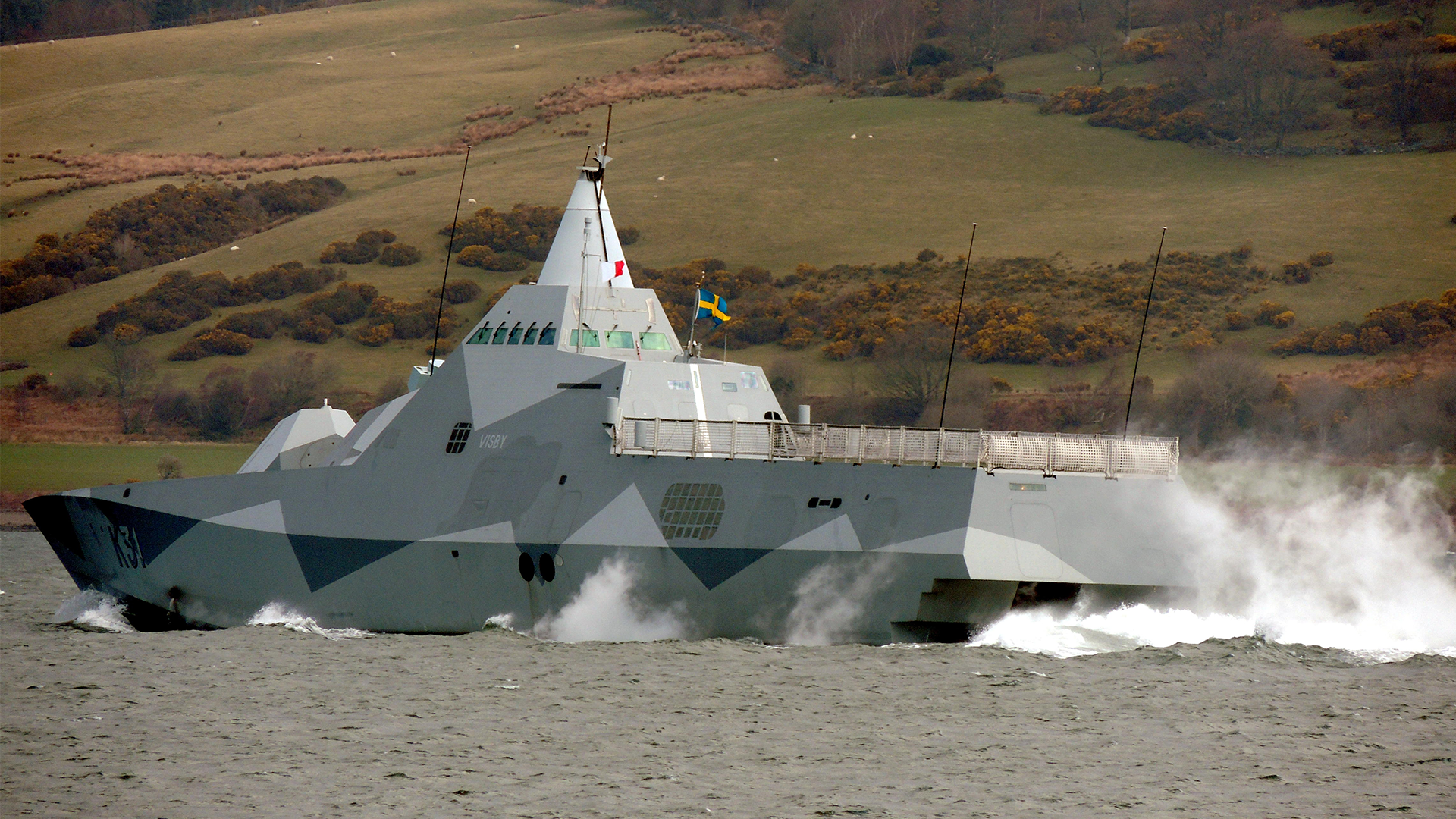
Launched in 2000, HSwMS Visby is the flagship of Sweden's stealthy Visby-class corvettes – engineered for littoral operations.
Her hull and superstructure feature a distinctive, matte-grey paint finish paired with angular plating designed to minimise radar detection.
The ship's use of carbon-fibre-reinforced plastic also cuts down radar signature, setting her apart as a true ghost of the sea in both form and function.
Italian Amerigo Vespucci
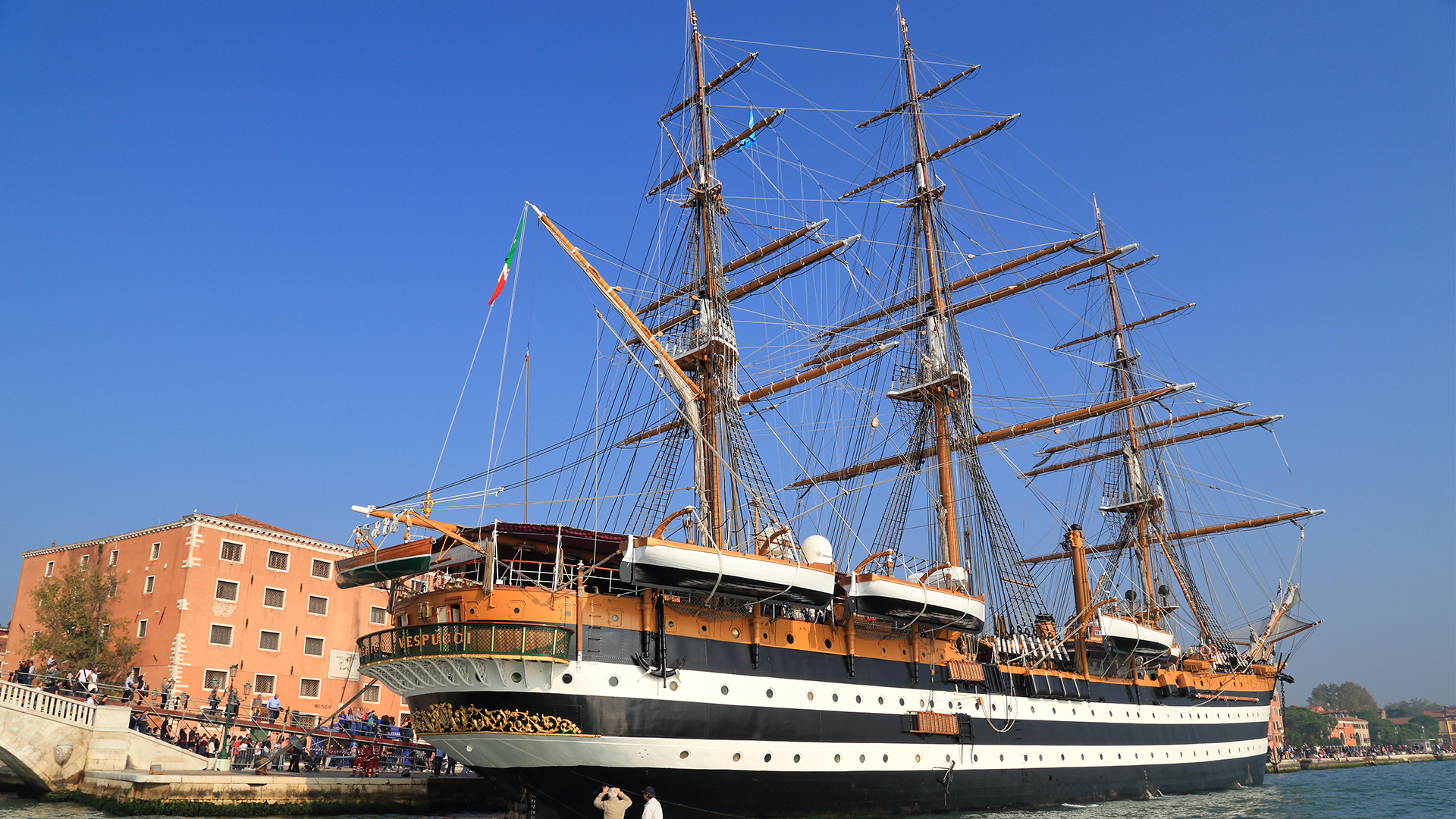
Italy's Amerigo Vespucci embodies naval beauty and tradition.
Her gleaming white hull, polished wooden decks, ornate carvings, and rigging recall a bygone era of sail – and demonstrate that tactile craftsmanship remains as captivating as any modern livery.
Related topics
Join Our Newsletter