Story behind haunting last photo of sailor trapped in USS West Virginia after Pearl Harbor

For most familiar with the date 7 December 1941, they are reminded of one of the darkest days in US history – the day Japanese airborne forces attacked Pearl Harbor, propelling the country into the Second World War.
However, for a small group of people, the date marks the moment a dark secret began, one that was considered too painful for the parents of three sailors to learn.
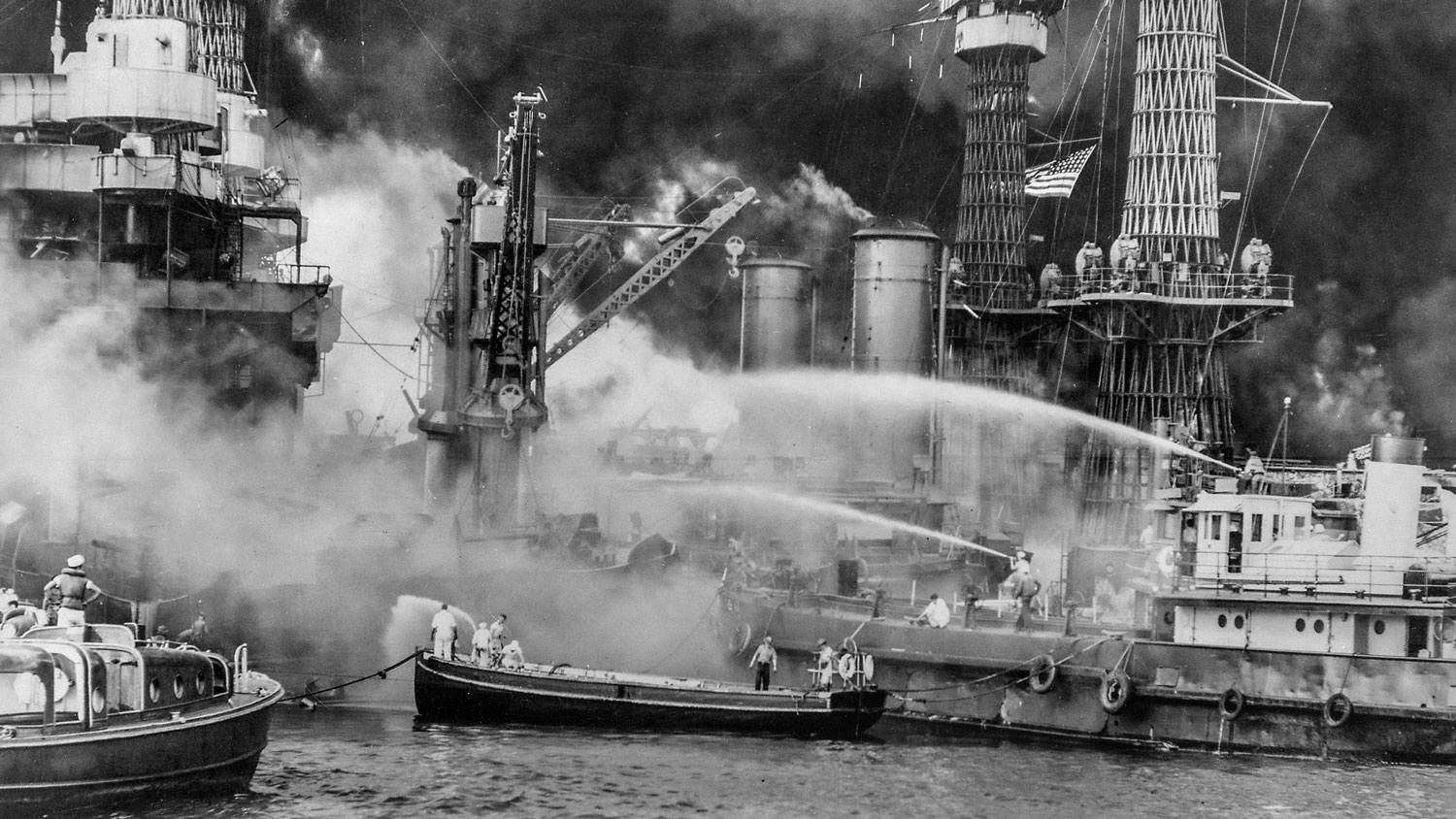
On that fateful day, Firemen First Class (F1c) Clifford Olds, 20, Firemen Third Class (F3c) Ronald Endicott, 18, and F1c Louis 'Buddy' Costin, 21, became trapped in USS West Virginia after the dreadnought battleship was torpedoed and sank to the harbour's bottom – forever sealing the fates of these men.
But instead of dying on that day like their families were told, these men survived and not just for a few hours or a day or two.
A calendar discovered once the damaged ship was salvaged had dates crossed off after 7 December, suggesting that at least one of the men lived for 16 days following the torpedo attack.
How did the men survive the initial attack?
Immediately after the attack began, Ensign Kelley, USS West Virginia's Assistant Navigator, set condition Z, which meant all doors marked with a Z were to be shut as a first line of defence.
This procedure helps to enhance a ship's watertight integrity by closing all doors and hatches to prevent flooding.
Unfortunately, F1c Olds, F3c Endicott and F1c Costin unknowingly sealed themselves in their own airtight coffin by following these instructions.
The night before
Less than 12 hours before the attack, F1c Olds (pictured on the right in the photograph below) was with his friends Seaman First Class (SN1) Jack Miller and Seaman First Class Frank Kosa at a tavern in Pearl City, Hawaii, known locally as The Monkey Bar, because of the long tailed animals that lived in an area behind the bar separated by glass.
Blissfully unaware of the next day's devastating impact on America – Pearl Harbor is the second deadliest attack on US soil after the terrorist attacks on 11 September 2001 – the men drank, smoked and had their photo taken by a local photographer.
It was their last hours of peace before hell was unleashed the next day, killing 2,343, wounding 1,272 and leaving 960 missing.
The Seattle Times reported in 1995 that F1c Olds' friend SN1 Miller went back to the Monkey Bar once he'd returned from two weeks at sea and found the photographer who gave him the negative.
Like a thunderclap from a clear sky
At 07:55 on 7 December 1941, a peaceful Sunday morning, the Imperial Japanese Navy attacked Pearl Harbor on the island of O'ahu, Hawaii.
"A date which will live in infamy," said President Franklin D Roosevelt.
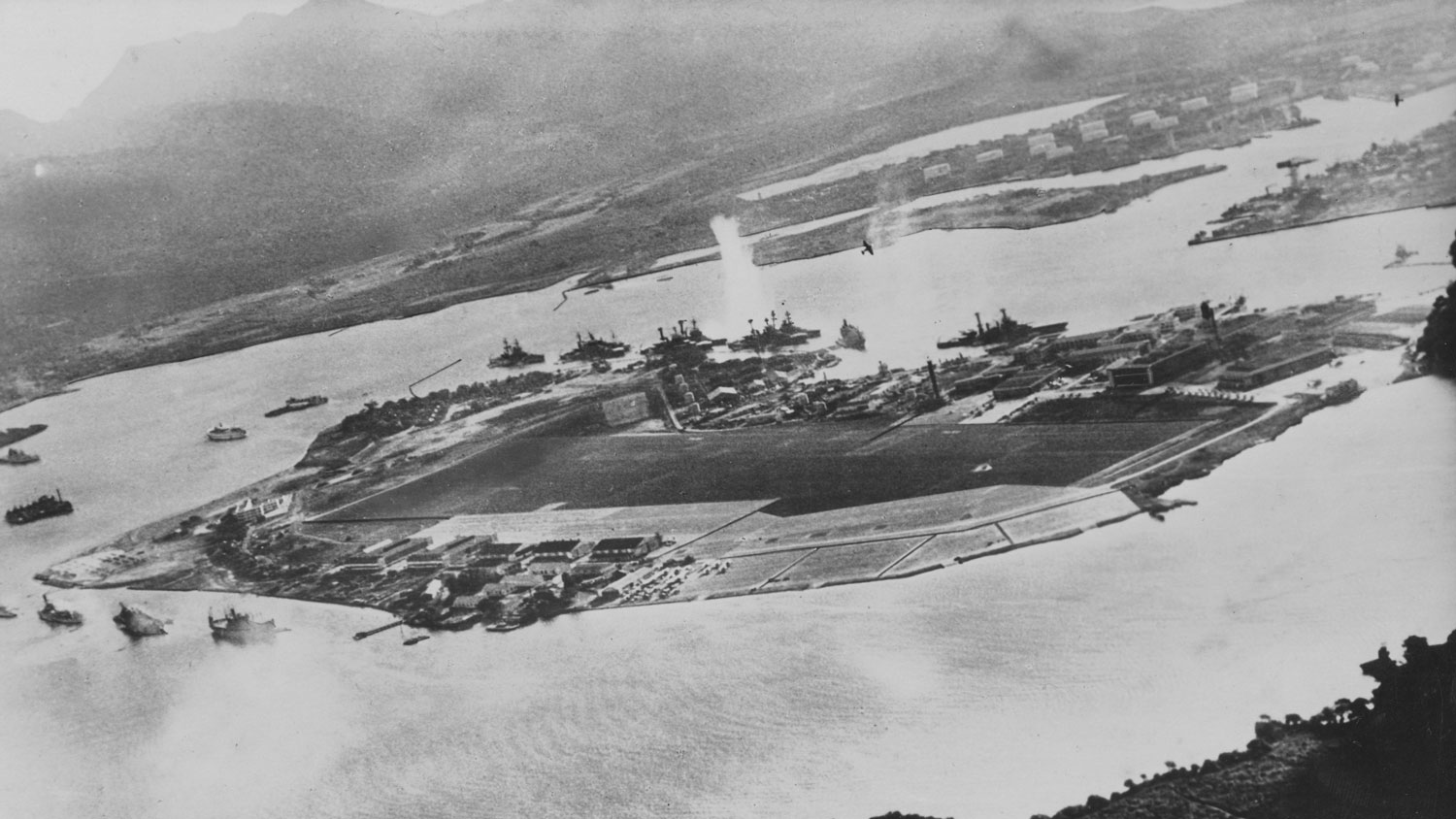
The image below shows a Japanese aircraft (centre right) flying away after having torpedoed USS West Virginia, the first vessel to be hit.
The damage to the dreadnought battleship of the Colorado class caused in a matter of minutes took more than two years to repair.
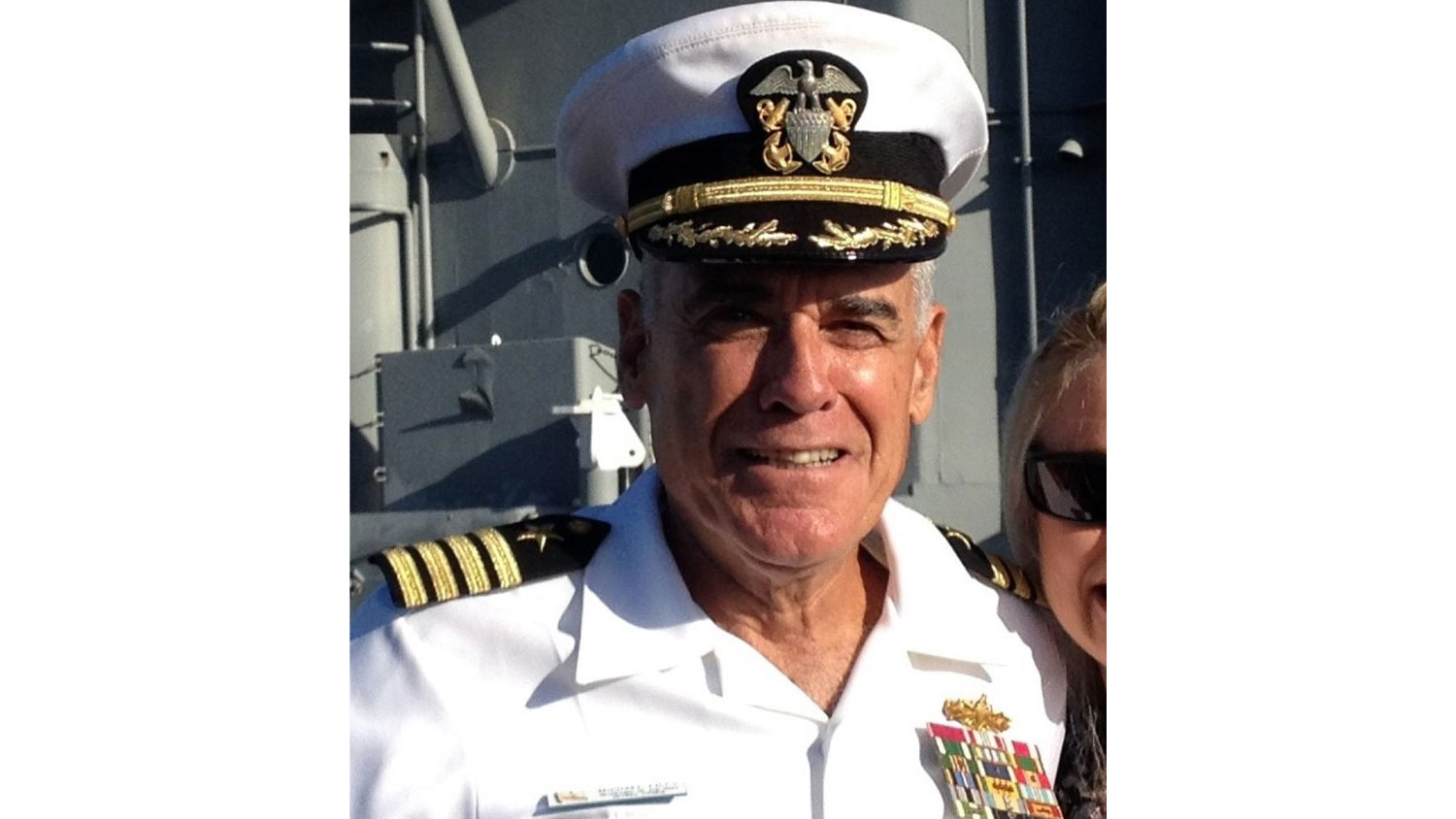
Vietnam War veteran and historian Captain Michael A Lilly was a surface warfare officer in the US Navy Reserves who went on to have a distinguished career as Hawaii's Attorney General and as a trial attorney.
He also wrote Nimitz at Ease, a book detailing how his grandparents helped Admiral Chester Nimitz cope with the stresses of command and win the Pacific war.
Capt Lilly's family lived on the island of O'ahu during the Second World War, so he is closely connected to the events that happened that day, despite being born after the war.
He said the single most, disastrous strategic mistake any military force ever did in history was attacking the United States, because that brought the country into the war.
Speaking to BFBS Forces News about the men who became trapped in USS West Virginia, Capt Lilly becomes visibly upset when he thinks about what the trapped sailors and those unable to save them faced, saying: "If there was a way for them to save those boys, they would have.
"But they already knew that they couldn't.
"I can't put myself in the position of those sailors and servicemen that were listening to those three boys banging on the walls of their coffin for weeks.
"It's probably the most tragic, saddest story out of Pearl Harbor."
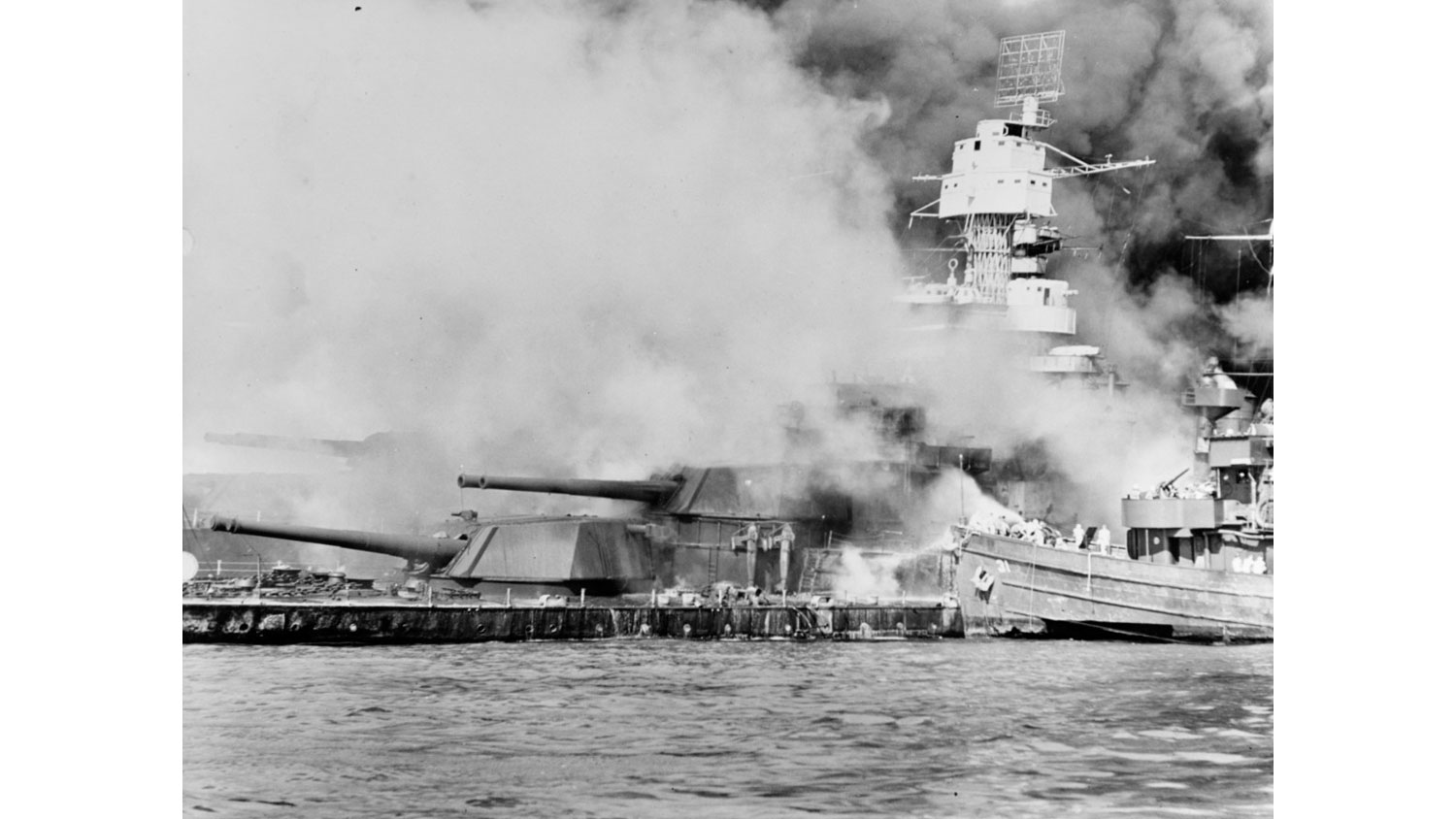
Being 40ft underwater, cutting into where they were trapped would have flooded the area and been fatal.
Compressed air posed explosion risks for the divers, and the combination of fuel oil and gas vapours with torches could also trigger an explosion in the dark.
And so, those on duty in the days after the attack on Pearl Harbor had to endure hearing banging coming from within the ship, knowing their comrades were trapped with no way to save them.
Speaking before his death in 2004, Master Sergeant (Retd) Richard Fiske, a 19-year-old US Marine bugler during the attack on Pearl Harbor, said: "Each day we could still hear the tapping.
"Of course, we'd bang all over the ship to let the guys know that we were looking for them and finally there wasn't much anyone really could do.
"The tapping continued until Christmas Eve and then it was over."
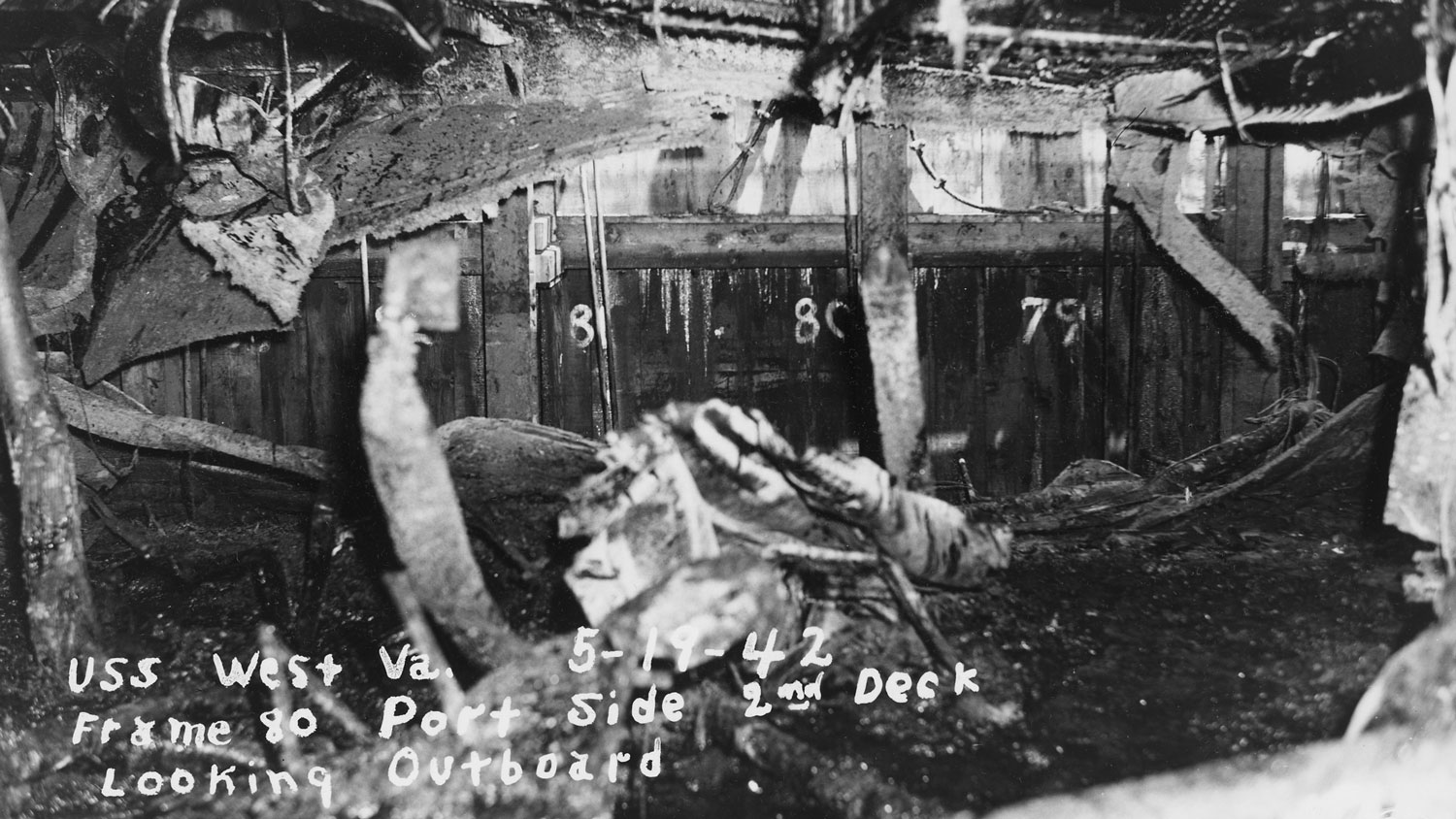
A shocking discovery
The official report states that 66 bodies found "widely scattered" throughout the ship were recovered.
It said: "In most cases they were in an advanced state of decomposition and considerably dismembered."
However, when the salvage team opened the door of storeroom A-111, they discovered three bodies "clad in blues and jerseys".
The storeroom was open to pump room A-109, which had given the men access to fresh water and the men had eaten the emergency rations in the room.
The report adds one final point about the room in which F1c Olds, F3c Endicott and F1c Costin were found.
A haunting detail which was kept a secret from the loved ones of the men.
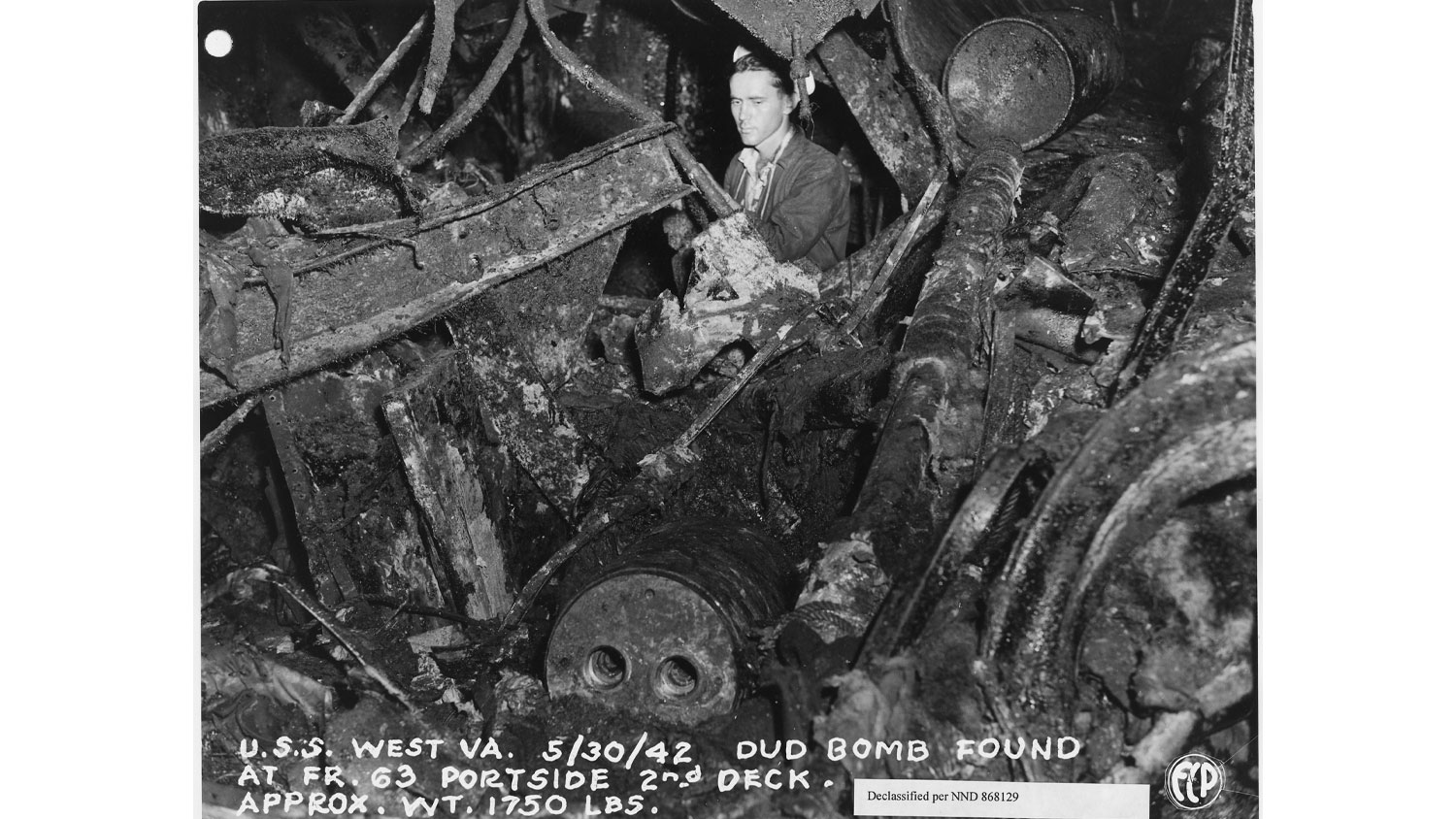
It said: "A calendar which was found in this compartment had an "X" marked on each date from December 7, 1941 to December 23, 1941 inclusive."
It was only through word of mouth that the true fate of their loved ones came to light and even then, the relatives who knew chose not to tell the parents, fearing the truth would break them.
F3c Endicott and F1c Buddy Costin are buried at the National Memorial Cemetery of the Pacific in Honolulu, Hawaii, and F1c Clifford Olds is buried in Stanton Cemetery in Mercer County, North Dakota.
All headstones list 7 December as their date of death.
It is reported that Commander Paul Dice, one of the people who worked on the salvage, kept an eight-day clock that was discovered in the room with the men until donating it to a museum in Parkersburg, West Virginia, and that he sent the calendar to naval headquarters in Washington, but its whereabouts are now unknown.
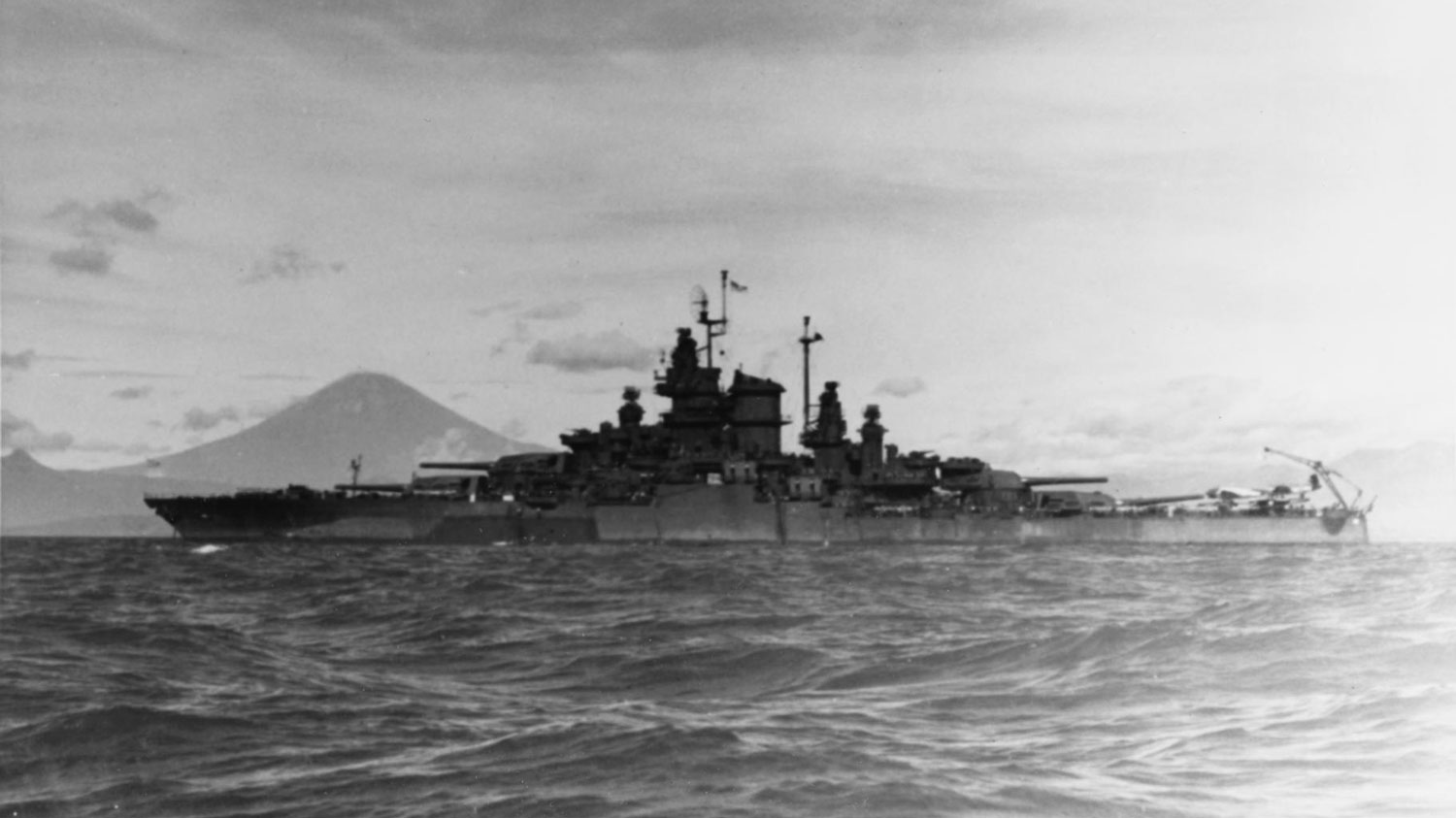
The USS West Virginia, affectionately known as 'Wee Vee,' returned to service in October 1944.
It took part in several key battles, including the Philippines Campaign and the Battle of Surigao Strait.
The ship also provided support for landings at Mindoro, Luzon, Okinawa and Iwo Jima – a defining moment in US Marine Corps' history.
And when the Japanese surrendered on 2 September 1945, the vessel was in Tokyo Bay to witness it.
Capt Lilly said: "It's like a spectre comes out of the Pearl Harbor mud and goes to war and wreaks vengeance on the Japanese for having sunk that ship."
The late Mr Fiske knew F1c Olds well. He used to stand watch with him.
Of how he wants the three sailors to be remembered he said: "You talk about heroes. They are the ones that are the real heroes.
"Stayed at their battle station no matter what and gave their lives for the ship that they thought they were saving."
Join Our Newsletter