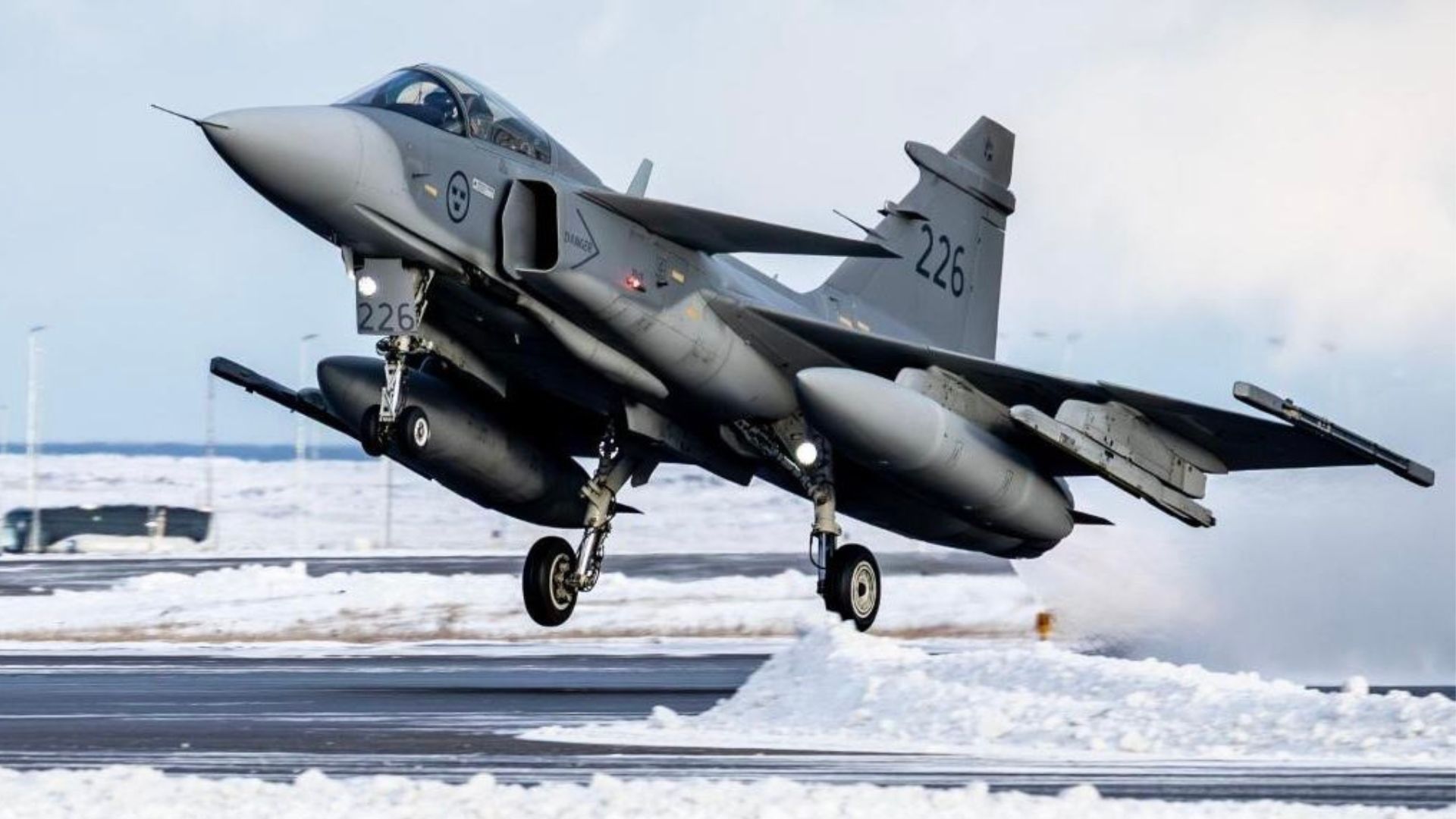
The Swedish Air Force has successfully completed its deployment to Keflavík Air Base in Iceland, where Saab JAS 39 Gripen fighters carried out air policing missions as part of Nato's Arctic Sentry operation.
Six Swedish Gripen fighters and more than 110 personnel from Skaraborg Air Wing F 7 were deployed – a historical milestone for Sweden, marking the first time the country has led the mission since joining Nato in 2024.
Air policing in Iceland has been carried out by Nato allies on a rotational basis since 2008. By using radar, surveillance systems, and fighter aircraft to detect, track, and intercept unidentified or unauthorised aircraft entering Nato airspace, these operations help keep the skies safe.
The mission here is slightly different to that of other regional assistance missions in that it does not permanently cover Iceland's airspace. Instead, it typically involves a deployment of fighter aircraft from a Nato nation for a period of three to four weeks, three times a year.
Policing the skies
"Serving in Iceland has been a proud moment for our team and for Sweden," explained the contingent commander, Lieutenant Colonel Johan Legardt.
"Operating in the High North is never easy; the weather, the distance and the conditions constantly test our people, but that is exactly the environment we train for at home."
Throughout the deployment, the Swedish detachment worked closely with allied air forces from other nations, including Danish F-35 fighters and German Eurofighters.
Major General Jonas Wikman, Commander of the Swedish Air Force, said the strategic importance of operating in the Arctic has been steadily increasing, noting that Russia is "establishing itself" in the region.
"Iceland is strategic, and I think for us, being here together gives us great situational awareness over this environment and also a presence that is needed to defend every inch of the territory," he said.
"I think as Swedes, we are built and trained to operate in this environment… we have the capability to do it."
For the Swedish Air Force, the deployment also showcased the adaptability of the Gripen fighter in challenging northern climates.
According to its developer, Saab, the supersonic, fourth-generation multi-role fighter is specifically designed to perform in extreme cold, with temperatures dropping below -30°C and is engineered to operate from dispersed, unprepared locations – such as public roads or short, narrow, icy airstrips.
Join Our Newsletter