Arctic kit: When batteries drain fast and mobility comes down to skis in High North cold
Cold-weather operations can punish equipment as much as people, turning power, surveillance and mobility into limiting factors before any enemy contact.
The idea of operating in Greenland and the wider High North is often framed around strategy and geography.
But in practice, the environment dictates what can be carried, what can be kept running, and how quickly forces can move.
Reliance on battery-powered systems becomes a vulnerability when temperatures plunge.
In Arctic conditions, lithium batteries and other new technologies can struggle to perform as expected, narrowing what can be sustained on the ground and for how long.
The problem is not limited to one device or one role: power underpins communications, navigation aids and the growing range of digital tools and sensors that units now treat as standard.
Meanwhile, up above, cloud cover can blunt the advantage of overhead surveillance, raising basic questions about what drones and other intelligence, surveillance and reconnaissance platforms can actually see on a given day.
If the weather blocks the view, commanders are pushed back towards ground truth, slower decision-making and shorter horizons.
Then there is mobility, where the Arctic is at its most unforgiving.
Vehicles need routes, traction and maintenance windows. Snow can change character rapidly, ice can turn surfaces into hazards, and the simple act of keeping tracks clear becomes an operational job in its own right.
The risk extends to frozen water, where a route that looks solid can become a serious incident if ice conditions are misread.
This is where skis come in, for people and, sometimes, for aircraft. Over snow, skis and snowshoes remain basic mobility tools because they work when roads do not exist, tracks are not cleared, or vehicles cannot get through.
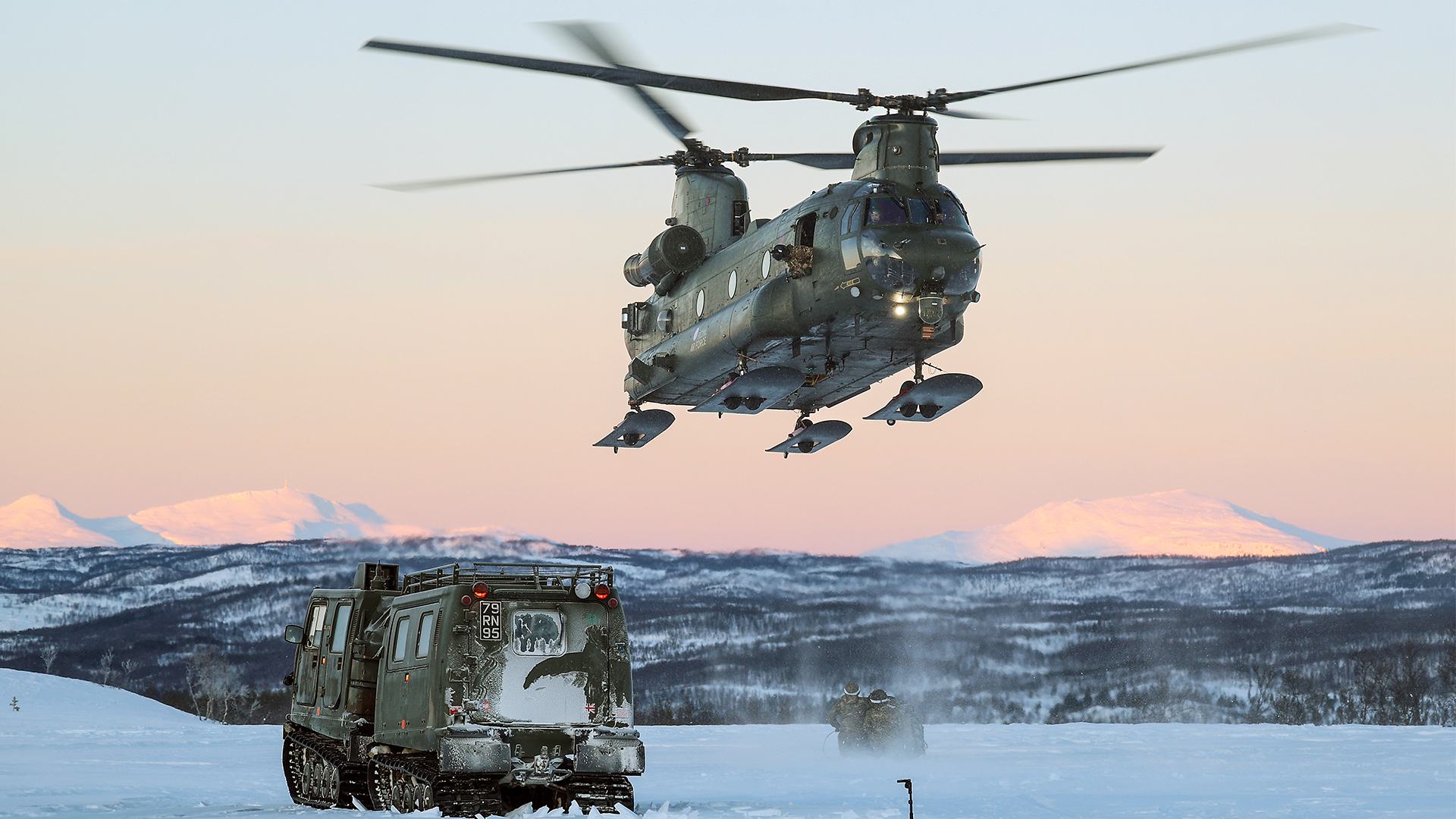
Skis are also used as adaptations for some rotary aircraft operating on snow.
Even RAF Chinook helicopters get fitted with snow skis during cold-weather training in Norway.
But even with the best equipment, commanders have to plan on weather and temperature stripping capability away at the worst time.
Related topics
Join Our Newsletter