Shoreham Airshow Crash: Pilot Denies 'Cavalier Attitude' To Flying
Andrew Hill, the pilot whose plane crashed during the 2015 Shoreham Airshow, killing 11 men, has dismissed claims he ever had a "cavalier attitude" to flying.
The 1950s Hawker Hunter fighter jet plunged to the ground and exploded in a fireball on the A27 in West Sussex after Hill attempted a loop on August 22.
Mr Hill, 54, of Sandon, Buntingford, Hertfordshire, denies 11 counts of manslaughter by gross negligence.
The trained Royal Air Force instructor, is on trial in the Old Bailey and was asked by his barrister, Karim Khalil QC, if he was ever a "cavalier" pilot.
"I would say I was probably one of the least people that applied to, in the sense that there are ways to be cavalier and some people are, some people are not,” Mr Hill replied.
"I believe I took a very structured, disciplined approach to it [display flying]."
He told the court that he sometimes held back from flights he was not comfortable with carrying out.
"We have our strengths and weaknesses," he said.
Prosecutors previously told the court the crash was due to "pilot error" and although Mr Hill was normally considered "careful and competent", he had taken "risks" in the past, suggesting he sometimes played "fast and loose" with the rules and may have had a "more cavalier attitude to safety than was appropriate".
In relation to his final display, Mr Hill denied he ever intended to hurt anyone.
Mr Hill claims to have experienced "cognitive impairment" shortly before the crash and does not remember what happened.
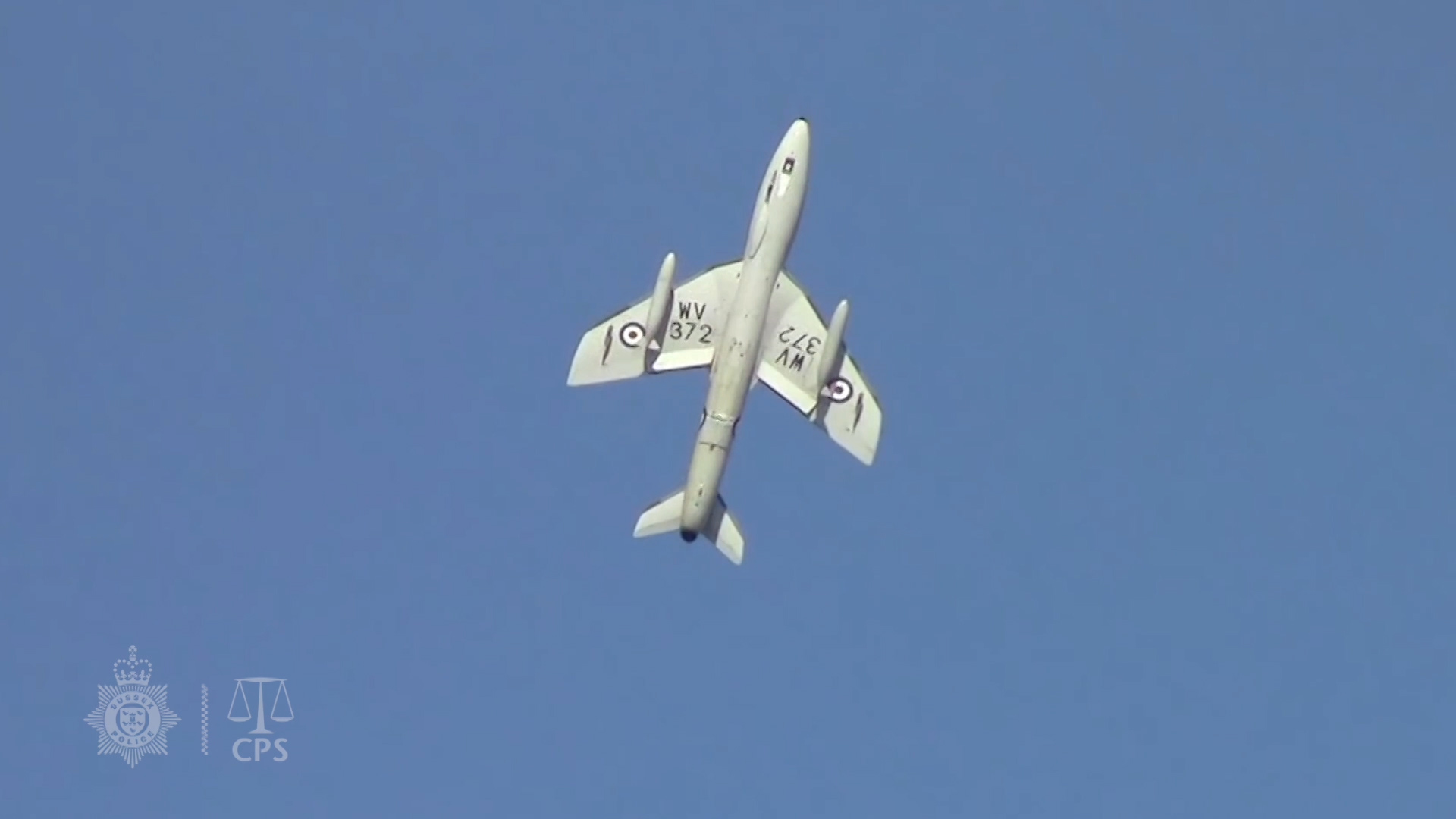
He was thrown from the burning plane and told medics he "blacked out in the air" after he was found with blood on his face lying in undergrowth beside the cockpit.
After the crash, Mr Hill was taken to hospital with serious injuries and placed into an induced coma.
Mr Hill had passed medical checks before the crash.
Tests and scans carried out afterwards did not show any sign of a medical condition - including cognitive impairment - which may have affected his health leading up to the crash, the court heard.
After graduating from Cambridge University, Mr Hill went into the RAF, winning a competition when flying a Jet Provost and was ranked a top performing student so was selected - or as he called it "creamed off the top" - to become an instructor.
Training in combat, he took part in active service for a month in the 1990s monitoring no-fly zones in northern Iraq.
Mr Hill also started to fly a Harrier - capable of vertical take-off and landing - and won an award for his work and ideas on improving aircraft safety procedures, the court heard.
Then he went into civil aviation, becoming a commercial pilot.
The trial continues.
Related topics
Join Our Newsletter