Is the Royal Navy heading towards a capability gap as Type 45 retirement looms?
It seems impossible that the last Type 45 Destroyer will be out of service by 2038. To me, they still seem impossible, modern and new.
Yet, as with all naval vessels, they have a finite lifespan, and their eventual obsolescence is understood right from the start.
This month, in answer to a written question from an MP, Defence Minister Luke Pollard reiterated that the last Type 45 Destroyer will retire from service by the end of 2038, which got me thinking.
Time is of the essence
In 12 years, all six of the ships will be out of service, which means the older ships will probably leave in the couple of years before 2038.
What is the status of their replacement? How far along the procurement journey is the Royal Navy?
The most recent information I could readily find was from mid-2025, which stated that the project was in its concept phase.
The logical next question must be: Is there going to be enough time to get them built before the Type 45s start to be decommissioned?
It is a difficult question to answer. If we look back at the Type 45s' procurement timeline, the construction contract was awarded at the end of 1999, with the first ship commissioned in 2009 - that's 10 years.
Time could be tight for any replacement.
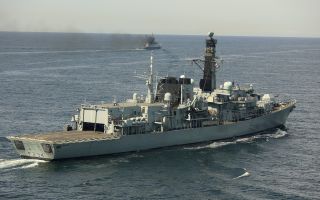
The Royal Navy could find itself in a similar situation to where they are with its frigates. Numbers of Type 23s in service have tumbled to just six, as the older ships have been withdrawn – their replacements, though, are still being built.
The new frigates could certainly do some of the jobs of the Destroyers, but there's one crucial capability that's out of their reach: the Sea Viper system.
Using Aster 30 missiles, the Type 45 can hit air targets up to 120 kilometres away. The Type 23s and their replacements have Sea Ceptor, with a limited range of 25 kilometres.
Time is of the essence here, with many feeling tangible progress is needed on the Type 83s to ensure there are not capability gaps in the future, when the distinctive shape of the Type 45 sails in retirement.
Join Our Newsletter