The 300-year-old rule that maintains the legality of Britain's Armed Forces
A military of nuclear submarines, F-35s and drones still relies on a rule written after a 17th-century king lost his throne.
Every five years, Parliament must renew the legal authority that allows the Royal Navy, British Army and Royal Air Force to operate.
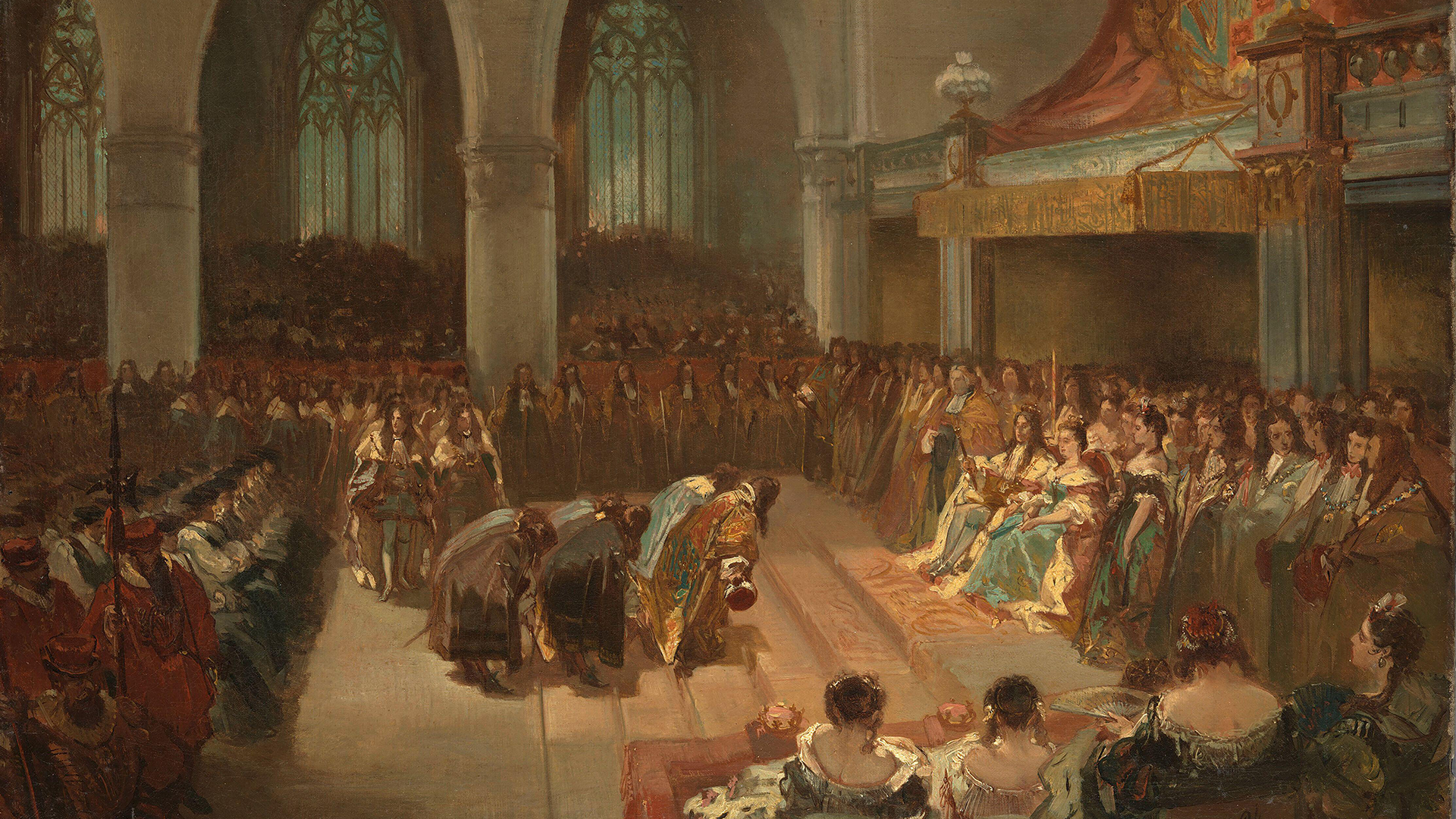
The requirement goes back more than 300 years, to a rule written after James II lost the Crown, and Parliament declared that a standing Army was lawful only with its consent.
- Why is Battle of the Boyne in my calendar?
- Armed Forces Bill report: What it says on housing, military justice and the reserves
- 'Deeply disappointing': Defence Readiness Bill omission from King's speech sparks criticism
The Armed Forces Bill now before MPs is the latest renewal of that consent, which nowadays also updates the laws on housing, justice, reserves and the Covenant.
It is a continuation of the Armed Forces Act 2006, the main legal framework for military discipline, service offences and the Service Justice System across the Armed Forces.
The act gives the chain of command its legal footing. It sets out how orders are enforced, how service offences are dealt with, how courts martial operate and how commanding officers can handle disciplinary matters.
The current renewal expires in December 2026.

The King, Parliament and the Army
James II came to the throne in 1685 in a kingdom still marked by civil war, the execution of Charles I, military rule under Oliver Cromwell and the restoration of the monarchy under Charles II.
A permanent force under the Crown could defend the realm and suppress rebellion. It could also give a monarch the power to enforce his will without Parliament's consent.
James expanded the regular Army after Monmouth's Rebellion, when his Protestant nephew tried to seize the throne and was defeated at Sedgemoor.
He appointed Catholics to senior military and political posts in a state whose established church and political class were Protestant. He removed Protestant officers who resisted him.
King James held annual military reviews at Hounslow Heath, west of London. Royal troops were mustered close enough to the capital to remind MPs of the King's military might.
The Glorious Revolution
William of Orange landed at Brixham in Devon on 5 November 1688. He was James's nephew and was married to Mary, James's eldest Protestant daughter, giving him a claim to the throne through both blood and marriage.
James's support collapsed as William advanced. Senior officers defected, including Lord John Churchill, later the Duke of Marlborough. James fled to France by Christmas.
William and Mary were offered the Crown in February 1689. The offer came with the Declaration of Rights, which set limits on the monarchy.
It prevented the King from changing laws, raising taxes or maintaining an army without Parliament's consent.
"By raising and keeping a Standing Army within this Kingdome in time of Peace without Consent of Parlyament and Quartering Soldiers contrary to Law."
The declaration became the Bill of Rights later that year, and remains the legal foundation for the Armed Forces Bill today.
From Mutiny Acts to modern law
The Bill of Rights declared a peacetime standing Army unlawful without Parliament's consent. But it was the first Mutiny Act, also passed in 1689, that gave Parliament a way to enforce discipline.
After James II had been replaced by William and Mary, the Royal Scots mutinied in 1689. Parliament responded by giving statutory force to military discipline, allowing officers and soldiers to be tried and punished for mutiny and desertion by court martial.
Almost two centuries later, in 1879, the Army Discipline and Regulation Act made permanent provision for Army discipline, subject to renewal by an annual Army Act.
The modern five-year system came later, with the five-year requirement dating back to the Army Act 1955 and Air Force Act 1955, and was later applied to the Naval Discipline Act 1957.
Between five-year acts, annual continuation is approved by both Houses of Parliament.
The current framework is the Armed Forces Act 2006, which came into force on 31 October 2009.
It replaced separate discipline systems for the Royal Navy, the Army and the RAF with a single system of service law covering command, discipline and justice.
The current Armed Forces Bill
These days, the bill has a double role. It renews the constitutional consent behind the Armed Forces and updates the legislature around modern service life.
The Armed Forces Bill, currently being considered, brings in reforms to housing, service justice and reserves.
A select committee of MPs backed the measures, but warned that delivery will decide whether they make a practical difference.
The housing reforms will aim to create a Defence Housing Service after long-running problems with poor repairs, damp, mould and low satisfaction among service families.
The justice measures add a victims' code of practice, wider reporting duties for commanding officers and new protections linked to domestic abuse, sexual harm, stalking and harassment.
Meanwhile, the reserve measures will make it easier to move between Regular and Reserve service, raise the maximum recall age for non-officer reservists to 65 and change the rules around how reservists can be recalled.
What happens if Parliament says no
No Parliament has ever refused to renew the Armed Forces Act.
If an act were allowed to lapse, the Armed Forces would retain their personnel, equipment and operational capability, but they would lose the legal framework for command and discipline.
Commanding officers could not lawfully punish misconduct. Courts martial could not sit. The chain of command would have no statutory basis.
That has never happened since the rule was first written.
The Armed Forces have changed beyond recognition since James II reviewed his troops at Hounslow Heath.
But the constitutional logic remains the same. Britain may keep a standing army, so long as Parliament agrees.
The bill now before MPs, is the latest renewal of that centuries-old consent.
Join Our Newsletter