Military planners behind Iraq invasion warn operation could not be repeated today

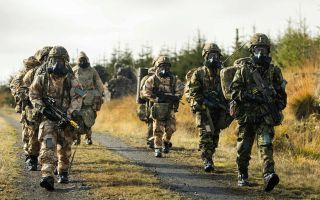
Senior officers involved in the logistical planning behind the 2003 invasion of Iraq have said the British Army would be unable to repeat a similar mission, were it required to do so today.
The invasion saw 32,000 British troops and 100,000 tonnes of military hardware delivered to theatre and ready for war in just 10 weeks – half the time the UK had to prepare for the Gulf War in 1991.
Now, as the UK commemorates the 15th anniversary of the conclusion of the Iraq War, which was known militarily as Operation Telic, those involved in the initial invasion have revealed how it was done and what the shortfalls were.
"The stuff" needed to wage a war
BFBS Forces News video report The Story Behind the Invasion of Iraq looks at claims of soldiers being sent to war without the correct boots or desert clothing, and reveals how close British main battle tanks came to missing the start of the war.
Covering the build-up to the moment the war began on 20 March 2003, the programme includes key interviews with Major General (Ret'd) Tim Cross, the senior British officer responsible for logistics across all UK forces, and Brigadier (Ret'd) Shaun Cowlam, the Army's logistic brigade commander on the ground for the conflict.
The men, two of the most senior officials involved in the war from the perspective of supply and sustainment, confront claims over a lack of kit and praise the efforts of those who worked around the clock to get UK forces equipped to fight in a short window of time.
Recalling "the stuff" his team were responsible for in Kuwait during the build-up, Brig (Ret'd) Cowlam listed the specifics of the equipment needed by the British land forces to wage war.
"The in-load was 32,000 people, 78 ships, 354 aircraft, 15,000 vehicles, 100,000 tonnes of freight and five-and-a-half thousand ISO containers," the former commander of 102 Logistic Brigade said.
Responding to claims of soldiers deploying without appropriate footwear, and to post-conflict reports levelling criticism at aspects of the logistics behind the invasion, Brig (Ret'd) Cowlam cited the defence planning assumptions of the early 2000s as a reason why some of the issues emerged.
"If you have a defence planning assumption which says a thousand men in the desert with three months' warning, and that's what you scale your equipment to, that's fine.
"But if you then send 32,000 people to the desert within six weeks, inevitably there's going to be a shortage of desert-specific stuff."
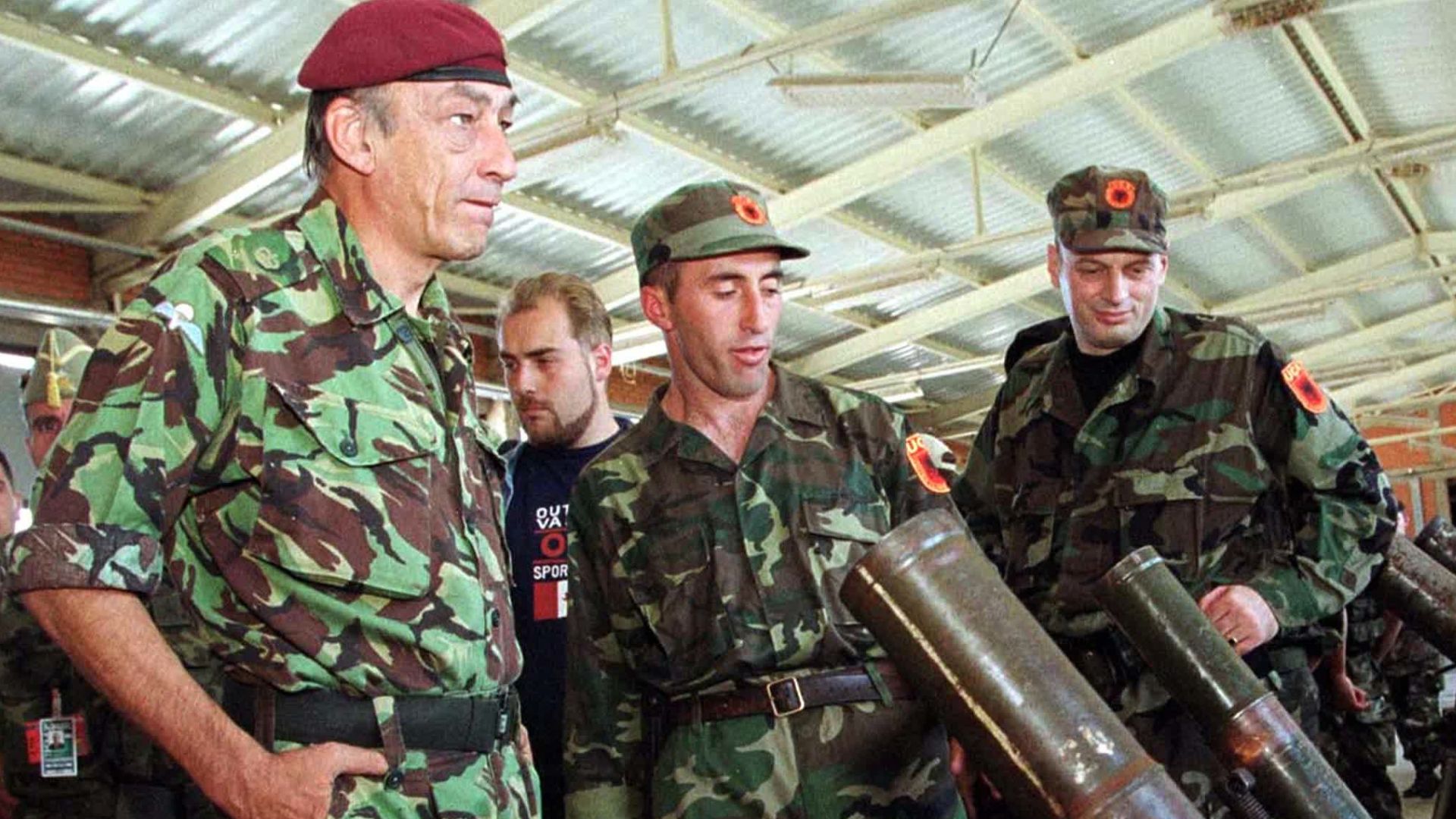
His boss, Maj Gen (Ret'd) Cross, explained that the MOD needed to establish a specific joint logistic command back in the UK, and that he was the man General (Ret'd) Sir Mike Jackson called to get it up and running.
"When you deploy on an operation, there are five component commanders: land, air, maritime, special forces and logistics," the now-retired General said.
"We didn't have a permanent logistic component commander stood up. When the need was there, they found somebody - and I was the guy that General Mike Jackson called."
Only weeks to prepare
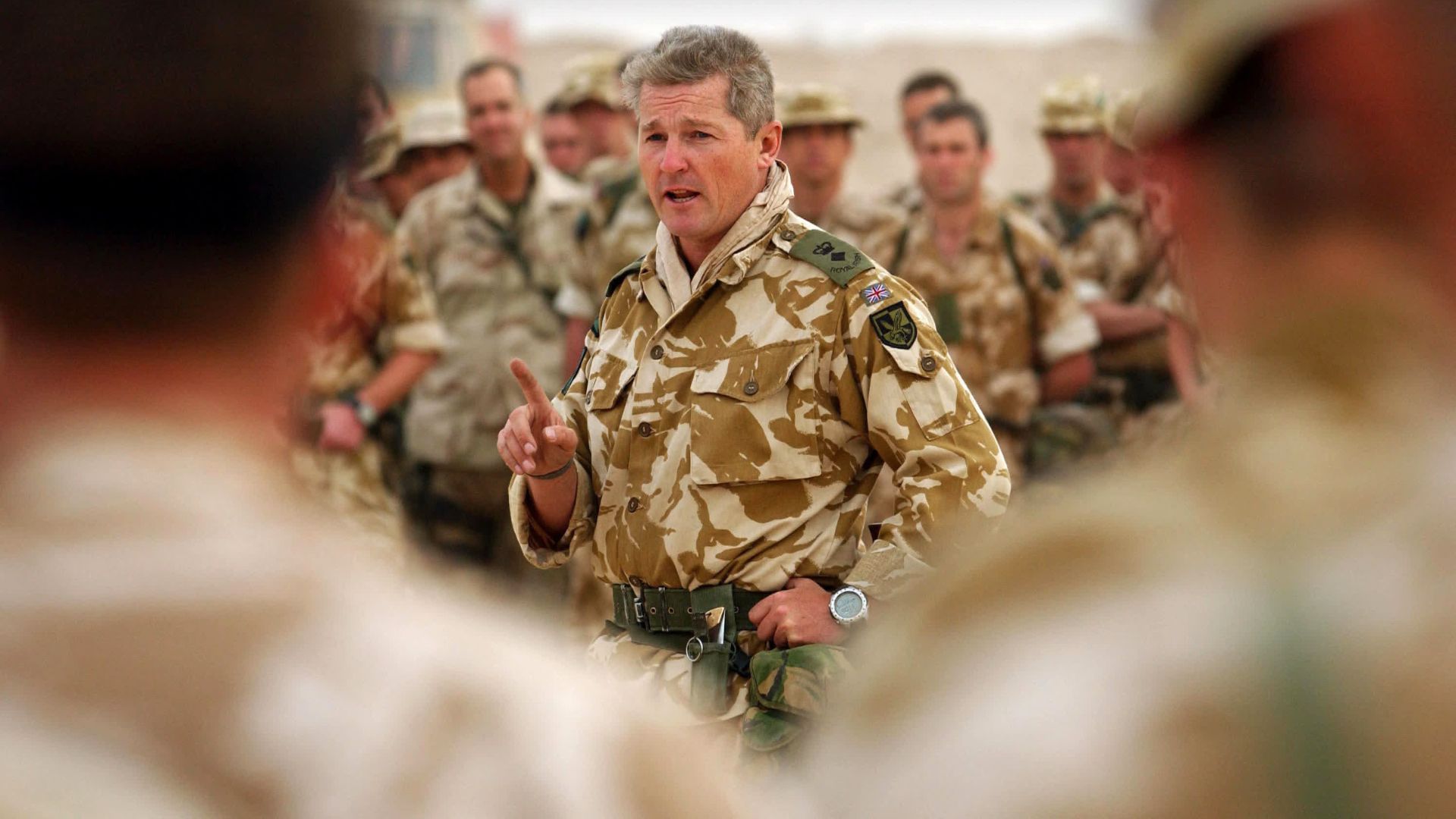
The programme features contributions from Colonel (Ret'd) Tim Collins, the commanding officer of 1st Battalion, The Royal Irish Regiment, famed for the pre-war speech he gave to his men just hours before the conflict began.
He said that he had, in fact, handed over command of his battalion and was instead preparing for a new position in Kosovo when Gen Jackson called him in late December 2002 to say there had been a change of plan.
Instead, he would be staying on to lead the Royal Irish into battle in Iraq.
"The reality was that even though there was a build-up to it, the government held back from pressing the button. So when the button was pressed, which was December 2002, things had to move fairly quickly," he said.
The former CO explained that the pressing issue for him following Gen Jackson's order to prepare for war was squeezing in appropriate pre-deployment training for his men, with just a handful of weeks available.
Holy sh*t, this is real
He said he realised his men needed a "deep dunk in cold water" and so he took the battalion to Sennybridge. But the exercise was to be overshadowed by a serious incident.
"Tragically, we had a negligent discharge on one of the ranges," Col (Ret'd) Collins explained.
"It came back, and we looked at it from every angle; it was nobody's fault. A guy jumped into freezing-cold water, and one shortcoming of the light support weapon is that the safety catch isn't very deliberate.
"And just by gripping his hand, it went off, and at the same time he fired on automatic, and those rounds hit a section commander, hitting him in the leg," he said.
But Col (Ret'd) Collins said he and his men were back at it within hours, live firing again later that day.
"Now the army is used to stopping when something happens like that. And people go away to contemplate their navel for a few weeks," adding that everything just kept going."
He added that "everybody realised, holy sh*t - this is real".
A close call
Describing the final days and hours until D-Day 26 years ago, Brig (Ret'd) Cowlam recalled how close the British Army came to its main battle tank - the Challenger 2 - missing the start of the war.
According to the retired Brigadier, two ships carrying the final loads of tanks into Kuwait docked on 7 and 11 March, the latter of which was just nine days before the invasion began.
This led to a race against time for the units, the Scots Dragoon Guards and the 2nd Royal Tank Regiment, to turn their vehicles around for desert operations and get "bombed up" ready for war.
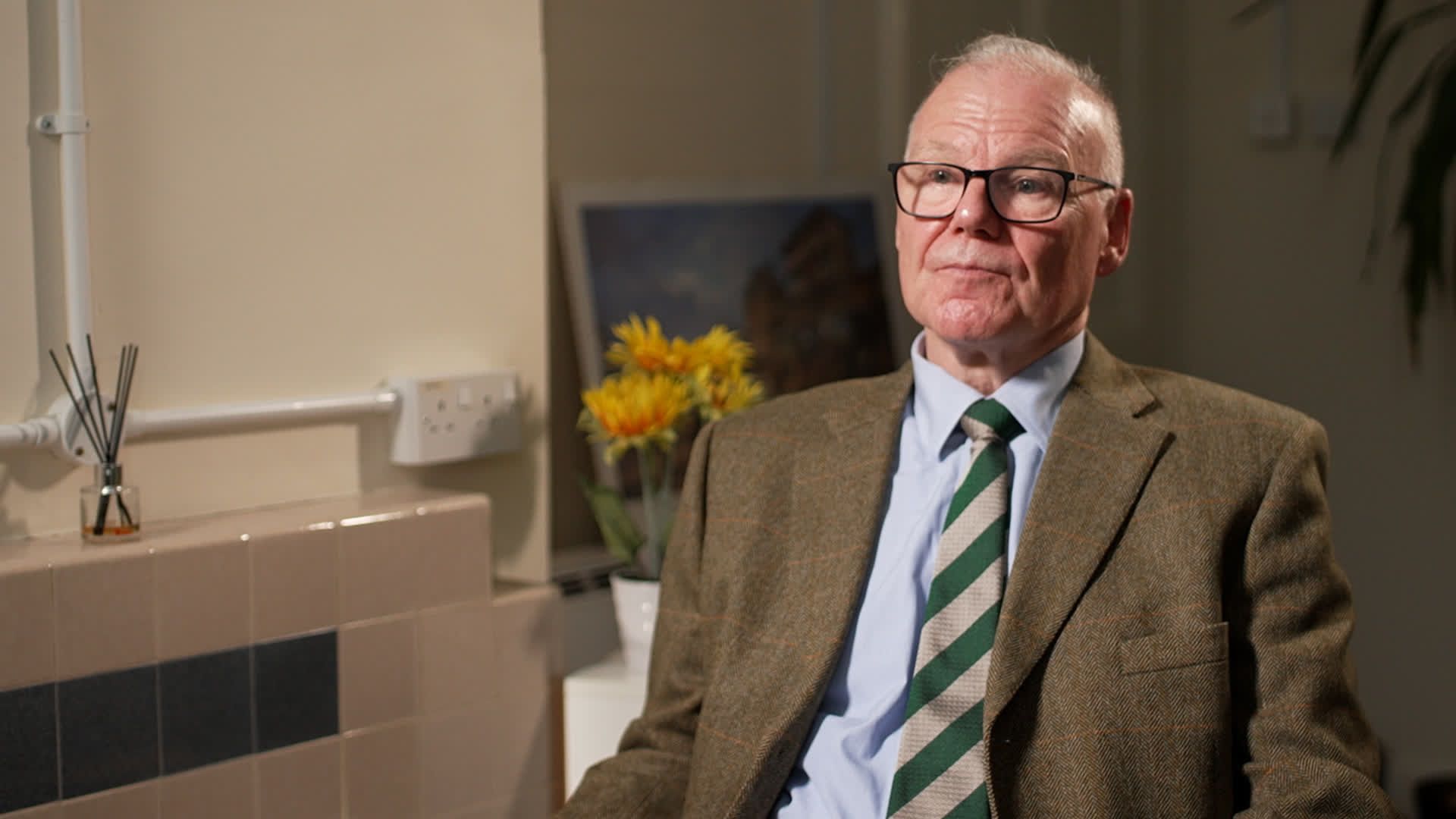
"The first thing to say is that we didn't actually know what the deadline was," Brig (Ret'd) Cowlam said. "But it was quite clear watching the Americans and the tempo they were operating at that this was not going to be a prolonged period of build-up.
"We were receiving ships and aircraft into theatre and pushing them forward into the field as quickly as possible.”
But things ran perilously close to the wire and, in fact, according to Brig Cowlam, the commanding officers of the units concerned only declared the tanks ready on 19 March – a day before the war began.
It had been an extremely close call.
A "paper tiger" Army could not do it again today
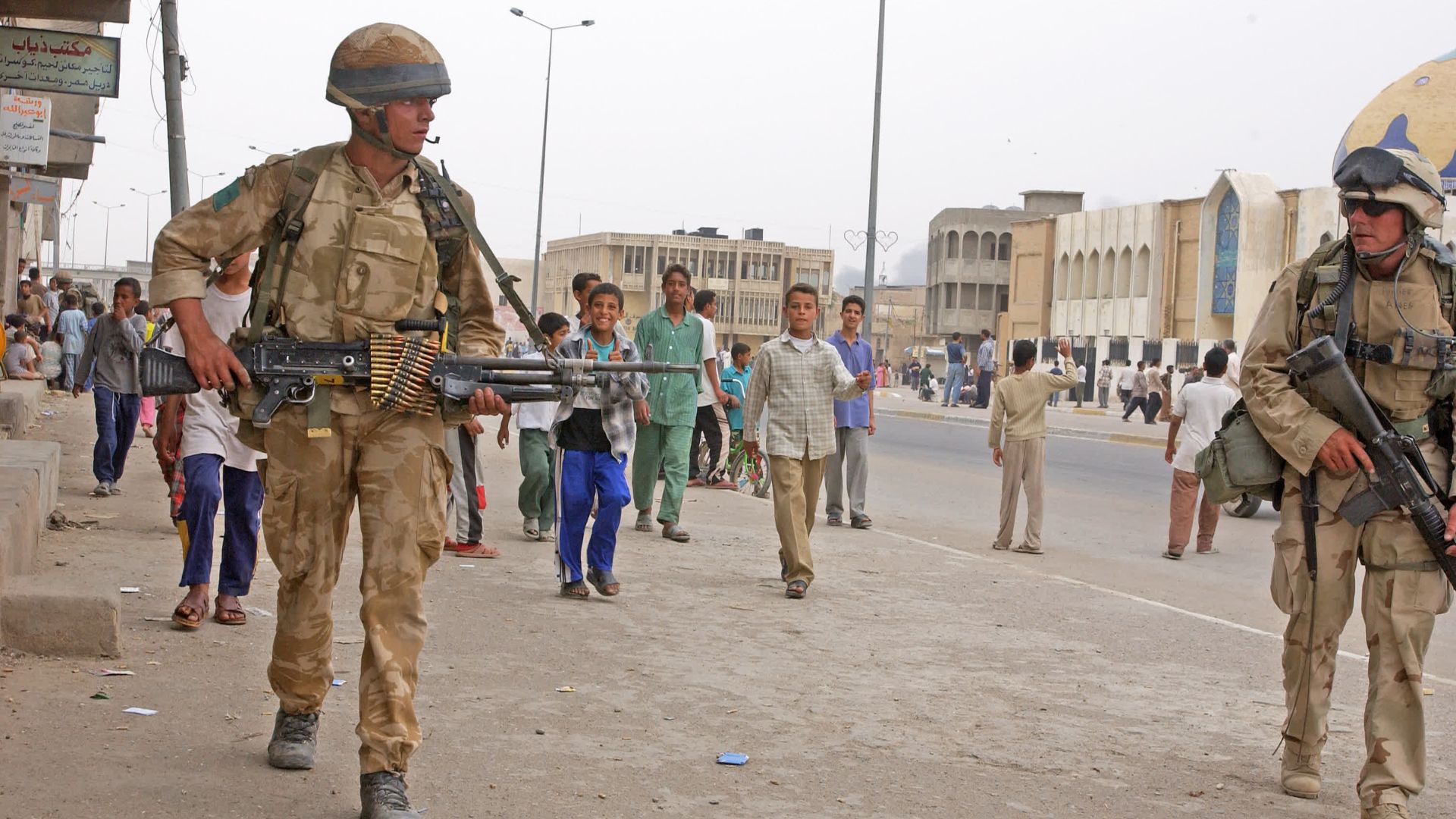
The 2003 Invasion of Iraq was the last conventional conflict the UK fought.
But, with war again in the Middle East and the ongoing fight in Ukraine, the conclusion of which may result in British boots on the ground, Gen (Ret'd) Cross, Brig (Ret'd) Cowlam and Col (Ret'd) Collins were each asked if they felt the British Army could replicate a deployment on the scale seen in 2003.
They all said no.
"If we were asked to conduct a major warfighting operation somewhere around the world," Gen (Ret'd) Cross said. "I think we would be very pressed to deploy more than a brigade-level capability."
"Certainly not on the same scale," Brig (Ret'd) Cowlam warned. "I don’t think we could deploy 32,000 people into a desert environment at the speed that we did, not least because I suspect there aren't 32,000 people available to do it."
Col (Ret'd) Collins, who in the years since leaving the Amy has written a book, seen Sir Kenneth Branagh play him in a TV drama and thrown his hat into the ring of politics, was equally dismissive.
"My guess is not, looking at the state of things. Look at the state of our response to the crisis in Iran, and even what's been happening with Ukraine, we are in no position."
"The assumption is somebody is spending money and building this up and getting ready to fix that, but I'm not sure that's happening."
He added: "We are a paper tiger."
Related topics
Join Our Newsletter