F-14 Tomcat: The real star of Top Gun as Tom Cruise's film celebrates its 40th birthday
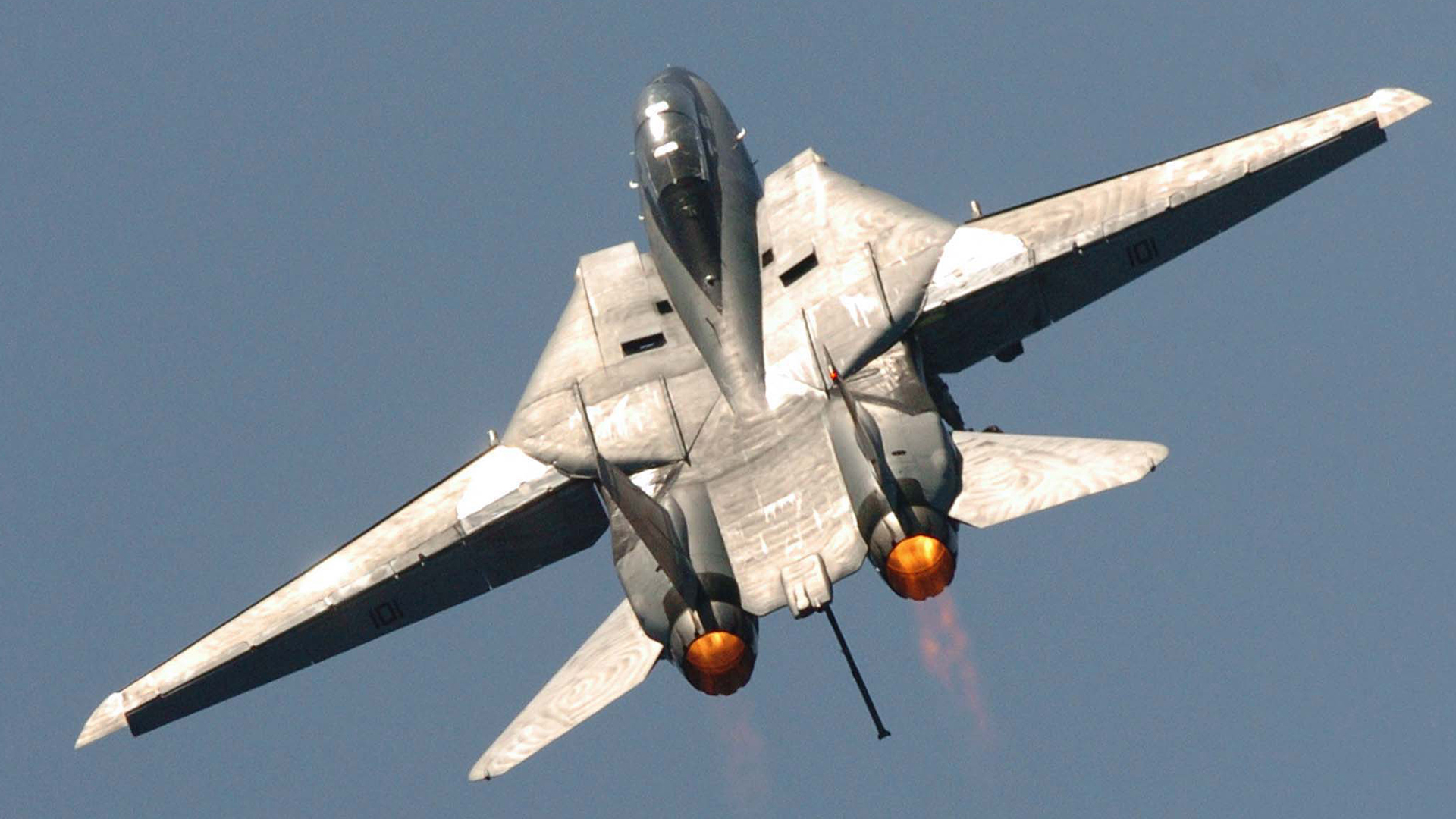
The F-14 Tomcat had already spent more than a decade flying off the decks of US Navy carriers when Top Gun turned it into a cultural icon.
Built by Grumman Aircraft Engineering, the twin-engine, two-seat supersonic jet was designed to defend carrier groups from long-range air threats during the Cold War.
Its swing wings, twin tails, catapult launches and arrested landings made it ideal for striking close-ups in the 1986 blockbuster, but those features came from the job it was built to do.
- Checkered Flag gives aircrew rare chance to launch live missiles at manoeuvring target
- A tale of two Lightnings: How the F-35A and F-35B stack up against each other
- Tom Cruise gets award for boosting recruitment to US Navy thanks to Top Gun
Its role was to intercept threats before they reached the carrier group, using radar, long-range missiles and a two-person crew.
By the time Top Gun reached the cinema, the Tomcat was already one of the most distinctive fighters in American service.
Swing wing speed
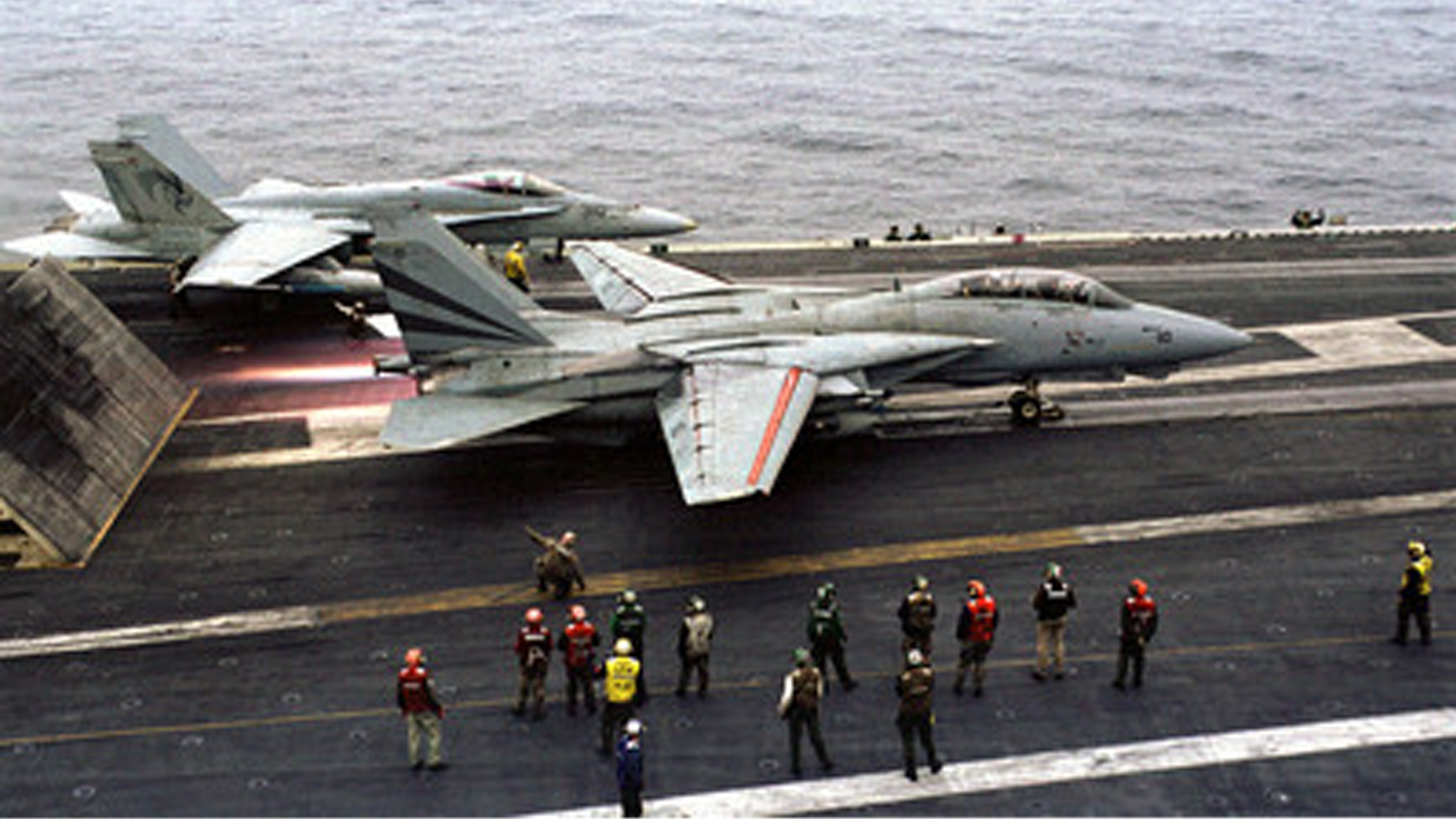
The Tomcat's most famous feature was its variable-sweep wing, better known as a swing wing.
Its wings moved forward for lower-speed flight and carrier approaches, then swept back for high-speed interception.
That engineering choice made the F-14 unusually cinematic. On deck, it looked broad, in the air, with the wings swept back, it became a sharp Cold War interceptor.
The US Navy needed a large fighter with the speed to intercept threats far from the carrier, but with enough low-speed control to return safely to a moving deck at sea.
Built to defend the carrier
The F-14 entered US Navy service in the 1970s as a fleet air defence fighter.
Its job was to protect carrier groups by detecting and intercepting hostile aircraft before they reached the ships.
The aircraft carried the AIM-54 Phoenix long-range air-to-air missile, paired with a radar system that allowed the Tomcat to engage threats at long range.
It may have been built for Cold War purposes, but by the time the film came out in 1986, the F-14 had already seen action in the Middle East.
F-14s were involved in confrontations with Libyan aircraft over the Gulf of Sidra during the 1980s, including air-to-air combat that added to the aircraft's reputation.
Four Libyan jets were destroyed, marking the first combat kills for the F-14.
Combat record beyond the film
Later in its US Navy career, the Tomcat took on a second role. Fitted with targeting pods and precision-guided ground attack weapons, it became known as the "Bombcat".
That gave the F-14 a second US Navy life over Iraq and Afghanistan before the type was retired in 2006 and replaced in frontline carrier service by Boeing's F/A-18 Hornet family of aircraft.
By the time the film's sequel, Top Gun: Maverick, came out in 2022, Tom Cruise was 59 years old, and the Super Hornet carried most of the flying action.
Every Maverick needs a Goose
The F-14 gave Top Gun its central double act, with Maverick, played by Tom Cruise, sat in the front flying the aircraft and Goose, played by Anthony Edwards, behind him as the radar intercept officer, or the RIO.
The Tomcat was designed to defend carrier groups at long range, using radar and missiles to find and engage threats before they reached the fleet.
That meant the back seat carried out real tactical work - while the pilot flew the jet, the RIO helped manage the radar picture, communications and weapons system.
Goose's death in a training accident becomes the loss that follows Maverick into Top Gun: Maverick, where Goose's son, Bradley "Rooster" Bradshaw, is now a naval aviator.
Maverick is sent back to TOPGUN to train Rooster and other younger pilots for a dangerous strike mission, forcing both men to face the accident that shaped their lives.
The real TOPGUN
The real school behind the film was the US Navy Fighter Weapons School, better known as TOPGUN.
It was established at Naval Air Station Miramar in California in 1969 after the Navy examined its air combat performance during the Vietnam War and concluded that fighter crews needed more advanced tactics training.
The programme trained selected aircrew in aerial combat and sent them back to fleet squadrons to spread those tactics.
The school later moved to Naval Air Station Fallon in Nevada, where it became part of the Navy's wider aviation warfighting structure.
But Miramar gave the story its real-world setting.
When Top Gun reached cinemas, the San Diego base became inseparable from the image of US Navy fighter crews, call signs, carrier aircraft and fast-jet in the California sun.
The Iranian Tomcats
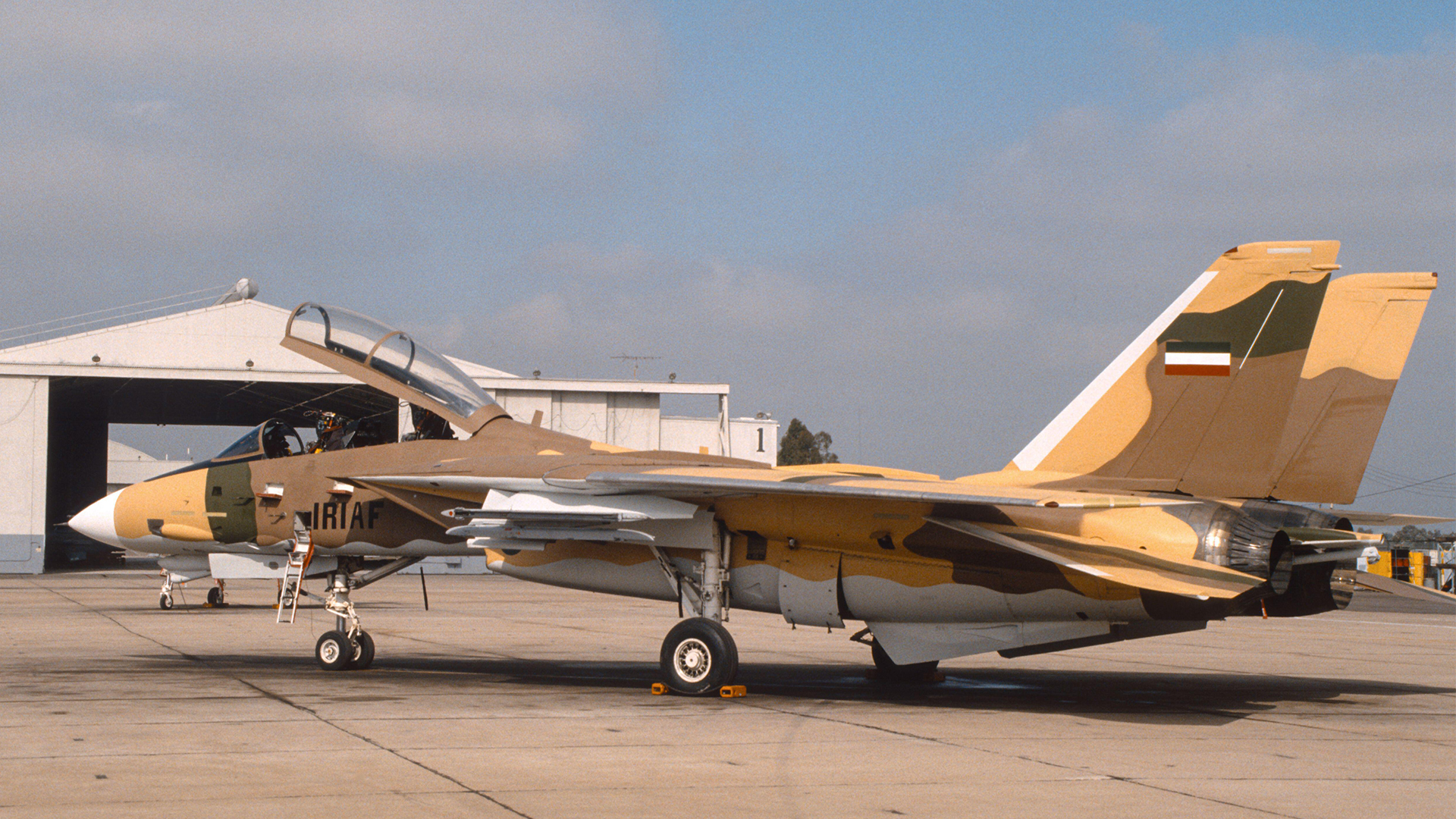
Iran became the only foreign customer for the F-14 after the Western-aligned government of Shah Mohammad Reza Pahlavi ordered 80 aircraft in the 1970s.
Seventy-nine were delivered before the 1979 Islamic Revolution cut military ties between Washington and Tehran.
Iran wanted a fighter able to counter high-flying Soviet reconnaissance aircraft, including the MiG-25, and the F-14 offered long-range radar, speed and the AIM-54 Phoenix missile.
Reportedly, the 80th aircraft was retained by Grumman after the revolution.
Iran then kept some of its Tomcats flying for decades despite sanctions and spare-parts shortages, claiming that its F-14s shot down at least 160 Iraqi aircraft during the 1980 Iran-Iraq war.
With only a few dozen aircraft believed to be left, Iran remains the sole operator of the F-14.
Operation Roaring Lion
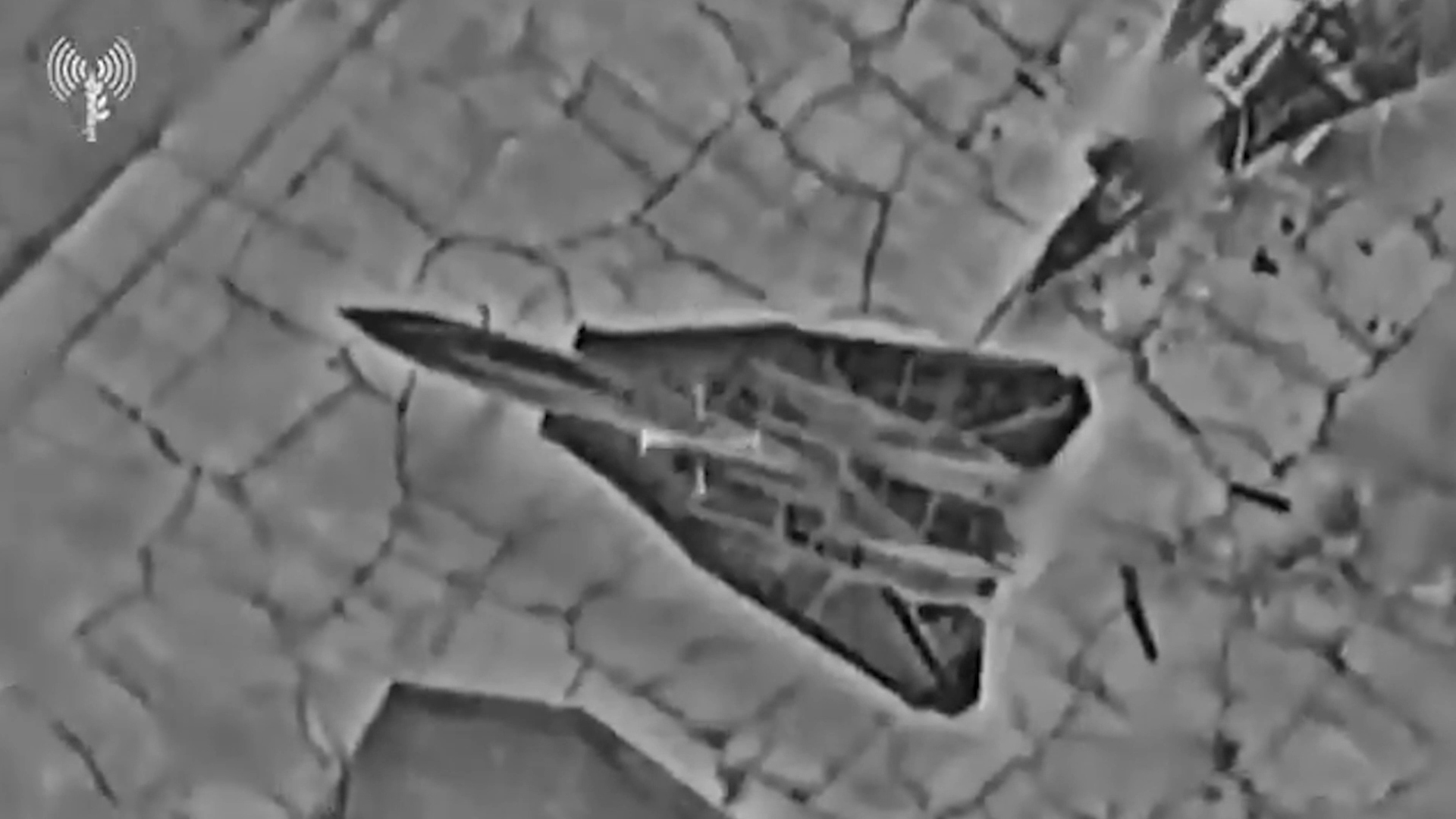
Iran's F-14s returned to the news in March 2026, when Israel said it had struck the aircraft on the ground at Isfahan airport in central Iran.
The strikes formed part of Operation Roaring Lion, which began on 28 February 2026 as a joint Israeli and US attack on Iran.
On 8 March, the IDF said the Israeli Air Force had hit military compounds at Isfahan where F-14s were being stored, along with detection and air defence systems.
Isfahan's 8th Tactical Air Base is closely linked to Iran's remaining Tomcat fleet.
Satellite imagery has shown at least two F-14s destroyed, with several F-7 aircraft also hit.
Iran's remaining Tomcat fleet is hard to verify, and analysts have questioned whether some targets were decoys, but any confirmed losses would now be more symbolic than operational against modern fighters such as the F/A-18 Super Hornet or F-35.
Join Our Newsletter