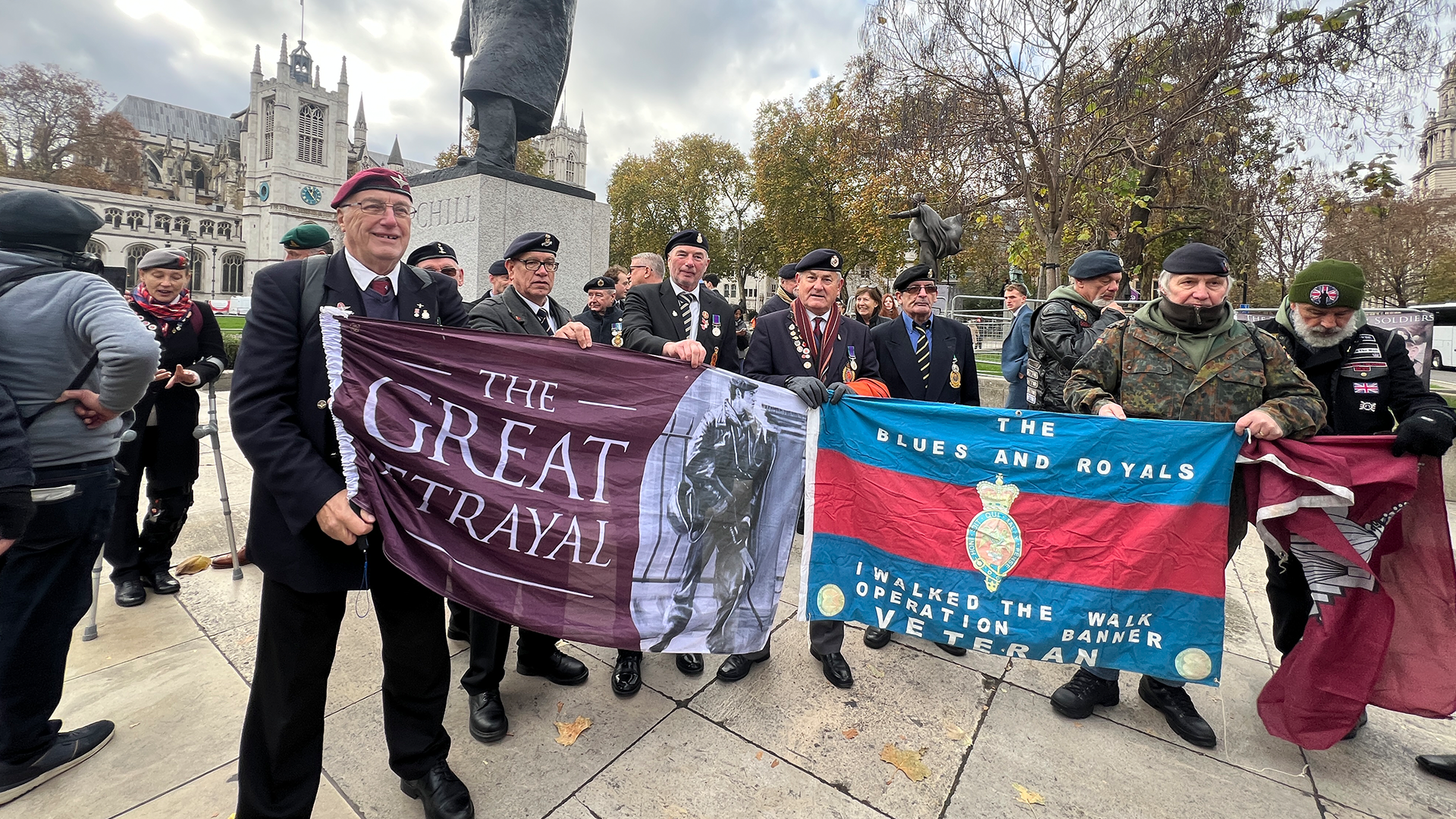
Soldiers shouldn't face endless legal jeopardy, says Carns in report on SAS veteran protection

A former Labour defence minister has said that SAS veterans who served in Northern Ireland should not face "endless legal jeopardy" decades after the Troubles.
Al Carns, the former Armed Forces minister who served for 24 years in the Royal Marines, has backed a new report, which argued that soldiers who fought the IRA are being judged using human rights standards developed years later.
The Policy Exchange think tank has said that the Labour government's Northern Ireland Troubles Bill could leave older veterans facing investigations, uncertainty, and potential prosecution.
No soldier should be above the law
Speaking in Belfast last week, Prime Minister Andy Burnham said the bill would be brought back to Parliament in the autumn.
"No soldier should be above the law," Mr Carns said in the foreword to the report. "Accountability is not the same as perpetual investigation. Justice is not served when the process itself becomes punishment.
"This is why this paper matters. It gives voice to men who were there, making decisions almost impossible to recreate 40 or 50 years later."
The previous Conservative government introduced the 2023 Legacy Act and offered conditional immunity for perpetrators of some Troubles crimes in exchange for cooperation with a new body, the Independent Commission for Reconciliation and Information Recovery, which would oversee investigations.
The Labour government has since introduced a new bill to Parliament to overhaul the act, with MPs already voting to repeal the conditional immunity provision and scrap a bar on future legacy compensation cases as the new bill is still being debated.
The Policy Exchange paper, which uses original interviews with over a dozen SAS veterans, shows the important contribution to the regiment made to Operation Banner through reducing the IRA's capacity to kill, restoring order in areas where the IRA had operated, and helping convince the republican movement that armed violence could not succeed.
A 'great injustice', according to a Labour Peer
The think tank paper recommended that the government should withdraw or reject the Troubles Bill 2025 (or repeal it if passed), reinstate the 2023 conditional immunity scheme, legislate to rule out new inquests or inquiries, and be prepared to stand up to the European Court of Human Rights in Strasbourg.
"It is a breach of our military covenant that veterans are investigated and prosecuted in their old age because of an understanding of the law that did not exist when they were active," Labour Peer Lord Glasman said, adding his endorsement to the report.
"This is demoralising 'The Regiment' and leading to severe problems in recruitment."
Lord Glasman also said that it was a "great injustice" that these prosecutions were taking place.
"Reciprocity requires a mutual amnesty and the conditions of geopolitics have never needed an effective SAS more. From Ukraine to Iran, their experience and expertise are central to our national interest," he added.
A government spokesperson said: "There was no question of needless repeat investigations or of any veteran being prosecuted for having followed the rules."
The spokesperson added that "more than 1,000 families of murdered UK civilians and soldiers were left without answers" – and the Troubles Bill "aims to fix that broken system", with the reformed Legacy Commission becoming the primary route for families to get the answers they're entitled to.
Related topics
Join Our Newsletter