Troops must be the best at killing their enemy at short distances, head of the Army says

Britain's top general has warned soldiers that they must prepare for close battle with the nation's enemies at distances immediately to their front because, he said, "the things that are going to kill you are going to get that close".
Citing decades-old doctrine of training to fight the leading edge of an enemy force at a distance of 400 metres to four kilometres, the Chief of the General Staff (CGS), General Sir Roly Walker, said Ukraine had taught him that, instead, his soldiers needed to be "hard, tough and resilient" to fight at distances of zero to 40 metres.
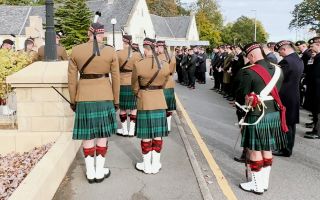
Gen Sir Roly made the remarks at Catterick Garrison while addressing around 700 members of the 1st (UK) Division, the Army's light, high-readiness global response force.
Fighting in tunnels, derelict buildings and forests
Setting the historical context, he said: "We are shifting from an Army that has for the last 20 to 40 to 60 years perfected, to a point of precision, the business of combat and fighting to a kind of geographical zone that was about 400 metres to your front, which is where you were going to engage the lead edge of the enemy, to about four kilometres behind them.
"That was the close battle. Our entire strategy was the same. Our system of fighting was optimised to enable you to do the most difficult and dangerous thing – and that is fight in close quarters with the enemy – in that kind of zone."
The CGS added that while the evolution of battlefield technology had provided the capability to shift that zone further away, the war in Ukraine had proved that it was, in fact, distances much less than 400 metres – significantly less – that really mattered for those fighting on the ground.
"The things that are going to kill you are going to get that close to you," Gen Sir Roly warned.
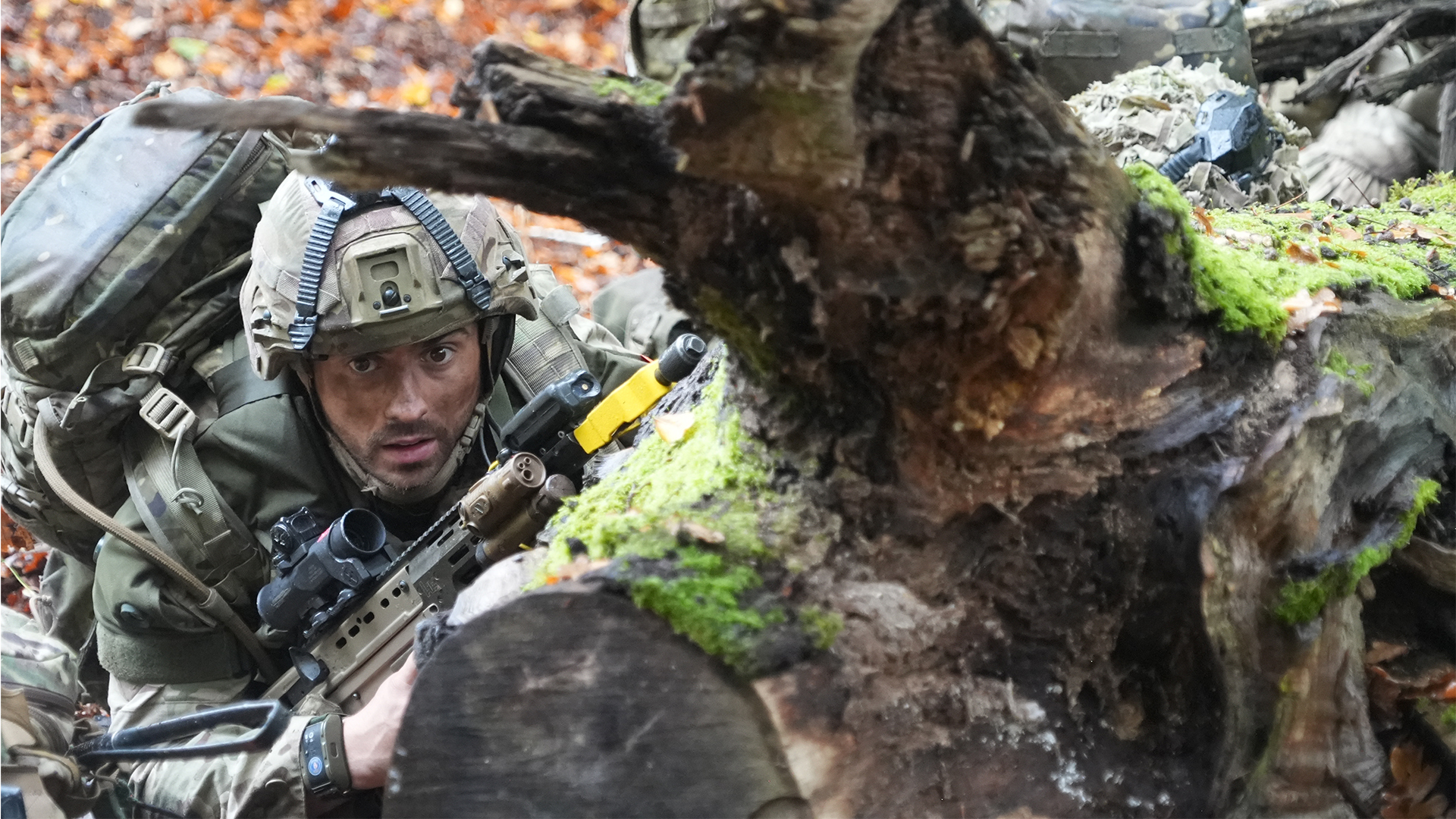
"Whether that is close-quarter combat in tunnels, whether that's in derelict buildings, whether it's in devilishly thick forests and woods, or on the streets of villages.
"At the end of the day, you have to be hard, tough, resilient and resourceful soldiers if you've got any chance of surviving on the modern battlefield."
Behind the speech
I stood roughly three metres away from the head of the British Army when he made these remarks, the same distance he warned that his soldiers needed to be comfortable with when it came to fighting an enemy.
Having spent a decade in the Army, I was familiar with his description of the doctrine most people who have served in uniform would recognise: that of training to comfortably engage an enemy at a range of 400 metres, supported by capabilities that allow that engagement to extend to four kilometres.
This is old-fashioned "fighting the Russians" stuff, based around the effectiveness of things like small arms and artillery. What's key, though, is that by engaging at 400 metres, the forward lines of a friendly position had space in front of it – let's say for comfort.
His description of the experiences coming out of Ukraine is that this comfort space no longer exists, and his speech at Catterick Garrison implored his soldiers to recognise this, and to get comfortable – that word again – with the idea that the enemy will employ capabilities designed to kill from within spitting distance of their positions.
There were, recently, periods when soldiers worried about things immediately around their position, be it a Forward Operating Base, vehicle, or a dismounted soldier patrolling along a road – and I'm talking about the threats posed by IEDs in places like Basra or Belfast. And rightly, SOPs and tactics were adjusted to account for that; carrying out "fives and twenties", for example.
But the general isn't referring to this; he's describing things much broader, running through the DNA of the warfighting doctrine our nation's soldiers are trained under.
And that doctrine is back to having an Army ready for a peer-on-peer war, with casualty numbers dwarfing those seen in the conflicts of the early 2000s.
The final thing that struck me was the makeup of the audience listening in to the general. He wasn't speaking at a public-facing event; the troops were not Phase One trainees taking in the usual remarks of a senior officer at something like a passing out parade.
This was more serious than that, and frankly, more sincere. These were Paras, Gurkhas and other members of the Infantry – people on whose shoulders he said the defence of the nation will rest when war comes. And judging by the stony-faced personnel stood in front of him, they believed every word he said.
Join Our Newsletter