Policies governing the training of Army recruits criticised in 112-page Service Inquiry report

An internal Army investigation, ordered in the wake of allegations of unacceptable behaviour, has criticised how policies are interpreted and implemented at basic training establishments – including the Army Foundation College, where under-18s are trained.
The findings form part of a Service Inquiry report, which identified systemic failures in howArmy training establishments handle complaints of unacceptable behaviour, including sexual misconduct, bullying and abuse.
It raised concerns across several areas – including the lack of formal or standardised training received by Junior Non-Commissioned Officers before they are made responsible for delivering training to recruits.
While high-level policies set by Army command were found to be well written, the report concluded that their implementation on the ground "was generally very poor".
In all, the report made 13 recommendations. The Ministry of Defence said it has accepted them all in full.
Within the report, which runs to 112 pages, investigators made a number of "observations" about the policies governing recruit training.
They include concerns about the absence of clear guidance on which roles at training establishments are considered "recruit-facing", and which require instructors to have completed a course known as "Care of Trainees".
Sanitary products
Some of the more troubling findings relate to policies designed to make basic training more inclusive for female recruits.
While the Service Inquiry said chains of command at training establishments were "passionate about engendering an inclusive culture", it added that there was "some way to go before this culture trickles down to the lowest levels".
In particular, the report found no evidence that sanitary products were being made readily available to female recruits at training locations, with the exception of Army Training Regiment Winchester.
In what makes for difficult reading for the Army, inspectors also found instances where female recruits were made to remove full sanitary bins from ablution blocks, only to replace them once they had been emptied by a civilian contractor. The report recommended that the contractors should instead be tasked to do this.
Reading ability
The inquiry found that some new recruits were given reading materials, or exposed to language and terminology that they were unable to understand during induction periods.
It noted that the minimum reading ability required for employment in the Army is equivalent to that of a seven-year-old, yet presentations and documentation were sometimes delivered using complex language or phraseology.
The report also criticised the practice of requiring recruits with low reading standards to read questions or answers aloud in a public setting, warning that this could "induce an unnecessary stress on an already vulnerable cohort".
'Fraternisation'
The inquiry found there was no "overarching policy" providing direction on relationships between recruits, which it said generally refers to "sexual relations between trainees".
However, it revealed that individual training establishments had implemented their own local rules aimed at regulating such behaviour. These varied significantly, ranging from policies banning recruits from holding hands to those prohibiting sexual activity.
Right to contact civilian police
The Army has previously given legal assurances that recruits are informed of their right to report allegations of criminal misconduct by instructors or fellow recruits to the civilian police.
However, according to the Service Inquiry, this is not happening consistently in practice.
The report said investigators attended several training sessions where this information was meant to be communicated, but found it was not explained in any of them.
In a later section, the inquiry also noted that leaflets explaining what recruits can do if they experience bullying, harassment or discrimination were not routinely distributed by instructors. The report called on the Army to fix this immediately.
MOD response
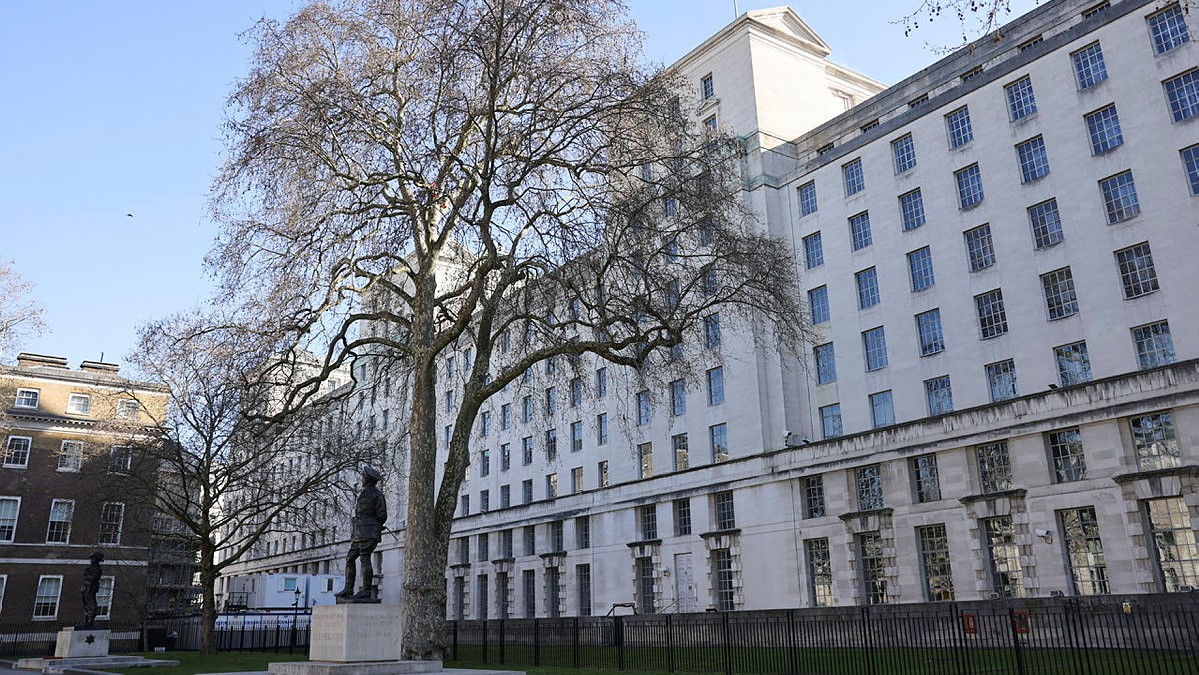
The MOD said it is clear in its position on unacceptable and criminal behaviour, stating that it has "absolutely no place in our Armed Forces".
It added that victims of crime, including those in basic training establishments, should report allegations directly to either the civilian or service police.
In a statement, an MOD spokesperson said: "The safety and wellbeing of our recruits and trainees is the highest priority. Having the right people to train them is essential, as is the requirement for properly resourced support and welfare provision.
"We are grateful to the Service Inquiry Panel for their thorough investigation and we have accepted all 13 of its recommendations and are acting on them as soon as possible. Twelve are now complete, covering instructor selection, staff qualifications, policy standardisation and victim support.
"This inquiry holds us to account for embedding lessons from previous reviews, improving both policy and assurance. These findings will now inform our wider Raising Our Standards programme."
Join Our Newsletter