Proteus: The Navy's uncrewed helicopter that's full-size – and now fully airborne

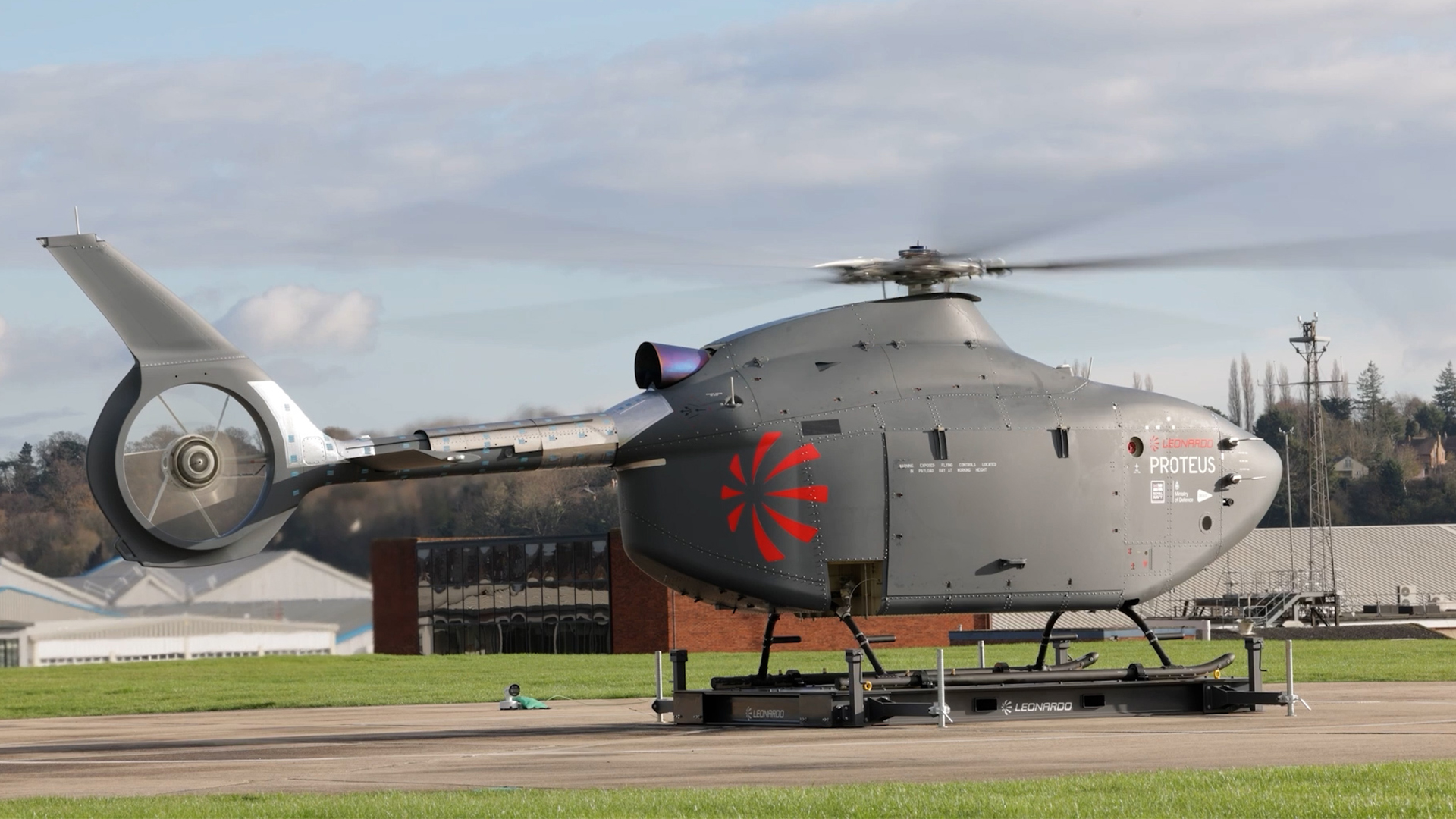
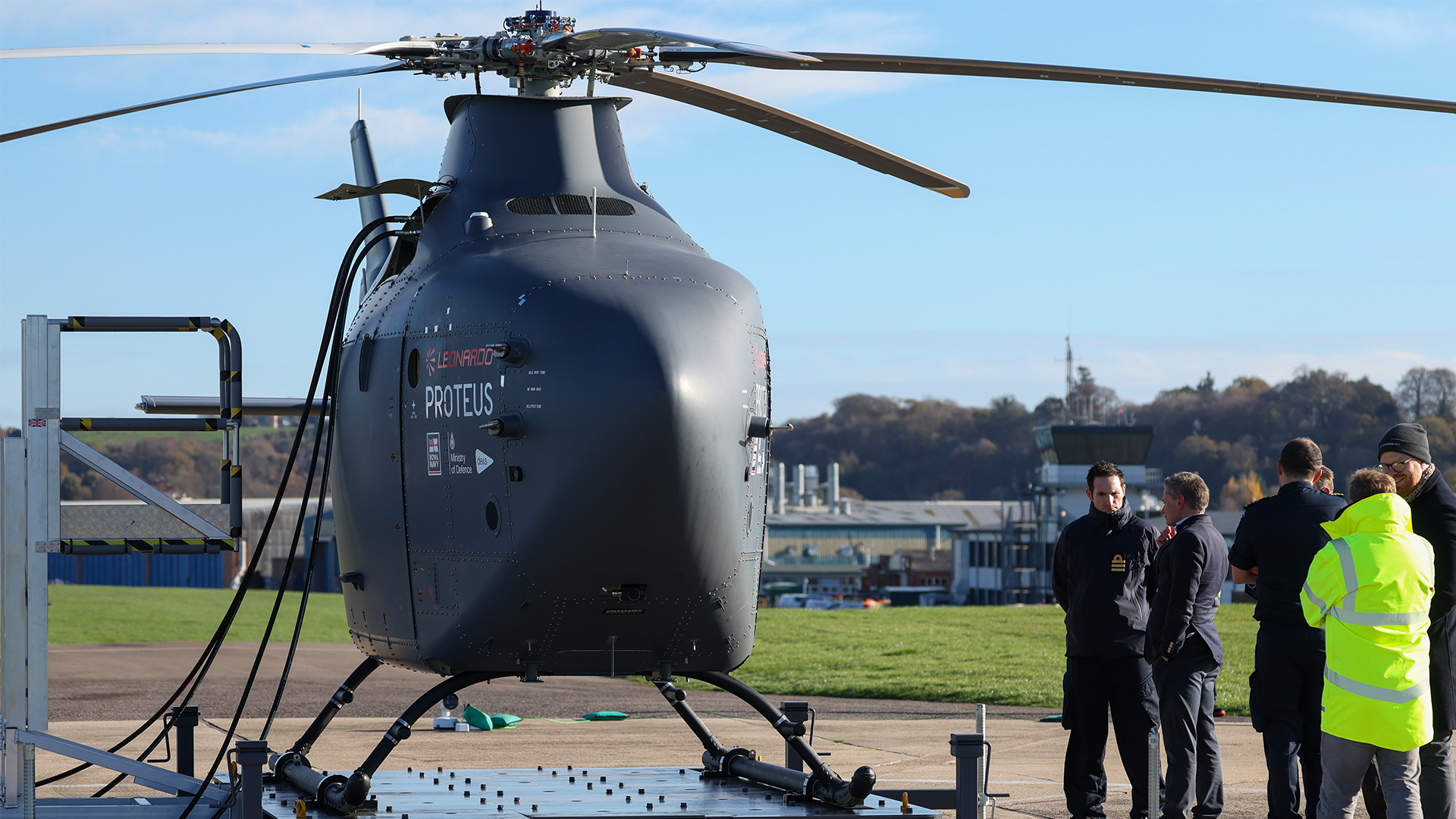
Proteus, the UK's first truly autonomous full-size helicopter, has completed its maiden flight, making British aviation history.
The helicopter was designed and built by Leonardo as a demonstrator for the Royal Navy to unlock the potential of uncrewed aerial systems.
The idea is to operate them side by side with crewed aircraft in a future "hybrid air wing" – and potentially at the heart of future anti-submarine operations as part of the Atlantic Bastion strategy.
Autonomous – and full-sized
Engineers, technicians and representatives from Leonardo, the Royal Navy and UK Defence Innovation watched history in the making on the Lizard Peninsula as the rotary-wing aircraft took flight.
It took place just a few weeks after Proteus completed a series of comprehensive ground running trials at Leonardo's Yeovil site, where the helicopter's systems, sensors and engines were put to the test – a process known as flashing up.
Proteus, which was designed and manufactured in less than two-and-a-half years in Yeovil, is believed to be one of the world's first full-sized autonomous helicopters.
Having a truly autonomous vertical take-off and landing aircraft in this weight class will help both the designers and the Royal Navy understand what similar machines will be needed in the future and how they will operate.
This could mean a crewless helicopter working either individually or in tandem with other uncrewed and crewed aircraft.
A hybrid air wing for hybrid warfare
"It combines cutting-edge technology, the experience of recent conflicts and has enormous potential to shape the Royal Navy's future hybrid air wing," explained Captain David Gillett of the Royal Navy's Develop Directorate.
Initially, the demonstrator is being assessed for the ability of autonomous systems to support anti-submarine operations.
But with a payload bay capable of carrying up to a tonne of equipment, a helicopter like Proteus could perform other missions.
These could include airborne surveillance and control, search and rescue, logistics re-supply for ground forces, weapon delivery and intelligence-gathering.
Let Proteus take the strain, not the aircrew
Proteus will be tasked to patrol specific maritime areas, drawing on information provided by other allied ships, helicopters, submarines and detection systems to calculate the best chance of success in finding an underwater adversary.
In order to detect submarines, Proteus can drop sonobuoy listening devices into the ocean to search the depths for the tell-tale acoustic signs that emanate from submarines.
Once located, the system has the ability to report its findings back to the mission commander.
By embracing drone helicopters, the Navy aims to search wider stretches of ocean for longer periods without putting strain on aircrew, who could be deployed on other critical sorties.
Related topics
Join Our Newsletter