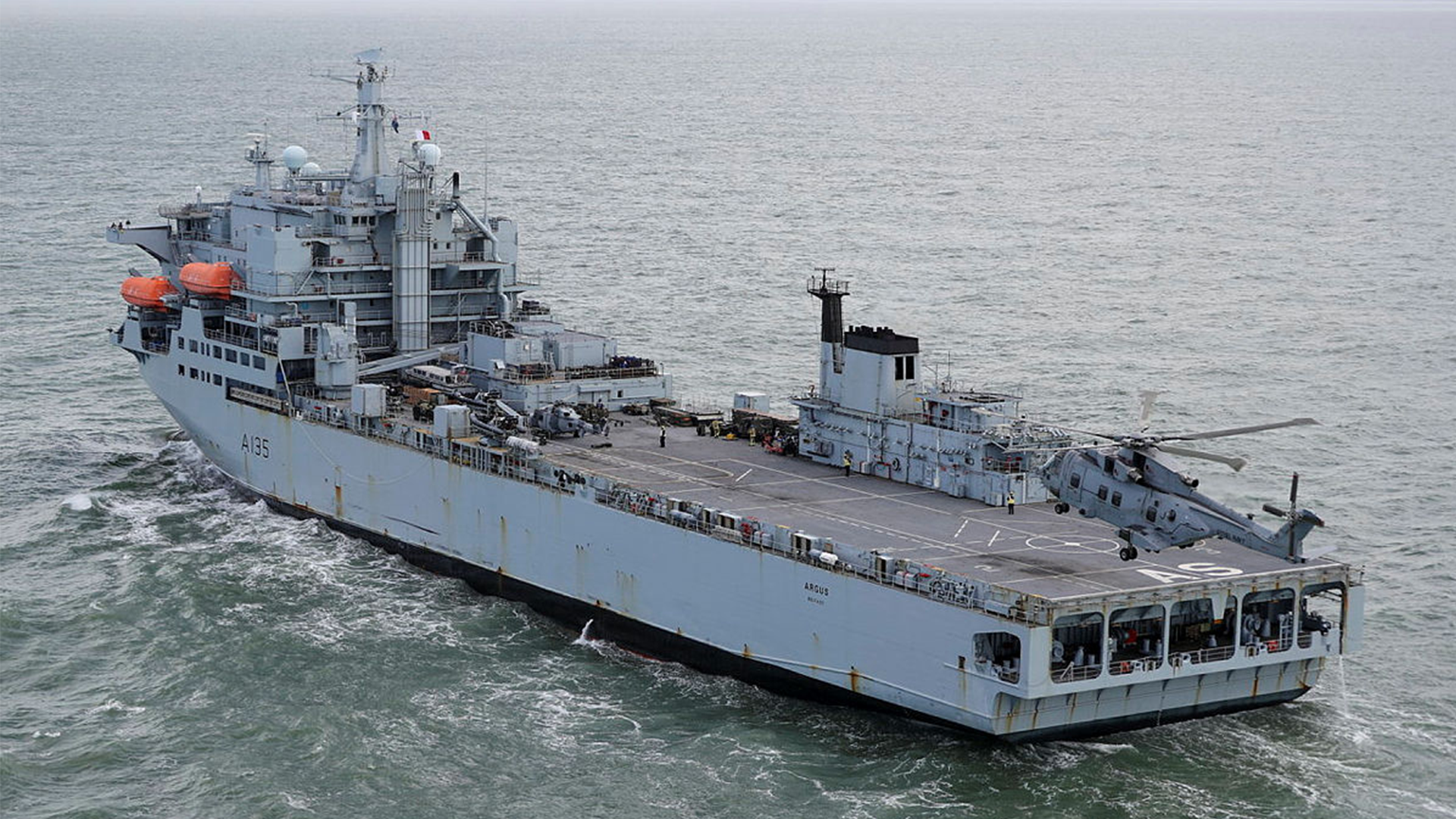
Argus retires after 40 years as Royal Navy's RFA floating hospital and casualty ship
The former RFA Argus is being retired after inspectors deemed the 1980s-converted vessel unsafe to sail in 2025, ending a career that repeatedly put a floating hospital wherever the UK needed it.
Launched commercially as MV Contender Bezant, the cargo ship was taken up from trade during the Falklands War in 1982, used to ferry aircraft south, then returned to her owners.
The MOD later bought her outright in 1984 and commissioned a major conversion that saw her enter RFA service in 1988 as an Aviation Training Ship.
The ship that became a hospital at sea
It was the first Gulf War that reshaped her legacy. In 1991, she deployed, fitted out with extensive medical facilities as a Primary Casualty Receiving Ship, a role that became central to how the UK planned to sustain operations at range; not just fighting power, but survival and recovery.
Argus was often called a "hospital ship" in popular shorthand, but she was not classed as one under the protections that apply to properly marked hospital ships.
She was armed and painted naval grey, built to operate in contested spaces rather than remain neutral. In practice, that meant she could sit closer to the battlespace than a protected hospital ship might.
Deployments that defined her service
Through the 1990s, she supported UK operations in the Adriatic during Bosnia and Kosovo, part of the supporting architecture behind the headlines.
In 2003, she backed Operation Telic, again tying together aviation support and medical capability as British troops went to war.
Then there were the deployments that reminded the public what that capability looked like when it was turned outward.
In 2014, Argus sailed to Sierra Leone as part of the UK's response to the Ebola crisis – a deployment that underlined why a ship with a hospital and helicopters can matter as much in a public health emergency as it does in combat.
In October 2023, she was again in the frame when the UK surged assets to the eastern Mediterranean after the outbreak of war between Israel and Hamas, deploying alongside RFA Lyme Bay as part of a Royal Navy task group.
Why 2025 was the end
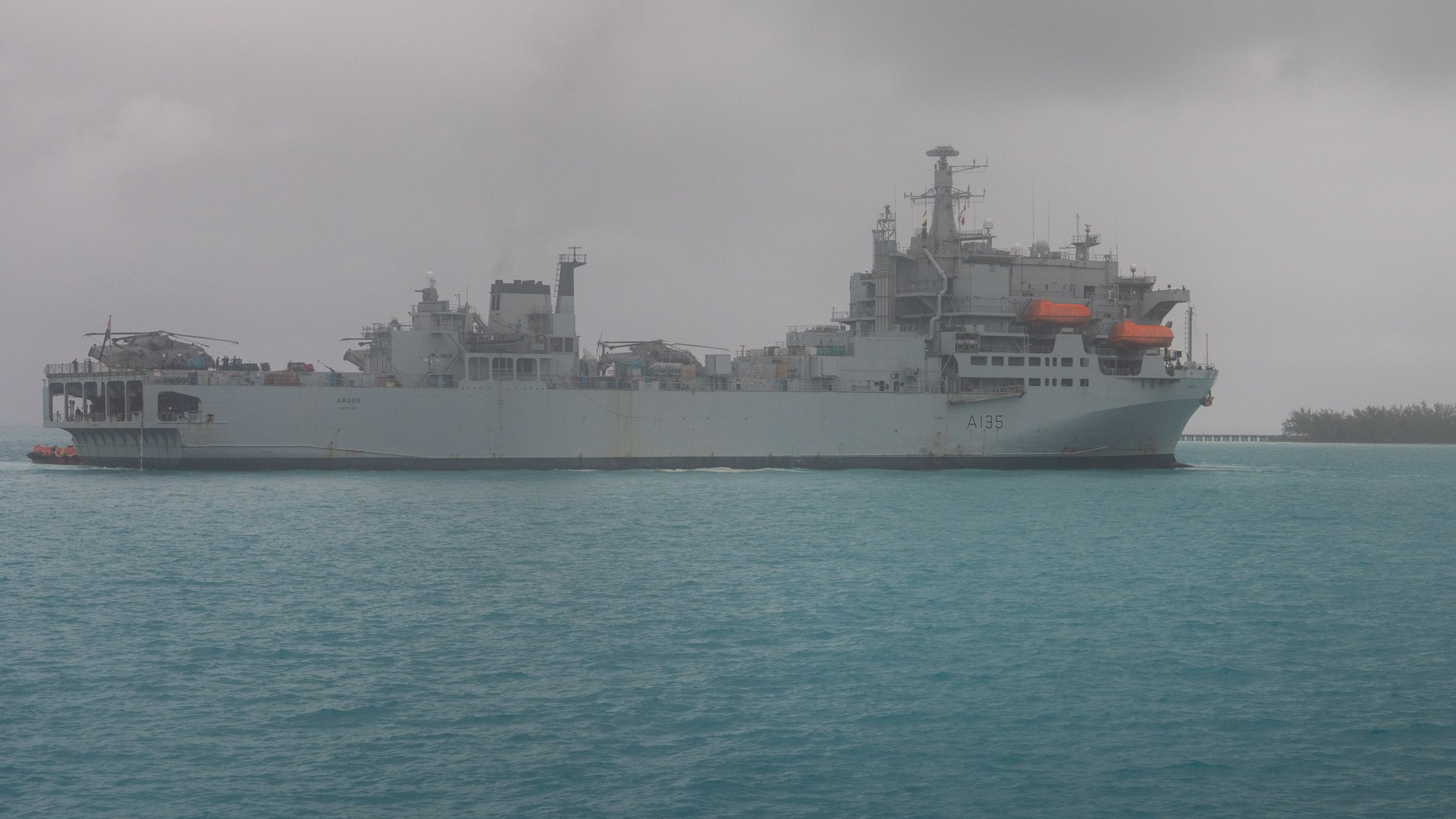
Argus returned to Portsmouth on 8 June 2025, but her material condition had deteriorated to the point her safety certification was withdrawn following inspections, leaving her alongside and unable to sail under her own power.
In February 2026, the Royal Navy confirmed she would be disposed of.
She was due to be towed out of Portsmouth for the final time, with weather conditions delaying the move until March.
What is the RFA, and what happens now?
Argus' departure also lands at an awkward moment for the organisation whose prefix she carried.
RFA stands for Royal Fleet Auxiliary, a uniformed civilian service that provides the Royal Navy's logistics, lift and support – fuel, stores, amphibious shipping, and specialist roles like afloat medical capability.
On paper, the modern RFA fleet includes four Tide-class tankers, a single remaining "one-stop" replenishment ship (RFA Fort Victoria), three Bay-class landing ship docks (RFA Lyme Bay, Mounts Bay and Cardigan Bay) and the seabed surveillance ship RFA Proteus.
In practice, availability has been repeatedly constrained by people and maintenance.
The MOD has said future Multi-Role Support Ships (MRSS) are intended to replace a set of retiring platforms, including Argus.
Join Our Newsletter