US military seeks to modernise the minigun – while retaining its lethal rate of fire

The US armed forces look set to be getting a new minigun, replacing the various types of M134 that are currently in use across the services.
Naval Air Systems Command is currently attempting to identify potential sources capable of providing the new GAU-24/A.
But while the request comes from the US Navy, the GAU-24/A is intended to be deployed across all branches.
What's being replaced?
The wording from Naval Air Systems Command refers to GAU-24/A "aircraft machine guns", however it goes on to say the new minigun will serve as the "common replacement for all other M134-based weapons currently being used throughout the Department of War".
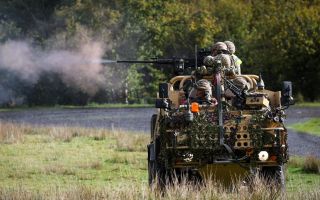
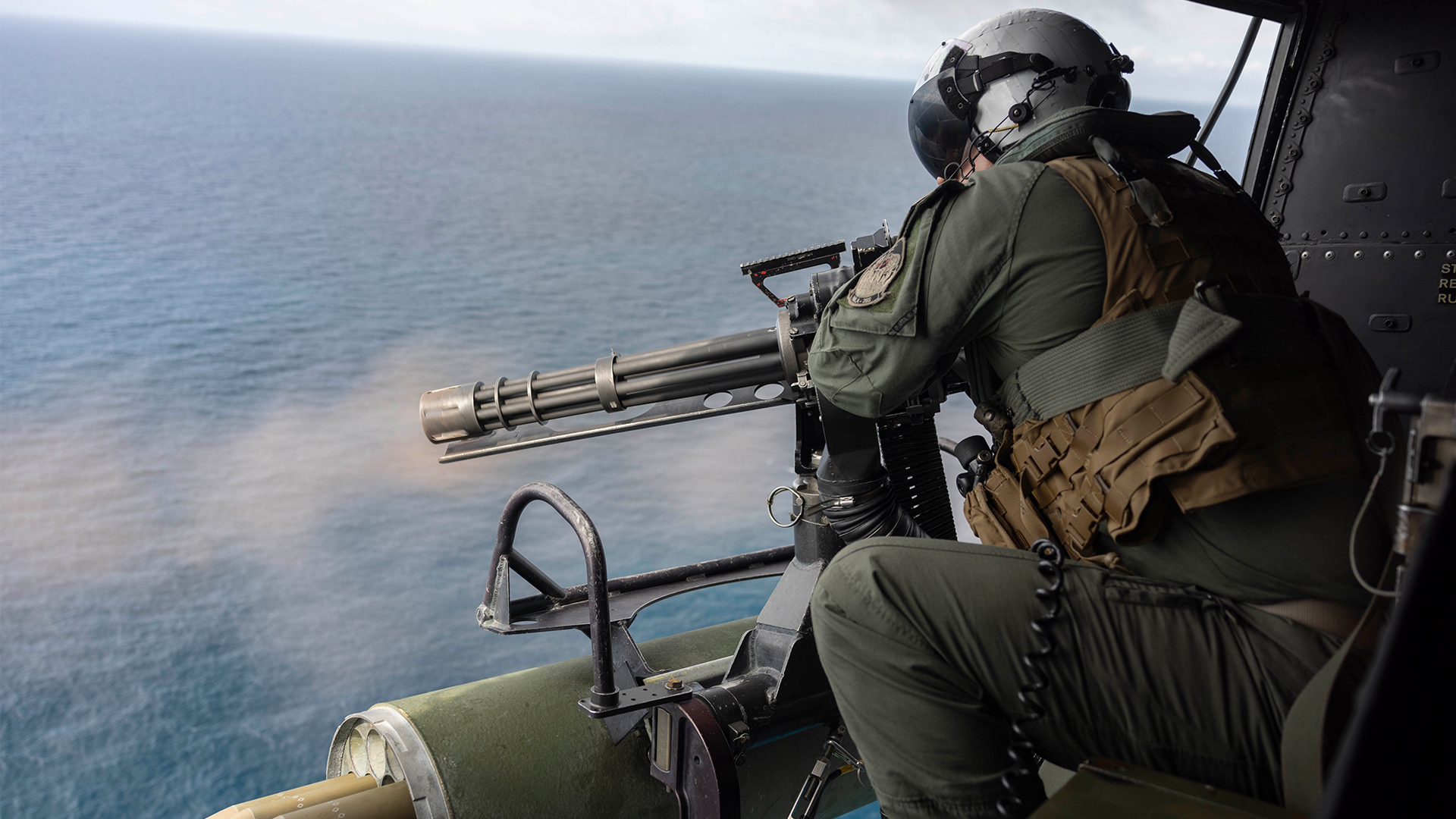
While the M134 is typically seen mounted on an aircraft, it can also be mounted on ground vehicles and ships, so, presumably the new GAU-24/A will follow suit.
The General Electric M134 Minigun has been in service since 1963, seeing extensive use during the Vietnam War.
It entered popular culture in 1987 in the science fiction film Predator.
But while actor Jesse Ventura's character Blaine Cooper fires an M134 minigun nicknamed Old Painless, the weapon is intended to be shot mounted, not operated by a soldier on foot.
Like its predecessor, the new GAU-24/A will be chambered in 7.62x51mm Nato.
What is a minigun?
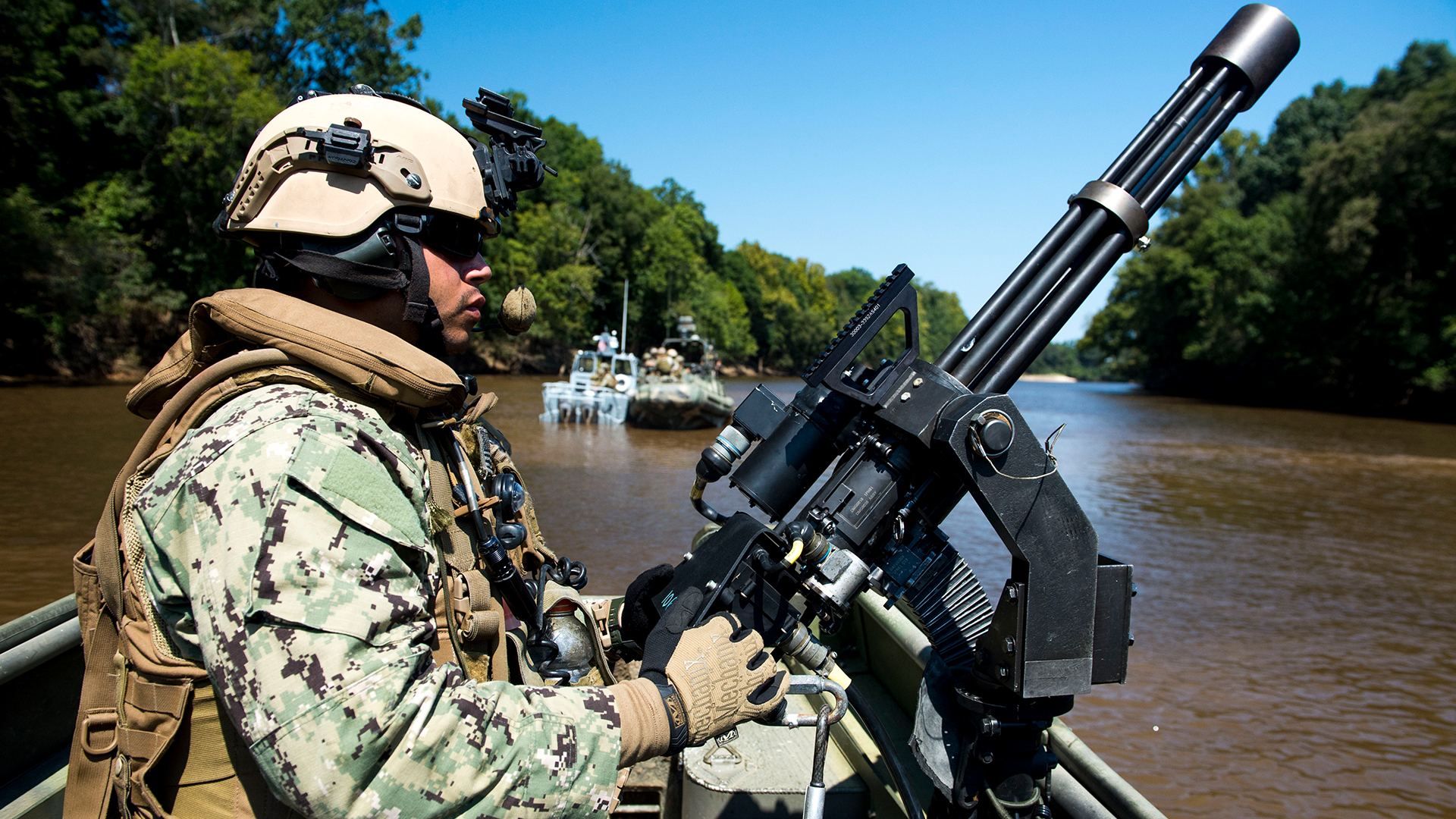
A minigun is a type of machine gun that's designed to have an extremely high rate of fire.
The German MG 42 from the Second World War has one of the highest rates of fire of any standard-type machine gun – averaging 1,200 rounds per minute, but capable of going far higher.
However, the friction generated by the bullets travelling down the barrel at such a high rate not only wears out the rifling in the barrel, but also makes it extremely hot, leading to a loss of accuracy and damage to the weapon.
The minigun, on the other hand, has a series of rotating barrels, similar to a Gatling gun, that are driven by an external electric motor.
The M134 has six barrels, meaning that for every six shots that are fired, each barrel is firing only one, so a much higher rate can be attained and sustained.
It has a rate of fire up to 6,000 rounds per minute.
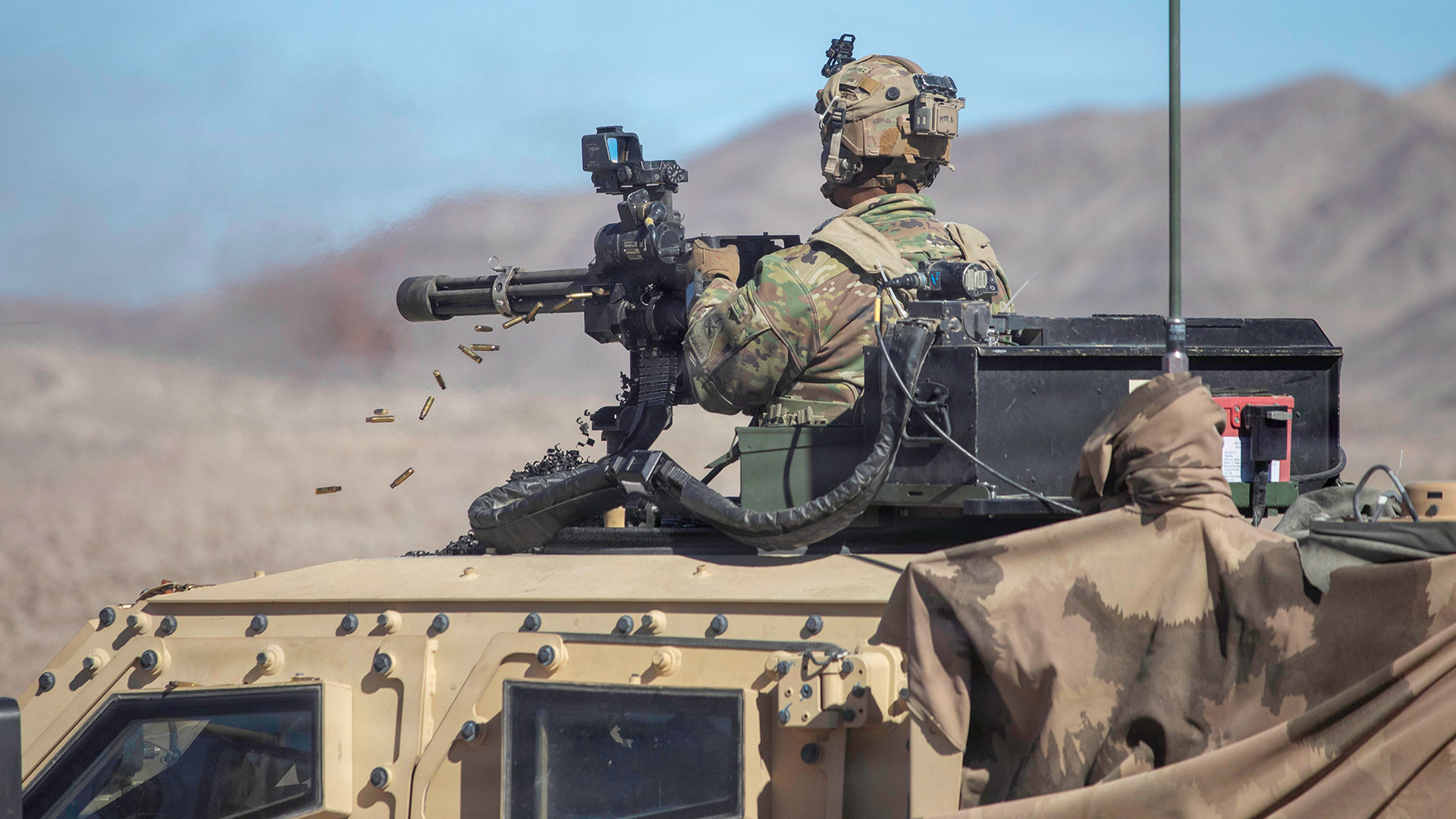
It's got six barrels and can unleash hell – so why mini?
Heavier machine guns do exist – such as the three-barrelled GAU-19, which is chambered in .50 calibre – 12.7x99mm Nato.
However, the 7.62mm M134 minigun is not called the "mini" due to guns like this, but because there are even larger Gatling-style weapon systems.
Perhaps the best-known example of this is the General Electric GAU-8/A Avenger, the 30mm hydraulically driven seven-barrel Gatling-style autocannon that's fitted to the A-10 Thunderbolt II.
The US Army, Navy, Marine Corps and Air Force had different designations for the M134, and the GAU-24/A programme is seen as an attempt to homogenise the 7.62mm minigun across the various branches.
Related topics
Join Our Newsletter