Warning British Army would 'struggle to do anything else' if committed to Ukraine peace effort
Britain’s commitment to a peacekeeping force-in-waiting on the ground in Ukraine could leave its Army short for other deployments, a defence analyst has warned.
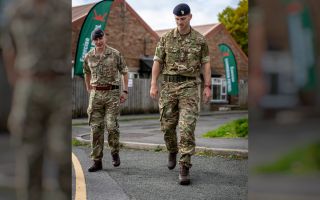
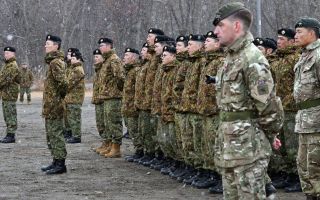
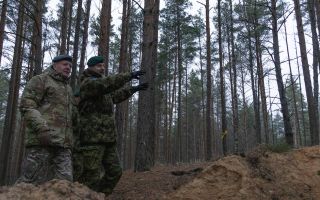
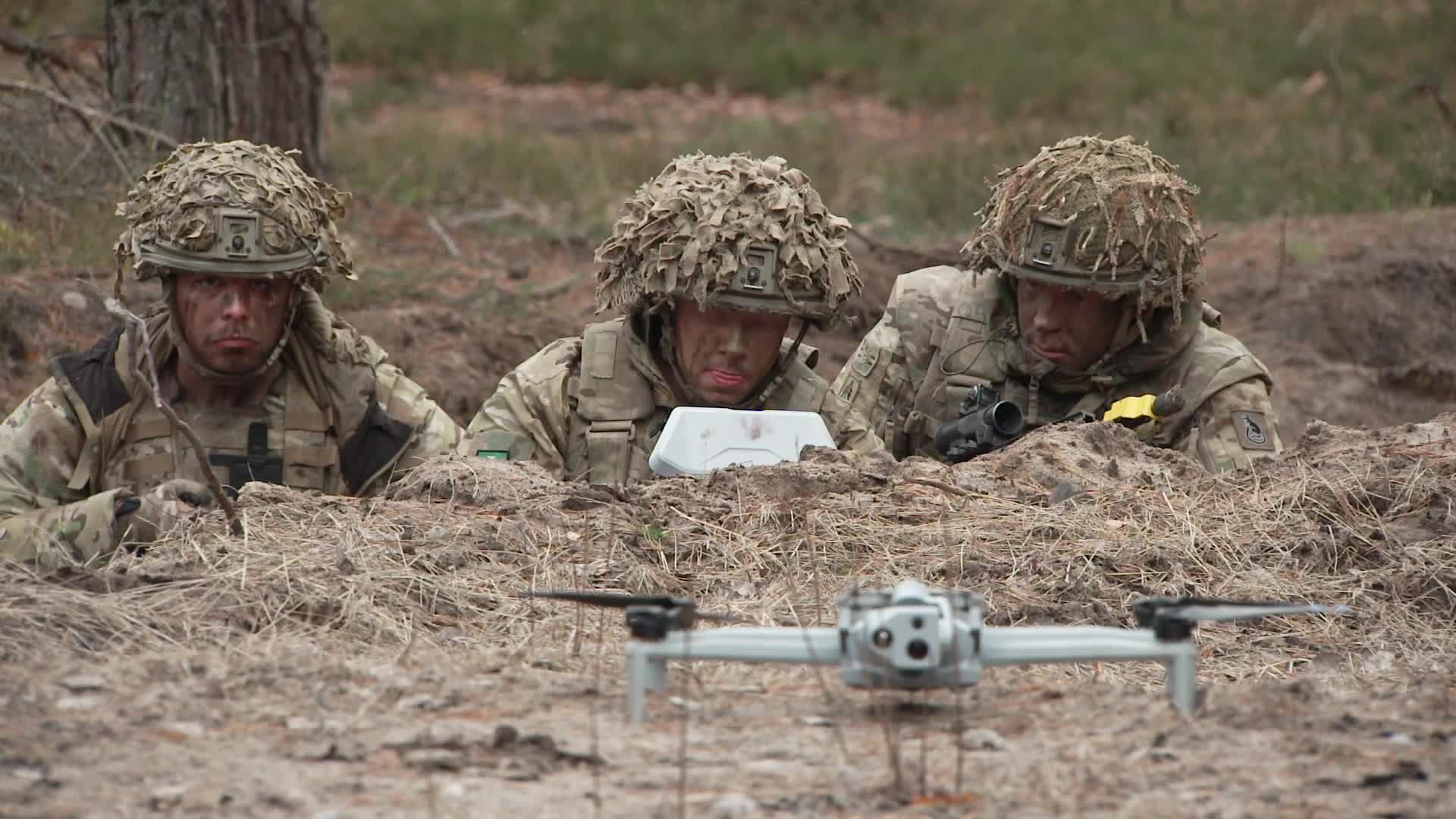
As 300 personnel from the 7th Light Mechanised Brigade Combat Team, or ‘Desert Rats’, trained with ten other nations in Poland, Professor Michael Clarke questioned the feasibility of a substantial UK contribution to the Coalition of the Willing – formed of over 30 nations pledging to secure a ceasefire in Ukraine.
If Britain were to call on a brigade to conduct peacekeeping, or peace enforcement, "that will tie up three brigades at least and arguably five brigades for that for a generation, quite likely not for two years, but more likely for 10 years or 15 years," he told BFBS' Sitrep podcast.
- British soldiers training hard for when ceasefire is finally announced in Ukraine
- British general takes charge of force preparing for deployment to Ukraine after ceasefire
- Desert Rats and RAF Typhoons to rehearse Ukraine deployment in event of peace deal
"If you think about previous peacekeeping operations for every brigade we might have, say, inside Ukraine, if it came to that, there's a brigade preparing to go in as a brigade just having come out, having to reroll. And arguably that will actually account for five brigades. So the British Army will find it difficult to do anything else."
Prof Clarke called for consideration of "what the implications might be in the longer term for British Army deployments" given the size of the regular force at 70,000.
Multinational Force Ukraine (MNF-U) is neither a UN nor a Nato mission, and defining mandates under peacekeeping and peace enforcement has historically caused difficulties for troops on the ground with limited rules of engagement.
Major General (Ret'd) Tim Cross, who co-ordinated multi-national troops in Kosovo in 1999, said: "You've got to be prepared to go in, initially, under the umbrella of a sort of peacekeeping mission.
"But you might then go into humanitarian. You might go into rebuilding. You might end up having to enforce peace or engage in high-intensity war fighting."
Kosovo Force, or KFOR, is a Nato peacekeeping mission which was established in the aftermath of the Kosovo War. It stepped in after Western bombing forced the sectarian conflict to a close, and has never stepped out.
While Exercise Koalicja in Poland is focussed on planning and logistics, Maj Gen Cross called for "a clear command chain" alongside "somebody who's who understands what they're trying to achieve here and brings together a coherent, capable force that isn't just about peacekeeping or even peace enforcement".
"It's about ensuring that if necessary to deter, they can they can use force," he continued.
"These things always take you to places you didn't think you were going to go to."
In my previous years reporting for BFBS, I have covered the mental health implications of a variety of peace missions from history – many of which have transformed into humanitarian emergencies and mass tragedies.
In the 2022 documentary "Peacekeeping and PTSD", a leading professor in the field explained how the psychological cost to military observers-turned-witnesses on peacekeeping duty is similar to the damage caused by traditional combat deployments.
Drawing on his experience in Kosovo, Maj Gen Cross also picked holes in the total force size on a hypothetical MNF-U mobilisation.
"There'll be lots of people who want to be seen to be involved in this and there'll be lots of countries that want their flags planted in the headquarters so that when the press conferences go on, you know, their flag is behind."
Prof Clarke went a step further, adding: "Those 11 countries that are represented in this exercise… if it comes down to something tough it'll be two, three at best, maybe four if you're really lucky.
"It won't be 11 really serious military players who are prepared to put equipment there and put the lives of their soldiers on the line."
Join Our Newsletter