Find out what naval mines Iran could use to try to shut down the Strait of Hormuz
Iran is reported to have a stockpile of between 2,000 to 6,000 mines, despite the latest US bombing of the naval platforms that deliver them.
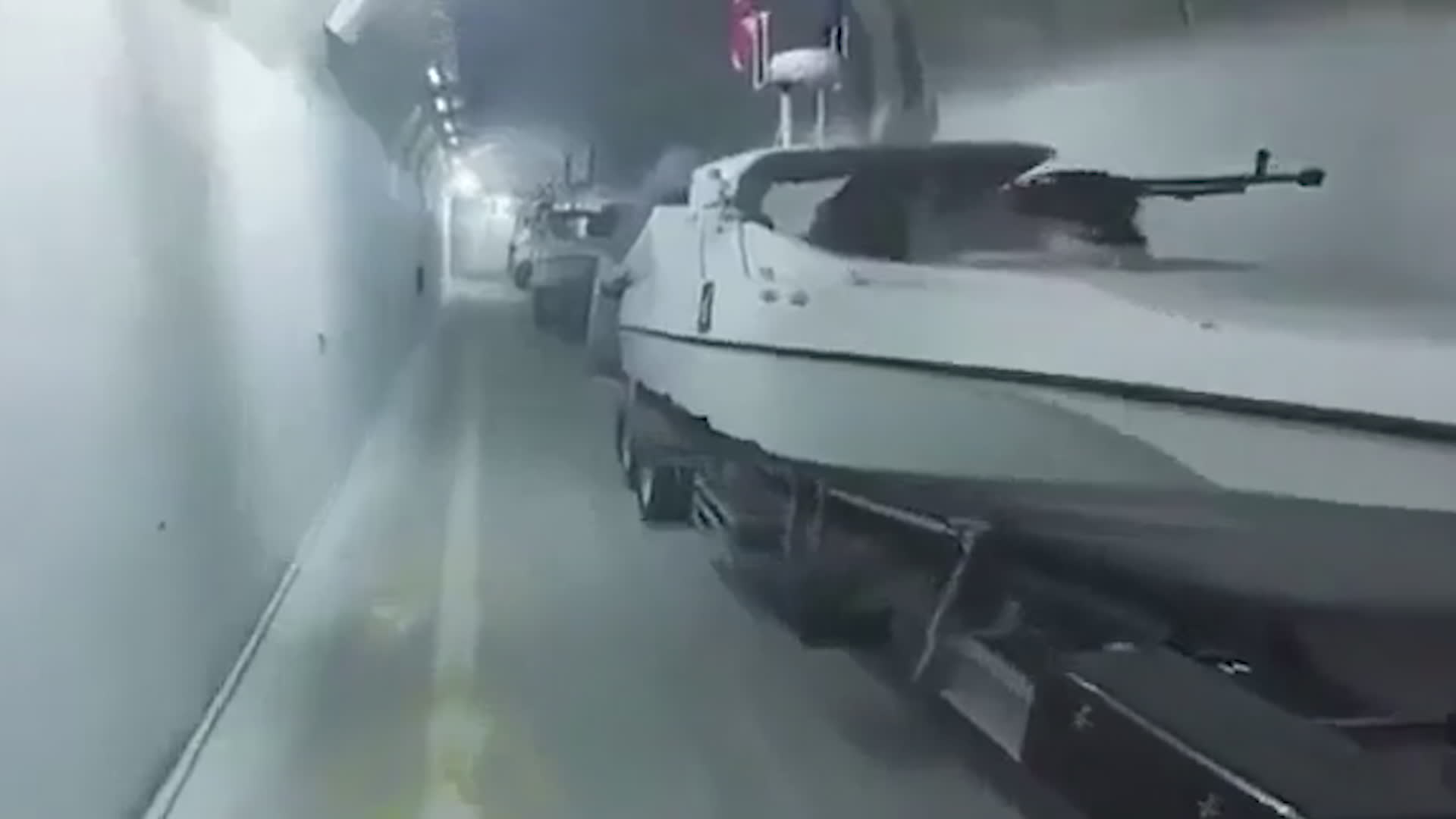
A recently released Islamic Revolutionary Guard Corps (IRGC) video, real or fake, has been produced to suggest plenty of other delivery platforms could remain intact in tunnels deep underground.
So what do we know about the mines Iran has in its arsenal, should it decide to turn the Strait of Hormuz into a permanent no-go zone?
Most of their stockpile is domestically produced, and they also reportedly source from China, Russia and North Korea.
These are the types of mine Iran likely has...
Floating / drifting mines which, as it sounds, are mines that are not anchored and float free with the currents, but they cannot be controlled and risk destroying unintended targets. These can be laid by ships and aircraft.
Buoyant mines can be drifting or moored at varying depths. Armed with explosives, they are triggered by contact or the targets' magnetic or acoustic signature.
Contact / moored mines are anchored to the seabed by cable, floating beneath the surface and detonate when a ship hits the horns on the mine. These are typically Soviet era and are cheap and easy to deploy.
Rising / rocket-propelled mines are a very sophisticated anti-ship weapon, which rest on the seabed and when a target signature is detected, launch a rocket or torpedo upward. They have multiple-influence sensors, a high-explosive warhead and are designed to defeat ships that are trying to avoid contact mines.
Influence / smart mines are even more advanced, with multiple triggers – detection systems, magnetic sensors, acoustic sensors and pressure signature. They wait for a vessel with a precise signature to pass before detonating. Iran is believed to have hundreds of these hard-to-detect advanced influence mines, including Russian and Chinese models.
Bottom mines sit on the seabed and are activated by trigger mechanisms, magnetic signatures, acoustic noise or pressure changes from passing ships. They are designed to detonate under a ship’s hull, which is more destructive than a side explosion.
What is Iran's mine-laying decision process for deploying mines?
Rather scarily it is understood each of the 31 autonomous IRGC provincial commands operates with independent firing authority, meaning any of them could decide to act independently.
As Iran's new supreme leader vows to keep blocking the Strait of Hormuz in his first statement released by regime, mining is looking an increasingly likely option.
Join Our Newsletter