Polish city reopens and renovates Cold War shelter as Russian attacks in Ukraine intensify

Poland has opened a renovated air raid shelter due to the ongoing tensions caused by the Ukraine war.
The facility, which was originally built during the Cold War, has been modernised with advanced technology and was recently used by locals during a drill.
Warsaw has been steadily bolstering its defences across all domains after Russia's invasion of Ukraine more than four years ago.
The announcement comes after Poles in the eastern Lublin region were asked to take shelter due to Russian airstrikes on neighbouring Ukraine recently.
Alongside the Polish government demanding that citizens find safe places in light of Moscow's attacks, Warsaw is reinforcing its border crossings with Ukraine.
The Polish army command said engineer regiments are building border fortifications using collapsible, wire mesh-lined containers that can be filled with sand or gravel and act as a blast wall or retaining structure.
The construction work also includes observation and guard posts near the Polish-Ukrainian border close to the crossings in Dorohusk, Medyka and Korczowa.
What are the air raid shelters?
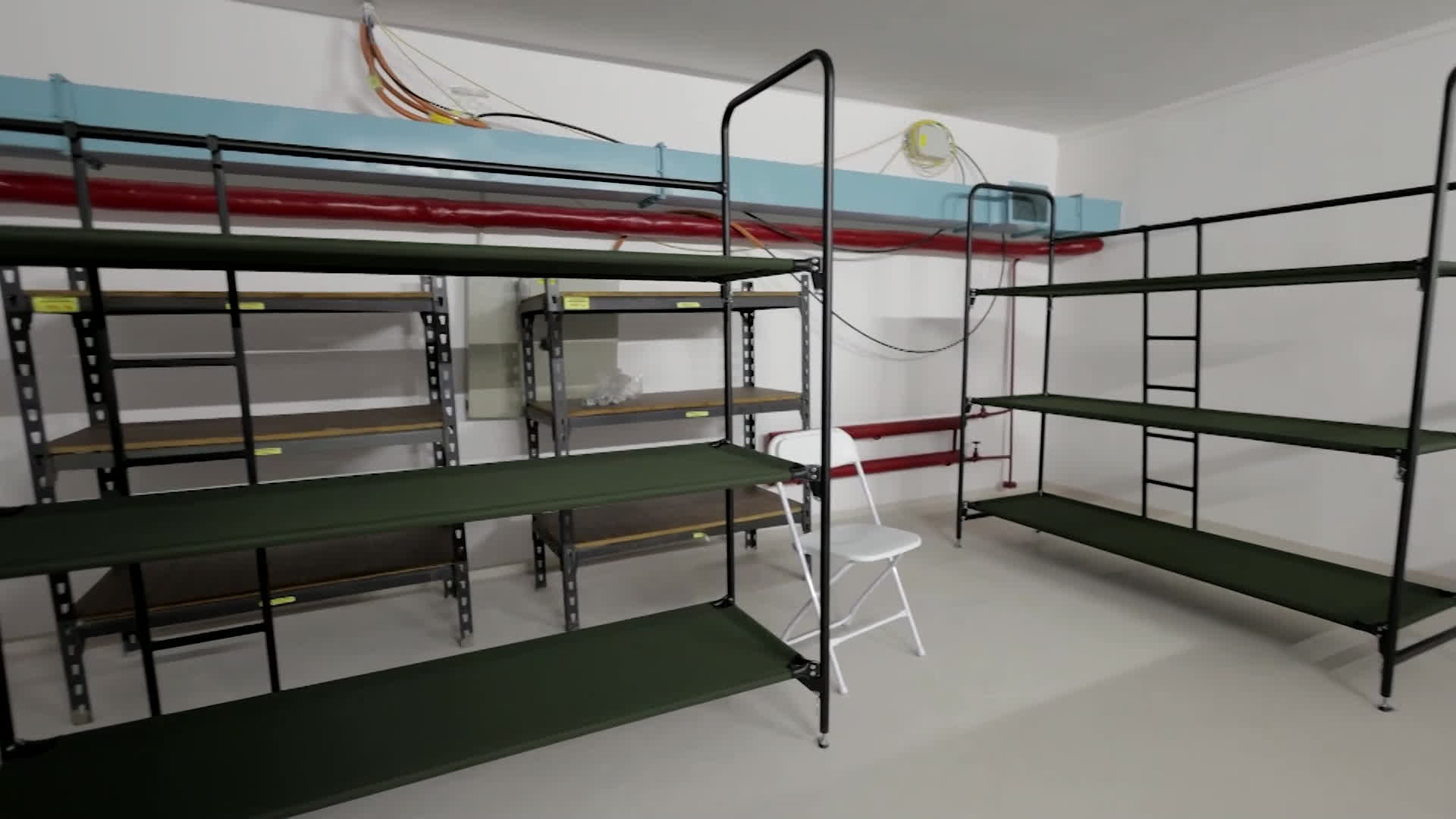
One of the shelters available during recent alerts is a modernised facility beneath the premises of municipal bus operator MPK in Lublin.
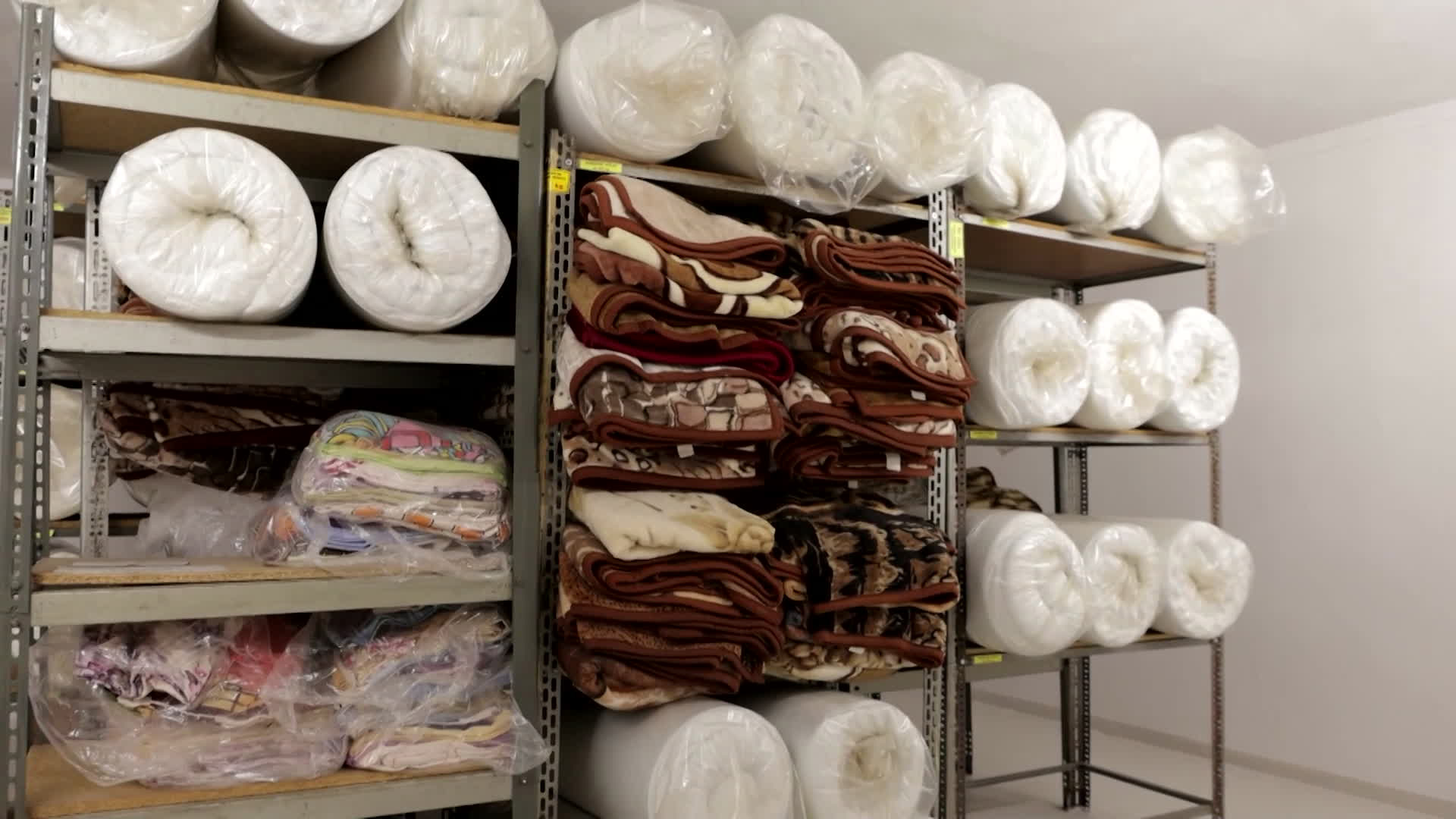
The shelter has been upgraded to meet modern standards, with beds, mattresses and blankets.
"It provides shelter for 200 people for up to 72 hours, ensuring access to air, water and electricity independent of external power grids," said Kamil Rzad, a civil defence inspector at MPK Lublin.
The Polish government estimates that there are roughly 2,000 shelters, capable of protecting about 300,000 people.
Poland also has more than 86,000 places of shelter offering a lower level of protection, including basements, underground car parks or subway stations, which can hold roughly 23 million people.
Why have the Poles modernised their air raid shelters?
Poland is on heightened alert following several Russian missile and drone incursions into its airspace, and alerts have become more frequent near the border.
A regional television station was interrupted recently during a live broadcast for around 20 minutes after journalists were evacuated to a shelter during an air raid warning.
Poland's prime minister Donald Tusk said the Kremlin's military campaign in Ukraine was moving ever closer to Ukraine's border with Poland.
But he insisted his government was "fully focused" on stopping any spillover onto Polish territory.
What other countries have air raid shelters?
Finland
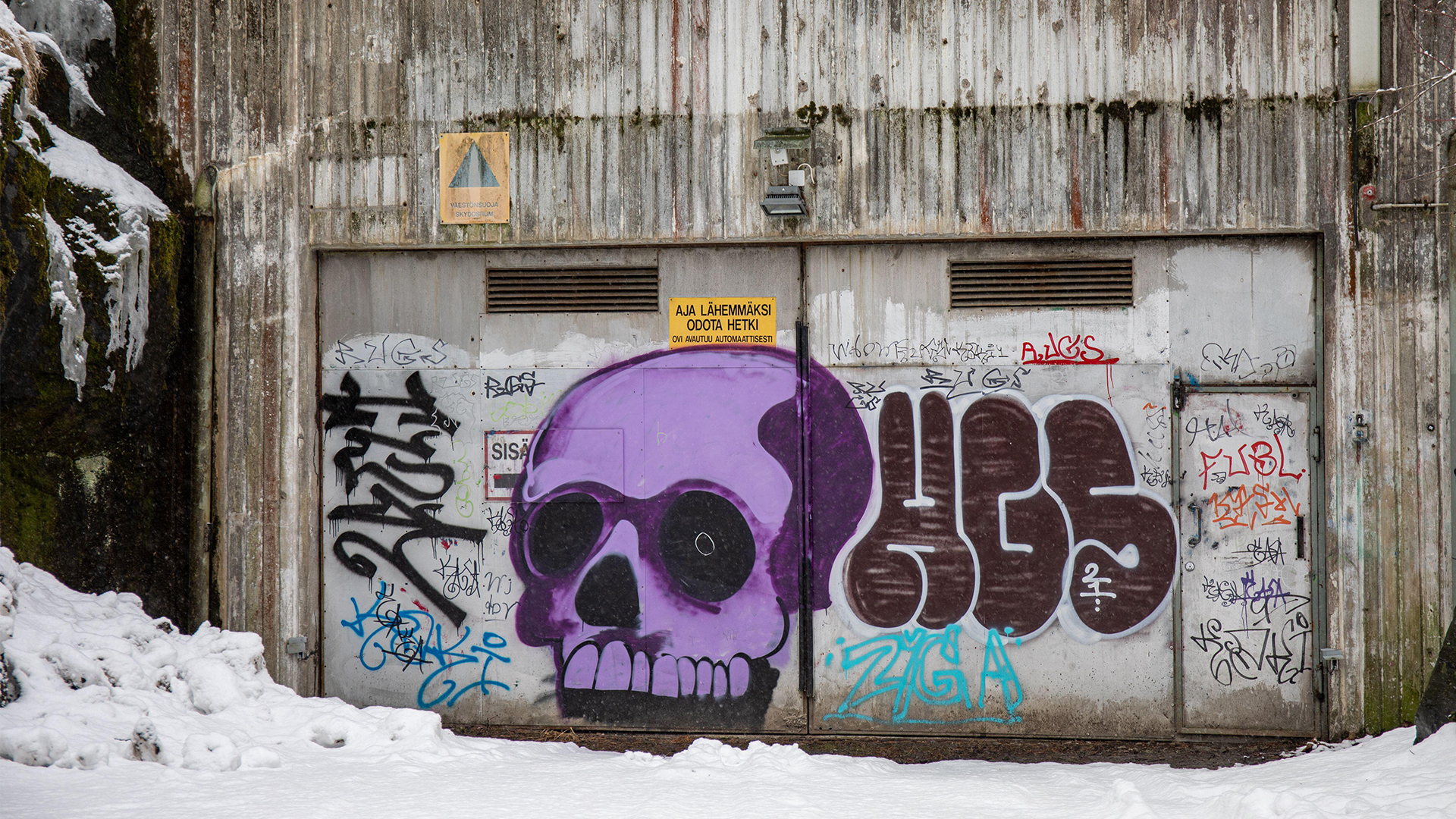
Finland's civil defence shelters can be used to protect the population from explosions, blasts, radiation and hazardous substances.
Helsinki has 50,500 of these shelters, according to the Finnish interior ministry.
The shelters are reinforced concrete shelters, while some buildings have joint bunkers.
However, in peacetime, these shelters tend to have other functions, being used as sports halls, tube stations and car parks.
Norway
Oslo has roughly 20,000 shelters with the capacity to hold 2.5 million people.
The emergency shelters were constructed between the Second World War and 1998 and are mostly found in cities and bigger towns.
The country has a mix of public and private shelters for its population. The public shelters are much like the Finnish shelters in that they are based in sports halls, public buildings and car parks.
By contrast, private shelters are found in office buildings, schools, nurseries, businesses, shops and hotels, and the operation and upkeep of each shelter is the responsibility of the building's owner.
Sweden
In neighbouring Sweden, there are around 64,000 civil defence shelters that can hold roughly seven million people.
The shelters are built to cope with CBRN attacks and the aftershocks and shrapnel from a bomb.
Despite that, the Swedish government suggests these shelters may be incapable of surviving a direct strike.
The population will be told of any possible strike through air raid sirens and an "important public announcement" or VMA.
The VMA, similar to the UK Government's emergency alert system, is a text message sent to people's mobile phones to alert them of any danger.
The alert is also broadcast outdoors in extreme circumstances, on radio and TV, and on Krisinformation.se's app, website and social media profiles.
Join Our Newsletter