Spies in the skies and seas: The military drones indistinguishable from birds and sharks
The bird watching an airbase of the future may be watching rather more closely than expected. It could have feathers, flap its wings and settle among the local wildlife.
But beneath the disguise may be a surveillance drone, sent to collect secrets while passing unnoticed. Militaries are experimenting with autonomous systems that borrow some of nature's cleverest designs.
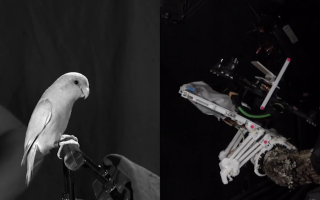
There are drones shaped like sharks, machines that fly like birds and robotic legs capable of gripping a branch like a peregrine falcon.
- Canine Courage: Britain's barking war heroes
- Killer dolphins? Exploding bats? What animals are used by militaries and why?
- Dickin Medal: 80 years of honouring the military's heroic frontline animals
It is called biomimicry: recreating features honed over millions of years of evolution and using them to make machines stealthier, more agile and harder to identify.
The idea has been around for years, and now advances in AI and 3D printing are now bringing engineers closer to copying nature convincingly.
A flock over an airbase
Footage shared on Chinese social media purports to show the Hawk, a biomimetic bird drone designed for surveillance.
Once airborne, its appearance and movement make it difficult to distinguish from a real bird at a distance.
Another bird-like drone, used by Chinese marines, has been shown launching from the water before taking flight to collect information.
Such systems could be used to conduct surveillance without attracting attention.
A flock of robotic birds flying over an airbase, for example, could appear to be nothing more than local wildlife.
A shark built by the US Navy
The US Navy is exploring the potential of biomimetic technology through Project Silent NEMO, which developed a shark-like underwater drone known as GhostSwimmer.
First revealed in 2014, the 5ft-long device weighed about 100lb and reproduced the oscillating tail movements of a marine animal.
It mimics the swimming motion of a marine animal, helping it evade sonar and gather clandestine intelligence.
Technology of this kind has also helped the US Navy reduce its reliance on trained marine mammals, including dolphins and sea lions.
Falcon feet and mechanical insects
Some researchers are copying individual parts of an animal rather than recreating the whole creature.
At Stanford University, engineers reproduced the legs of a peregrine falcon to build the Stereotyped Nature-inspired Aerial Grasper, or SNAG.
Fitted to a quadcopter, the legs allow it to grasp a branch and remain hidden in a treetop.
Bones are replaced by a 3D-printed structure, while motors and fishing line perform the work of muscles and tendons.
When the feet wrap around a branch, the ankles lock, and an accelerometer triggers an algorithm that balances the drone.
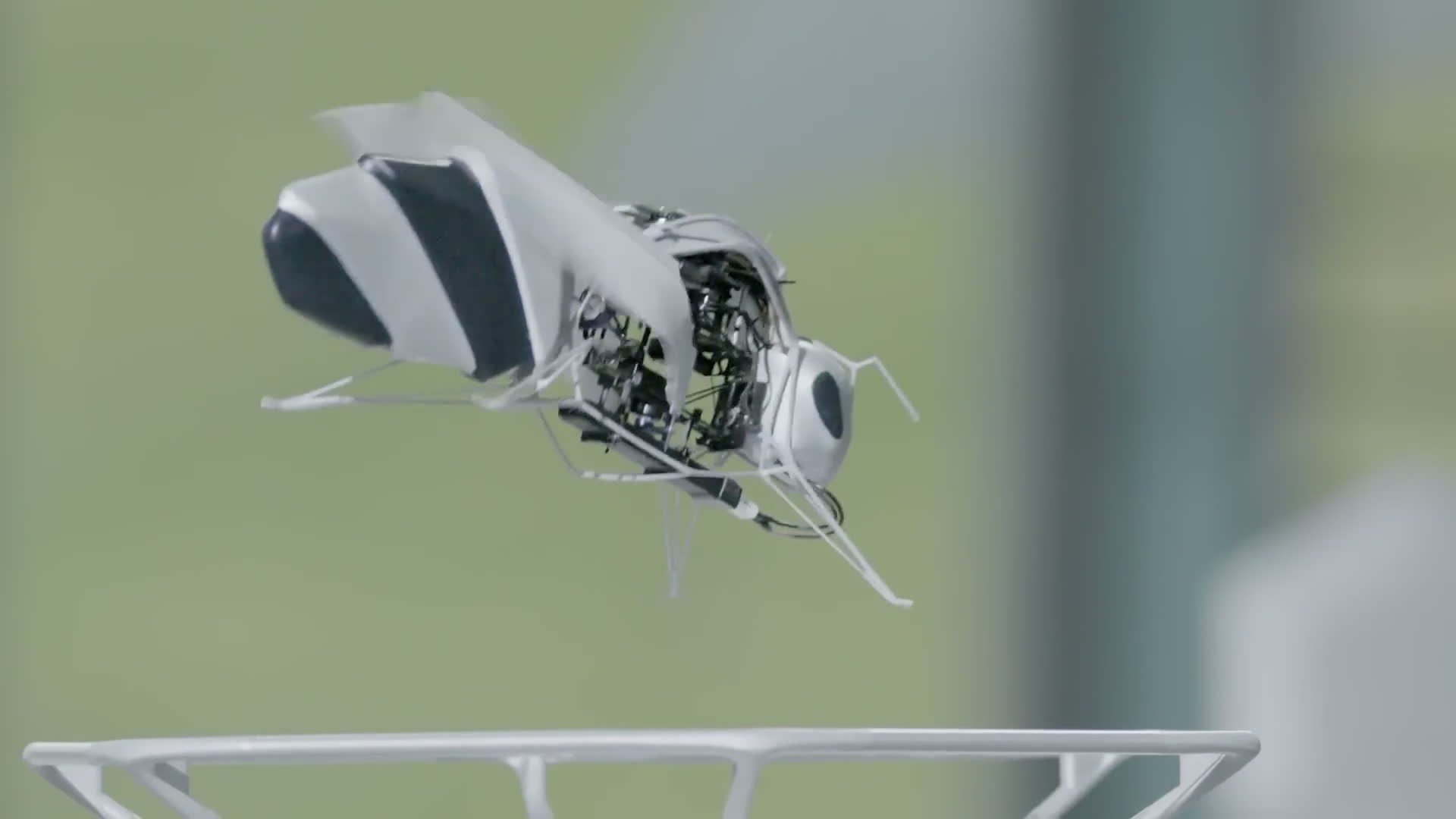
Bumblebees, dragonflies and hummingbirds are being studied as models for miniature, highly manoeuvrable surveillance drones.
The work spans military programmes and civilian laboratories, united by the same engineering challenge: how to reproduce machinery that evolution has refined over an almost unimaginable length of time.
Related topics
Join Our Newsletter