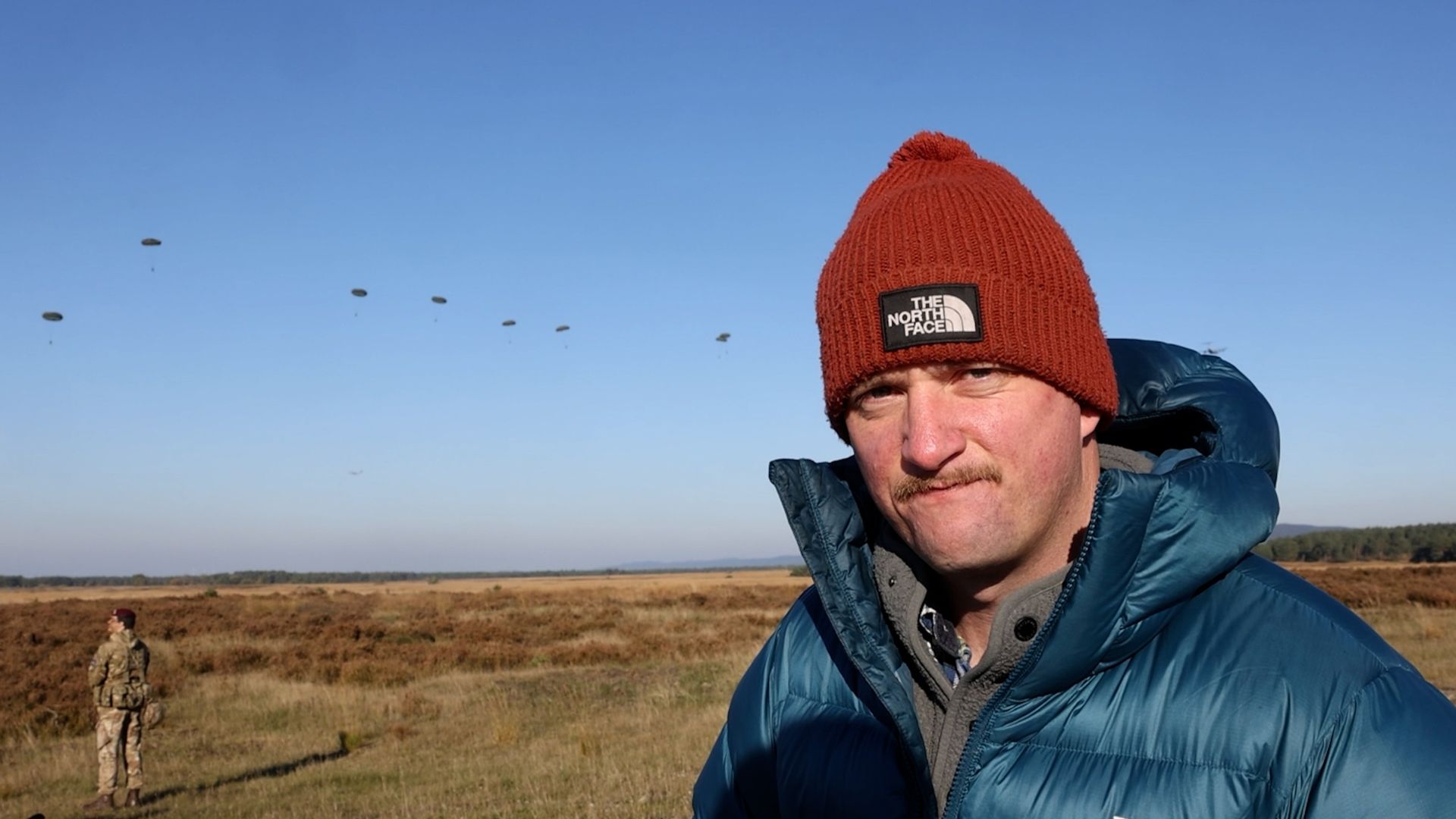
My week in the field with 3 Para on Ex Rhino Titan: Elite soldiers, outdated scenarios

3 Para are being tested in Germany. They form the core fighting force of 16 Air Assault Brigade, one of the UK's top military capabilities when it comes to warfighting.
Since the Second World War, all the significant action British troops have participated in has featured the Paras. They are renowned the world over, and for those tough enough to wear the maroon beret, serving in the regiment matters more than anything.
That is because when bad stuff happens, the UK government has only two or three units it can turn to in a dire emergency – and one of them is the Parachute Regiment. But how realistic is the training current members of the regiment and its parent brigade, 16 Air Assault, receive?
After five days in the field watching these troops prepare for war, I came away with more questions than answers.
Getting comfortable with danger
A week ago, General Sir Roly Walker, Britain's top soldier, said that infantrymen like those in the Parachute Regiment needed to become comfortable with fighting their enemies at distances immediately in front of them, because, he warned, "the things that are going to try and kill you are going to get that close".
For me, the key word was comfortable.
He was outlining how, in the wake of the war in Ukraine, those with the inclination to serve and fight needed to know that when that moment comes, events around their close position would be a matter of life and death, and likely extremely violent.
For most of us, that prospect is terrifying. But for Paras, and elite soldiers like them, this is what military service in 2026 is all about.
Yet the training I saw last week, although impressive, looked very similar to the type of training that has gone on for decades.
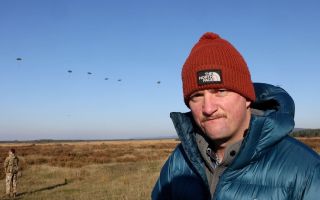
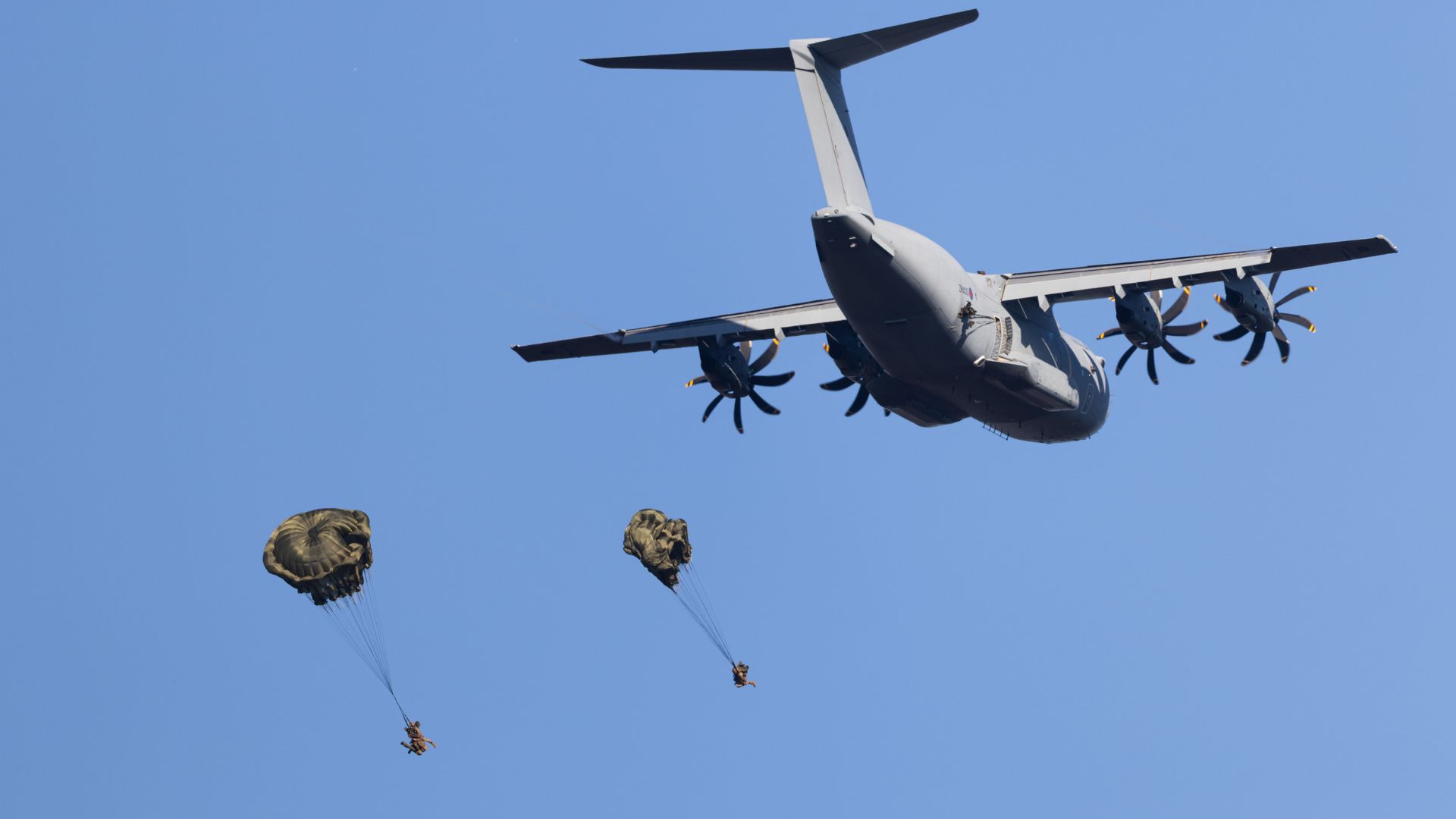
It began with a parachute jump – the largest over Europe in 20 years – and involved numerous engagements with an enemy force provided by the Gurkhas, the Paras' old rivals.
They utilised aeroplanes, helicopters, and all the components of a fighting force that packs a serious punch, including German Shepherd attack dogs.
However, almost constantly missing from the action we saw were drones – the omnipresence of which has been perhaps the single most vital lesson out of Ukraine.
They were there, just not physically in number; instead, exercise controllers mostly augmented drone threats into battles, meaning they were purely virtual.
It made me consider the general's words once again: how are these soldiers meant to get comfortable with the idea of something like a swarm of drones trying to kill them if, while training, they cannot physically experience that in a safe, tangible way?
Little expense spared
Contrary to popular belief, the Army is still conducting major training exercises.
And it was clear that little expense was spared in organising the activities taking place in Germany.
The exercise, called Rhino Titan, involved four Atlas A400M aircraft provided by the RAF, a fleet of Chinooks, and all the attached arms and capabilities that collectively make up 16 Air Assault Brigade.
In total, nearly 3,000 personnel were deployed, including a company of French troops.
Yet once again, factors seemingly beyond anybody's control limited the extent and realism of training that was costing millions of pounds to stage.
Part of the reason for augmenting threats digitally, I was told, was geographical. It simply is not possible to test some of the Army's capabilities in the space available at locations like the Sennelager Training Area, where we found ourselves.
It is also true that gains in simulation – even out in the field – allow more soldiers to go through the motions (such as flying a UAV carrying an explosive charge into the side of a tank) without incurring the costs and hazards of doing it for real.
I was given the opportunity to try flying one of these sim-kamikaze drones into the side of a main battle tank; it was great fun – but absolutely not real.
Another factor is health and safety.
Much of the exercise utilised helicopters for insertion and extraction. Yet while observing a Chinook-borne assault on an enemy position, it was explained to me that troops were not permitted to operate drones at the same time due to safety concerns regarding the helicopters. There is simply no appetite to risk a collision.
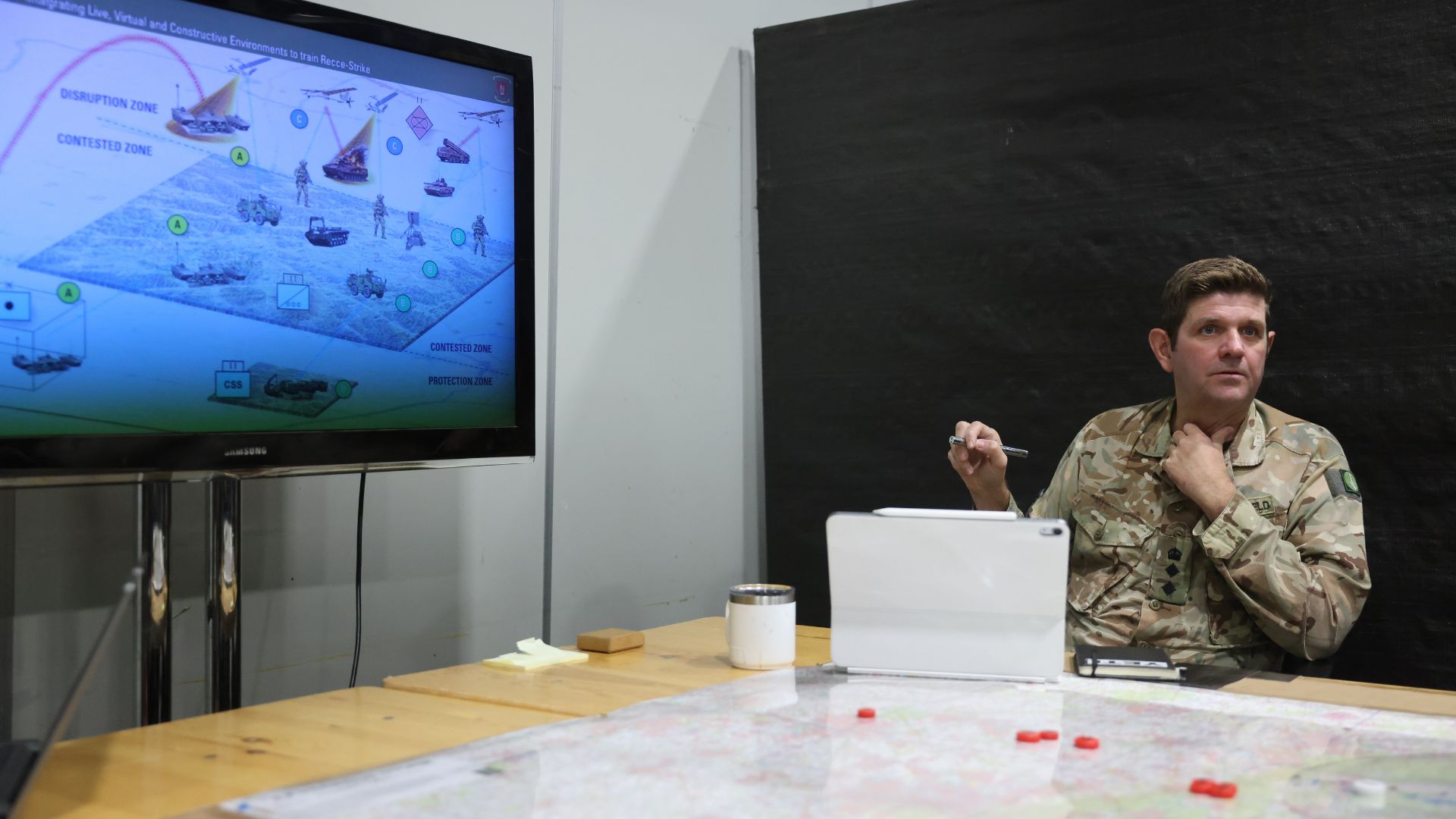
Of course, Russia does not have these concerns. It isn't worried about finding the space and people to test its warfighting equipment; it isn't bound by health and safety rules preventing it from flying drones near helicopters. It has a real war in Ukraine to test its personnel with – every day.
This was something I put directly to the Commander of the Combat Ready Training Centre – the Army's internal auditors of fighting standards – who was responsible for oversight across the exercise.
He acknowledged this reality, mostly conceding that his hands were tied when it came to creating something more realistic.
"There is a limit to what we can do," Colonel Ed Oldfield told me.
"The best crucible for actually training is a proper war. What we're trying to do is get as good as we possibly can be, as realistic as we can be, and as often as we can be, so that we are training that competency level so that we are as ready as we can be, all of the time."
The colonel stressed that the core value of the training remained intact, adding: "This is in addition to the things that we would do normally."
New kit and capabilities on display
New equipment bearing a direct link to the war in Ukraine does exist across the British Army, and some of it was laid out for me to look at.
There is no doubt the Army is training soldiers on sophisticated technology, even if – as Col Oldfield was keen to stress – exercises like this are not designed to teach troops basic operation from scratch; that should happen back at unit level well before they get to an exercise like Rhino Titan.
Some of the equipment on display is so new it remains classed as in trial. The stuff I saw here was easily identifiable as a response to the war in Ukraine, and impressive.
For example, a soldier from the Royal Irish Regiment demonstrated a dropper drone system – a lethal UAV still in development.
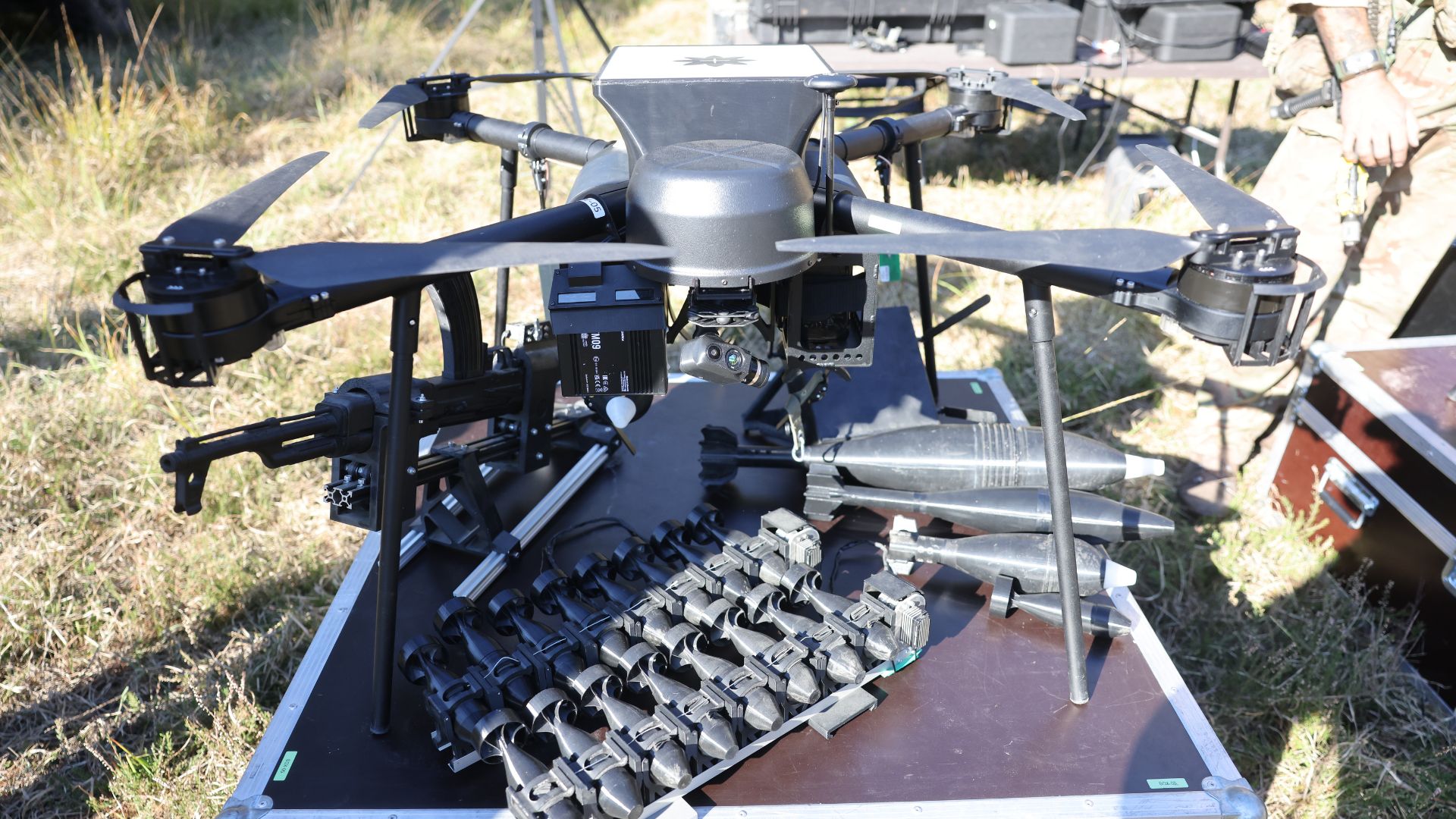
Fitted with an underslung rack for mortar rounds, it can drop significant explosive payloads on precision targets while piloted remotely from several miles away.
The Royal Irish are set to be early adopters of this system when it comes online in the coming months.
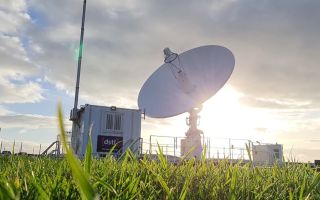
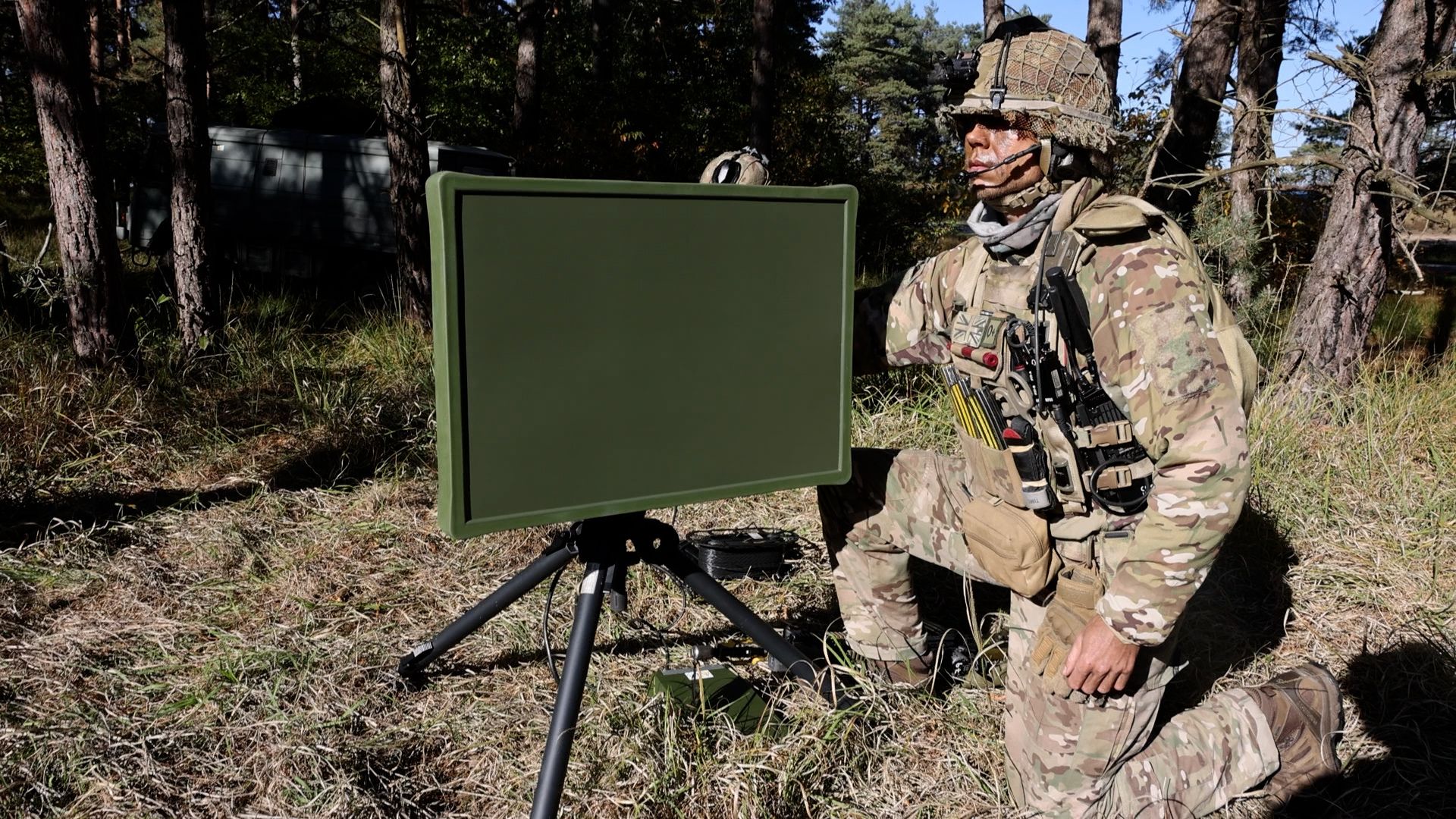
I was also briefed on the Lightweight Multi-Mode Radar (LMMR) – a field-deployable system that rotates much like the apparatus you see on top of an airport tower.
A sergeant from the Royal Artillery explained that it can track incoming drones at ranges up to 20 kilometres. He was genuinely upbeat about its capability and spoke passionately about its potential.
There was other cutting-edge kit on display as well, offering a clear glimpse into Britain's post-Ukraine procurement trajectory. It was just frustrating not to see any of it being used in the actual exercise.
Training for any war adds value
The fundamentals of soldiering remain largely unchanged, whatever the conflict.
When you factor in the airborne dimension of 16 Air Assault Brigade and the complex skills involved, the training value of massing thousands of personnel in maroon berets will always justify the cost.
I spoke to soldiers who had never parachuted into an exercise before, and others who had never seen joint air-land assets like Chinooks and Atlas A400Ms working together under a single scenario. The benefits of doing all that are easy to sell.
Yet if Rhino Titan was meant to prepare soldiers explicitly for a war akin to Ukraine – facing saturated airspaces, pervasive electronic warfare, and loitering munitions – the Army must confront the constraints holding back its realism.
Preparing for that kind of fight demands larger spaces, fewer 'augmented' problems, and a greater willingness to tolerate risks while training.
Join Our Newsletter