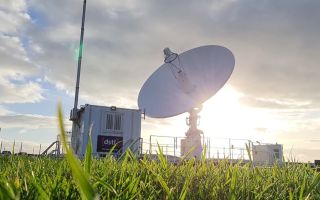
Should the Armed Forces stop using Starlink and Starshield – its military-grade companion?
Recent events in Ukraine, where the Starlink service to the Ukrainian military was throttled back, have raised questions about the use of SpaceX services by the MOD.
Should the Armed Forces stop using Starlink and Starshield – its military-grade companion – and reconsider who they get their internet from?
The UK military doesn't, of course, only use SpaceX systems. It has others, including its own dedicated Skynet satellite system.
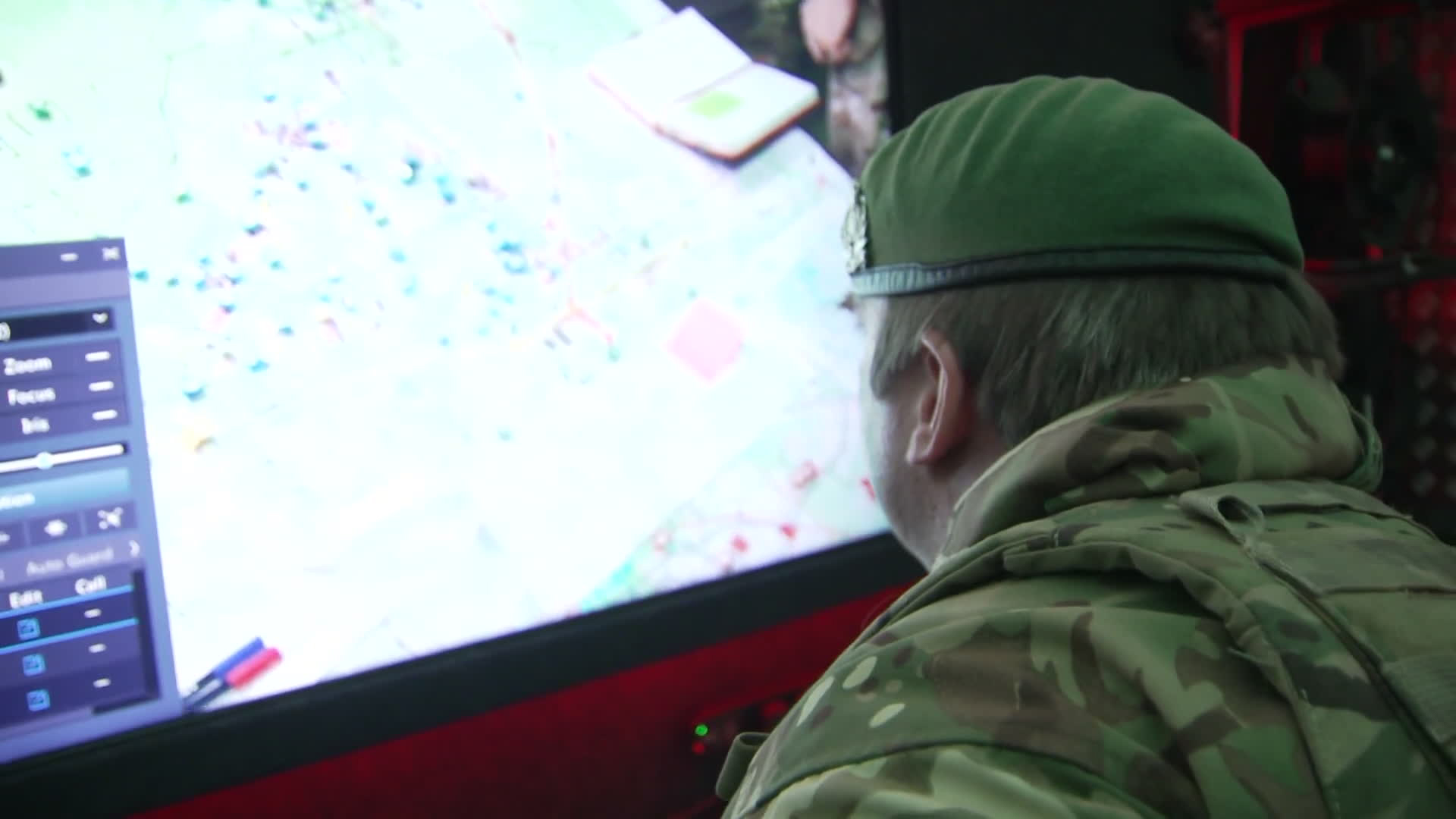
A potential vulnerability?
But according to Reuters, the MOD spent £30m with Elon Musk's company and now operates 1,000 Starshield terminals and around 500 Starlink ones.
So is that a vulnerability that needs to be looked at?
"The British military generally were quite embedded with the US in many different respects," said Dr Mark Hilborne, from King's College London's defence studies department. "And despite some of the political variations we see, it's a fairly stable relationship.
"The UK is unusual in that it also has access to Starshield. And in fact, there are only three nations that have access to Starshield. There's the US, UK and of course Ukraine, which the US pays for.
"I don't see the situation being replicated that the UK might have its speed throttled. But the UK does have to think about resilience.
"We're launching what's called the Istari programme with certain satellites that are doing some of the reconnaissance, whether it's imaging or satcom [satellite communications].
"But we probably need some greater resilience – somewhere between what we have in terms of the military system, the Istari system. And we can use OneWeb, which is also a constellation of satellites, a bit like Starshield, but with nowhere near the same data-handling capacity.
"So I think the UK, if it wants to be truly resilient, ought to have something in between.
"I don't see the security relationship between the US and the UK deteriorating to such a point where we would find limitations placed on our use of Starshield.
"But I guess you can never say never."
Speed versus security
The UK military began using Starlink in 2022. SpaceX stipulates that it can't be used for any sort of offensive military action. So it's used for welfare, the internet and streaming services on some bases.
Then we have Starshield, this militarised version designed to handle things like target tracking, reconnaissance and the early-warning systems that Ukraine uses to monitor incoming Russian missiles.
The Ministry of Defence got its first Starshield terminals in 2025 and it's spent around £13m on it so far.
But the main system the British military uses operationally is Skynet, an encrypted satellite communication, or satcom system, that's being modernised at a cost of around £8bn.
"Skynet is something that's placed in geostationary orbit. And this is a big difference between that kind of system and something like Starlink," Dr Hilborne explained.
"Even though both are satellite communications, the distinction is that Starlink is in low Earth orbit. So if you look up at night and you can see these trains of satellites zipping across, and they orbit the Earth every 60 minutes.
"Geostationary systems are fixed over a certain point. So your satellite dish, for instance, it's fixed on a satellite which is so far out in orbit that its orbit is actually exactly over the same point of Earth at all times.
"Now the problem with that is there's a latency, there's a delay. That's because the signal is travelling 36,000 kilometres out and then it has to come back again, whereas Starlink, because it's so close overhead, the signal is almost immediate.
"And because of the vast constellation of Starlink, it has a huge data bandwidth. So lots of information can come through.
"So we get the FPV drone. People are flying those drones using the data bandwidth of Starlink and all that information is virtually immediate.
"Nothing like that is possible. So while Skynet is highly secure, it doesn't handle anything like that kind of bandwidth."
What about the Russians?
The Russians were using thousands of smuggled Starlink terminals in the occupied parts of Ukraine until Elon Musk pulled the plug back in February.
It had an immediate effect, cutting their battlefield communications and the video links to their attack drones. To get around it, Moscow is developing its own version, a system called Razvet.
"So far they've had a lot of problems launching it," Dr Hilborne pointed out. "And a lot of the satellites have not been able to reach the correct orbit.
"Nonetheless, the Russians are able to get some valuable windows of time over Ukraine, where they can effectively replicate what the Ukrainians are able to do using the various Starlink, StarShield systems."
Dr Hilborne said an expensive and elaborate system such as Starlink was not needed to provide a persistent capability over a limited geographic area.
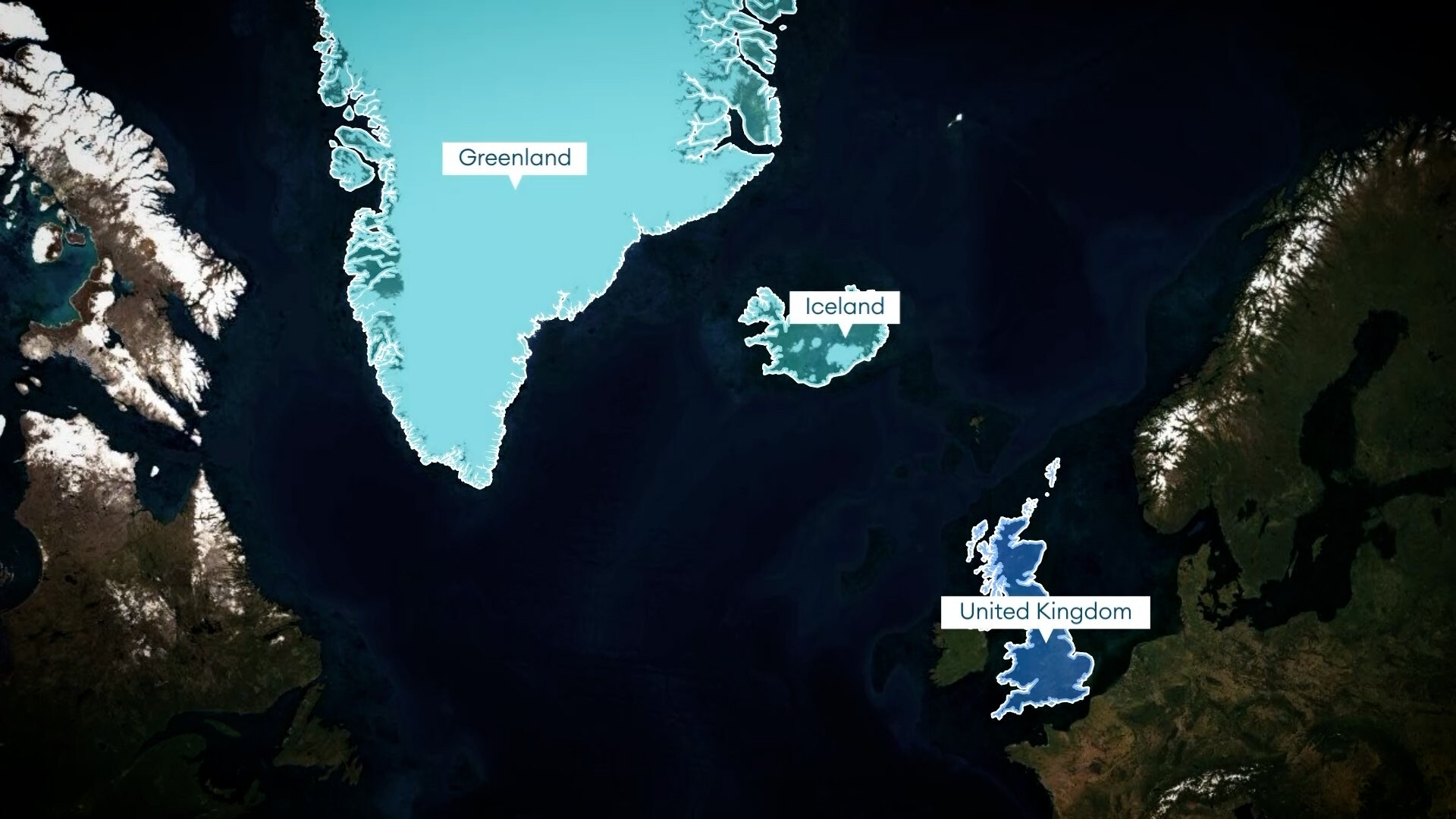
"You don't need those 10,000 satellites of Starlink. You only need probably 10 to 24 to have a rather persistent capability... to keep a careful eye over, let's say, the UK, the Greenland-Iceland-UK gap and the Arctic."
He said a small constellation system that could offer both satellite communications and imagery would not be expensive.
Now whether it was Elon Musk, the White House or the Pentagon acting alone, what happened in Ukraine recently will focus militaries worldwide on how dependent or otherwise they are on Starlink and Starshield.
If your communication system is built and operated by a commercial company or companies, even if they are from historic allies, is that potentially a vulnerability?
And who does ultimately have their hand on the throttle?
Starlink, Starshield and Skynet explained
:: Starlink is a global satellite‑internet network operated by Elon Musk's company SpaceX.
It uses more than 10,400 low‑Earth‑orbit satellites to deliver high‑speed, low‑latency broadband to more than 12 million subscribers in excess of 160 countries.
One major user is Ukraine, but earlier this month the service in Ukraine suffered a massive slowdown, which affected the country's ability to defend itself from Russian attacks.
Ukraine is forbidden from using Starlink for offensive, purposes – something Mr Musk accused the Ukrainians of doing.
He posted on X: "Ukraine military violated Starlink terms of service and used it for offensive drone strikes to kill people.
"That loophole was closed last week."
This has raised questions over how much reliance Europe should place on systems it uses that are beyond its control.
:: Starshield is a military-focused SpaceX satellite system that is used by the US government and its allies. It is designed for military and intelligence use, offering encrypted networks, reconnaissance sensors and support for missile‑tracking missions.
As Mr Musk pointed out in the same post: "Starshield, a different system, is controlled by the US government. What they decide to do is up to them."
:: Skynet is the Ministry of Defence's satellite‑communications capability. The family of military communications satellites provides secure satcom for the Armed Forces and their allies.
Related topics
Join Our Newsletter