Britain opens first gun barrel factory in 20 years as it steps up rearmament
Britain has opened a £60m gun barrel production facility in Telford, ending two decades of reliance on overseas suppliers for the manufacture of large-calibre tank and artillery barrels.
German defence company Rheinmetall says its new UK Gun Hall will produce 245 gun barrels and 50 breeches a year, helping to rebuild the country's defence industrial capacity as the Government accelerates plans to prepare the Armed Forces for a potential future conflict.
The facility was officially opened by Defence Secretary Wes Streeting and the Chief of the General Staff, General Sir Roly Walker.
Challenger 3 and RCH 155 to benefit
"Modern warfare consumes equipment and ammunition at extraordinary rates," Gen Sir Roly told the audience, pointing to the tens of thousands of artillery shells both Russia and Ukraine fire every day.
"Industrial capacity cannot be conjured in a crisis. It must be built before the conflict."
Despite the rapid development of drones, the war in Ukraine has shown that tanks and artillery remain central to modern warfare, delivering the firepower needed to destroy enemy positions and support troops advancing on the ground.
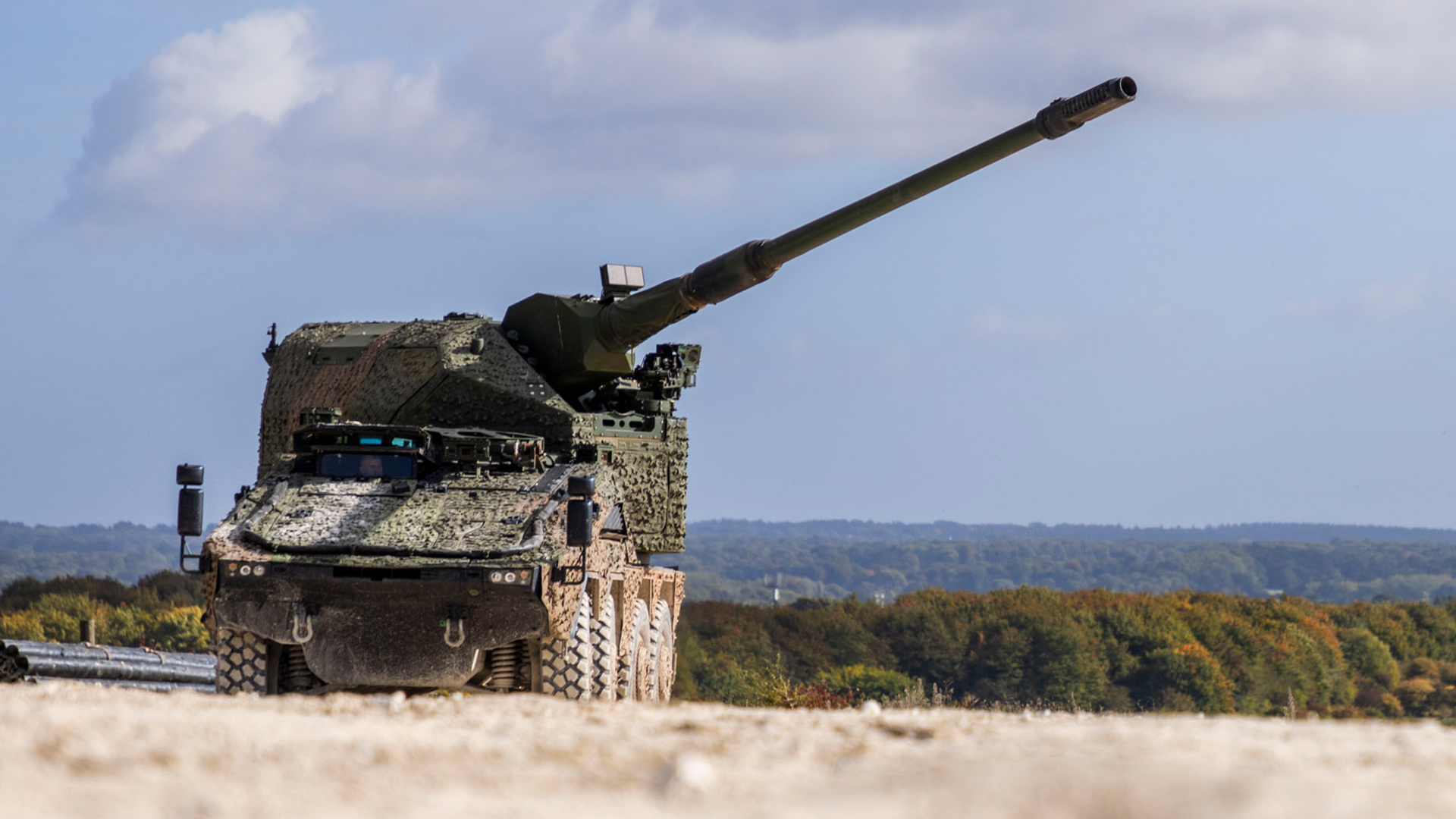
The new 11,500-square-metre facility will manufacture barrels for two of the British Army's major equipment programmes: the RCH 155 self-propelled howitzer and the Challenger 3 main battle tank.
The Army is acquiring 72 RCH 155 artillery systems to replace AS90 howitzers that were transferred to Ukraine.
The factory will also produce 120mm smoothbore barrels for the new Challenger 3 tank. The British Army is getting 148 of these, with the first vehicles expected to enter initial service next year.
Gun barrels a consumable commodity
"Britain is back in the business of making the weapons that our Armed Forces need to defend the nation against our adversaries," said Mr Streeting.
"From an empty site to full production in eight months, this is rapid reindustrialisation in action."
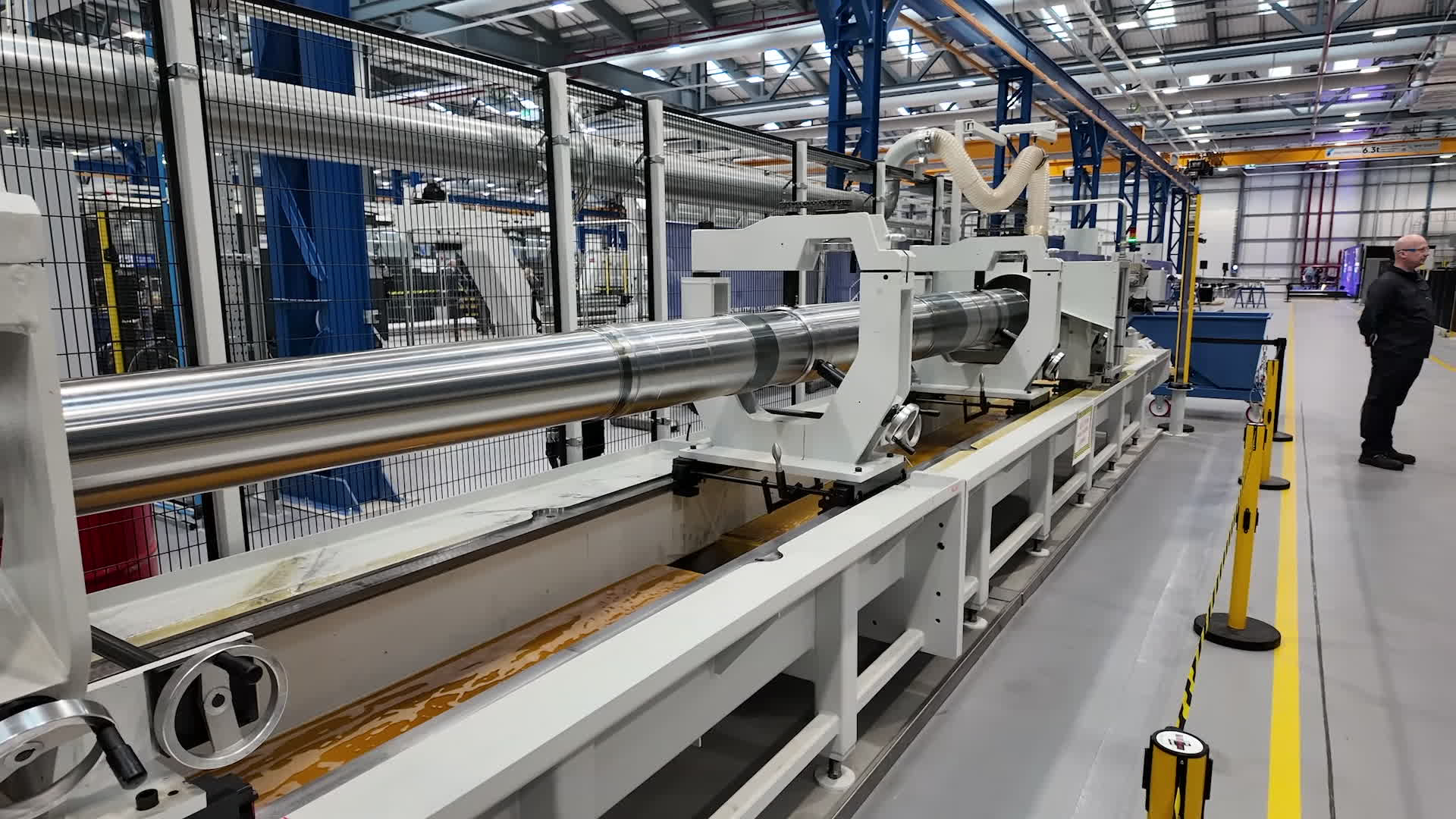
Around 35 production staff will work in the Gun Hall, using steel forged in Sheffield to manufacture the barrels and breeches.
The process demands extraordinary precision.
Each eight-metre long 155mm barrel takes 220 hours to produce, with operators honing the internal surfaces to tolerances of just 30 microns - roughly half the width of a human hair.
The facility will also manufacture breech blocks for the 155mm artillery system and 120mm tank gun, components that have to withstand the extreme pressures generated when a weapon fires.
Large-calibre barrels have a finite working life and have to be replaced regularly.
According to Rheinmetall, an artillery barrel can typically fire around 2,500 rounds before requiring replacement, while the smaller calibre tank barrels have a lifespan of around 1,500 rounds.
Scope for expanding capacity
Russia has tried to expand its own production of ammunition and military equipment since its full-scale invasion of Ukraine.
In 2025, Russian factories produced or refurbished an estimated seven million artillery, mortar, tank and rocket munitions.
However, international sanctions and other industrial constraints mean Russian factories have struggled to make enough new barrels to fire them.
Rheinmetall says the Telford facility has been designed with the flexibility to increase production rapidly if the British military was sent to war.
"If you see what we produce here, it's a huge capacity," Rheinmetall CEO Armin Papperger told me.
"Together with the capacity we have in Germany, we're able to produce 500, 600 even 1,000 barrels if we wanted to. If we went to 15 shifts a week it would be possible.
"So there are huge capacities we could build up."
Rheinmetall employs 685 people in Telford, and now has four sites across the UK.
The Gun Hall forms part of a wider £200m investment Rheinmetall has made in the UK over the past six years.
Related topics
Join Our Newsletter