Lack of MOD procurement reform absolutely influenced defence spending, says MP
The troubled past of defence equipment programmes has influenced the amount of money being poured into the MOD, a Liberal Democrat MP and former British Army officer has told BFBS Forces News.
Mike Martin, who sits on the cross-party Defence Select Committee that scrutinises defence protocol and processes in fine detail, sat down with our reporter Tom Sables to outline what's going wrong and what "radical reforms" could look like.
"The waste in the UK procurement system is absolutely shocking and has been for decades. And I think that we should adopt an approach that's very similar to what you do with other government departments, where you say 'There is more money, but you're only having it if you do this radical reform'", he said.
- MOD accused of placing unrealistic expectations on troops operating Ajax
- Seven bidders shortlisted in contest to replace Army's Land Rover and Pinzgauer fleets
- Ajax woes hugely damaging to Army, says former tank commander as trials to restart
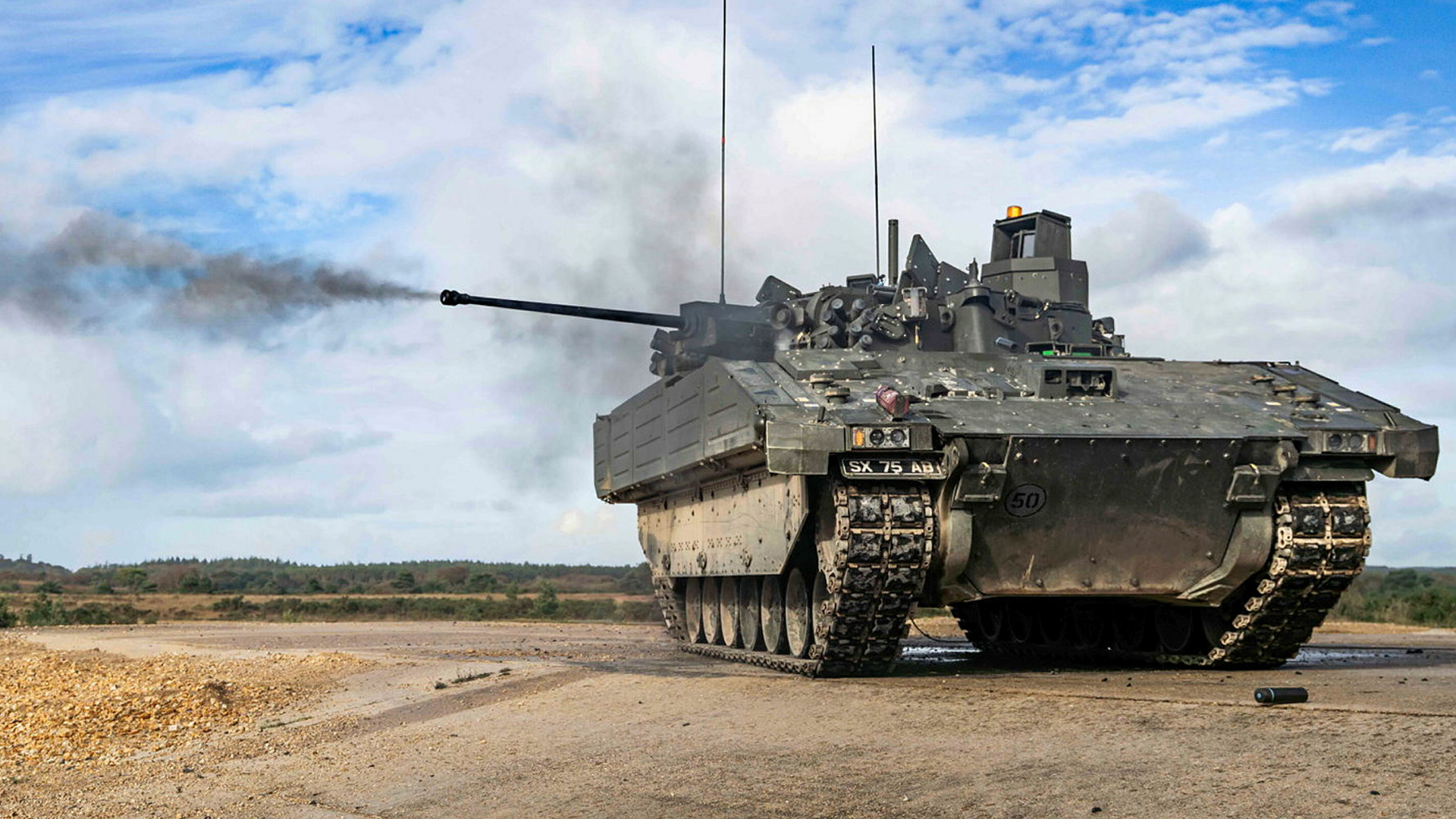
Citing "tens" of MOD procurement programmes, including the Ajax armoured vehicle, which have rumbled over budget and seen long delays, Dr Martin agreed with the notion that this track record in the handling of public money has influenced how much is being given to the department.
"Absolutely. There's almost this sort of Faustian pact between the primes and the UK defence procurement system," he said, explaining that different sides of defence procurement should share some of the blame.
"At times industry has failed to deliver and it's come late and it's come, you know, over cost. At times the procurement system has changed what they want or changed their mind or new people have come in, or they've changed the size of the contract. And then you end up with something that takes too long and costs too much."
There was also continued criticism over the political roadmap from current levels of defence spending to the target of 3.5% of GDP.
"That gap is about £30 billion a year," said Dr Martin.
"None of the three main political parties have a pathway that sets out how they're going to get to that level.
"So my own party, the Liberal Democrats, have got a plan around defence bonds and that certainly fills some of the crunches that we have now around defence spending. But that's not a long-term solution. You can't forever borrow your way out of a hole.
"The Conservatives talk about cutting welfare to fund defence, but there simply isn't enough welfare to cut to fund defence. The Labour Party is saying that they are setting out a pathway to 3%, not even to 3.5% – but there's no details at all."
This year's Defence Investment Plan, outlining targets for future defence spending throughout the next decade and which areas the money will be put toward, was itself delayed by several months.
Smaller manufacturing firms, many of which will have been specialists in the technology underpinning the new, software-and-drone-led battlespace, will have been hampered or completely halted due to the lack of guaranteed cash coming their way from the UK Government.
Asked to what extent the ripple effect of that delay will stifle UK readiness, Dr Martin said: "It's hard to quantify it precisely".
"I meet one or two SMEs a week in my position on the Defence Select Committee, and they all tell a very similar story, which is that interacting with the UK government's defence procurement system takes too long.
"You have to sign up. You have to have a framework, and then that's delayed, and then the bid comes out, but then that's delayed.
"And then, several years in, they've spent £100,000 on trying to go through this process, and they still haven't had any orders, and there's no money flowing for them. And if you're a big prime, you're able to have a team that just does that.
"That's your job as that team is to bid for government contracts. But if you're a small company, cash flow is absolutely king.
"I've got many, many stories (…) of companies that are leaving the UK or seeking contracts abroad because they're just unable to get through the UK procurement system in a short enough space of time."
Dr Martin, who also sits on the National Security Strategy Committee in Parliament, offered his insight into how a reformed procurement system could look.
"At the moment we have a system where, you know, requirements are generated at one end and then they go into the UK defence procurement system. There's 12,500 people that work in that system.
"Out of that sausage machine pops a piece of kit, often late, often over budget. I think that there will still be bits of kit that we need to procure in that way. Nuclear submarines is a kind of the classic example", he explained.
"But I think there's many bits of military kit that you could actually totally change that system and I imagine the defence procurement organisation acting more as a convener, where they bring together war fighters [with] an industry partner and crucially a financing option."
Once these elements are convened, rapid iteration could follow, Dr Martin suggested.
"This is what they do in Ukraine to get to a technological solution. Get to a minimum viable product, then something that's a prototype level. So you're constantly moving up quickly rather than designing.
"Just let them get on with it and create the right regulatory environment around that sandbox where they're developing that kit so that we get to a point where we have a prototype that is scalable."
Related topics
Join Our Newsletter