Non-nuclear Typhoons fly with nuclear-capable Rafales simulating nuclear strike

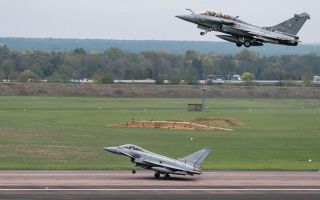
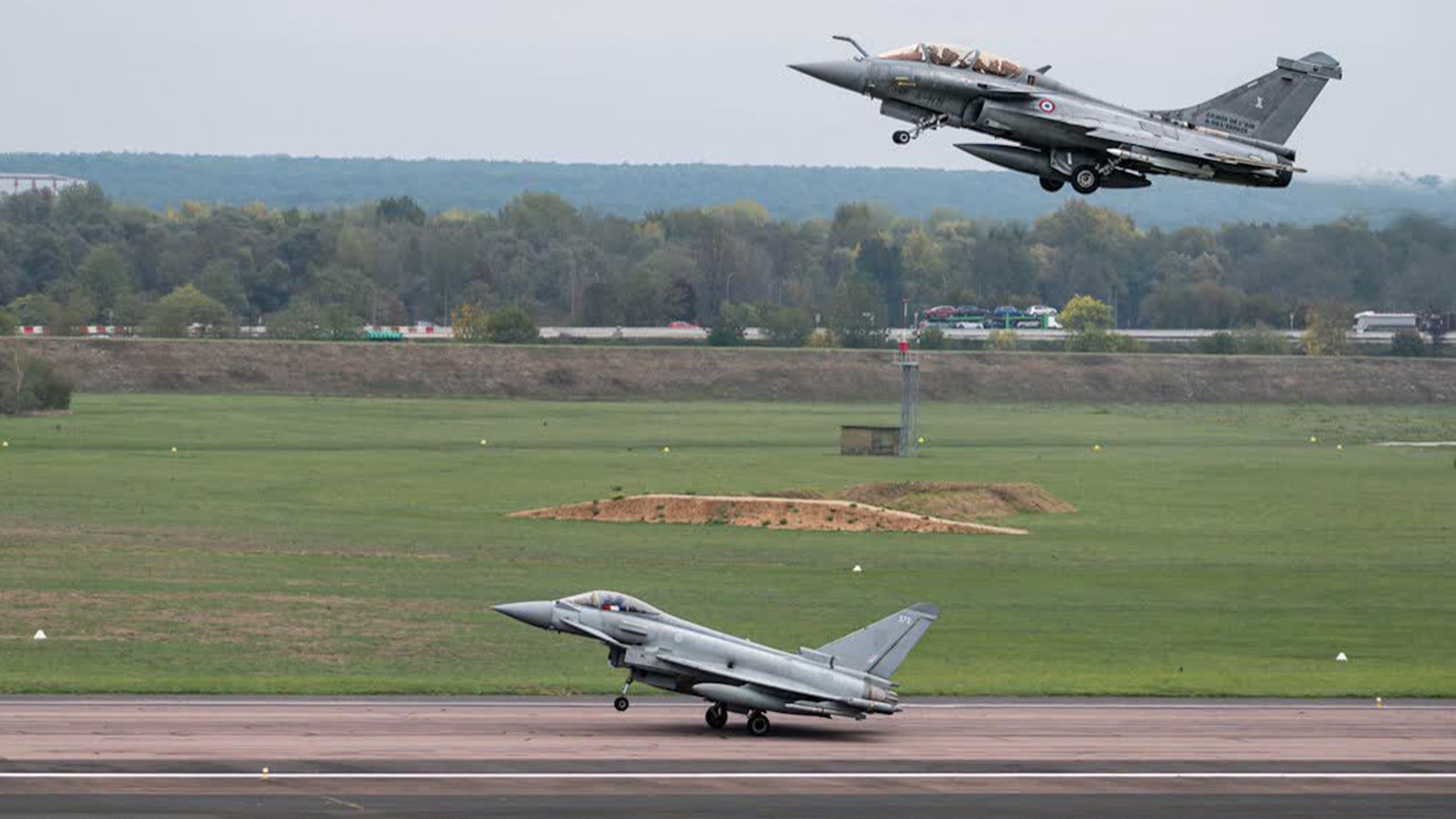
RAF Typhoon fighter jets have flown together with French nuclear-capable Rafales over the Mediterranean in the first joint exercise involving France's airborne nuclear capability.
London and Paris agreed in July last year to reinforce cooperation over their nuclear arsenals, considering the increasing threats to Europe amid the war in Ukraine.
After taking off from Saint-Dizier air base in northeastern France, the French fighter jets were escorted by the non-nuclear RAF Typhoons, recreating a nuclear strike in an exercise called "Rummy".
"Having independent nuclear forces does not preclude coordination," said French armed forces minister Catherine Vautrin.
"Our nuclear cooperation with the United Kingdom continues to deepen: …British Typhoons took part for the very first time in a French nuclear exercise alongside Rafales."
French president Emmanuel Macron said earlier this year that Paris would increase its nuclear arsenal and launched an initiative offering European countries joint exercises and the possible short-term deployment of French nuclear-capable assets on their territory.
The RAF Typhoon fighter jet is a multi-role aircraft, which entered service with the RAF in 2003.
With its multi-role capability and variety of weapons, the Typhoon FRG4 is capable of engaging numerous target types.
The Typhoon can carry a vast range of air-to-surface weapons and can remain on task for long periods of time with large, flexible weapon loads.
The jets have been deployed in numerous operations, such as on Nato air policing missions, for the Quick Reaction Alert, and on Operation Shader, supporting counter-ISIS operations in Iraq and Syria.
However, Typhoons are not capable of carrying tactical nuclear bombs, unlike the Tornados they eventually replaced.
France invests around €5.6 billion annually to maintain its stockpile of 290 submarine- and air-launched weapons, which makes it the world's fourth-largest arsenal.
The UK has an estimated 225 nuclear warheads, while Russia and the United States have more than 5,000 each.
"In an increasingly dangerous world, our adversaries should be in no doubt: the United Kingdom and France stand together in their commitment to European security and to maintaining the deterrence that has helped preserve peace for generations," Defence Secretary Wes Streeting said.
Join Our Newsletter