Armed Forces Bill: Government defeat in Lords puts spotlight on military housing standards

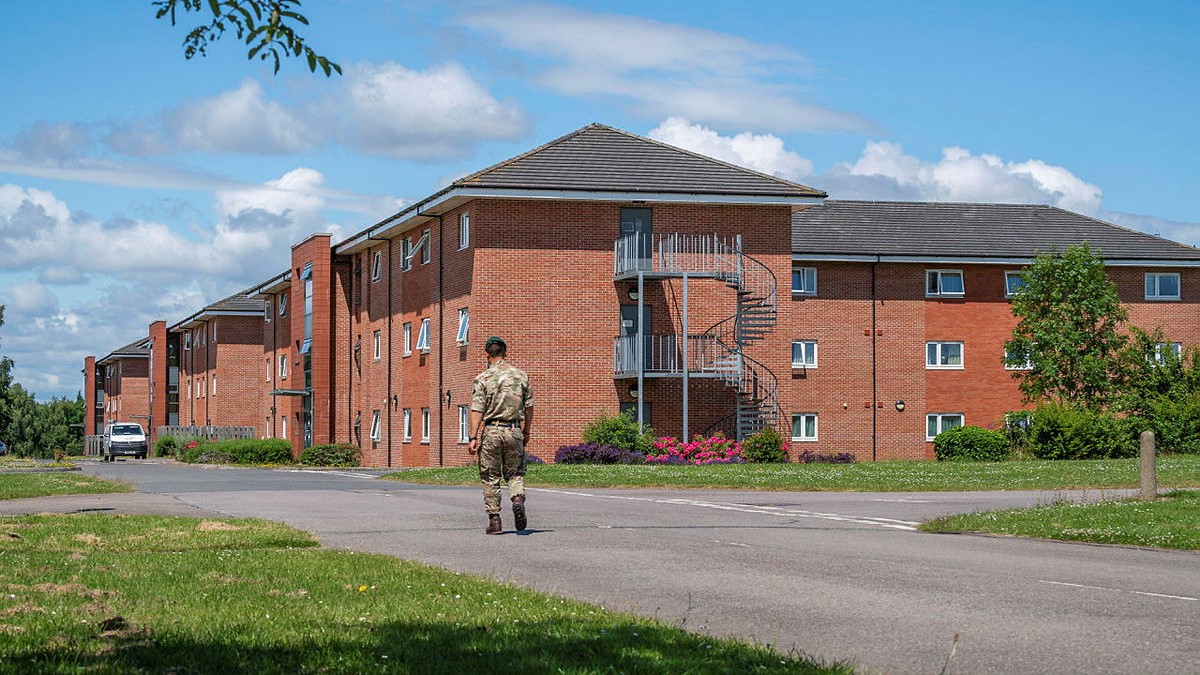
The House of Lords has defeated the Government on demands for improved housing for single people living in military accommodation.
The Armed Forces Bill, which is currently at the report stage, was said to have failed to improve single living accommodation (SLA), according to the Liberal Democrats and the Conservatives.
The Liberal Democrats' amendment to establish a "military homes standard" similar to the decent homes standard in the Housing Act 2004 was passed by 259 votes to 173.
Baroness Smith of Newnham, who put forward the amendment, said: "Many service personnel spend the whole of their service lives in single living accommodation.
"They may be single, they may be married, they may be in long-term relationships and have families, but because of the way they have chosen to be living away from home, maybe during the week, they will find themselves in single living accommodation."
What is the Armed Forces Bill?
The Armed Forces Bill is normally passed every five years and gives Parliament's official consent for the UK to maintain a standing Armed Forces.
The bill, which will renew the Armed Forces Act 2006, will bring in several reforms, including alleviating forces housing, stronger protections for military personnel and civilians who experience sexual assault, domestic abuse or stalking at the hands of serving members of the Armed Forces, and increasing the size and availability of the Strategic Reserve.
What does it say about housing?
As part of the Armed Forces Bill, then-Defence Secretary John Healey announced the defence housing strategy in November 2025.
In this strategy, a new body was created called the Defence Housing Service, which will manage military homes while keeping them in public ownership. It will also offer new homeownership opportunities for military personnel and veterans.
The new organisation was created after problems across military housing, such as poor contractor performance, sub-standard repairs, damp and mould, and low satisfaction among families.
The new Defence Housing Service is part of a 10-year plan funded by £9bn to modernise or upgrade roughly 43,000 defence homes.
What is the particular issue with SLA?

SLA is accommodation provided to serving personnel who live far away from the base, with the type of accommodation derived from their rank and the availability of suitable housing.
In October last year, the Ministry of Defence settled a legal case brought by more than 4,500 claimants, up to 90% of whom were thought to be currently serving, over the way it "discriminately" charged rent for SLA.
Leigh Day Solicitors secured a £12m compensation agreement, which saw around 3,800 claimants receive four-figure payments, sources said.
However, despite settling the case, the issue of SLA has not gone away, as service personnel have said that their experience of living in the accommodation has increased their intention to leave the military, according to a government report.
The report said that 39% of personnel thought that their experience living in the accommodation made them want to exit the services, due to problems such as the quality of repair and maintenance work, wifi provision and anti-social behaviour.
Given these problems, a review was launched into the SLA at the beginning of this year after Louise Sandher-Jones, the Veterans and People Minister, said that everyone has "horror stories" about it.
The bill's timeline
December 2021: Latest Armed Forces bill comes into law
January 2026: First reading in the House of Commons of new legislation
January 2026: Armed Forces Bill passes its second reading in the Commons
April 2026: Select Committee on the Armed Forces Bill said it supported the measures in the bill, but highlighted repeated concerns over implementation and accountability
June 2026: Bill enters report stage
June 2026: Bill moves to the House of Lords
October 2026: Government defeated in the House of Lords on amendments on improving housing standards for single people
Related topics
Join Our Newsletter