Army explains shift in focus on training to concentrate on counter-drone warfare

The British Army has been changing the way it trains its forces to better match the threat posed by an aggressor on the modern-day battlefield - but potentially at the cost of other types of training.
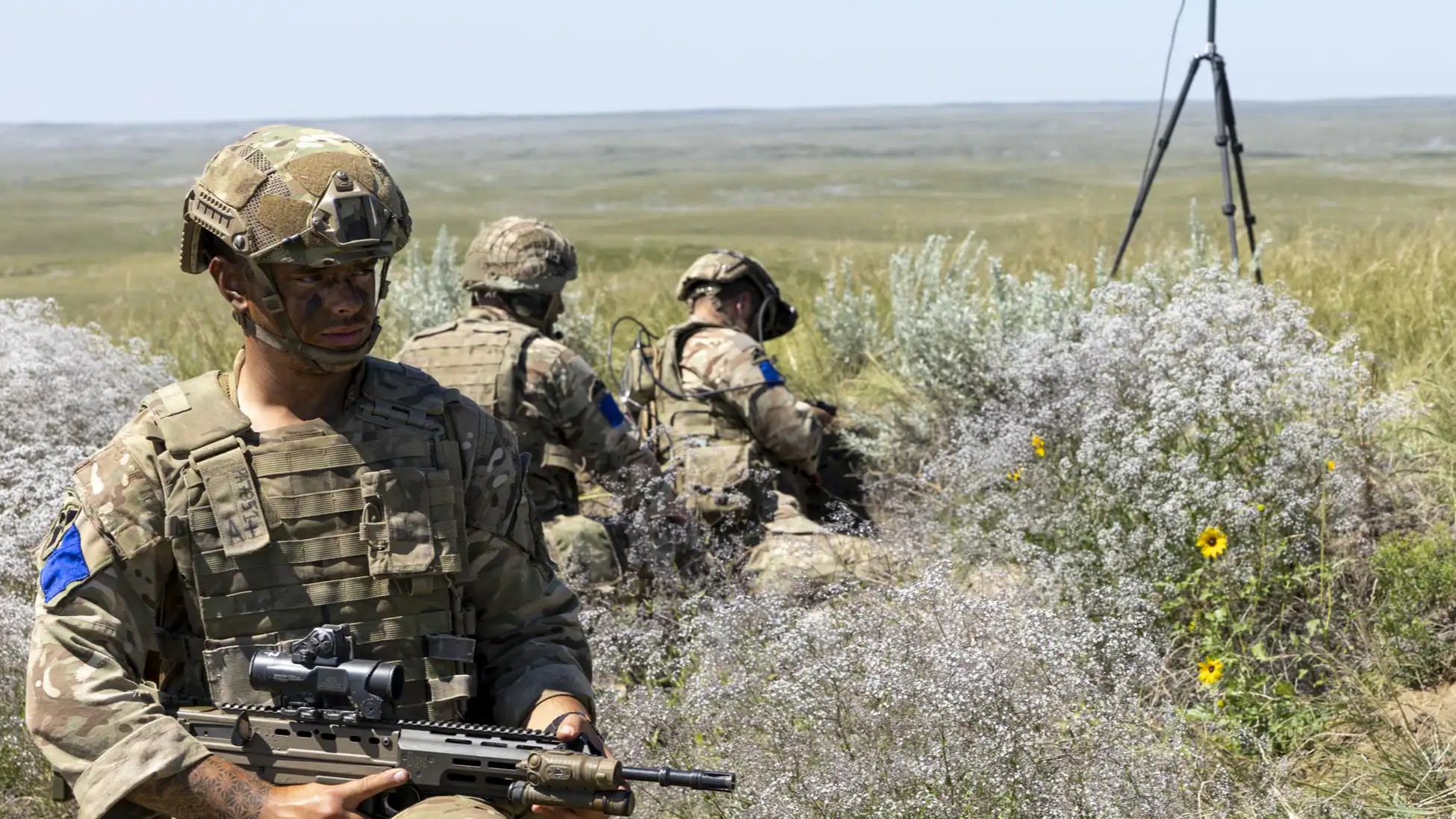
Training exercises are being adapted as a result of the lessons learned from the war in Ukraine, with an emphasis on methods to defeat uncrewed aerial systems.
More corps-level training and modernisation training is being carried out.
Some media outlets claimed non-essential exercises were being put on hold in order to make cost savings amid pressure on the defence budget.
Reports from The Times and the BBC suggested collective exercises involving UK-based units were likely to be suspended for much of the year.
However, training will continue for troops who are deployed, preparing for operations, held at readiness or assigned to quick-reaction duties, they added.
An Army spokesperson told BFBS Forces News: "Our training continues and we are prioritising activity that contributes most directly to readiness, deployability and operational effectiveness.
"We are also investing £2bn to transform training for the British Army over the next 15 years."
An Army worth having?
General (Ret'd) Sir Peter Wall, a former chief of the general staff, told BFBS Forces News: "What I do know is that an Army that is already small, that is not training for any important contingency, or on the other hand just training to generate its core skills in whatever mode of warfare we are training for, is not frankly an Army worth having.
"So it's small, not as well equipped or sustained as it should be. It's facing a lot of dilemmas in terms of trying to anticipate what type of warfare it's going to be engaged in and when.
"And not to be training is a critical admission. And it could just be another indicator of a stretch in the budget and the wrong priorities in Government."
He added: "The Army's job in peacetime is to train for war. And when we're not doing that, we're not doing our job."
Tom Tugendhat, the shadow foreign secretary, who served on operations in Iraq and Afghanistan as an Army Reserve officer, said that halting British Army training is "serious" and that there should not be a delay in reverting it back to normal.
"Training isn't just about preparing the next generation of soldiers – vital though that is – it's about deterring our enemies today by showing them we're ready," Mr Tugendhat said in a post on X.
"Major training operations are part of our national security and delaying projects weakness not strength. That makes us all vulnerable, discourages investment and damages Britain."
Prime Minister Andy Burnham is under pressure to raise defence spending to 3% of GDP by 2030, increasing to 3.5% by 2035 in line with Nato commitments.
He was this week urged by Commons Defence Select Committee chair Tan Dhesi to "urgently commit to charting a pathway to reaching 3% of GDP spend on defence by 2030 which, as his Chancellor [John Healey] rightly noted, is critical to keeping our country safe".
Plans set out in the Defence Investment Plan (DIP) will see defence spending rise to 2.7% of GDP by 2027/2028, but there are no firm details on how further increases will be achieved beyond that date.
The Treasury has consistently said the Government will set out plans for reaching both 3% and 3.5% at the spending review, due to take place next year.
Join Our Newsletter