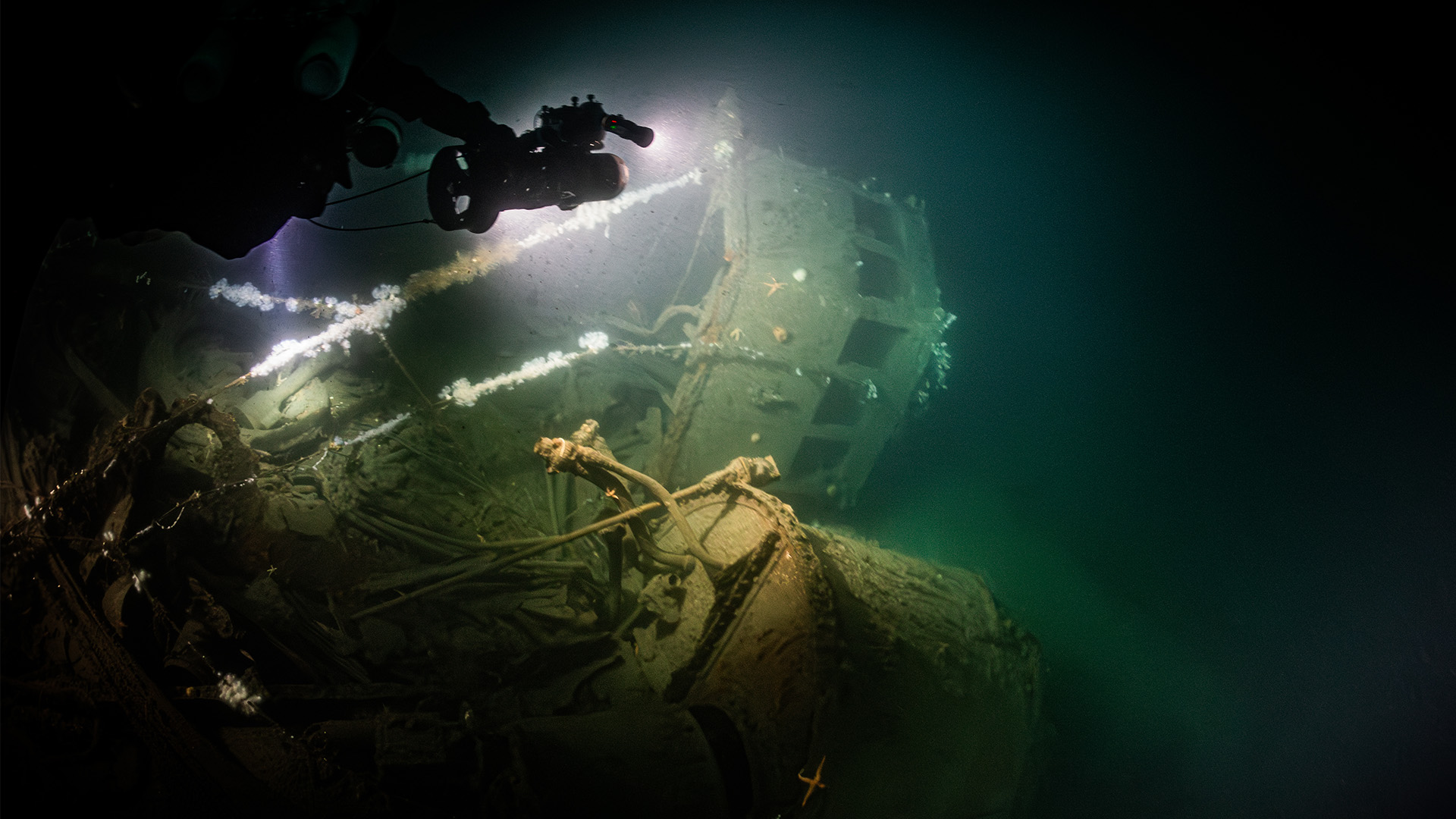
Ban on divers entering military shipwrecks aims to protect sailors' final resting places

The wrecks of sea vessels - including warships - will soon be protected thanks to the amended Armed Forces Bill.
The Bill, which cleared the Lords at its third reading this week, will automatically give sunken and stranded vessels a "protected places" label and give legal protection to the resting places of thousands of sailors and mariners.
Divers will be allowed to approach wrecks to look at the vessels but - importantly - will not be allowed to touch or enter them.
Under existing laws, more than 100 wrecks are on the list of protected places after ministers stepped in to give them the designation.
Among them are the recently discovered First World War wrecks of Alarm-class torpedo gunboat HMS Jason, Edgar-class protected cruiser HMS Hawke and Town-class light cruiser HMS Nottingham, located by civilian dive teams off the Scottish coast over the past five years.
Also included is the French minesweeper Emile Deschamps, which foundered after striking a mine two miles northeast of the North Foreland coast in 1940 while acting as a troopship in the Dunkirk evacuation.
The change in the law means the protected places label will apply without the need for a minister's help.
Until this point, ministers weren't allowed to designate vessels as protected places if they sank before 4 August 1914.

The Armed Forces Bill will lift this cut-off date, allowing vessels sunk before the First World War to receive protections.
While the Bill has now been backed by MPs in the Commons and peers in the Lords, both Houses of Parliament must settle on the final wording in a tidying-up process sometimes known as "ping-pong".
Defence minister Lord Coaker had previously described the law as an opportunity to "renew the nation's contract with those who serve".
At the second reading earlier this year, he said: "This substantial Bill does much for our current and former personnel and the Armed Forces community as a whole to provide better support, better housing, better protections for victims of crime and to provide greater resilience for the nation by increasing the size and availability of the strategic reserves."
Once the Bill is passed, it will also establish a Defence Housing Service, tasked with "improving the supply and quality of defence housing", make changes to the military justice system and raise the maximum call-up age for the strategic reserve of retired and former military personnel from 55 to 65.
The existing Armed Forces Act, which the Bill will update, is due to expire on 14 December.
Related topics
Join Our Newsletter