Behind the scenes of the largest parachute jump over Europe in 20 years with 16 Air Assault Brigade

BFBS Forces News has been on exercise with UK and French personnel in Germany, with our reporter spending time with Paras at they pack parachutes, check kit – and get haircuts.
"We exist to protect the interests of our nation, and if our nation asks us to go to war, then it's our job to be ready for that war."
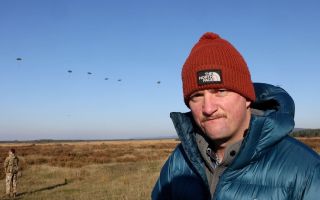
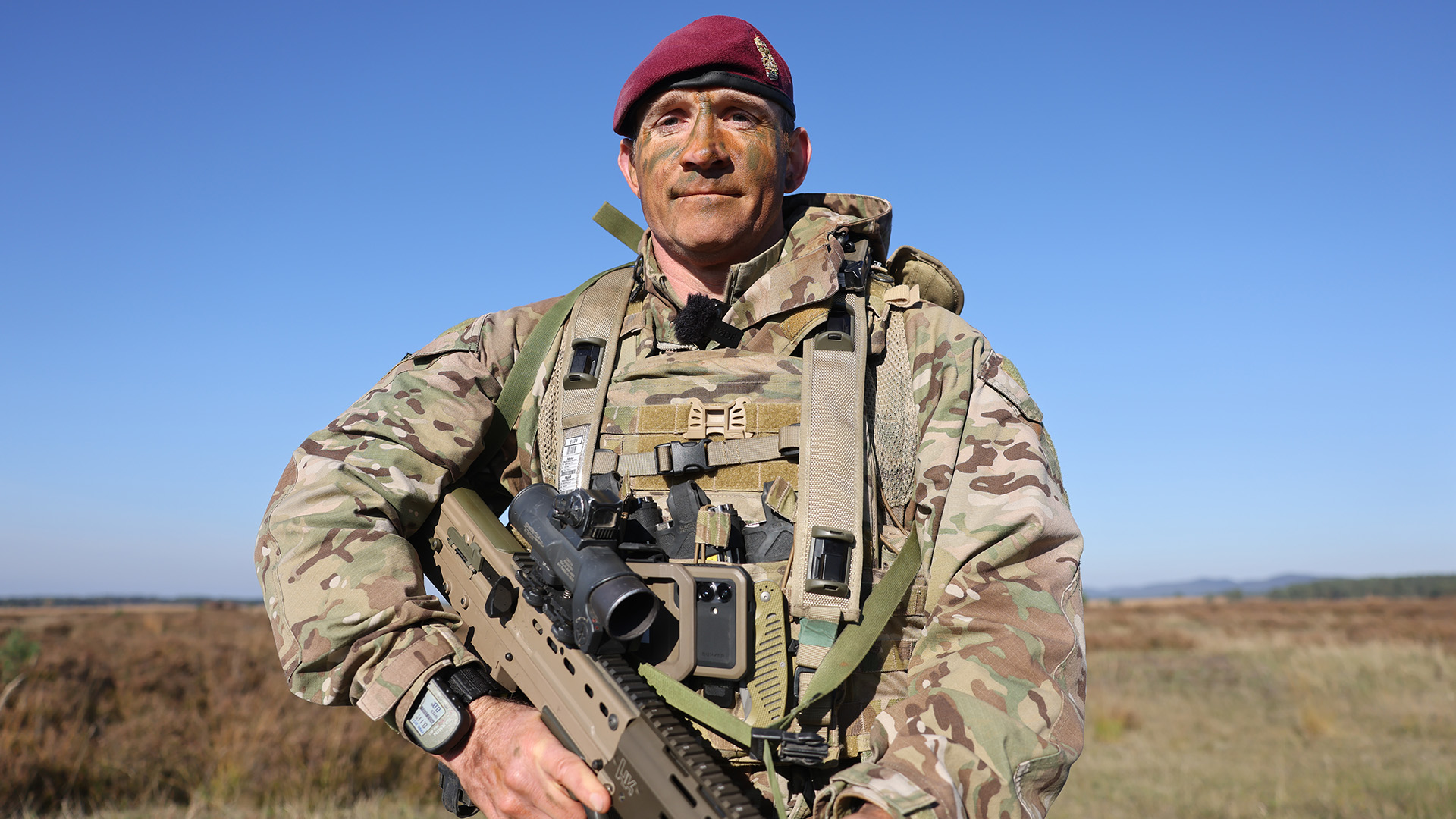
Those were the words of Brigadier Ed Cartwright, who spoke to me just minutes after jumping out of the side doors of an A400M Atlas aircraft and into the test phase of a significant exercise being held on European soil.
Leading from the front
Tipped as a possible future Chief of the General Staff, Brig Cartwright leads from the front – the first of 570 airborne troops to jump – which, according to him, went well this time.
He is in charge of 2,700 soldiers who are being put through their paces on what's known as a validation exercise.
This is the internal process designed to ensure that the men and women tasked with meeting the UK's defence needs are up to the job.
Given that among those he commands sit hundreds of paratroopers from 3rd Battalion, The Parachute Regiment, keeping his personnel in an aggressive state of mind is not a major concern.
The day before – final prep and haircuts
Eighteen hours earlier, I met some of the men preparing to jump. We found ourselves in a huge – yet cramped – aircraft hangar at Celle Air Base, in the centre of Germany.
The location was itself impressive: captured by the British at the end of the war and turned into an RAF base. From here, thousands of aircraft took off to deliver crucial supplies into Berlin during the Airlift of the late 1940s as the country was divided.
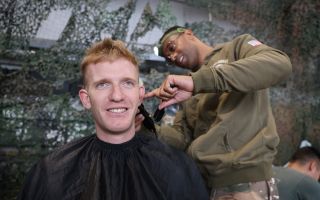
Inside the hangar, the activities I witnessed ranged from soldiers playing cards and reading books to preparing kit and, somewhat strikingly, fitting in last-minute haircuts; if the Paras are going to jump into action, they're at least going to look good when they land.
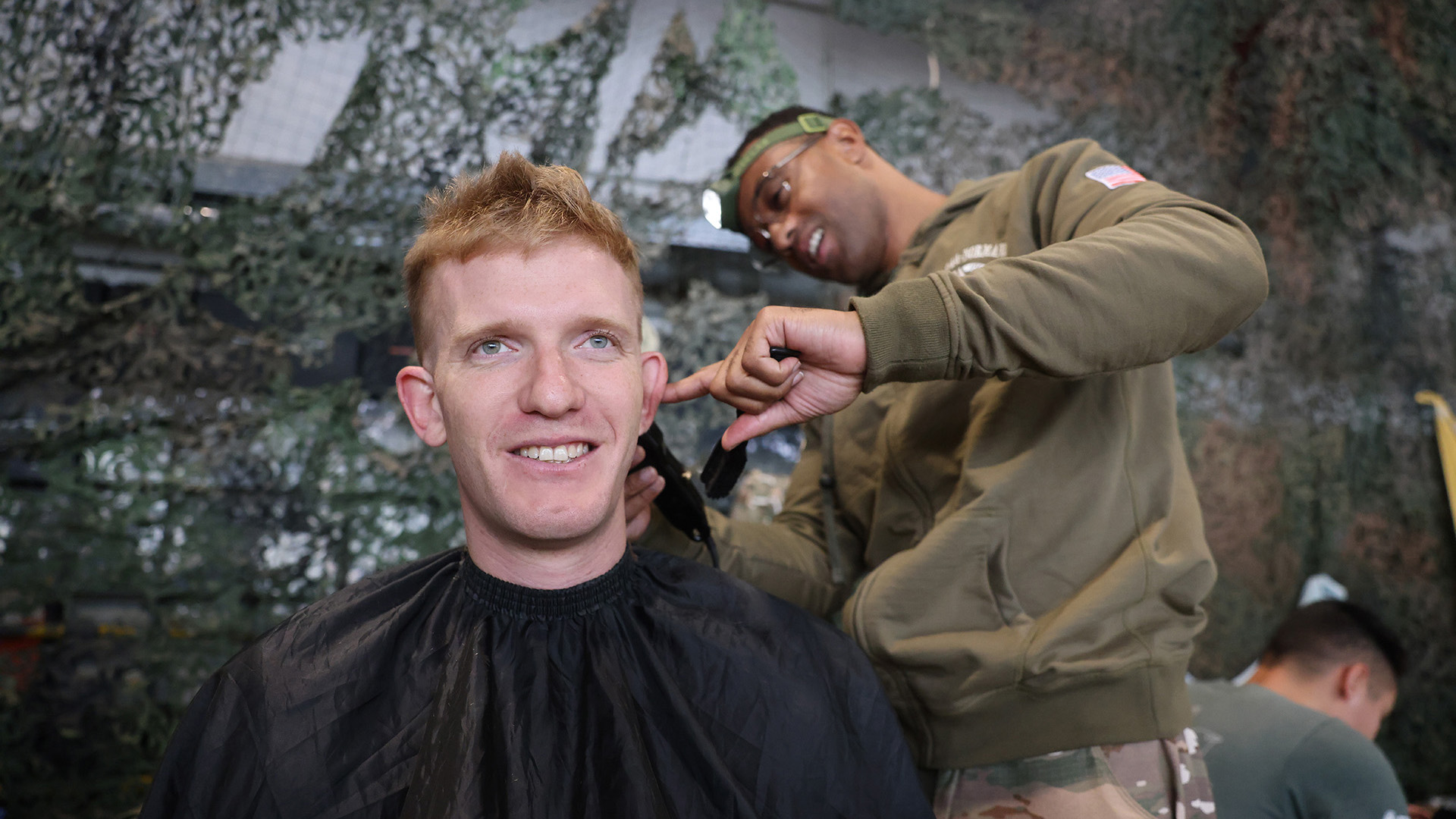
"It's busy and a bit chaotic," Private Callum Hardy, a drone specialist in 3 Para, said. "We're getting our final bits done before we jump."
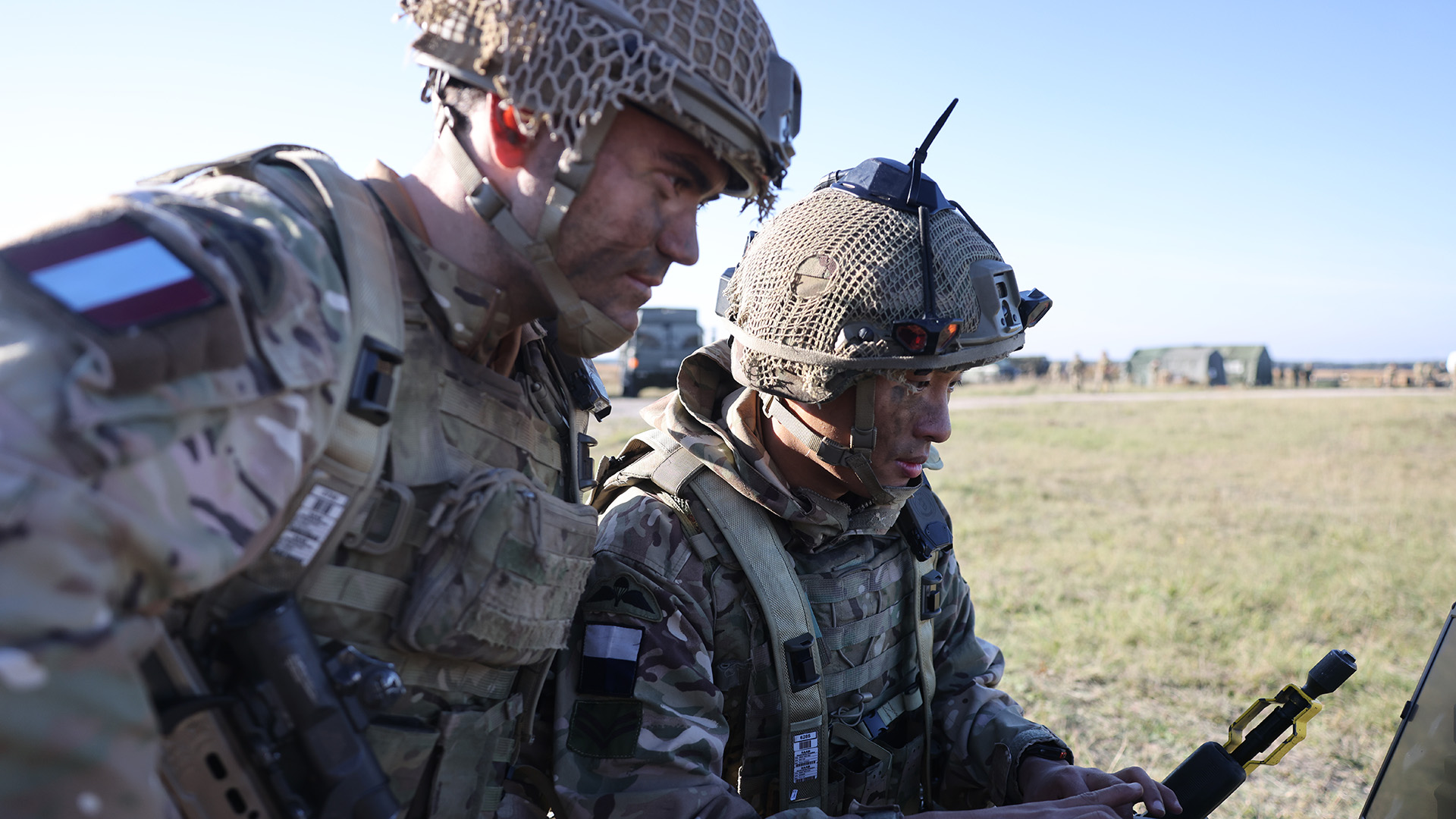
When he jumps, he will have in his possession, alongside all the standard kit Paras jump with, some of the Army's newest Unmanned Aerial Vehicles (UAVs for short, or more commonly known as drones”, which he has been learning to operate for months in advance of this deployment.
“We use both ISR [Intelligence, Surveillance and Reconnaissance] and FPV [First-Person View] drones that work in tandem to strike targets, whether it be so many kilometres away or not, and to support our other assets in our battalion. We work with everyone, basically," he explained.
Jumping with the British Paras is a company of French paratroopers drawn from the 3e Régiment de Parachutistes d'Infanterie de Marine, who, like their UK counterparts, are some of the toughest soldiers in their military.
For this exercise, they are fitting – seamlessly, I was told – into the 3 Parachute Regiment Battlegroup, led by Lieutenant Colonel Ollie Mikulskis.
"I'm about to take my battlegroup, which isn't just 3 Para but the logistics, artillery and engineers that also come to me, and tomorrow we're hoping to parachute into the exercise and participate there afterwards," he said.
"We're in the middle of what we would call the airborne timeline, which is between being given orders to parachute and actually descending under a parachute canopy onto an exercise."
Lt Col Mikulskis added: "Everyone's packing kit; they’re lining it up with how they're going to go onto the aircraft and we're getting ready for our enforced rest before we jump early tomorrow morning."
The jump – broken ankles and dislocated shoulders
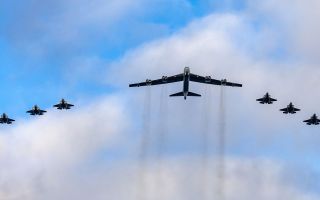
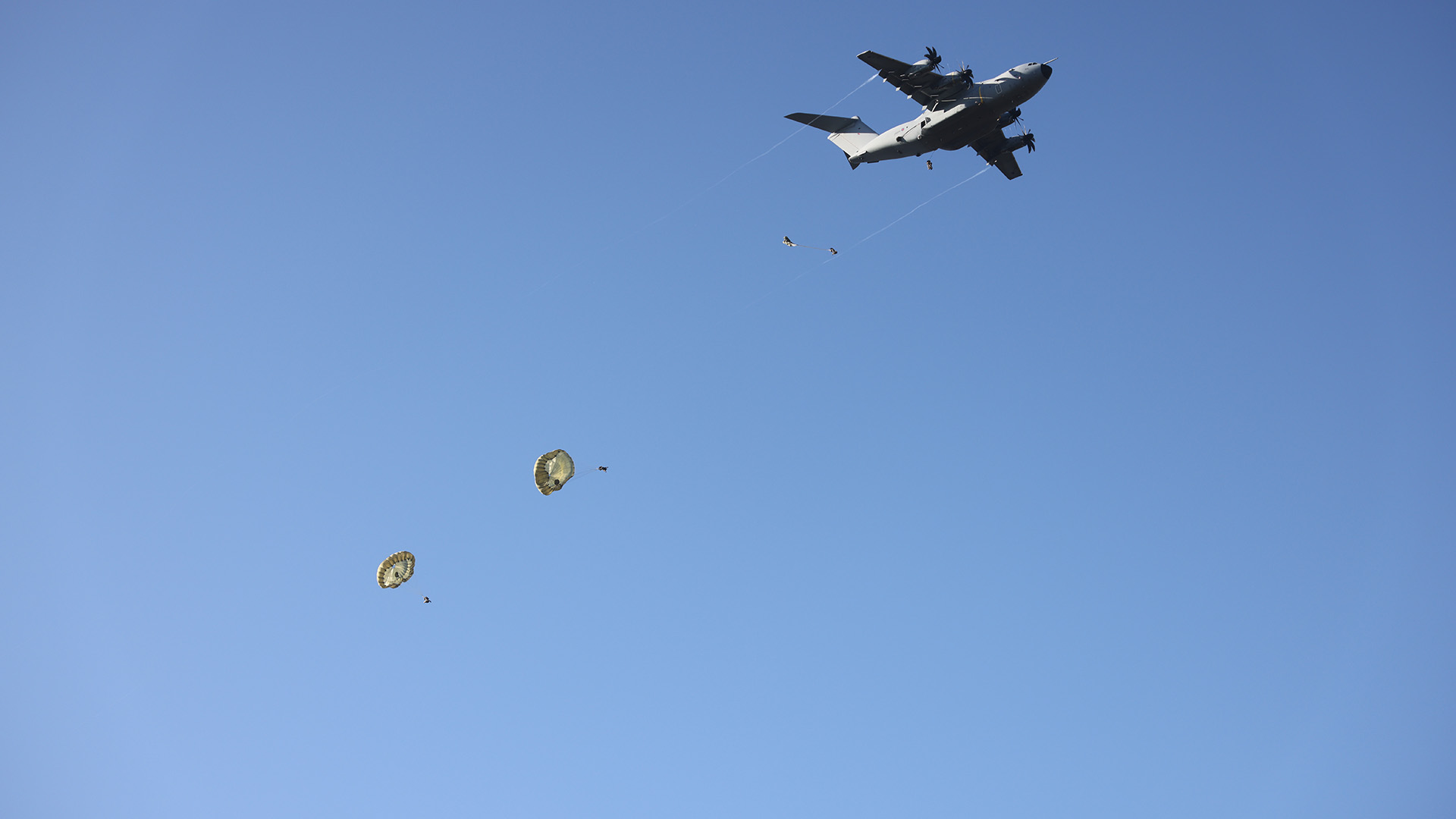
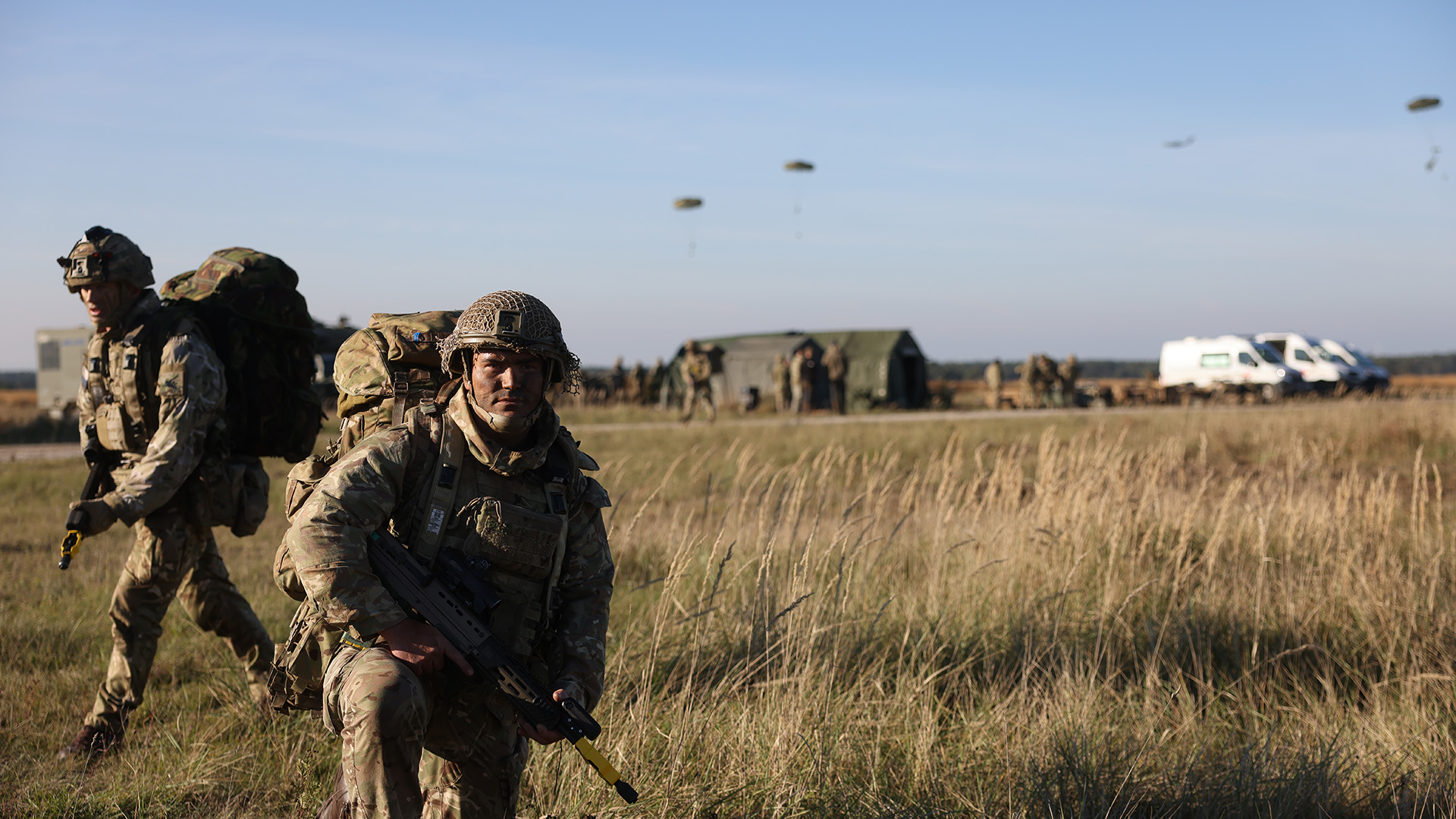
Right on cue, the four A400M Atlas aircraft carrying the battlegroup appeared as distant dots in the clear skies above western Germany.
I watched as they flew over the landing zone in the centre of the Sennelager training area – initially to recce the ground – before circling round and opening their doors.
Next week marks 70 years since British paratroopers last jumped into conflict. That was during the Suez Crisis of 1956, and coincidently, it was 3 Para doing the business back then.
But such a long passage of time indicates how slight the margin is for something like this to happen in modern armed conflict. While the Paras have been involved in every fight the British has had a hand in since then, they haven’t deployed under canvas. Add in the modern dilemma of contested airspaces and the ever-present worry of drones, it makes you wonder if the Paras will ever jump into war again.
For this jump, unlike the real thing where all 570 personnel would jump in one continuous wave, the aircraft, crewed by the RAF, dropped repeated sticks over the course of about half an hour.
It was an impressive sight with few hiccups. On one pass, two soldiers became entwined; on another, a parachute dropping equipment failed to deploy correctly. Later, I learned that some had suffered broken ankles, while others had received dislocated shoulders.
Nothing deemed serious, and all within the 1% injury rate factored into a jump like this.
And it was because of the magnitude of the activity – the largest in 20 years – that the Chief of the General Staff, General Sir Roly Walker, took to X to share pictures and details of the event.
Back on the ground, Brig Ed Cartwright outlined how the jump and this exercise fitted into the context of UK defence and the war in Ukraine.
"It's our responsibility to be ready for war," he said.
"And here we are, on the continent, training to defend European cities and protect our vital national interests."
Join Our Newsletter