Hell ship: PoWs' families get closure as wreck of Hōfuku Maru and its lost souls found

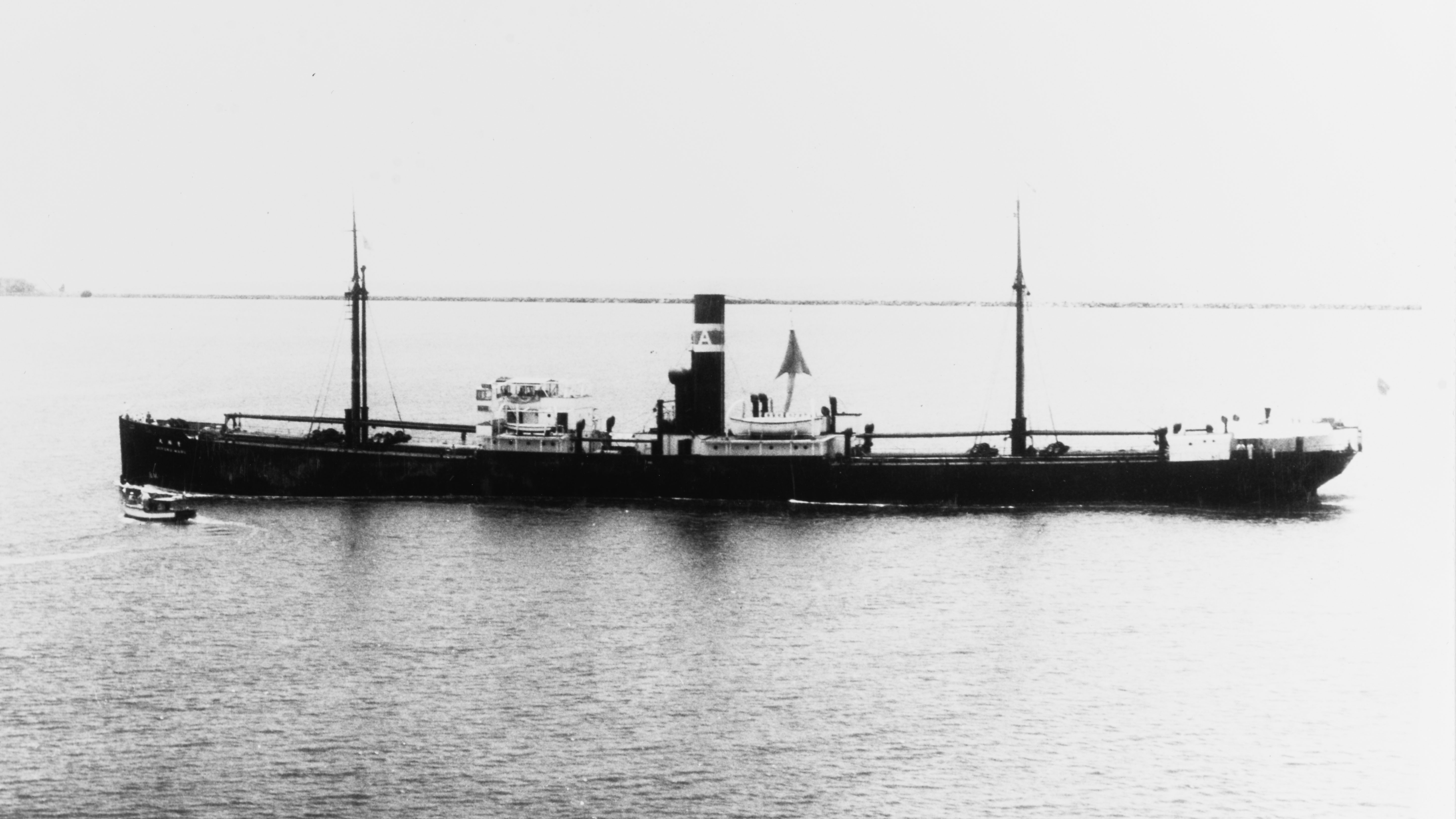
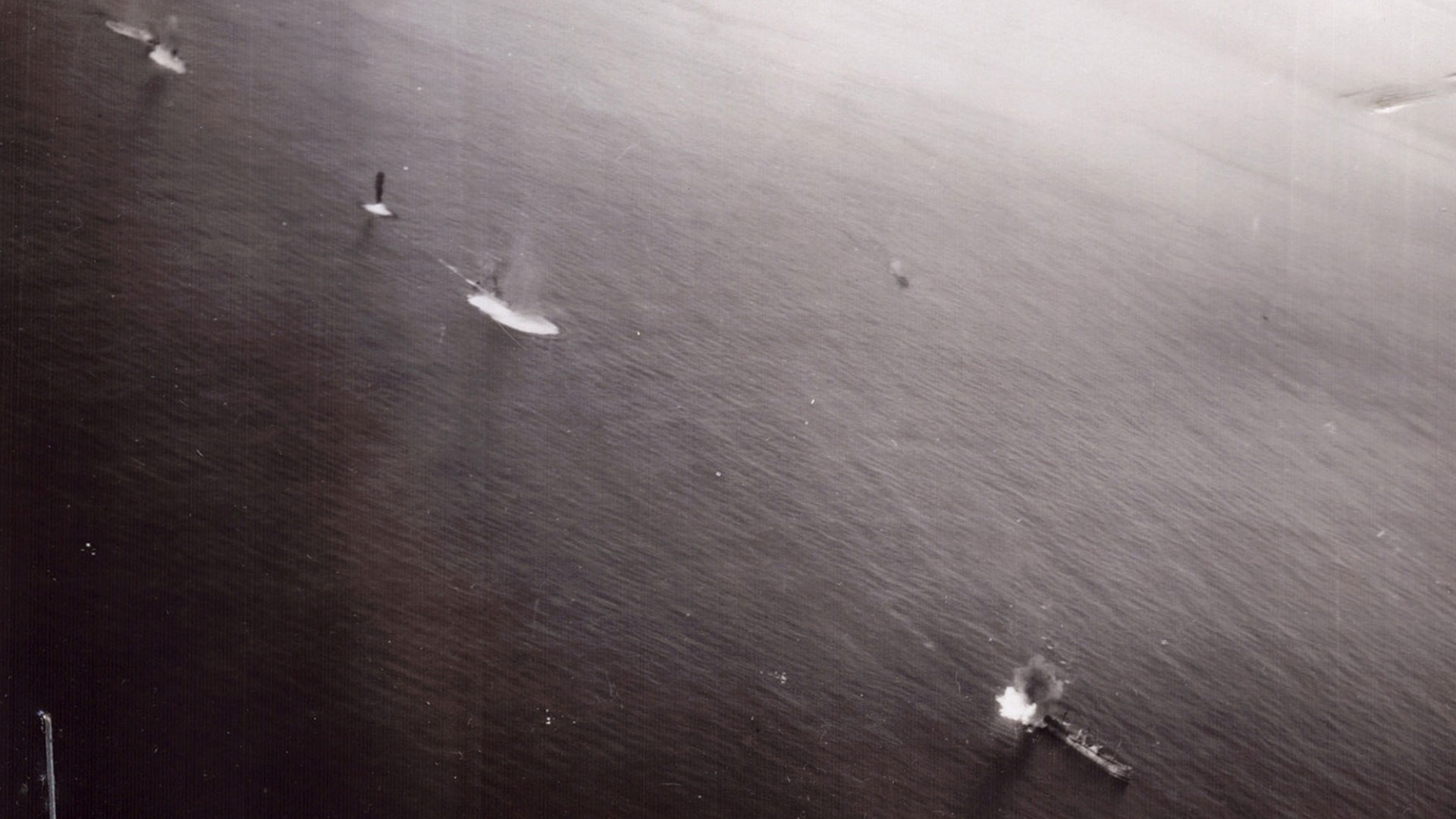
Little did the pilots of US carrier aircraft from Task Force 38 know that the cargo ship they were about to bomb contained more than 1,140 British and Dutch prisoners of war, crammed like sardines in the hot, rancid, overcrowded holds of hell ship Hōfuku Maru.
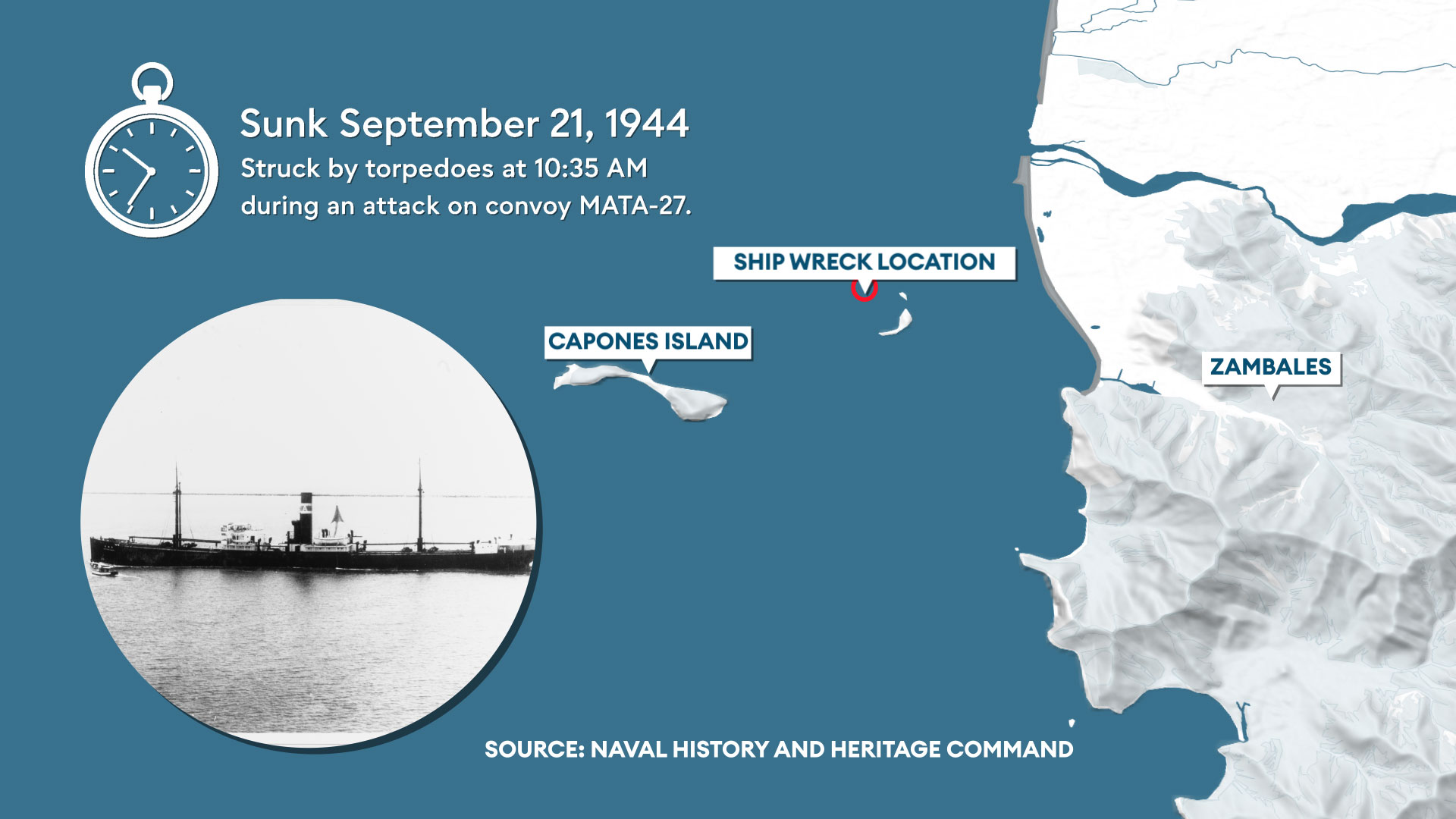
The prisoners, weakened after years of captivity in Japanese camps, stood little to no chance of survival when the unmarked vessel they were being transported in was attacked by aerial bombs and torpedoes on 21 September 1944, broke in half and sank rapidly.
Of those 1,140 who had somehow survived the hellish journey up until this point, about 800 Dutch and British PoWs, according to the latest data, died.
Now, more than eight decades later, the location of the Hōfuku Maru, also known as the Toyofuku Maru, has been discovered off the coast of San Narciso in the Philippines – 30 nautical miles south of where people thought it had been – giving closure to the families of those who died.
Retired US Navy officer Gerald 'Randy' Anderson, founder of the Hellships Memorial Foundation and who was stationed at US Naval Station at Subic Bay, Philippines, for five years, told BFBS Forces News: "The successful identification of the wreck as the Hōfuku Maru provides all those who perished on her with a known resting place, a location which can be protected and act as a place of remembrance and ensure that those who suffered are not forgotten."
Floating dungeons
These unmarked merchant vessels used by the Imperial Japanese military were known as hell ships because of how horrific the conditions on board were.
Essentially floating dungeons, the conditions endured by PoWs on the hell ships were designed to torture and humiliate those held captive.
Photos from within hell ships are rare and so we rely on sketches plus oral and written accounts from those who survived.
These men, who were heading towards labour camps, lived in cramped holds with little to no food or water.
Those who lived to tell their story describe being packed like sardines in a tin and, with nowhere to go to the toilet and a lack of ventilation, there were often outbreaks of dysentery and vomiting.
Japanese guards were also known to behead PoWs for rule-breaking. The prisoners knew they had to behave.
The late Bill Marshall was a prisoner of war for three-and-a-half years and was the lifetime president of the Java Far East Prisoners of War Club 1942.
Two years before the Hōfuku Maru sank, he was transported on the very same hell ship.
Speaking to BFBS Forces News in 2015, the RAF veteran said: "If it was a small misbehaviour, you just got a few punches across the head and a slap or two.
"They put rice mats down and then crammed you into the holds, as many as you could get.
"You couldn't really lie down to sleep properly but as we went out to the tropics, we run into hurricanes and dysentery developed on the ship and we lost a few people and there seemed to be a little bit more room to stretch out."
Speaking to BFBS Forces News, Tim Beckensall, Hellships Memorial Foundation Search Director, said: "The abhorrent suffering of the PoWs aboard the Hōfuku Maru multiplies when you realise that the vast majority had only just survived the ordeal of building the Thai-Burma Railway.
"Having barely survived... they entered the holds of the Hōfuku Maru already weakened by years of malnourishment and disease."
A harrowing account from a hell ship survivor that haunts Mr Beckensall to this day reveals that after a hell ship sank, PoWs were beaten back from rescue ships while Japanese crew were saved first.
The scene is made more chilling by the fact that even livestock was rescued before the prisoners, exposing the brutal hierarchy of the moment.
He said: "That really sends a shiver down my spine, because it says a lot about Japanese treatment of the PoWs."
The discovery of the Hōfuku Maru
The location of the hell ship's wreck was uncovered due to a smoking gun document found in the Japanese archives.
If the team had not been originally looking for the location of US Navy pilot Lieutenant John F Thompson, killed in action on 14 December 1944, and his missing fighter aircraft, Grumman F6F Hellcat, the hell ship's location might still be a mystery.
During a dive to discover Lt Thompson's final resting place, Mr Beckensall discovered a wreck but it turned out to be a post-Second World War vessel.
Before putting this line of enquiry to rest, he asked John Duresky, the Hellships Memorial Foundation's Lead Researcher, to go into the Japanese National archives and confirm some details, whereupon Mr Duresky made another discovery.
He told BFBS Forces News about the astonishing discovery, saying: "When I found the after-action report detailing the convoy and the sinking of the Hōfuku Maru, I was literally stunned [because I] could see the actual sinking location was 30 nautical miles from where it had been reported.
"Everything was there – the written Japanese language report, the sketch of the convoy showing the Hōfuku Maru sunk, details of the American planes attacking the convoy."
Why did it take so long to find the Hōfuku Maru?
After the Second World War many Japanese records were found to be incomplete or had been destroyed and Allied strike reports only gave approximate locations.
In addition, survivor accounts were limited as so few survived and, as Mr Beckensall discovered, those who lived to tell their story often kept the most horrific details to themselves in an attempt to protect their own mental health and they didn't always know the real name of the hell ship they had been transported on.
Only through modern archival research, sonar technology and underwater surveys was identification finally possible.
A surprising discovery
During the process of confirming whether the wreck they had discovered was in fact the Hōfuku Maru there weren't many surprises.
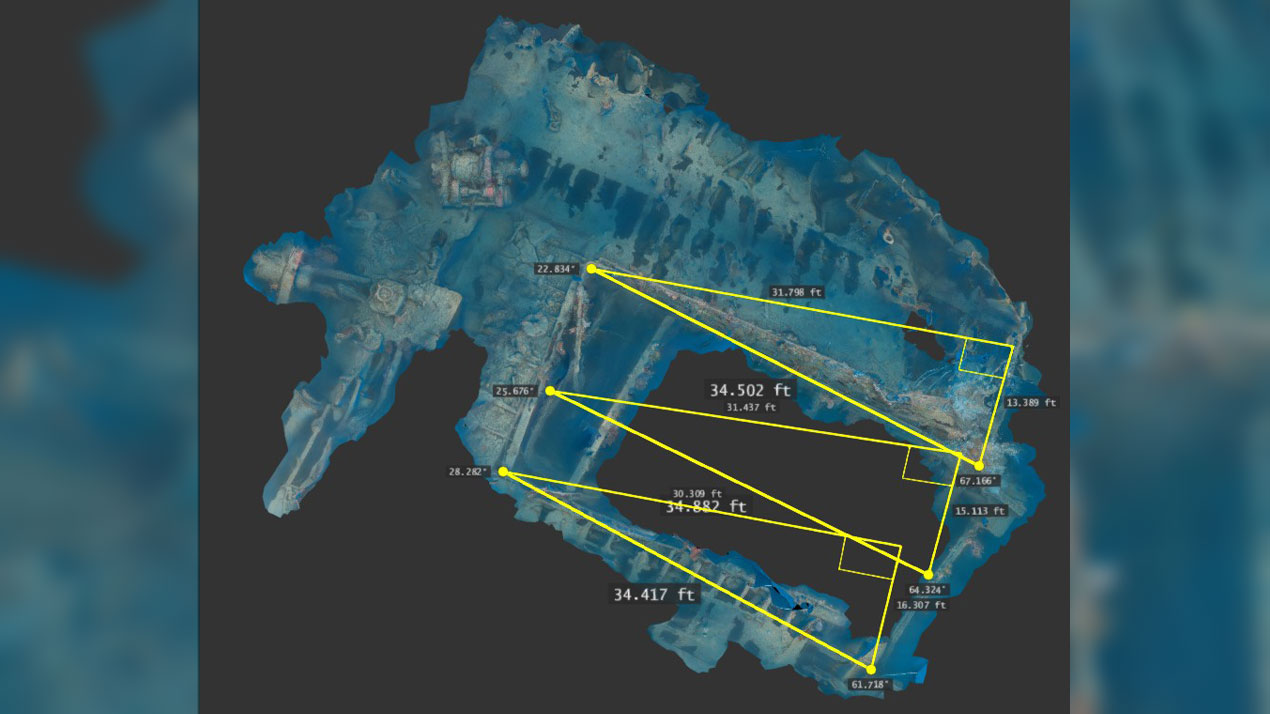
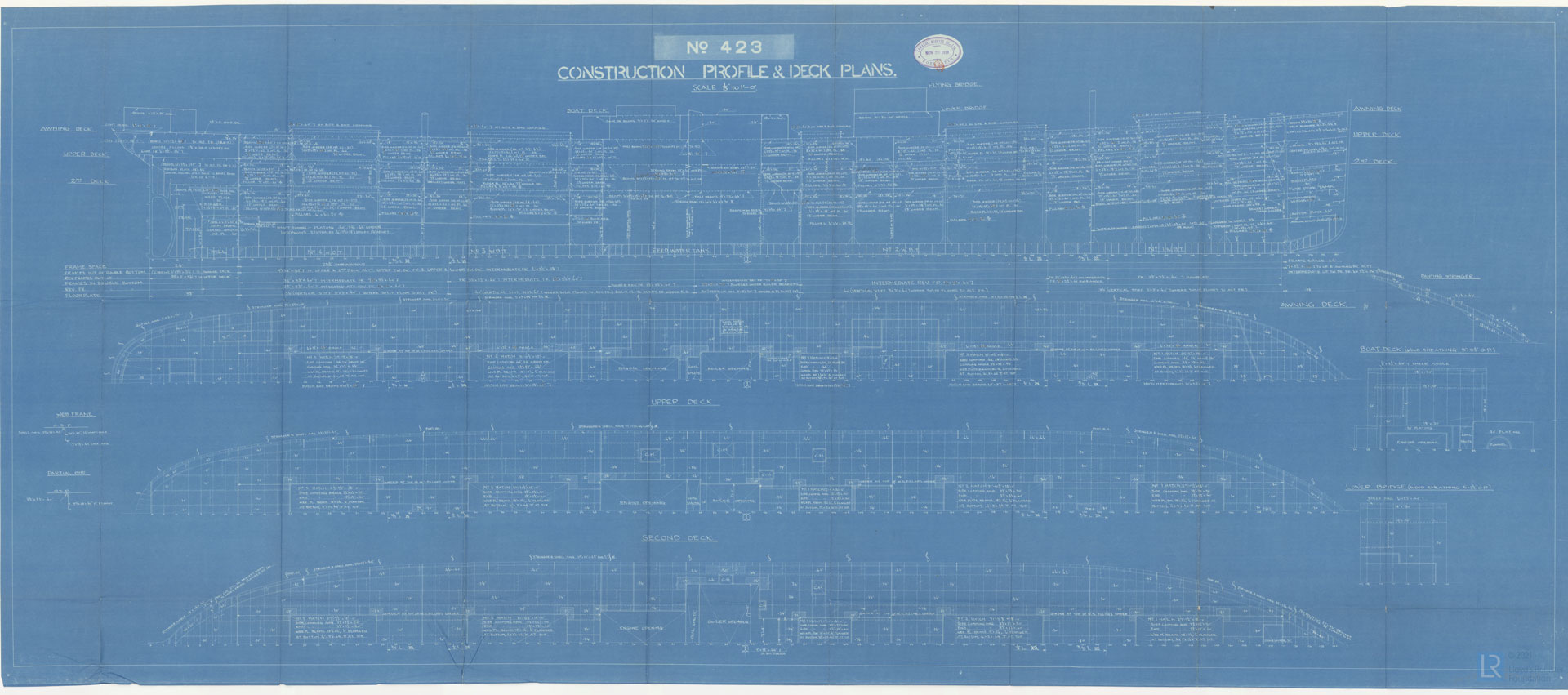
Data gathered from several independent sources such as side-scan sonar mapping, underwater photography, comparison with shipyard plans and analysis of bomb damage patterns proved over and over again that they had discovered the Hōfuku Maru off the coast of San Narciso in the Philippines.
However, the condition of the wreck was significantly worse than the team was expecting.
Unlike wrecks discovered in clear water, the Hōfuku Maru is covered in silt and has become home to plenty of fish and soft coral.
Dead fish discovered lying on the wreck is a sign that local fishermen have been blast fishing in the area causing further damage in the eight decades since it first landed on the seabed.
Mr Beckensall said: "Unfortunately, our wreck has undergone a lot of post-war damage and most of that is caused by humans, of course.
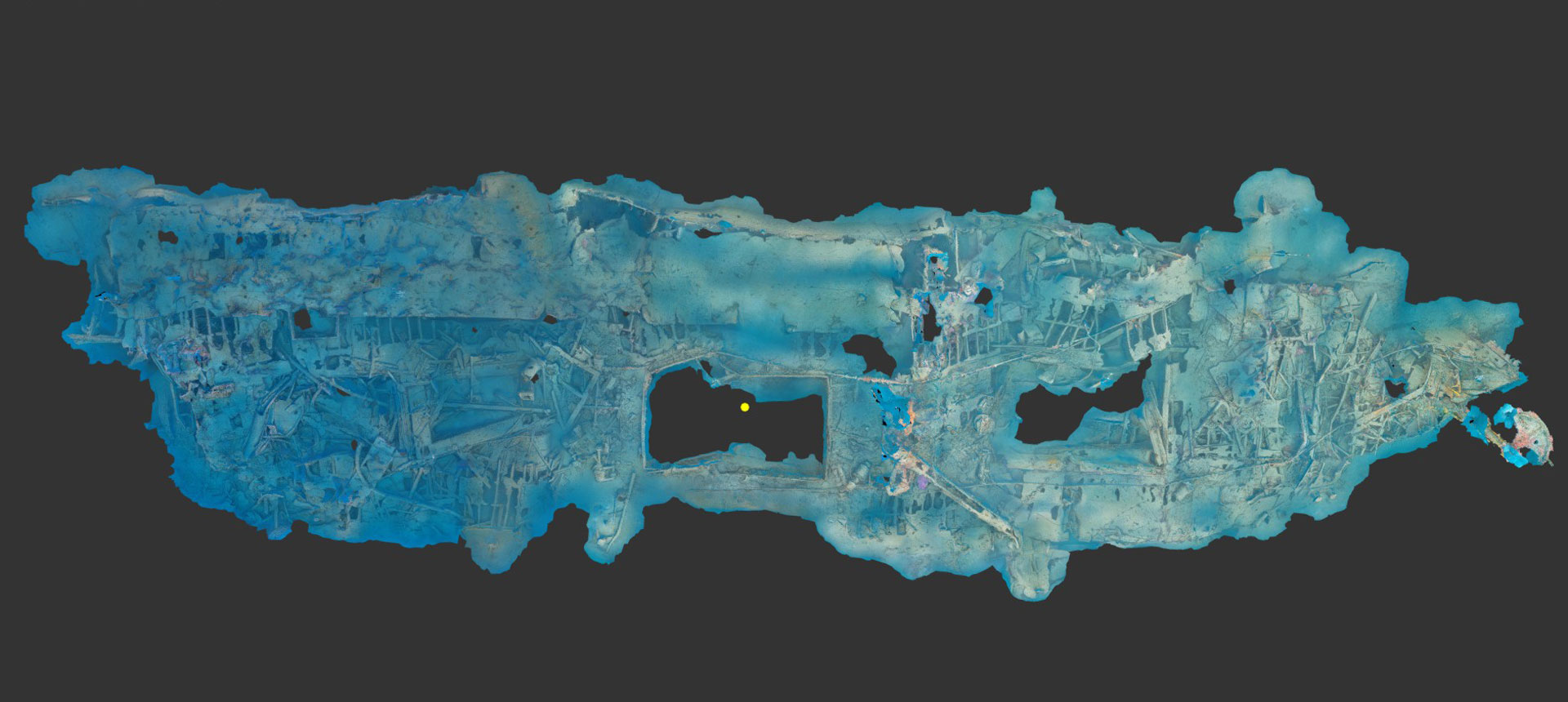
"The other part of this surprising state was we do believe, but we haven't found any primary evidence for this just yet, but there is a very good chance that the wreck was leveled down to the deck, probably in the '50s, for shipping to pass through it."
Is the Hōfuku Maru now a war grave?
The Hellships Memorial Foundation considers the site a maritime war grave and the Netherlands agrees.
In a press release following the discovery of the wreck, the Cultural Heritage Agency of the Netherlands said: "The wreck is considered a war grave, where the sanctity of the grave is respected out of reverence for the victims and their families.
"Therefore, the ship will not be excavated but left undisturbed.
"The Netherlands maintains good contacts with all involved countries and is seeking, together with them, a suitable way to commemorate the victims."
Mark Kelso, Director of Descendant Affairs, joined the Hellships Memorial Foundation team after the successful identification of the Hōfuku Maru.
However, the hell ship researcher has a deeply personal connection to the vessel's discovery.
Mr Kelso is the grandson of Lt Walter Kelso, a soldier of the US Army Air Corps who survived three hell ship journeys – the Oryoku Maru, the Enoura Maru and the Brazil Maru – and died at Kokura Military Hospital, Fukuoka POW Camp 22, Japan on 4 February 1945.
He said: "When discoveries like these are made, our loved ones are no longer lost to history.
"They are back with us in more than stories and affirmed in the overall victory over tyranny."
No one's seeking revenge
The Hellships Memorial Foundation hope that the identification of the Hōfuku Maru and a memorial created to honour those who died, will help future generations learn from the past.
Mr Beckensall says he often meets people his own age who have never heard of hell ships, let alone the Hōfuku Maru.
He said: "So we can't really expect our children and grandchildren to have heard of a hell ship and know what that is and the horrors that the people on board suffered.
"No one's here seeking revenge or pointing fingers.
"This is about learning about human nature and learning from history... about the dangers of going too far."
Related topics
Join Our Newsletter