Going underground: Army Reserve medics set up field hospital below street level

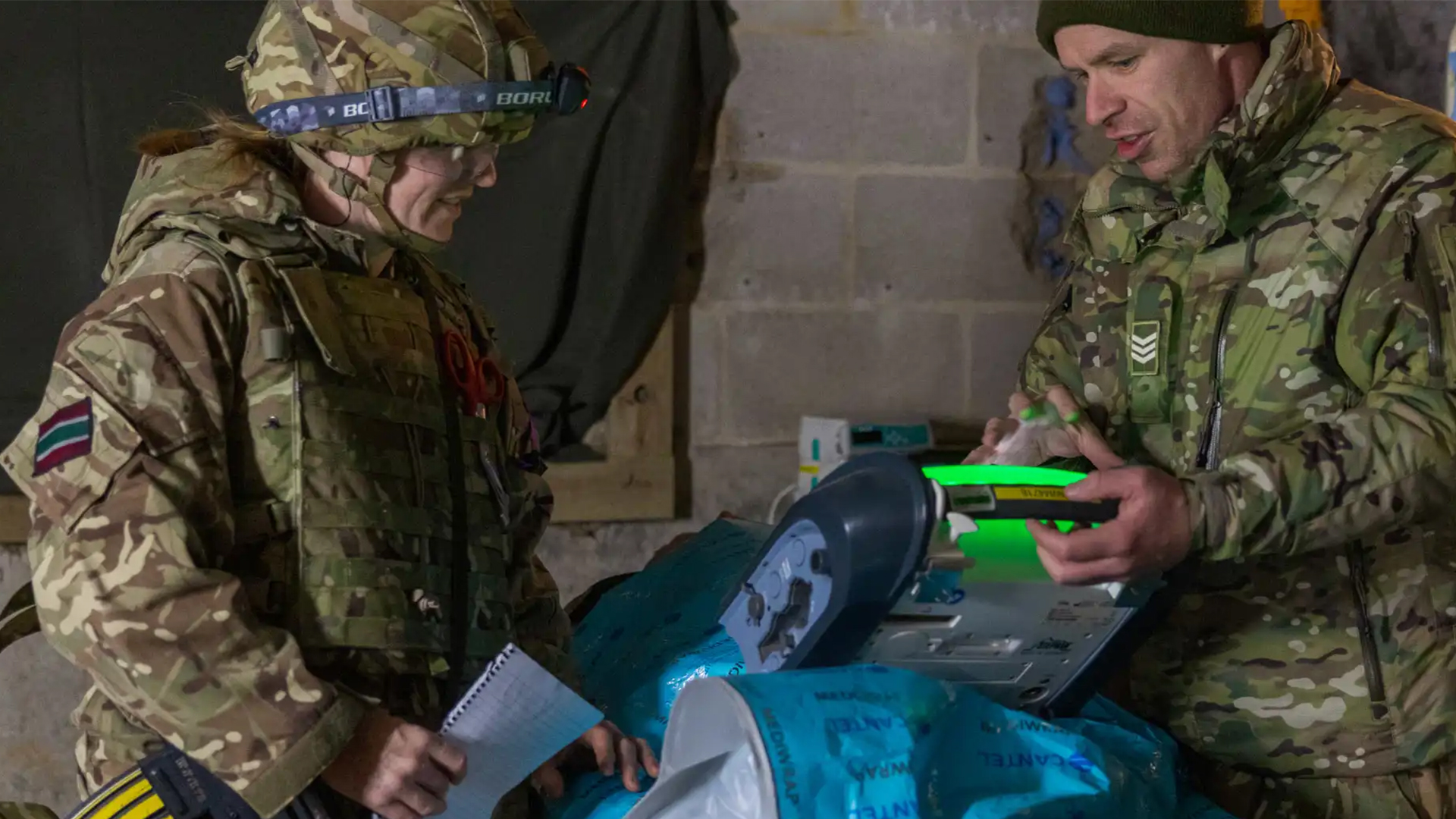
Army Reserve medics have used their annual exercise to test a different type of battlefield medical care, heading below street level to do so.
Instead of setting up traditional large hospital tents marked with Red Crosses, the soldiers from 215 (Scottish) Multirole Medical Regiment (215MMR), part of Second Medical Group, used an innovative method.
The idea was to trial a dispersed hospital concept in a contested urban environment, so they split their medical departments into smaller groups.
Doing right inside the ruins
These teams then worked in different basement locations, in simulated bombed-out buildings, creating a hidden hospital beneath the street.
The exercise took place at the FIBUA (fighting in built-up areas) training facility on Salisbury Plain in Wiltshire, where soldiers get the chance to practise operating and fighting in towns and cities.
Setting up this way would offer a number of benefits in a real-war scenario.
A dispersed approach makes field hospitals much harder for enemy forces to spot.
It also offers some protection against drones, artillery and rocket systems, while minimising the impact of collateral damage.
Lessons learned from Ukraine
The exercise was called Paieon Cyclone – named after the physician in Greek mythology who healed the gods' wounds when they were injured in battle.
Major Iain MacArthur explained: "Exercise Paieon Cyclone has been designed to directly reflect the lessons that have been learnt in the contemporary operating environment.
"[It's] a fascinating way for us to modernise the threats these medics may face in the future.
"This hospital differs in being put into what is really a sub-optimal environment.
"We have obviously been much more comfortable in the past with the huge tent-based hospital or hospitals going into large buildings with set up infrastructure."
Challenges to be overcome
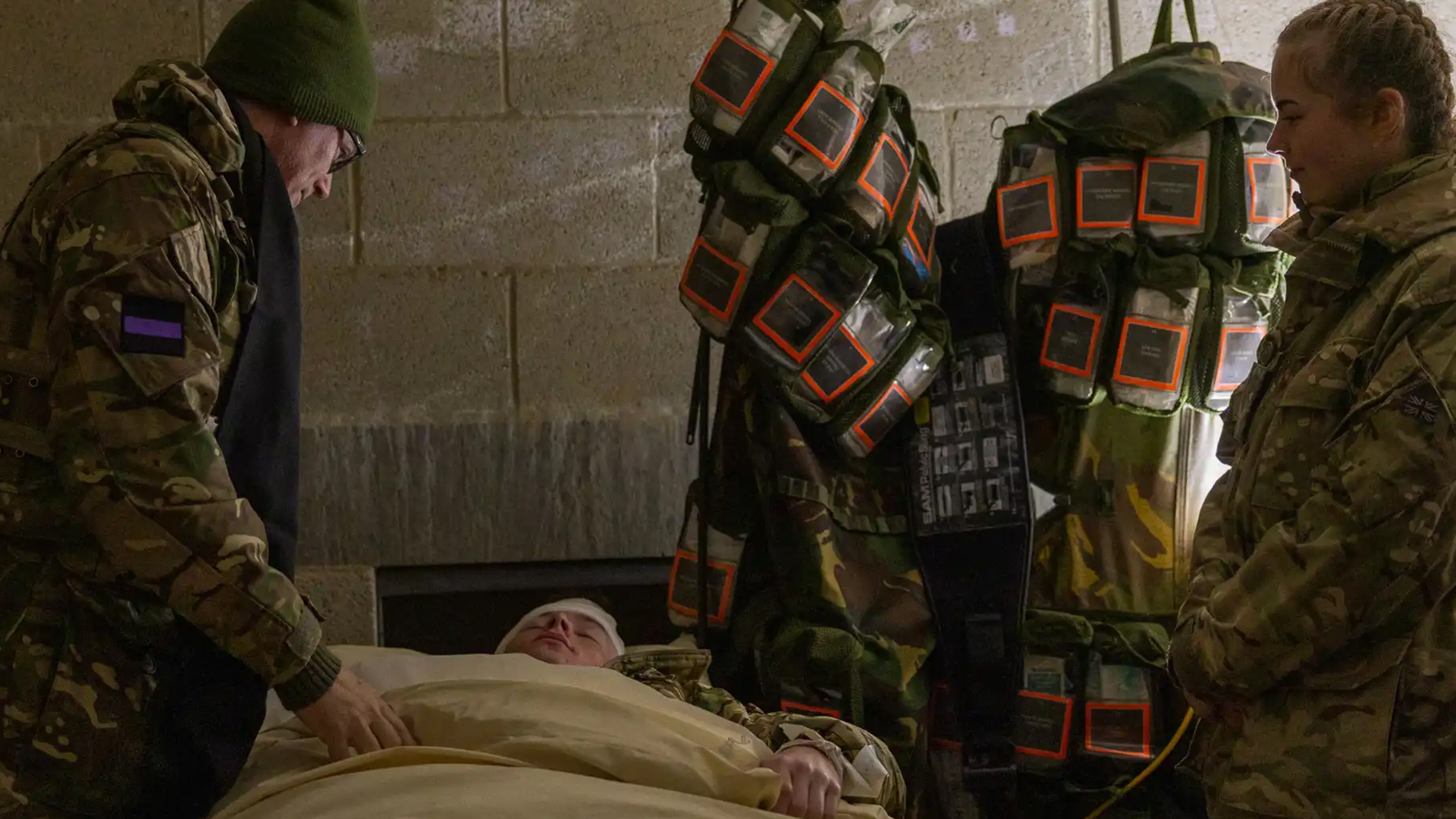
The facility set up by the men and women of 215MMR is the equivalent of a small NHS hospital, but also offers surgery for significant injuries.
However, working underground does create a few challenges.
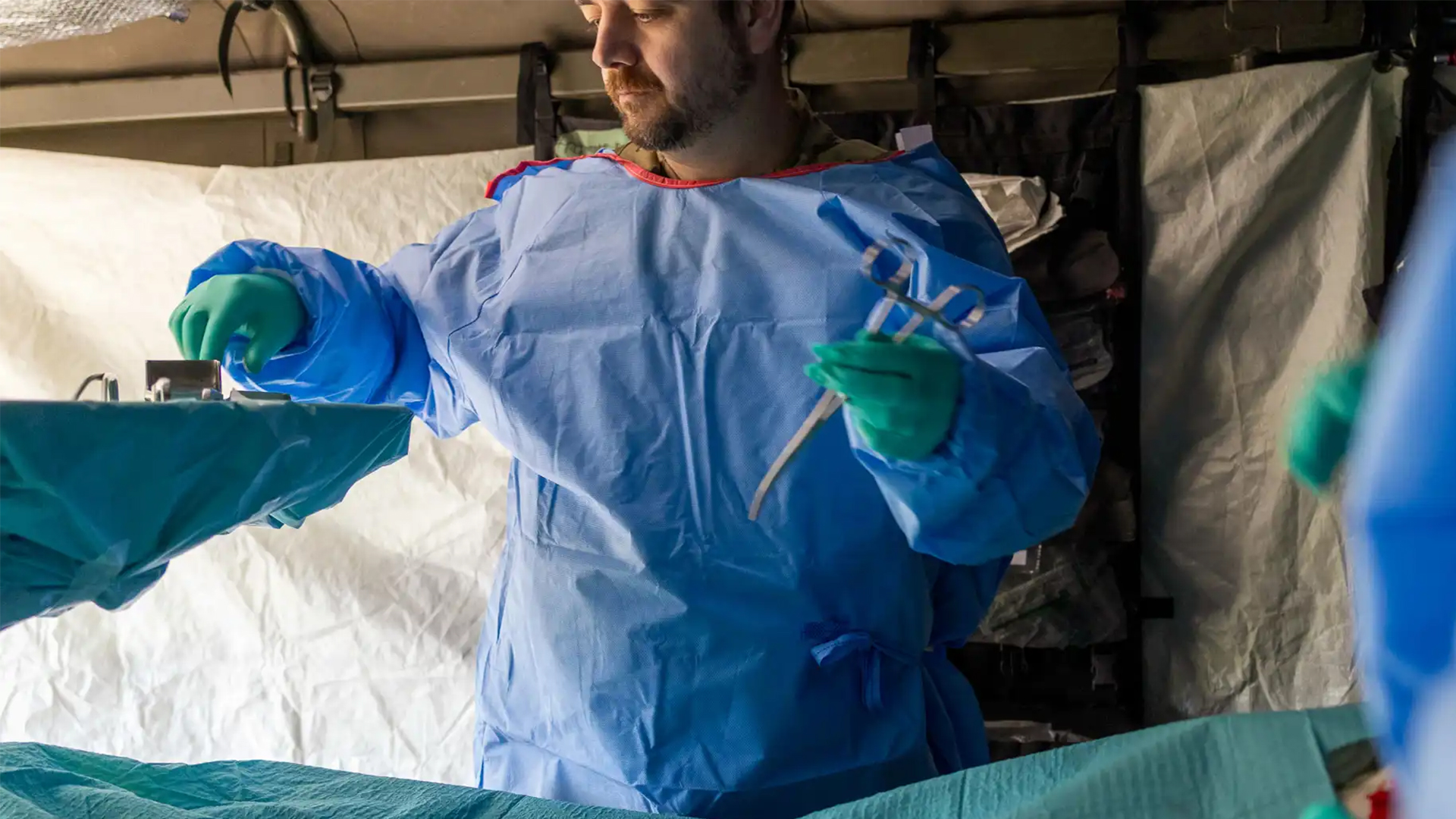
Scrub nurse Corporal Nicole Webber, who worked in the relative dark of an operating theatre, described some of the difficulties.
"Our building was flooded so we had to come up with a concept to make sure we could get rid of the water," she explained.
"And as we have a lot of electrical items, we had to make it safe to use and obviously as hygienic as possible.
"Another issue of being in the basement is getting our patients in and out. We've had to stretcher patients through the windows, and that takes manpower and a lot of communication."
The seal of approval
Several US service personnel were invited to watch the proceedings, one of whom was Colonel Jeffrey Smith from the 519th Hospital Centre in Germany.
The theatre nurse has experience on surgical teams in real conflicts and was familiar with the setting up in buildings of opportunity.
He said: "This is very comparable to what I've seen; this is a top-notch facility.
"Realistically, when you look at the type of wars we train for, the long, large-scale combat operations, to me, this is what it would be; it is a very superior training range."
Join Our Newsletter