Russian missile defences could neutralise Navy's nuclear deterrent, experts warn
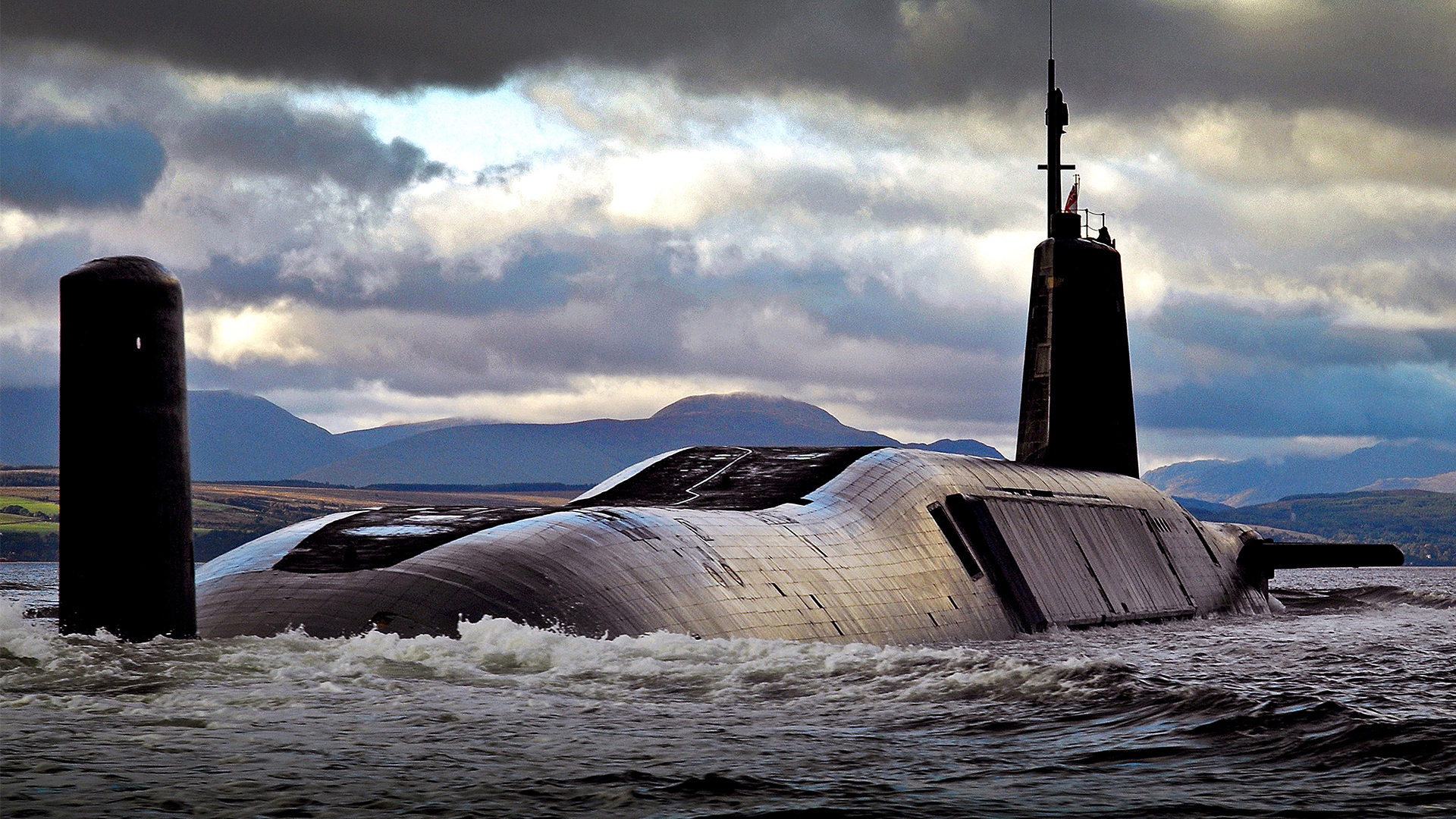
Improved missile defences around Moscow could be neutralising the effectiveness of the UK’s nuclear deterrent, a report has warned.
The Royal United Services Institute paper said Russian systems such as the A-235 and S-500 could pose a problem for ballistic weapons fired from both the Royal Navy and French military.
The Russian capital is protected by a multi-layered ballistic missile defence network - which are effective against a small to medium number of targets.
The assumption was that while some weapons fired on the city would be intercepted, others would be able to penetrate the defences - meaning the nuclear arsenals of the UK and France posed a legitimate deterrence to Russia.
However, this new report, authored by Dr Sidharth Kaudal and Juliana Suess, said the augmented system may mean that this is not the case.
Their paper said: "The qualities of speed and manoeuvrability would serve as a means of maximising probability of effect against a small but very well-defended target set."

They conclude European nations lack the scale of a nuclear power such as the US to guarantee enough missiles are fired to overcome the defences.
Investment in conventional prompt strike capabilities, such as those that can be fired from US stealth destroyers, medium range ballistic missiles and hypersonic glide vehicles (HGVs) has been recommended.
The report added: “Prioritising this mission to the exclusion of others would be especially reasonable if the costs of missiles and availability of ISR [Intelligence, Surveillance and Reconnaissance] do not substantially change.”
“Ballistic missiles and HGVs should be viewed as mutually reinforcing capabilities rather than alternatives.
The report concludes that without a credible pathway to defeat Moscow’s air and missile defences with prompt strike, Europe’s independent nuclear deterrents risk erosion.
Related topics
Join Our Newsletter