Laser breakthrough promises faster, secure military satellite communications from space
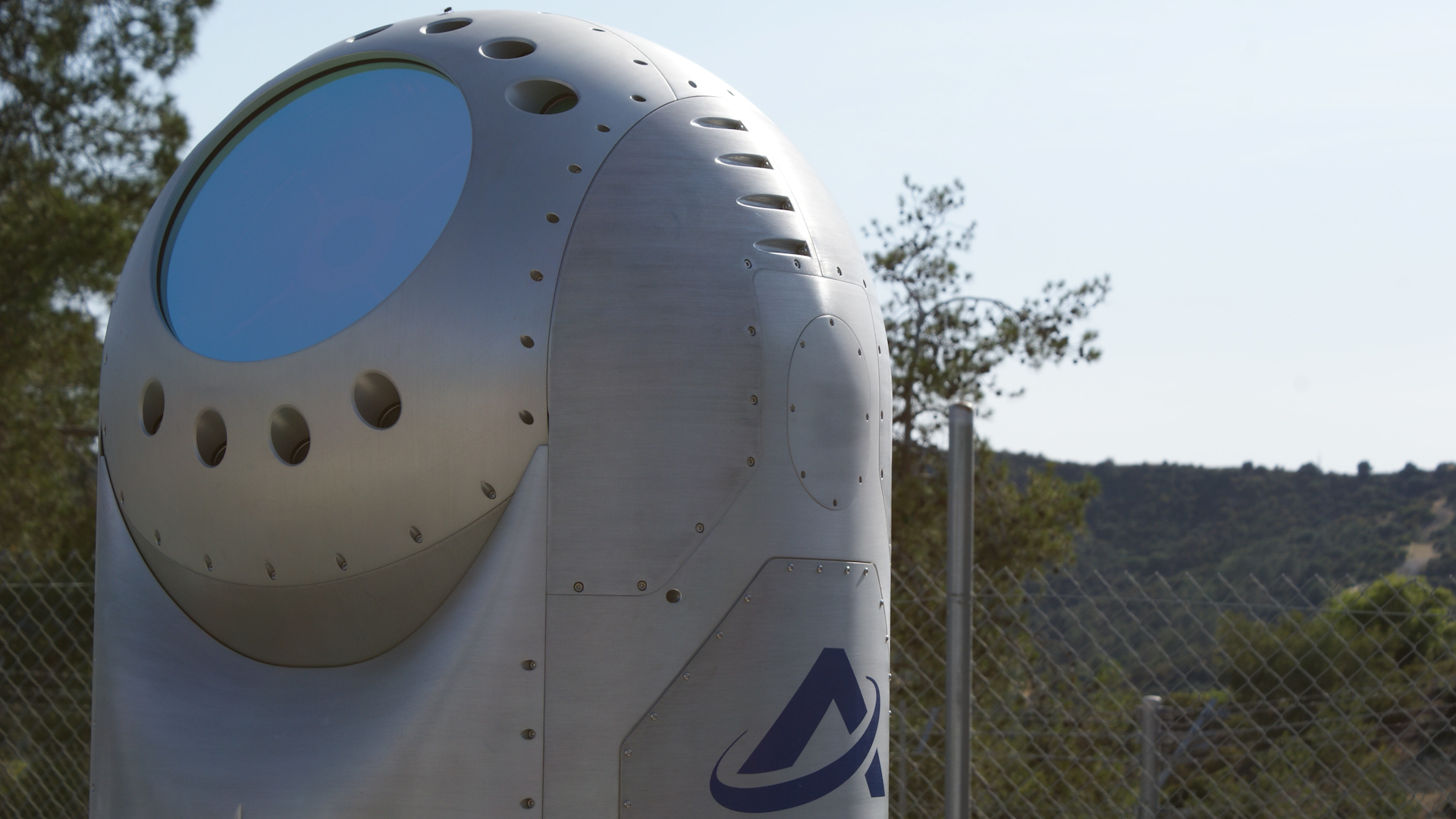
For the first time, the UK has downloaded data from a satellite in space using a deployable laser communications ground station.
The breakthrough by Archangel Lightworks for the Defence Science and Technology Laboratory (Dstl) paves the way for significantly faster and secure military communications.
During a 90-second satellite pass, multiple gigabytes of data were transmitted from a low Earth orbit (LEO) satellite to an optical ground station in the Mediterranean region.
Major milestone
It represents a significant leap in capability – which has been compared to moving from slow dial-up internet to superfast fibre broadband.
Laser communications, also known as free space optical communications, enables high-speed transmissions over long distances.
For military applications such as intelligence, surveillance and reconnaissance, this allows large volumes of information to be sent quickly, which can give an operational advantage.
Defence Readiness and Industry Minister Luke Pollard said: "Space is crucial for how our Armed Forces communicate, allowing our sailors, soldiers and aviators to conduct the operations which keep the UK and our allies safe.
"By developing laser communications we're dramatically increasing how quickly and securely our satellites can talk to our bases on Earth, protecting these communications from interference and giving us an advantage over our adversaries."
How does it work?
Laser communications transmit information using very low power, non-visible light instead of radio waves.
Light has a much shorter wavelength than radio waves, so can transmit more data per second.
By being very difficult to detect and intercept, it greatly reduces the chance of being found by enemy sensors.
Narrow beams also mean there is less chance of overlap or interference with other networks and equipment.
Laser communications will allow the military able to communicate in an increasingly contested and congested electromagnetic environment.
Related topics
Join Our Newsletter