Making history: Uncrewed Royal Navy minehunter docks in mothership in service first

In one of the first known operational instances of its kind, the Royal Navy has docked an uncrewed vessel in its minehunting mothership as the Senior Service continues on its path to a Hybrid Navy.
The 12-metre RNMB (Royal Navy Motor Boat) Ariadne was moved into RFA Lyme Bay's floodable dock, the mothership for the minehunting technology for the proposed Gulf mission, in the waters off Gibraltar.
It comes after extensive trials ahead of a potential operation to make the Strait of Hormuz safe.
The docking comes amid growing concerns that the strait, through which roughly one-fifth of the world's oil passes, could remain closed indefinitely if the proposed peace agreement between Iran and the US fails to materialise.
"This was a successful first day of operations, and great to see the integration of Ariadne with Lyme Bay," Lieutenant Commander Craig Wadley, operations officer with Commander UK Mine Counter Measures Force, said.
Hybrid Navy
Former Royal Navy Commander Tom Sharpe commented on the docking on X, saying succinctly: "Compliment [sic] not replace."
The Royal Navy's use of the Ariadne is a real-world example of the Hybrid Navy in action, pairing traditional vessels with uncrewed systems including drones.
The Hybrid Navy strategy is one of the key pillars of First Sea Lord General Sir Gwyn Jenkins' overall theory of the Navy's future.
The Ariadne
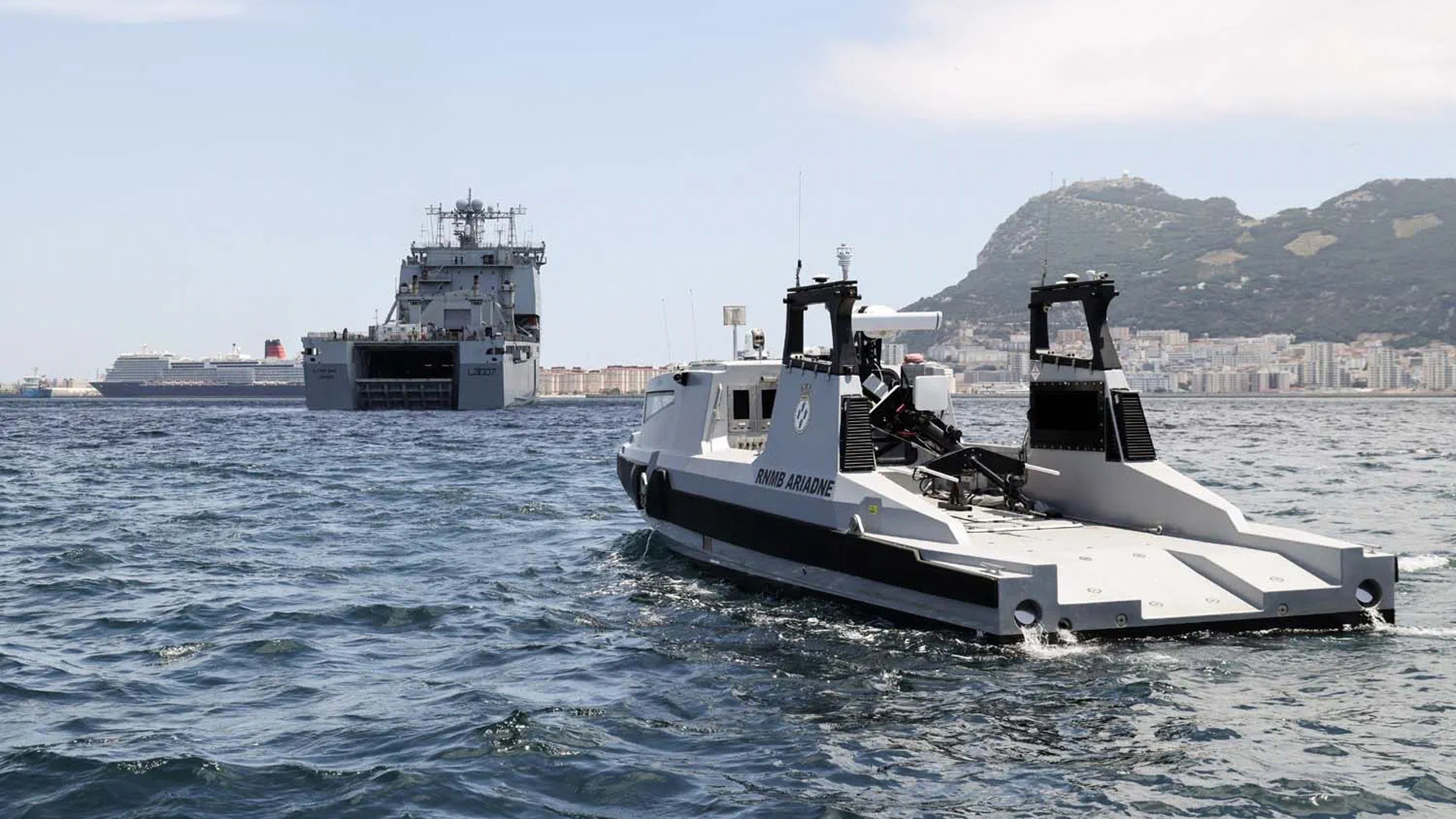
RNMB Ariadne, designed to discover and destroy sea mines without the need for personnel to set foot in the minefields, went through operational testing by specialist assessors and mine warfare experts in Dorset.
The Royal Navy's Maritime Capabilities, Trials and Assessment (MCTA) team tested the RNMB Ariadne's towed sonar's accuracy on a target, recently surveyed by HMS Magpie, on the seabed.
The vessel uses the Thales TSAM system, one of the world's most sophisticated towed sonars, to find the mines deep beneath the water.
It can be controlled both locally and from a portable operating centre, where operational and sensor data can be received from the vessel to help decide command decision-making.
Alongside the MCTA, members of the Mine Threat Exploitation Group's Yankee Squadron – two highly trained units, made up of Mine Warfare Operators supported by a hybrid of Marine and Weapons Engineers to enable the deployment of next-generation autonomous systems – operated Ariadne.
"As modern warfare continues to evolve at pace, it is essential that the Royal Navy advances alongside it," Lieutenant Tommy Walters, from the MCTA team, said.
"Supporting these trials and helping to ensure autonomous capabilities can be effectively deployed in an operational environment has been a privilege for both myself and the MCTA team."
Uncrewed vessel loaded onto HMS Stirling Castle
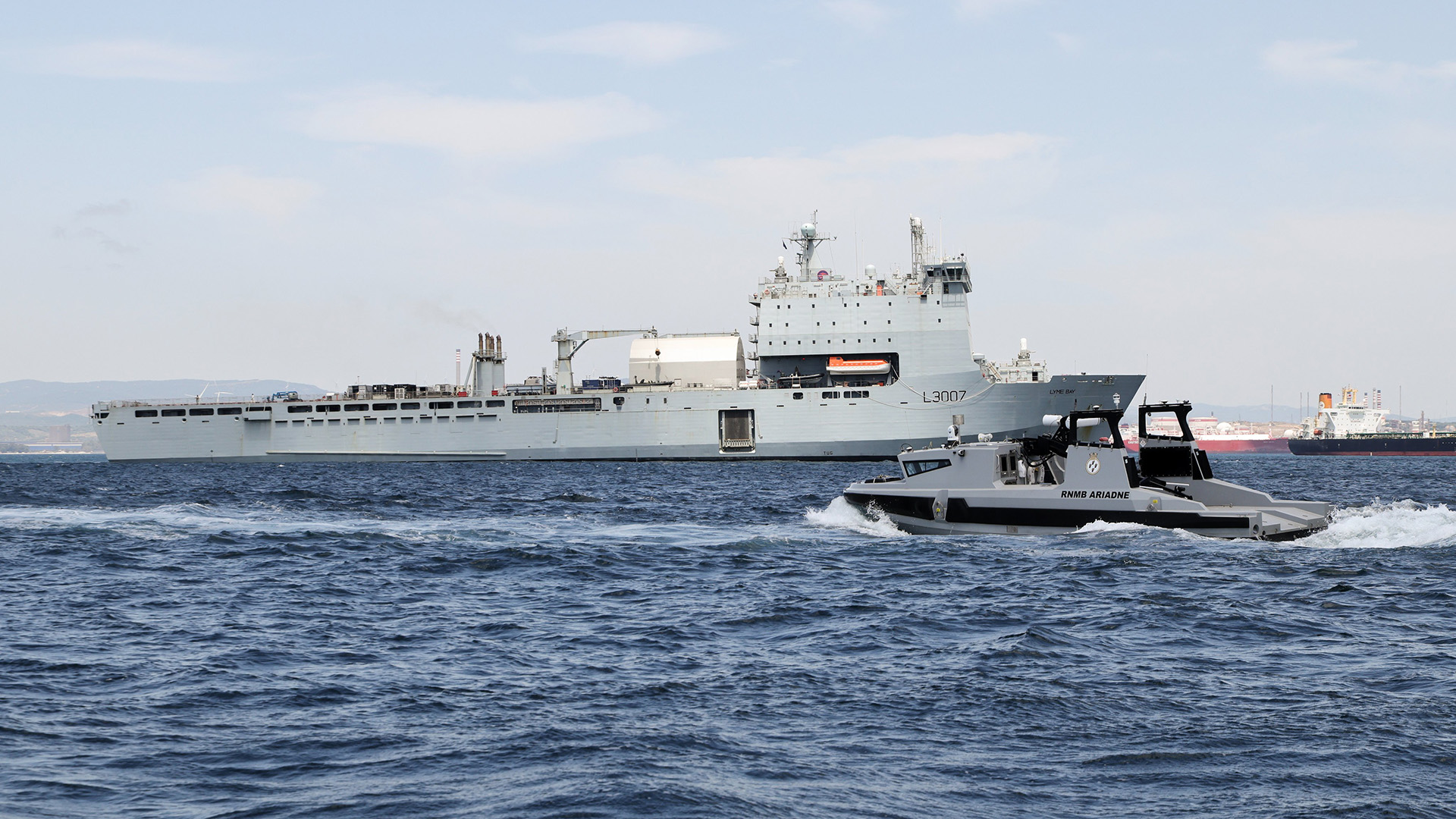
After the trials were finished, Ariadne was stowed inside HMS Stirling Castle for its journey to Gibraltar and docking with RFA Lyme Bay.
Yankee Squadron's members drove the vessel into the dock before the water was drained, and the Ariadne was deposited on a cradle in the hull.
"It all went a lot smoother [than] I expected; thought it was going to be tighter, but we nailed it first time," Leading Hand Matt Savage said.
The Royal Navy's Gibraltar Squadron provided additional safety and protection as this took place after RFA Lyme Bay had sailed from Gibraltar.
The potential Strait of Hormuz mission
The Royal Navy is preparing for a potential multinational Strait of Hormuz mission, as the UK and France have planned for defensive operations when conditions allow, to defend the freedom of navigation in the strait.
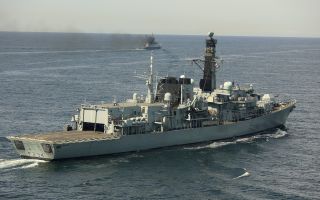
Type 45 destroyer HMS Dragon will play a key role in the mission in the strait, after she arrived east of the Suez Canal earlier this month.
Related topics
Join Our Newsletter