The Soviet navy did it first with the ekranoplan – now the US military's likely to get one too
It's been said there's nothing new under the sun, and war is the mother of all reinventions.
The Squire Sea Glider is making use of something the world of defence has explored before, with Russia once leading the way in the 1980s and 90s.
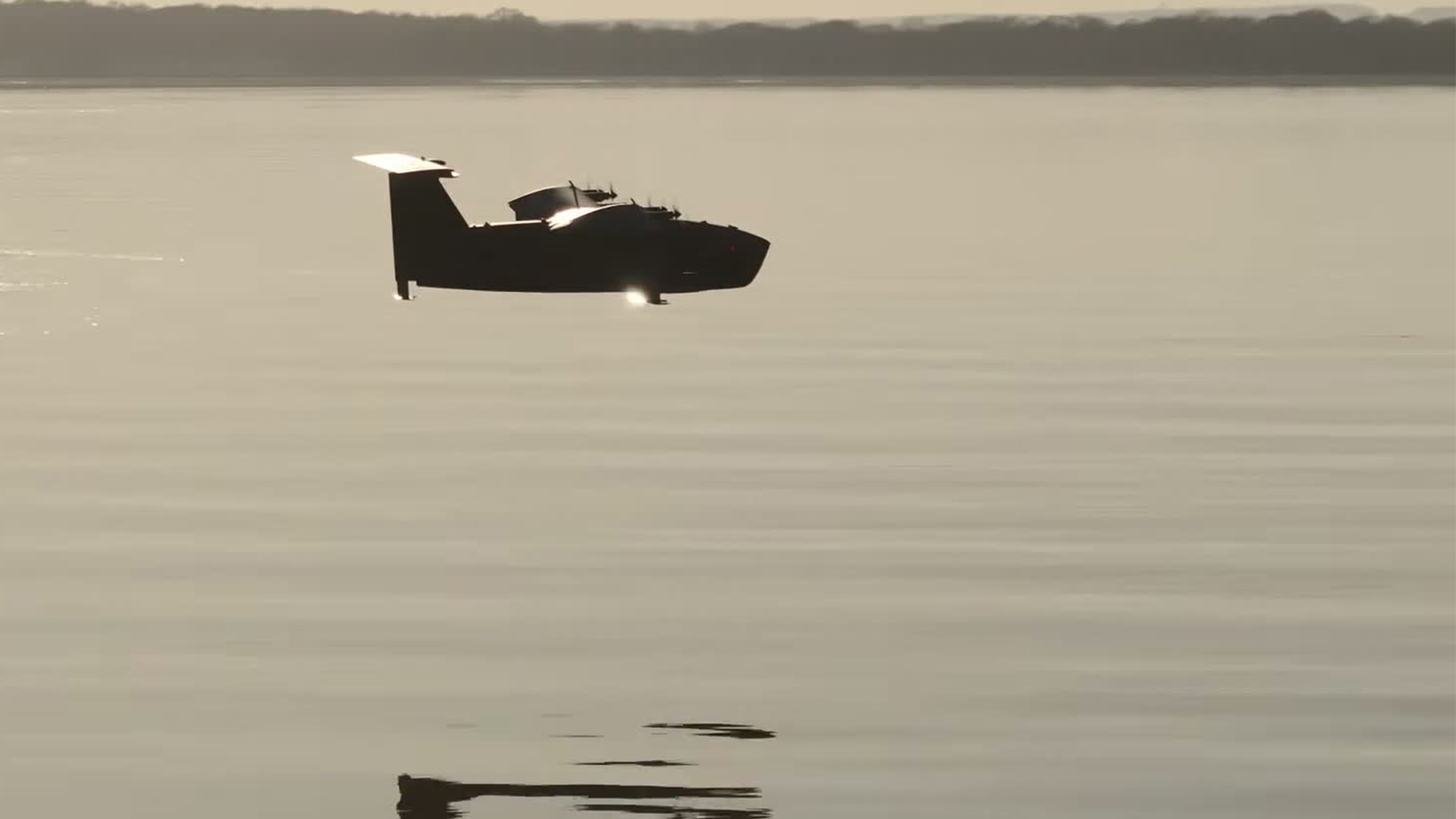
The Sea Glider is a drone that's being developed for defence missions that utilises what's called the wing-in-ground-effect, or WIGE for short.
Ships, not planes
Ground effect allows flight just above water on a cushion of air, taking the vehicle below line-of-sight radar.
The Sea Glider's test flight was a double first, marking not only a successful first flight, but also the first time a defence-specific WIGE craft had flown in the United States.
Manufacturer Regent Defense says it's an achievement that's positioned the US to overtake its closest defence competitor, China, in what it calls a critical technology space.
The last time that space was filled was with the Soviet navy's MD-160 Project 903 ekranoplan.
Only one example was ever built, designed to use low-level flight and high speed to approach aircraft carriers under the radar to deliver a lethal missile strike.
Cruising at about four metres above the surface, it was one of a kind, and the only ekranoplan ever operationally deployed as a warship.
Yes, you heard right, a warship! If you're tempted to call a craft like this an aeroplane, seaplane, hovercraft or hydrofoil, forget it.
These ground-effect machines are listed as maritime ships by the International Maritime Organisation.
USMC could be the first customer
So what might the future have in store for the Squire Sea Glider drone and its full-sized crewed versions that are also in development?
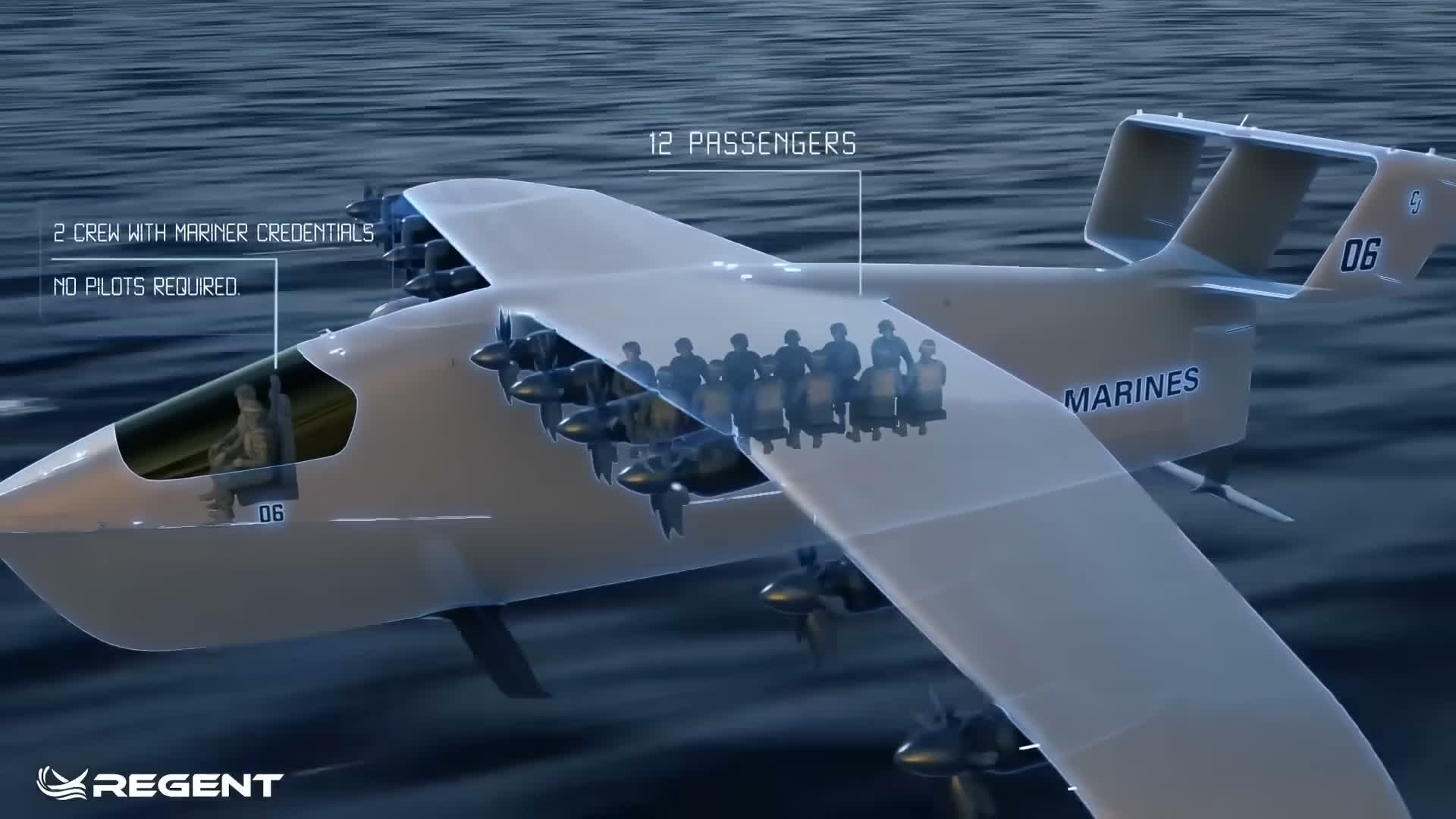
Well, its unique high-speed, low-level capabilities – it'll reach speeds of 70 knots or 81 miles per hour and have a range of 100 nautical miles – make it ideal for multiple mission critical operations.
These could range from intelligence, surveillance and reconnaissance, to search and rescue and anti-submarine warfare.
The US Marine Corps is already said to be watching developments with interest. Regent Defense is pitching its drone as the first ever unmanned surface and aerial vehicle, or USAV for short.
So watch this space, and I don't just mean the one between the water's surface and the drone, because something isn't just coming over the horizon, but just below it.
And you won't see it until it's too late.
Related topics
Join Our Newsletter