Ukraine's Special Operations Forces celebrates 10 years as Kyiv's elite troops
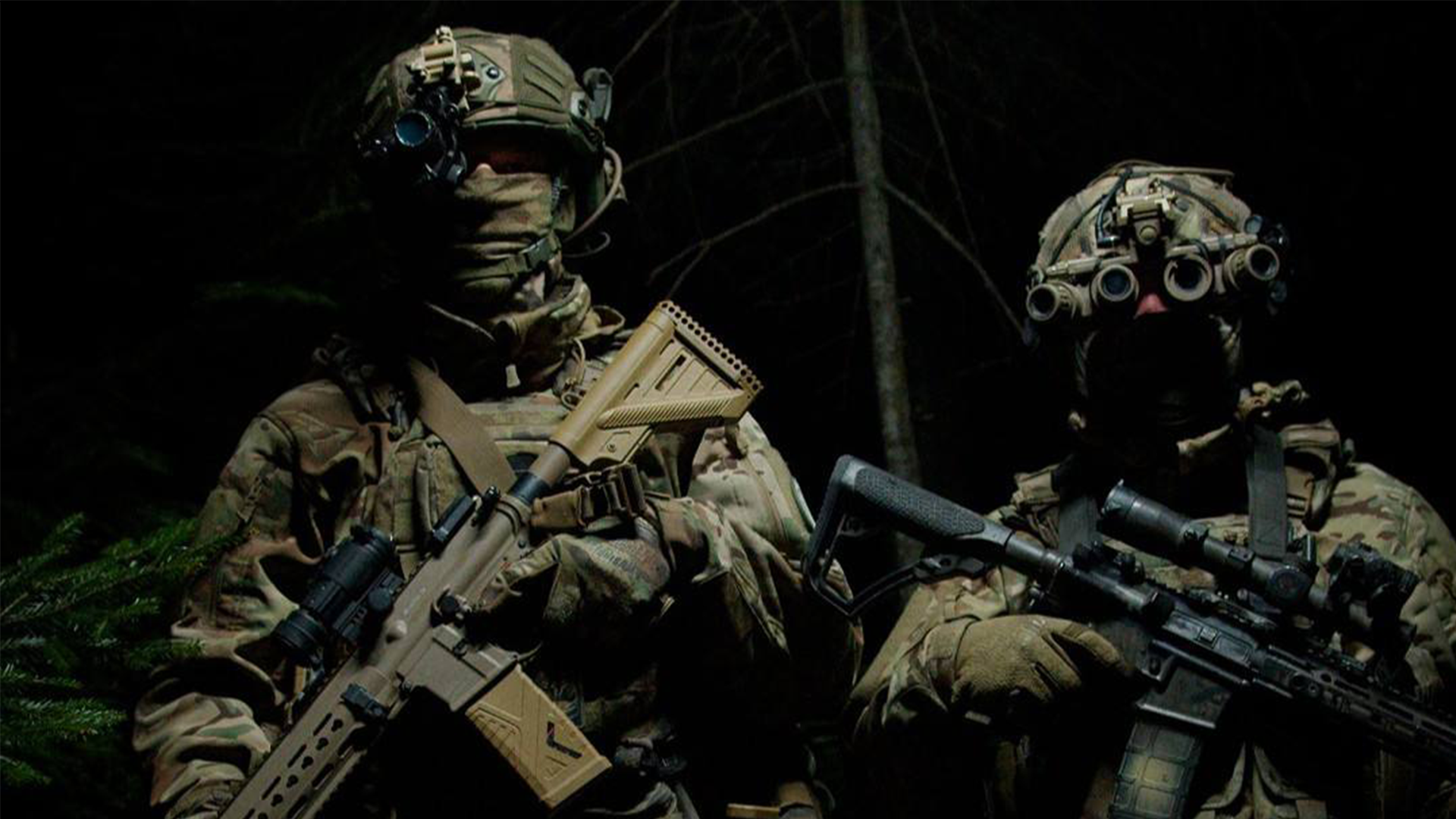
Ukraine's Special Operations Forces have marked their 10th anniversary as one of the country's most secretive and closely watched wartime branches.
Known in Ukrainian as the SSO, the branch was built out of the reforms that followed Russia's takeover of Crimea and the start of the war in the Eastern Ukraine in 2014.
It became a separate part of the Armed Forces of Ukraine as Kyiv moved away from its Soviet inheritance and towards a more Nato-style special operations model.
- Ukrainian drones hammer Russia's supply route running through occupied Crimea
- Ukraine's 'Equaliser' revealed as Kyiv builds its own answer to Russia's feared glide bombs
- Ukraine Battlefield Brief: Find out what's been happening on the frontline in conflict with Russia
The professional day is now marked on 27 May, a date chosen because of the 2014 operation at Donetsk Airport.
Ukrainian special-purpose troops were among the first into the new terminal during the operation to retake it from Russian-backed militants, with the airport brought fully under Ukrainian control the following day.
Structure and operations
The SSO is a branch of the Armed Forces, with its own command and its own mix of units.
Its public structure includes special-purpose units, the Resistance Movement and psychological operations units.
The special-purpose units include land units used for reconnaissance, raids, direct action and missions behind enemy lines.
Publicly identified formations include the 3rd Special Operations Regiment, the 8th Special Operations Regiment, the 140th Special Operations Forces Center and the 144th Special Operations Forces Center.
The maritime role sits with the 73rd Naval Special Operations Center, based around operations from the sea, rivers and coast.
Its operators have been linked to Snake Island and other Black Sea missions, giving Ukraine's SOF a naval special operations arm as well as a land one.
The 140th Center is one of the clearest examples of Ukraine's push towards Nato standards.
In 2019, it became the first unit from a non-Nato country to pass Nato SOF certification and gain eligibility to contribute to the Nato Response Force.
The Resistance Movement builds agent networks in temporarily occupied territory, supports sabotage, damages Russian logistics and equipment, and helps other Ukrainian units during 'liberation' operations.
Psychological operations units work in the information space. Their task is to study the enemy's information environment and conduct influence operations against Russian forces.
Ukraine's SOF have been credited with operations linked to the defence of Kyiv, the defence of Chernihiv and Sumy regions, the liberation of Snake Island, the Kharkiv counteroffensive, the liberation of Kherson, and fighting around Bakhmut, Avdiivka, Chasiv Yar and Vovchansk.
Many of their missions remain classified.
How big is it?
Ukraine does not publish a current wartime strength for the SSO.
There have been unconfirmed estimate of about 2,000 to 4,000 personnel for Special Operations Forces Command, with Ukraine's broader special forces ecosystem being much larger and more dispersed.
That makes the SSO small compared with Ukraine's conventional forces, but its role is built around effect rather than mass.
Its missions rely on selection, intelligence and secrecy.
How do recruits join?
The official SOF recruitment route begins with an application, followed by an interview, selection, a meeting with the unit commander, document checks, internal security screening and a medical commission.
Recruits then enrol in a unit and complete seven weeks of basic combined-arms training.
Specialist training comes after that and can last one to three months, depending on the role.
Team integration can take another three to six months before combat missions.
Published preparation standards include a 3km run in up to 12 minutes, 15 pull-ups and a 100m sprint in 15 seconds.
Applications are accepted from both within the military and from civilians.
Recruits must be aged 18 to 40.
Related topics
Join Our Newsletter