Ukraine

Ukraine Battlefield Brief: Find out what's been happening on the frontline in conflict with Russia

Find out about the latest movements in the Ukraine war and the issues affecting the four-year-long war

At the start of 2026, the Russian meat grinder started to devour more men than the Kremlin could feed in, with Moscow's casualties reaching more than 30,000 a month. 

For the first time, the Kremlin is losing more soldiers than it can recruit. 

Part of that is that in winter, when the landscape is bare, Ukrainian drones hunt more effectively. This winter, they have been more deadly than ever before, which has also allowed Ukraine to launch several localised counter-offensives.

The three big tactical questions

In February, Kyiv said it liberated more territory than it lost as it tried to stabilise the frontline, particularly in the south. It is the first time that has happened since 2023. 

There are three big tactical questions for 2026: Will the Russians finally take the Donbas and, in the south, could they capture the city of Zaphorizhzhia, which they have been pushing towards for months?

And will they get close enough to Ukraine's second city, Kharkiv, to bring it within artillery range? 

So, the front has been pretty static through this recent brutal Ukrainian winter, but that could well change as the weather improves and the Russians start to push again.

Russia's drained infantry adopts new tactics

Russian forces adopt new tactics as war evolves in Ukraine

But in Ukraine's favour is the fact that Russia's infantry has been depleted of both mass and quality. 

What we saw in Pokrovsk was the Russians changing tactics, sending in small groups of soldiers to infiltrate the Ukrainian lines. 

In places, it worked – the problem is that they have fewer soldiers with the experience and skills needed to do it. So, what they are doing is sending two, or three-man teams on suicidal reconnaissance missions, to find Ukrainian positions that can then be targeted by drones. 

And you can see this playing out on social media. There are far fewer videos of infantry assaults than there were. 

2026: The year of the uncrewed aerial vehicle

Ring wing: Old idea makes a comeback in the Ukraine war

But lots more gruesome footage of drones taking out Russian soldiers – and indeed Russian troops are taking their own lives rather than be hit by a drone. 

This year will again be dominated by uncrewed aerial (UAV) and ground vehicles (UGVs). 

The Ukrainians are using their long-range drones in a much more systematic and organised way, inflicting real damage on Russia's economy. 

By attacking facilities like the oil terminal at Primorsk on the Baltic Sea – deep inside Russia – they not only cut off the cash flow that is funding this war, but they also force the Kremlin to redeploy scarce air defence systems like S-400s from the frontline to defend these facilities. 

The war in Iran has undoubtedly boosted Russian oil and gas revenues and refilled the Kremlin's coffers – possibly by as much as $10 billion – but the US has said it is ending the sanctions waiver that, in effect, gave Russian president Vladimir Putin a much-needed windfall. 

Experts seem to agree that Russia's war economy is going to run out of steam at some point. GDP is already down by 1.5%, and the question is whether this is the year that happens? 

On the battlefield 

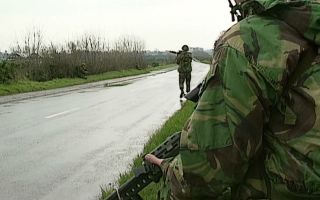
The Russian meat grinder started to devour more men than the Kremlin could feed in
The Russian meat grinder started to devour more men than the Kremlin could feed in (Picture: Ukrainian armed forces)

The Russians are focused on this area in the east, dubbed the "fortress belt". 

They are aggressively attacking a city called Kostiantynivka which, together with Kramatorsk and Slovyansk, forms this elevated buffer that Ukraine is using to defend the flatter lowlands to the west. 

The Ukrainians have spent a decade reinforcing this belt with fortifications, anti-tank ditches, and other obstacles because they know that if the Russians get through here, the flatter territory beyond it would be much harder to defend. This is precisely why Mr Putin wants Ukraine to surrender this belt as part of any negotiated settlement. 

The Institute for the Study of War's conclusion is that the situation on the battlefield for Ukraine is difficult but not critical. 

Compared to this time last year, the Russians are only taking half the amount of territory per day – about five square kilometres – that they were capturing then. At the same time, Kyiv has said it is now intercepting around 90% of Russian drones and just under three-quarters of all Russian missiles. 

To put some numbers on that, Kyiv said that between November last year and March, the Kremlin launched 27,000 Shahed drones into Ukraine. 

It remains a war of attrition, but one in which Russia's precarious economic situation is likely to play an increasingly significant role. The Russian economy is not on the verge of collapse, but as time goes on, it is going to get more fragile. 

It is Moscow's economy, more even than Russia's horrific battlefield losses, that will shape how it prosecutes this war this year. 

Join Our Newsletter

WatchUsOn

French Foreign Legion's space mission🚀

Royal Navy v RAF LIVE | 2026 men's Inter Service rugby union championships

Royal Navy v RAF LIVE | 2026 women's Inter Service rugby union championships