Ukraine hits Russia on home soil, including Moscow, with biggest drone strike in a year
Ukraine has carried out its largest drone strike on Russia in more than a year, and managed to pierce the air defences around the capital, Moscow.
Hundreds of UAVs attacked regions across the country, and that included 180 drones that targeted Moscow itself, the most that have been seen.
The drone strikes have meant that Moscow's inhabitants are getting a taste of the Ukraine war.
Moscow is ringed by a whole load of air defence systems, including S-400s and Pantsirs, which combine guns and missiles.
However, many of these Ukrainian drones seem to have got through.
What does this attack tell us?
First, it shows that Ukraine has the industrial heft to launch mass coordinated swarms deep in Russia, in this case 400km (250 miles) from the border.
Second, even what you think would be Russia's most heavily defended airspace is now increasingly porous.
Kyiv sent at least 600 drones into Russia, including a jet-powered drone called RS-1 Bars.
But, this is not just about scale, it is also about capability.
Ukraine has released footage of what it alleges is a drone firing unguided rockets at Russian targets in Crimea.
So, these are rockets that are usually used on attack helicopters, effectively turning cheap first-person view (FPV) drones into gunships.
Ukraine pushing its drone defences
Ukraine has been developing its air defences in light of the drone threat from Russia, notably from the Iranian-made Shahed-136 drone.
Trident, not the UK's nuclear deterrent, but a laser weapon built in Ukraine, has been claimed to have taken down drones, helicopters and even missiles from 4.8km (3 miles) away.
There is also another system, called Sunray, in development that can burn through a drone's body and electronics.
Outside of Ukraine, the US has a system called HELIOS, which is used against Iranian drones, and the Israelis have Iron Beam.
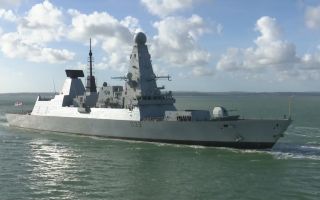
The Royal Navy has a directed-energy weapon called Dragonfire, which is going to be fitted to Type 45 destroyers, which cost £300m.
The Ukrainians have said that their system is relatively cheap, and at the rate of innovation we are seeing, it will not be long before it is used in anger.
Put all of this together, and what you are seeing is a battlefield being reshaped in real time.
Related topics
Join Our Newsletter