Strategic Defence Review hailed as transformative: Exactly a year on, how much is reality?
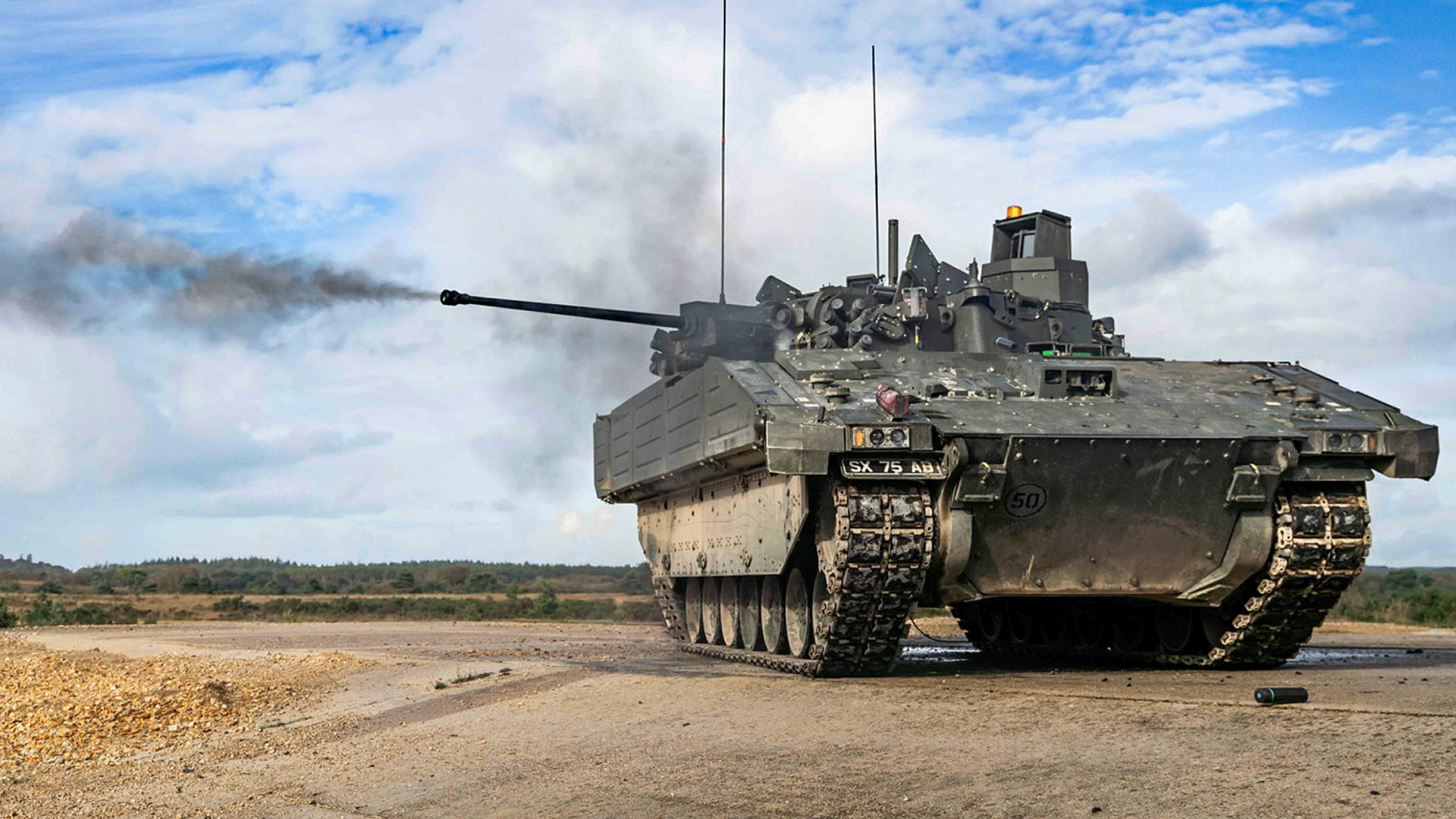
Right at the front of the Strategic Defence Review – published exactly a year ago – there was a pledge from Defence Secretary John Healey to make the Army 10 times more lethal.
This is to be achieved by combining drones, autonomy, AI and traditional armour.
SDR co-author General Sir Richard Barrons says the Army has a great way forward with the proposed 20/40/40 structure to balance crewed and uncrewed platforms and munitions. But there are problems.
10x Army lethality
"The Army broadly seems to me to have a great narrative," Gen Sir Richard told BFBS Forces News.
"It absolutely knows what it would do to grasp this new way of fighting, and it understands what it is and it will get there.
"But it has the money roughly for about the first 20%, and it needs a lot more money, I would say maybe half a billion pounds a year, to move faster."
The integrated force
The SDR calls for an integrated force, being tech-enabled and fit for the 21st century.
But it also wants it to be a unified force that breaks down historic barriers between the three services to create a modern, dynamic warfighting machine.
Is that vision still a pipe dream or is it taking shape?
"We need to be clear," said Gen Sir Richard. "The integrated force is nothing less than essentially a revolution.
"We've all come from a place where you once had a very separate, very independent Army, Navy, Air Force.
"And now we have completely reversed that so... the Chief of the Defence Staff now commands the Armed Forces for the first time... and therefore he can direct what the balance of investment is.
"But again, to do this properly you need competent people in in this new way of fighting – and you need more money."

The digital targeting web
Making that integrated force a reality relies on the digital targeting web, sometimes called the digital kill web.
It's a transformative vision of modern-day warfare, but how is it going one year on?
"It is the key architecture of defence for war in the 21st century," argued Gen Sir Richard.
"It's exactly what you see the US doing over Iran in in the last two months. So it connects any sensor of any type, anywhere through data in the cloud managed by AI to any effector, typically a weapon, anywhere.
"And I think they believe they're about halfway there now in how they get to the first stage, which is good. But again, to do this faster, they would need more money sooner."

Recruitment and retention
Of course none of this is possible without the right people. The SDR flagged a decline in Armed Forces numbers since 2022 and called for Active Reserve Forces to increase by at least 20%.
Gen Sir Richard believes recruitment is improving, but highlights urgently needed improvements to managing manpower.
"Historically the UK has as small a set of regular forces as it thinks it can get away with, because it knows it can draw on a big and powerful reserve," he said.
"But we've got a very small set of regular forces and a very undernourished reserve, so that's a really important thing to fix."
A national conversation on defence
For the UK to defend itself effectively against growing threats, the whole country has to get more involved, so the SDR called for a national conversation on defence – but according to Gen Sir Richard that is not happening.
"We called for a national discussion and it absolutely hasn't happened," he said. "So I really worry about it. I mean, partly because as things stand, most British citizens are not engaged in this discussion and they're not aware of it.
"So it seems to me, more likely than not, that something terrible will have to happen, which you should have deterred or avoided before the penny drops in wider UK society."
So according to him we are a long way off where we should be by any measure, and the clock is ticking.
Britain's enemies aren't waiting for us, they're already watching, already calculating whether an attack on the UK is a risk worth taking.
Related topics
Join Our Newsletter