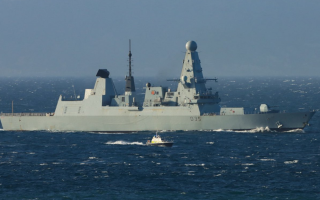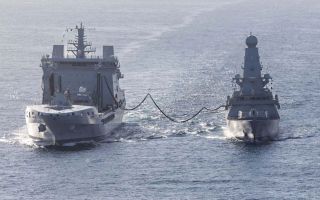
HMS Dragon arrives in Eastern Mediterranean to begin her defensive operations
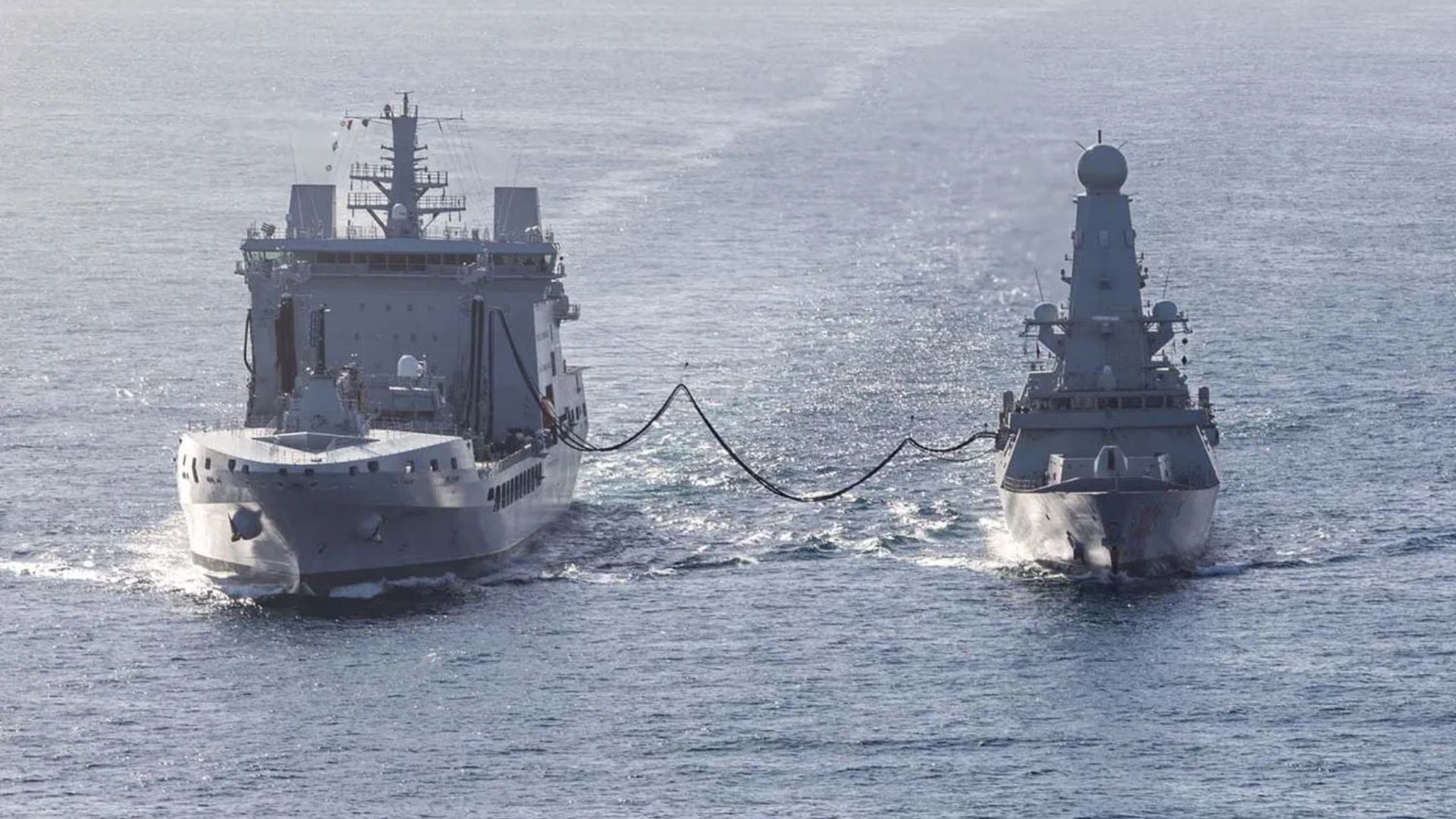
HMS Dragon has arrived in the Eastern Mediterranean and will begin her "operational integration into Cyprus's defence", Defence Secretary John Healey has announced.
It comes three weeks after RAF Akrotiri was struck by a kamikaze drone, prompting the deployment of the Type 45, whose delayed response has drawn widespread criticism.
Earlier media reports suggested her "slower-than-normal progress" was caused by adverse weather, as well as additional personnel training that contributed to the delay.
Mr Healey also confirmed that there are now an additional 500 air defence personnel in Cyprus.
"As more military capabilities are committed to the eastern Mediterranean, we're working closely with the Republic of Cyprus to coordinate the contribution of allies, including the US, France and Greece, to reinforce the security of Cyprus," he said.
"RAF and Navy pilots have now racked up nearly 900 flying hours in defence of Cyprus, Jordan, Bahrain, Qatar and the United Arab Emirates. We have more jets in the region than at any time in the last 15 years."
UK to play its role
Mr Healey also confirmed that Prime Minister Sir Keir Starmer had permitted the US to use UK bases "for defensive strikes against specific Iranian targets," extending to missile sites and capabilities that threaten the Strait of Hormuz.
He emphasised these permissions are purely defensive, and do not include the striking of Iranian power plants.
Roughly a fifth of the world's oil passes through the strait, and its closure has had a global knock-on effect, triggering soaring energy prices and inflation, among other impacts.
The Defence Secretary said Iran had been holding the strait "hostage", by laying mines, targeting ships, including Red Ensign vessels – merchant and private British ships – and putting lives in danger.
He added that UK military planners were deployed into US Central Command to develop options, and the UK is looking to accelerate new minehunting and drone technology.
"We are determined that the UK plays a leading role in securing the strait so commercial ships can move freely and confidently again," he said.
Cutting-edge air defence
HMS Dragon has spent the last two weeks undergoing critical training and assessment to ensure her 230 sailors, advanced systems, and weaponry are ready for the potentially intensive pace of operations.
First Sea Lord General Sir Gwyn Jenkins said: "Equipped with the cutting-edge Sea Viper system, she can tackle a wide range of threats. On her way to the region, her crew have undertaken essential training to ready themselves for this mission, and I have every confidence that they will rise to the task before them.
"In uncertain times, her presence is a visible demonstration of the Royal Navy's commitment to protecting our people and our interests, at home and overseas."
The Sea Viper is the Royal Navy's primary, highly automated air defence system, which can launch eight missiles in under 10 seconds and direct up to 16 missiles onto a target simultaneously.
It can close in on a kill at up to four times the speed of sound, and manoeuvre at G-forces no human can endure.
Commander Iain Giffin, Commanding Officer of HMS Dragon, said: "It has been a busy three weeks getting the ship fuelled, stored, ammunitioned, worked-up and deployed to the Eastern Mediterranean.
"My team has been put through its paces conducting mission rehearsal training during our transit to Cyprus, and they have stepped up to the challenge and delivered with their characteristic determination, professionalism and good humour."
The training included air defence serials, fighting and medical first response, person overboard drills and aircraft crash on deck scenario training.
Sitting in the dock of the bay
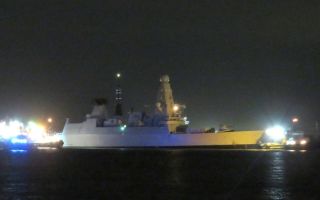
On Monday, 23 March, images emerged on X showing HMS Dragon docked in Souda Bay, Crete. Navy Lookout suggested the vessel is likely undertaking maritime testing.
In the foreground is the imposing figure of the US Navy's largest and most advanced warship, USS Gerald R Ford.
She had left the Red Sea late last week for essential repairs in Crete after a fire on board injured sailors and caused significant damage.
She is expected to be docked for more than a week, with the New York Times reporting that USS George HW Bush could relieve her in the meantime.
Join Our Newsletter