Knocked out, on fire or crashed: RAF Lossiemouth trains for worst-case scenarios
Members of the Royal Air Force team charged with protecting the UK’s northern airspace have been testing their ability to adapt and continue operating in the face of major challenges.
Personnel from RAF Lossiemouth have been undertaking a series of exercises to confront a series of scenarios and their round-the-clock quick reaction alert capability.
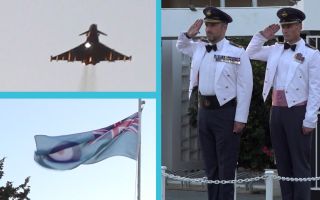
The Typhoon jets in Moray are the last line of defence for suspect aircraft encroaching on UK airspace, and if the airfield is badly damaged they need to be able to move to another base to continue that capability.
The team members have also been testing their ability to react to a major fire on the base, dealing with the perimeter security being compromised and even a search and rescue effort after a simulated jet crash in the nearby countryside.
RAF Lossiemouth commanding officer Group Captain Jim Lee said: "This is part of a wider RAF initiative to focus on Agile Combat Employment, or ACE.
"The purpose of that is to make sure that the whole of the Royal Air Force becomes more agile in the face of an increasingly uncertain world - especially on our continent.
"There is war in Eastern Europe so our adversaries and the threat that we to see from them is perhaps closer than it has been in the last 20 or 30 years.
"So it's important that every one of our stations and all of our people on them already for that future."
These exercises are on a huge scale.
Every area of the RAF and other emergency services getting involved to make sure they are ready for a worst-case scenario.
Flight Lieutenant Nathan Burton said: "There are a lot of things that go on to make sure that we can succeed in any environment.
"That's why this exercise and all the other exercises that have gone during this week - they're important in their own right - but it's the culmination of what they bring to make sure that we can do anything come the day that it's required."
The exercises see every team member use their expertise in the situation, while also taking knowledge from others they are working with.
This includes working with civilian organisations – such as the emergency services, mountain rescue and the Coastguard.
Northeast area commander of HM Coastguard Callum Christie said: "In this part of the world the RAF and the military are a key part of the of the local economy.
"The defence infrastructure is really important so making sure that we're prepared to support other services as part of this is vital as we go about our work."
Join Our Newsletter