Royal Marines and Commando Helicopter Force show why the Arctic matters more than ever
Never before have politicians seemed quite so interested in Royal Marines scaling frozen waterfalls with ice axes and Commando Helicopter Force pilots trying hard to land in blizzards as cold as -30°C.
Recent months have seen a string of bigwigs visiting the previously routine cold weather training in the Arctic as the UK has committed to doubling personnel deploying there over the next three years from 1,000 to 2,000.
A deal’s also been signed to build a joint fleet of frigates with Norway and a carrier strike group is due to be dispatched to the Arctic later this year. So why suddenly all the attention?
It's all about control
Whoever controls the Arctic can also monitor the shortest missile route between Russia and North America.
The Arctic’s rapidly melting ice also allows access to valuable resources for countries to fight over and previously inaccessible shipping routes that nations want to dominate.
When Vladimir Putin invaded Ukraine, Finland and Sweden joined Nato and the Arctic map became Russia on one side and Nato on the other.
Russia is growing its military presence in the Arctic all the time. Nato needs to be ready to defend it.
And before you can fight there, you need to survive.
Survival skills
As we arrive at the Royal Norwegian Air Force base in Bardufoss, a new batch of students are just beginning their cold weather survival course.
Anyone who deploys here – whether soldier, chef or pilot – must complete this kind of training.
A group of students cluster around a table for a stove demonstration.
"There will be in your tent group people who will be better at doing this and people who will be terrible at it," says the instructor.
"You need to find that out rapidly. And then if you're good at f***ing melting snow, that is your job when you get up!"
Meanwhile, another group is trudging round getting used to walking in snowshoes.
The course involves spending several nights out in the field (or snowfield rather!) learning how to survive. Temperatures in the area recently plummeted to -30C.
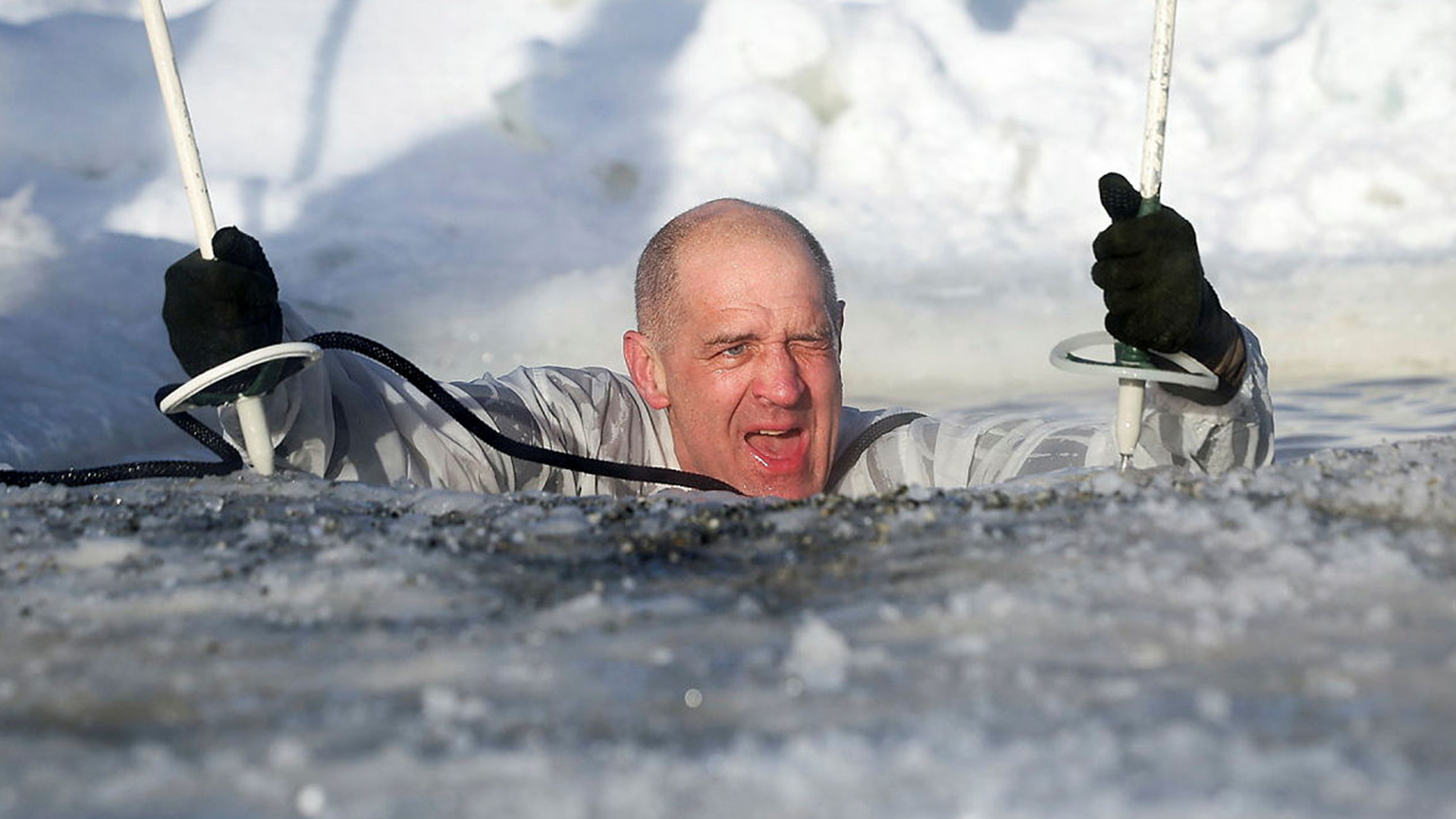
The last night is spent in a quinzee - a kind of survival snow hole - which students spend about nine hours constructing , first piling up snow, then leaving it to set, before digging into it.
Up to eight of them could sleep in this tiny dugout, with one person always on candle watch to check oxygen levels.
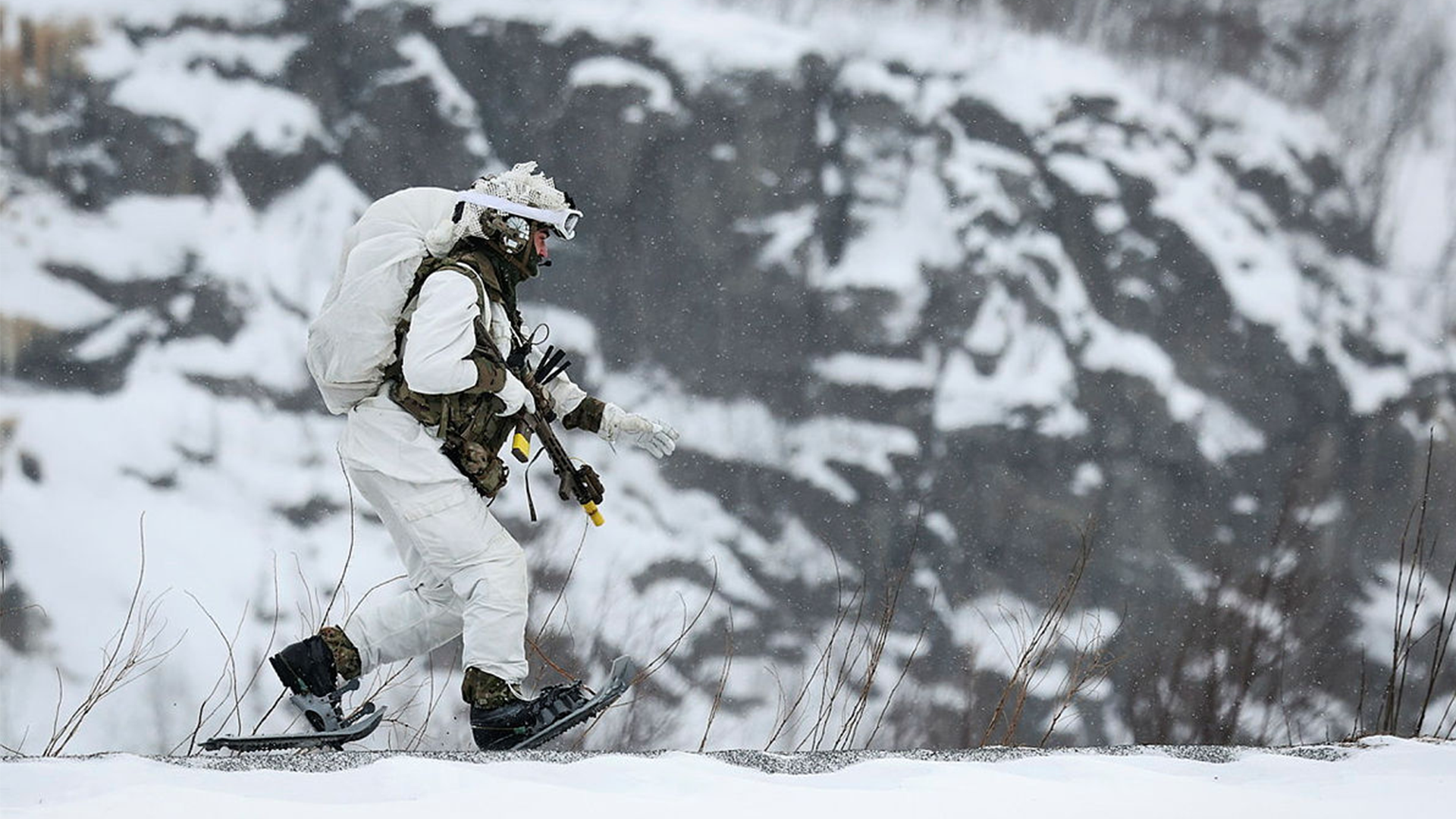
Mother Nature trying really hard to kill you
"How many nights would you be happy staying in a quinzee?" I ask one tent commander, Air Engineering Technician Finlay Dowey.
"Could go for weeks," he says. "Yeah, easily. I quite love it in a quinzee. It's cozy."
Apparently it's everyone’s favourite night - though I do wonder if that's because it's their last one!
"The biggest challenge I'd say is just existing," says Commanding Officer of 845 Naval Air Squadron Alex Hampson.
"Keeping your people alive for a start – that's the biggest challenge. And then going from that to actually being effective as a fighting force in this extremely cold and inhospitable environment."
"Out here Mother Nature is a very cold lady who's trying really hard to kill you," agrees Captain Marnix Cramer of the Royal Netherlands Marine Corps.
Camaraderie through challenges
This week is a relatively new bit of training for the Royal Marines and the Commando Helicopter Force. It sits in between Clockwork - the Royal Marines' annual cold weather training - and Cold Response - Nato's biennial exercise to test the alliance in extreme cold weather conditions.
It involves them working closely with the Dutch - an already close relationship becoming even closer.
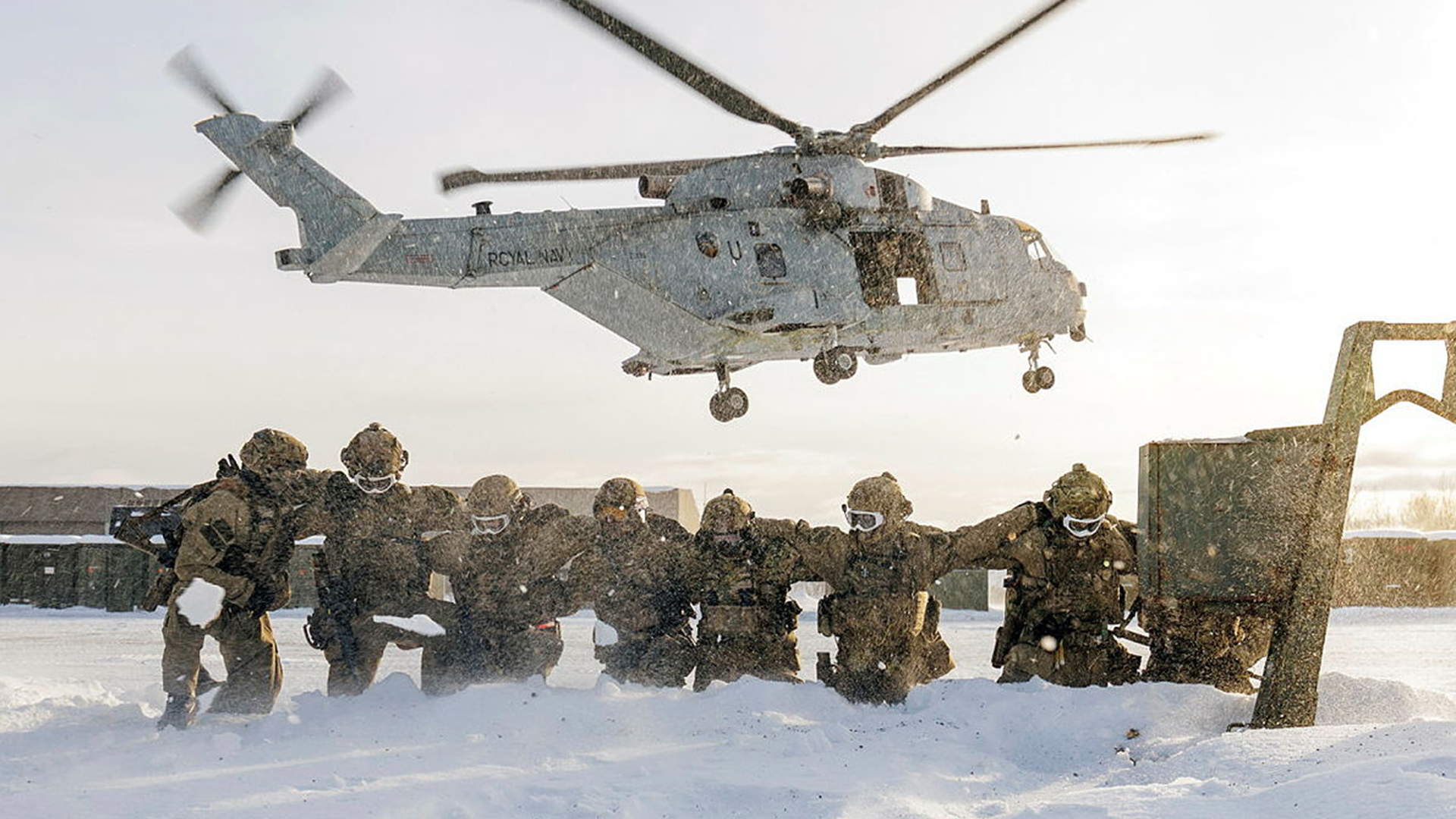
Learning from every mistake
"We plan together, we train together, we fight together," says Cpt Cramer. "One moment we have the lead in planning, the other moment you have the lead in planning. It's seamless, really.
"We speak the same language, we more or less have the same humour and we have the exact same type of operation, so it works absolutely flawless."
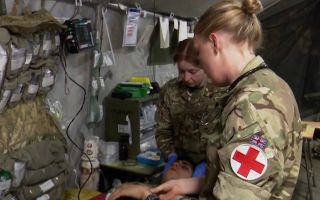
That afternoon we see this in play, as a Dutch medical team take part in a scenario treating a gunshot wound whilst onboard a British Merlin helicopter.
The Dutch Flight Nurse explains to me over comms mid-flight that this is the strength of the partnership and the strength of Nato.
For example, British medics can begin treatment in the field, and when they hand over to the Dutch medics, they give them the Nato standard medical card, and care continues smoothly.
Meanwhile, the pilots have a steep learning curve.
"I think personally what I found difficult is the challenges of landing," says Lieutenant Chris Reynolds, a pilot in 845 Naval Air Squadron.
"Things that are easy back home, such as making an approach to a landing point, become harder because everything is the same colour. And then when you get near the ground, the snow build-up is something I've never experienced before."
"It's kind of hard to fly a helicopter if you can't see," agrees Cpt Cramer, "and landing in the snow means that everything outside a two-metre radius, I'd say, disappears completely from sight.
"Things go right, things go wrong. We learn from every mistake."
Within the next week, 25,000 personnel from 14 allied countries will gather in Northern Norway to train to fight in the Arctic – ensuring Nato is ready to work together as one to defend this part of the world, should they need to.
Additional reporting by Sofie Cacoyannis
Related topics
Join Our Newsletter