Norway: The highlight of my career as a Royal Marine – I just didn't know it at the time

Woodbury Common, the Brecon Beacons, and Dartmoor. Speak to any Royal Marine, and they will confirm that these environments set the conditions for some of the ultimate tests of self-administration.
But while sideways rain can be shrugged off ("your skin is waterproof") and the mud brushed off with boot polish, the hardships here are more irritating than deadly.
However, for those operating high in the Arctic Circle – where temperatures can drop below -20°C – conditions here are no longer tests of self-administration; they are necessities for survival.
Norway's largest exercise
It is precisely the reason Norway presents the ideal playground for the UK's extreme cold weather and mountain warfare experts – the Royal Marines.
And once again, the Commando Force is returning to Camp Viking, nestled in the village of Øverbygd, about 40 miles south of Tromsø, for Exercise Cold Response.
It will see the commandos operate closely with their Norwegian hosts and alongside a contingent of Dutch marines, as they train to defend this strategically important region – one increasingly exposed to the threat of Russian aggression.
The UK and Norway have had a long history of military cooperation, recently solidified with the Lunna House Agreement, which will establish a joint fleet of anti-submarine frigates to patrol the North Atlantic.
Baptism by fire
Looking back at my time as a Royal Marine, my deployment to Norway in 2017 stands out as a highlight of my career – I just wasn't aware of it at the time.
Departing from RAF Brize Norton and sat bunched up in a now-retired RAF Hercules, you could just about make out the narrow fjords and treacherous mountain terrain below through a small window, all under the stunning backdrop of the northern lights.
Sounds inviting? It is – but there is one caveat: anyone wishing to operate in this austere climate must first pass the demanding Cold Weather Warfare Course – known colloquially as Novices.
Under the guidance of the hardy Royal Marines Mountain Leader Cadre (MLs) – the course is split into three phases over three weeks, each building on the last and getting progressively more challenging.
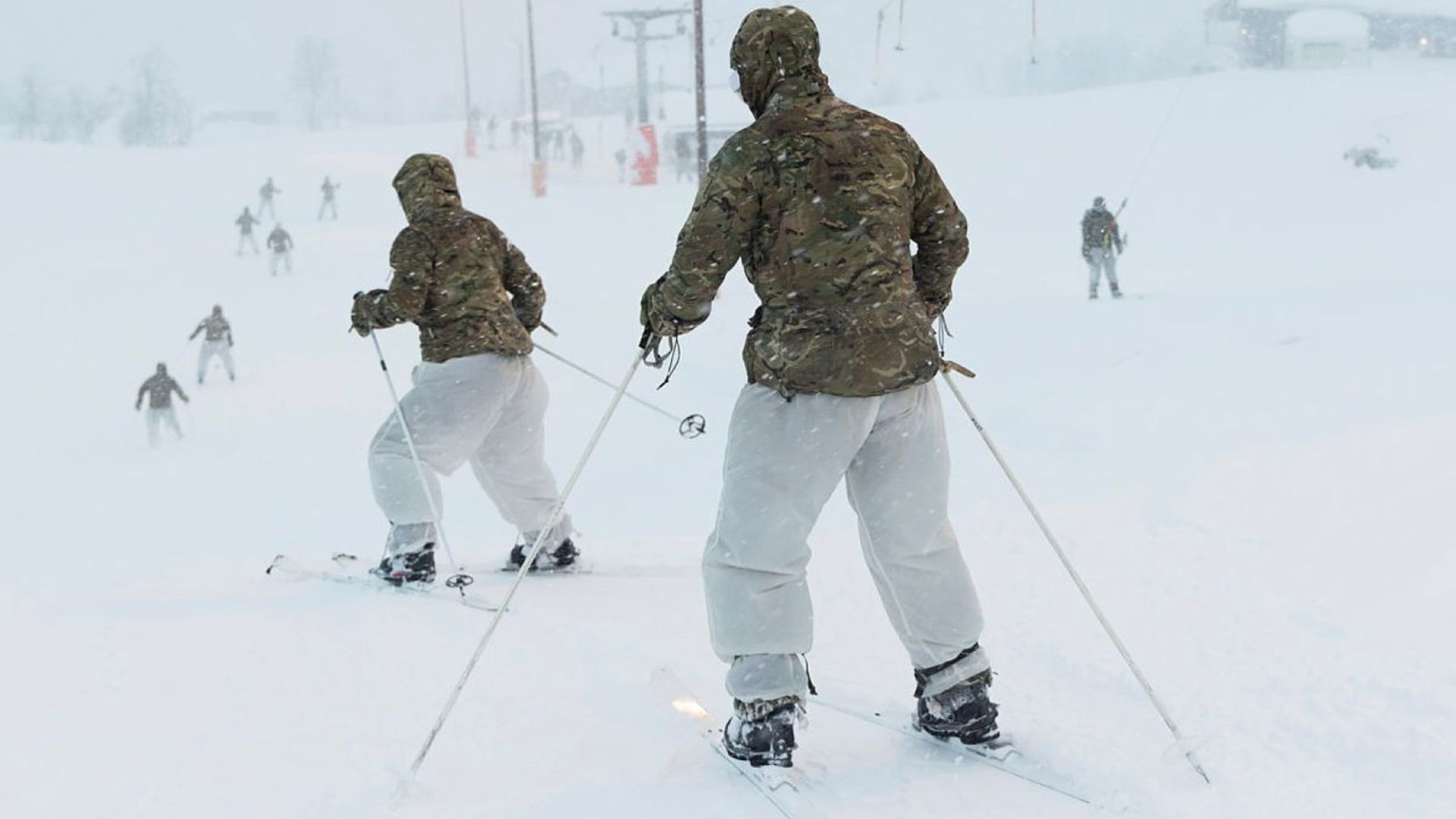
The opening phase delivers a crash course in Nordic skiing and the discipline of Telemark, techniques the MLs have made look effortless for decades.
A blend of Nordic and Alpine skiing and defined by its signature lunge turn, it is a core operational skill for the Arctic terrain, especially under the strain of a 75lb load.
But it is tough going, and the terrain is unforgiving – made no easier by the issued Alico boots, which offer little to no flexibility. Every slip or fall proves costly as energy levels dwindle throughout the day.
For this reason, calories are the real currency in Norway. Ration packs come in freeze-dried form, ranging from the ever-popular prawn noodles to the far less desirable muesli. In these austere conditions, each Royal Marine is required to consume between 4,000 and 8,000 calories a day – a tall order even for the hardiest of appetites.
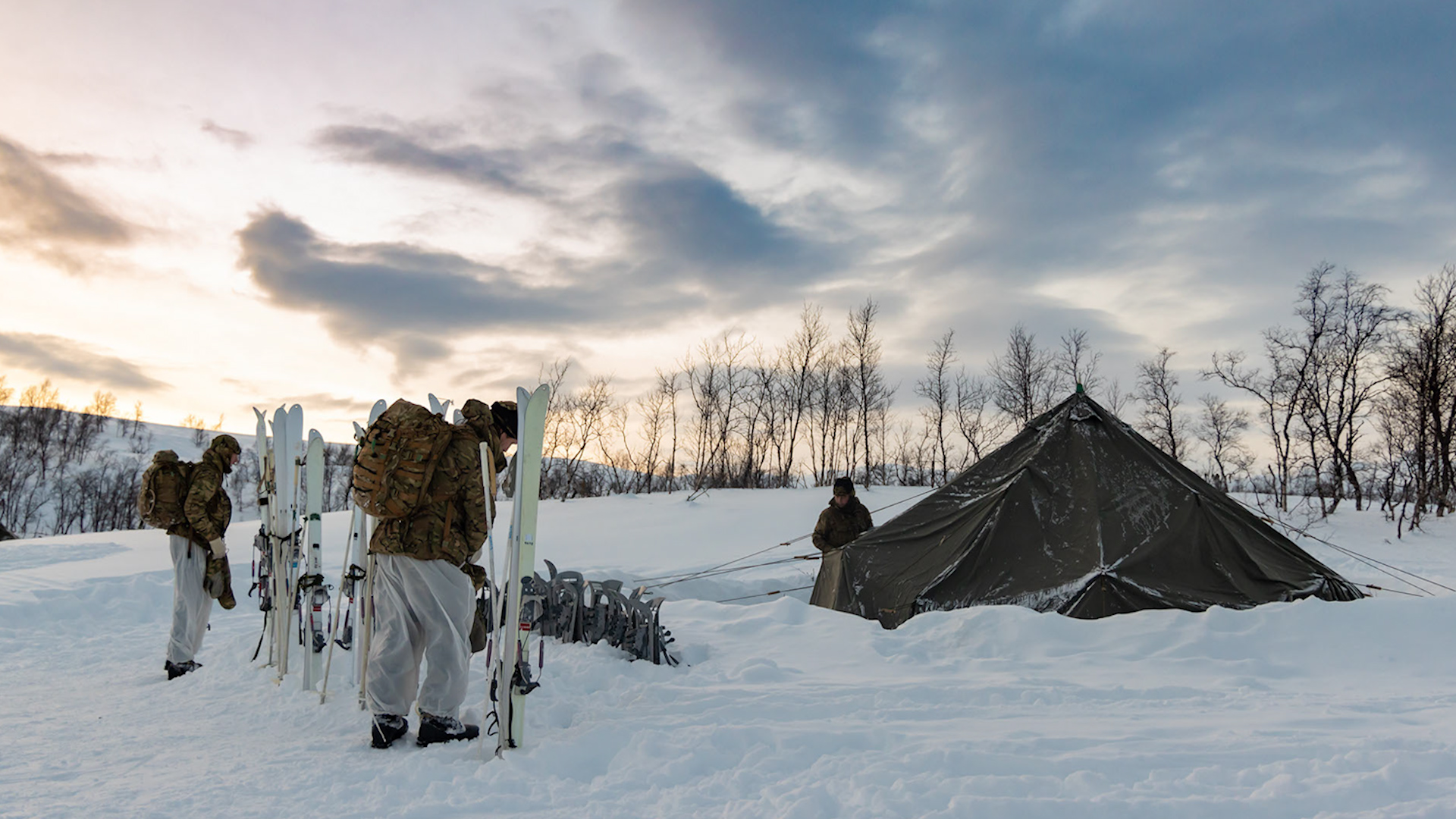
Each evening that week was spent huddled in 10-man tents, a single fuel-powered lamp positioned at the centre, cutting through the cold just enough to make sleep possible.
Each man would be required to conduct an hour's 'candle watch sentry' throughout the night – silently praying the lamp wouldn't flicker, and force him out of his warm green time machine.
Lessons in survival
The week culminates in a 24-hour survival phase. Stripped of all our warm clothing and left with nothing but our smocks, we were marched out to a dense woodblock – a startling contrast to the usual desolate landscape.
Unsurprisingly, the first thing that strikes you while operating in this region is the cold. Unlike British winters, it is dry and penetrating, and with only six hours of daylight, the sun offers little relief.
We had previously been taught the theory of building a simple shelter, and it was here that we would put it into practice. A lean-to, with a single sloping roof, can be built against a tree, supported by sticks, and covered with materials such as branches or dry vegetation to give it added protection from the elements.
"Slow is fast, and fast is smooth" was the mantra, and here there was no rank structure – every man was expected to do his part foraging, collecting firewood, and help prepare to cook the reindeer we'd seen killed hours earlier – the only sustenance we'd have through the night.
We spent most of the night sitting huddled around, a sense of camaraderie forming as we all stared blankly into the pussers' TV (the fire). Talk turned to the end of the survival phase, and what awaited us next: ice-breaking drills.
Taking the plunge
While described as a rite of passage for every Royal Marine exercising in Norway, the lessons learnt here are crucial. In temperatures of -15°C and lower, sudden cold water immersion can cause panic, hyperventilation and a risk of drowning long before hypothermia can take hold.
And what better way to understand these dangers than by experiencing them firsthand?
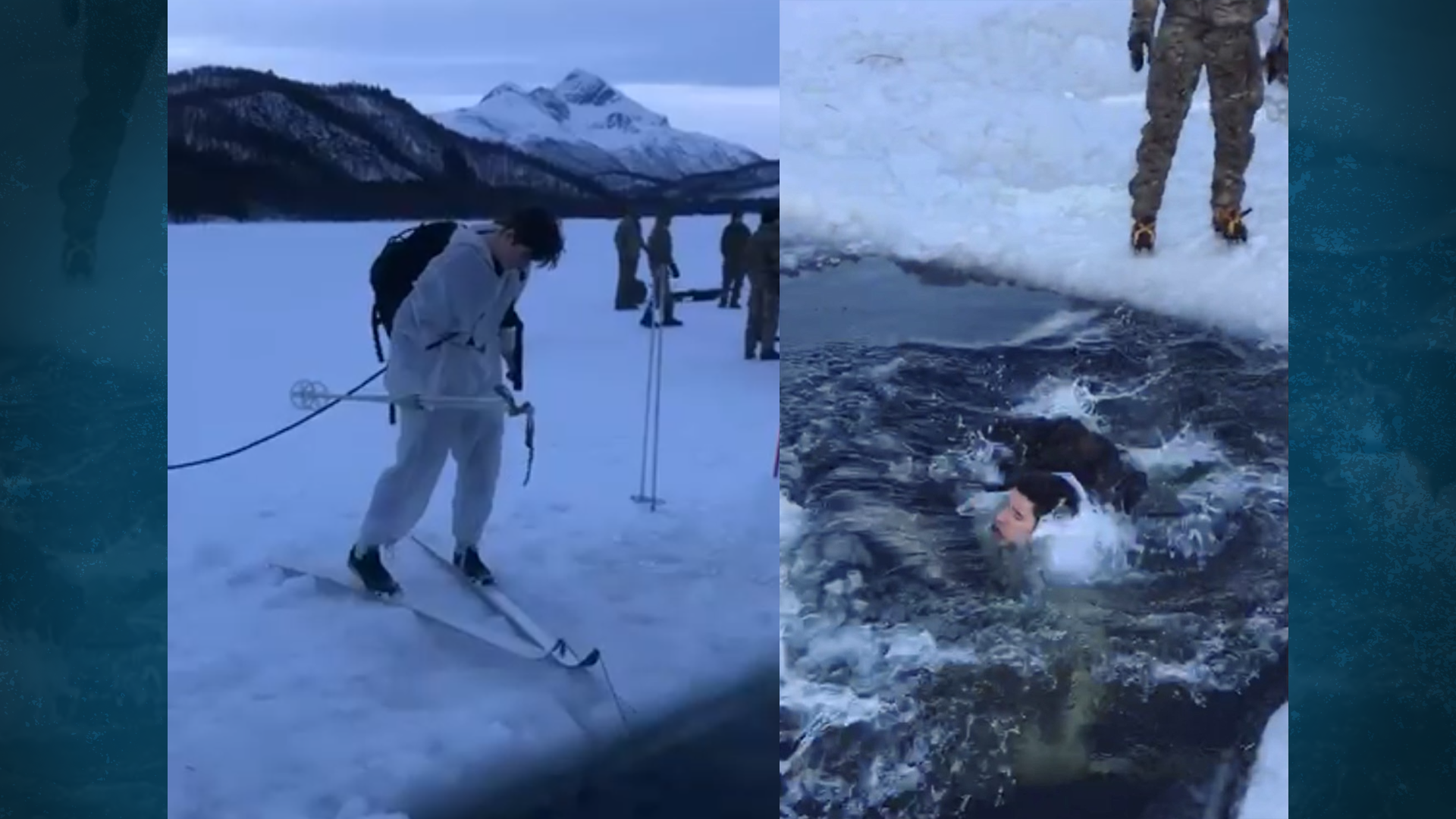
Dressed in thermals and draped in thin white camouflage over-suits, we made our way toward a small cut in the ice, carved into the vast expanse of a frozen lake.
I was unfortunate enough to go last, and I can assure you that watching as others took the plunge did nothing to quell the nerves.
The scenario replicates the ever-present danger of falling through the ice. Stepping into skis and carrying a bergan on your back, you slowly inch forward.
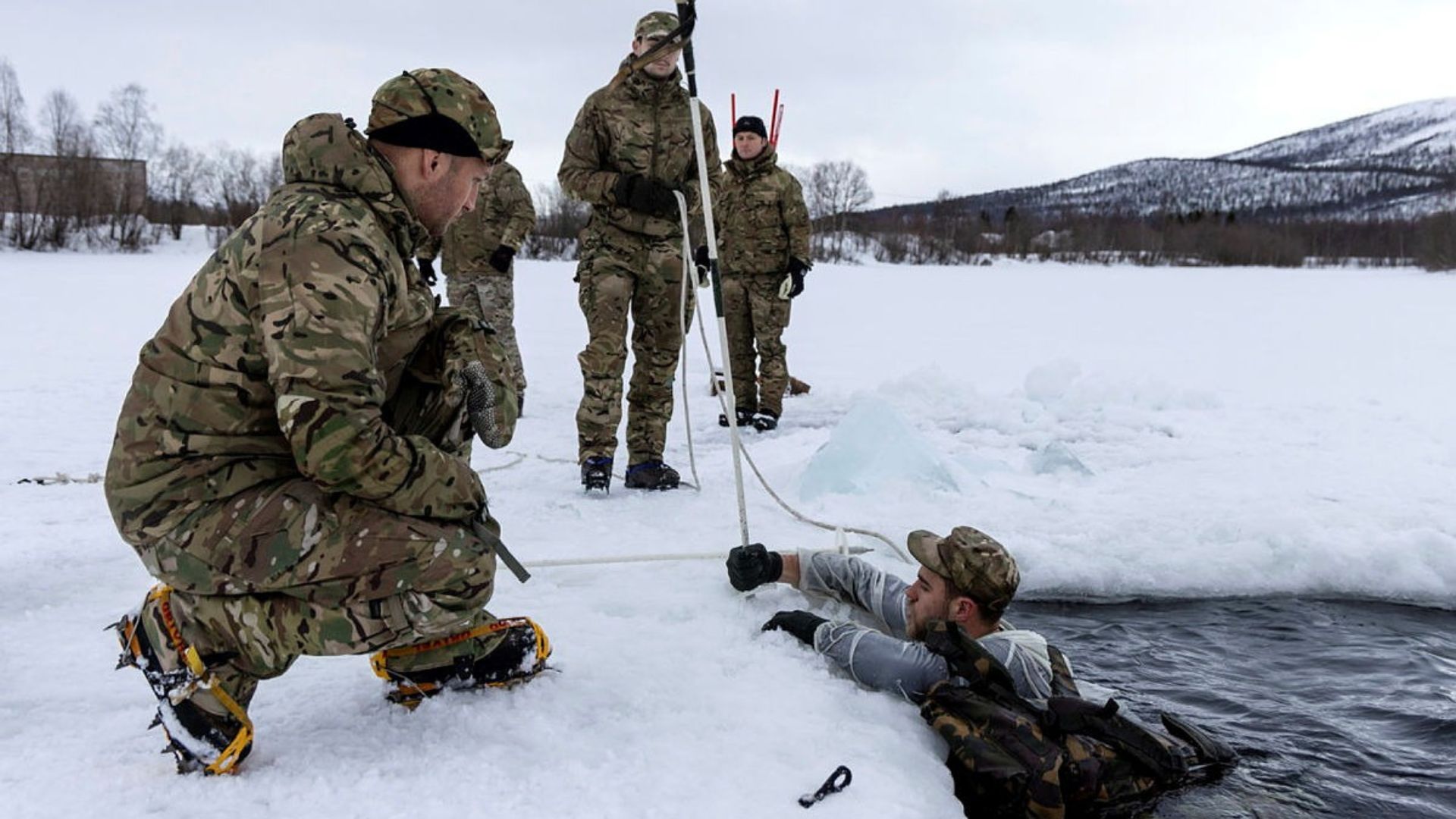
A second later, you are underwater, your head reeling from the shock of the freezing water – and it is mind-blowingly cold. I remembered an odd sense of calmness as I resurfaced, giving me a few brief seconds to steady my breathing and regain my composure.
Swimming over to the side, I hoisted the bergan up to an oppo, a wry smile on his face – cheerfulness in the face of adversity, I thought.
Moving to the other side, and using the ice poles as daggers, I go to pull myself out, only to be halted halfway by a sudden question.
"What is your service number?" I am asked. The seconds go by, and I'm still racking my brains. "What is your service number?" came the question again.
Steadying my breathing, I calmly gave my answer and was afforded permission to leave the ice. Hoisting myself out, I ran back toward the tent, rolling in the snow to help absorb some of the moisture.
Before I got there, a touch of Royal Marine tradition: a quick shot of pussers rum and a salute to the monarch, before I was back to rewarm - the tent now alive with the groans of men whose balls were just beginning to resurface.
I would later return to Norway the following year as an Arctic Cold Weather Warfare Instructor – a wry smile on my face this time as I watched the next group earn their Norwegian rite of passage.
But for now, I reflected on the week and grew to revel in its brutality. It would later put me in good standing for the mobility and warfare phases of the course – but that's a story for another time.
After nearly eight years as a Royal Marine Commando, Joe Hearn is now a Website Reporter at BFBS Forces News. You can contact him at [email protected]
Related topics
Join Our Newsletter