Armed Forces get more powers to down rogue drones, but will it make a difference?
New powers allowing personnel to take down rogue drones at military bases are unlikely to make much difference in the short term, an expert has warned.
The number of drone incidents near military bases in the UK has doubled in the last year, with 266 reported drone incidents near UK military sites in 2025, just over double the 126 in 2024.
As a result, defence personnel will be given new powers through the Armed Forces Bill to take out drones that pose a threat to military sites, without the need for police assistance.
Not just aerial threats
This includes land drones and those that can be operated on or under water, as well as aerial drones.
But Peter Lee, a professor of applied ethics, told BFBS Forces News: "I'm not sure in the short term it will make much difference at all.
"Every base has the ability to defend itself, and the police in the surrounding constabularies have always had powers of arrest for anyone who's breaking the law."
The Government has quadrupled its spending on counter-drone technology, allocating more than £200m this year.
Defence Secretary John Healey said the latest statistics underlined "the increasing and changing nature of the threats we face".
Current legislation that enables interference with drones for the purpose of preventing crime can only be used by the police and certain other agencies.
Difficulties in downing a drone
Prof Lee, who has a specialism in drones at the University of Portsmouth, also pointed out how it is difficult to bring down a drone reliably, consistently and affordably.
Taking down a drone in a civilian environment also poses different challenges to the battlefield.
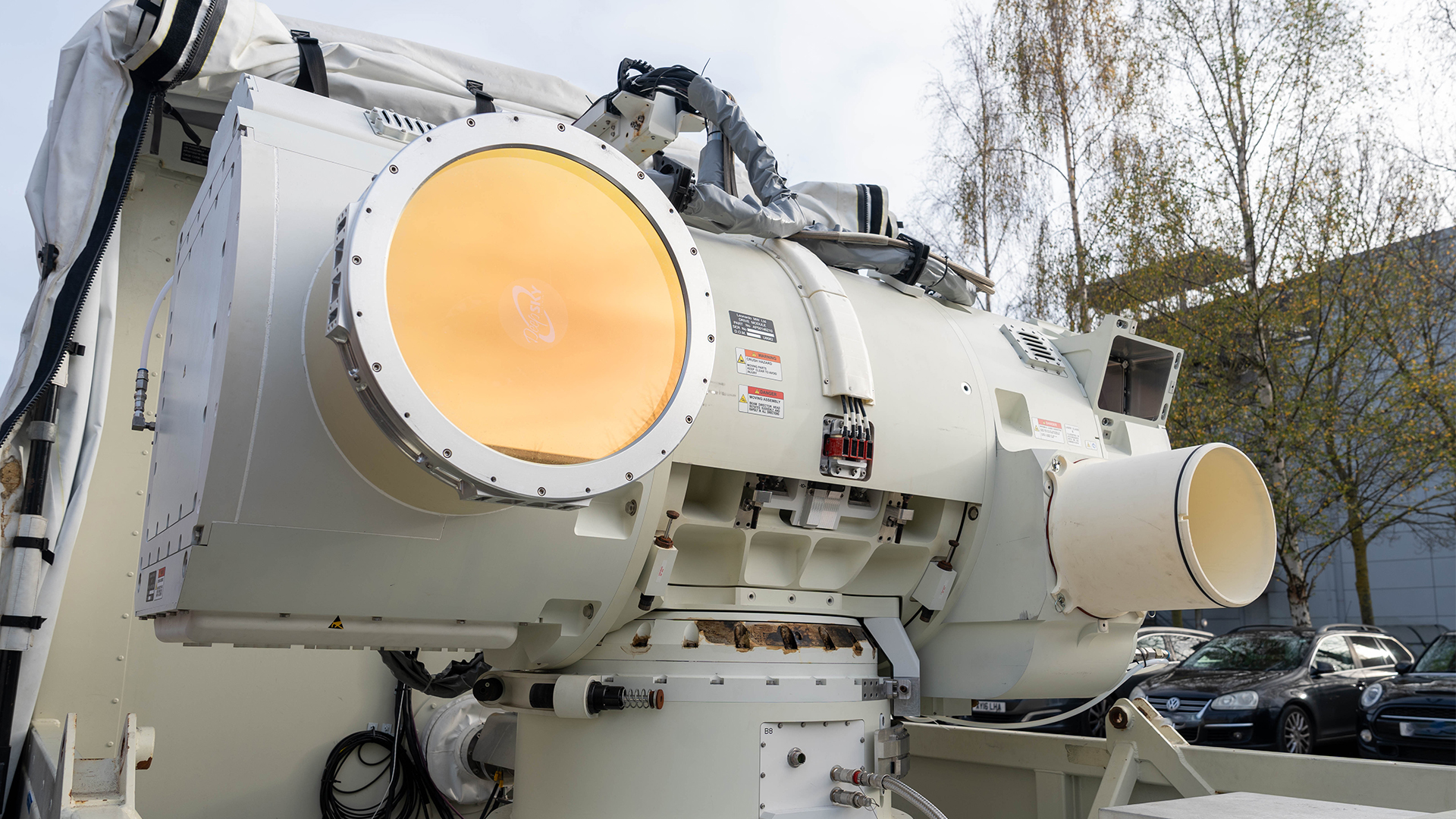
"There are new laser weapons which in due course might become affordable to reproduce in large numbers," he said.
"But they've got a limited range of maybe a kilometre, so it would have to be in the right place on a military base at the right distance in order to hit the drone, and it would be a multimillion-pound endeavour, so that's impractical.
"Using ballistic bullets or other weapons is not feasible in a civilian environment, and then any other option, like shotguns, are going to leave pellets.
"And if it's an airfield, then you can't have pellets on the grass when you've got jet engines that might suck them up."

Return to sender?
"One of the other things that's also [being] looked at is disrupting the drone signal, because when you take the signal away, most drones either will drop to the ground automatically or lower themselves to the ground or return to where they were launched from.
"But if a drone has been programmed so that there is no signal, you can't disrupt the signal."
Some of the measures already introduced by the Government include restricted airspace at 40 defence sites, new drones to guard military bases, investment in advanced CCTV and £20m in digital transformation to modernise security systems.
Automated track-and-detect systems are now operational at multiple key sites, delivering 24/7 surveillance.
Related topics
Join Our Newsletter