Just how ready is the UK for a long war? Former commander Barrons says we aren't
There is a growing sentiment across defence and politics that the general public – not just the military – needs to step up to deter the threat posed by Russia.
Worst case, this could see the UK drawn into a 'Long War', similar to what is happening in Ukraine.
Defined as a conflict measured not in days or even months, but in years, a Long War tests not only armies, but economies and entire societies. It is a war in which fighting outlasts the amount of deployable people and kit available on the shelf.
The government's latest national security strategy suggests a Long War is not an impossible scenario.
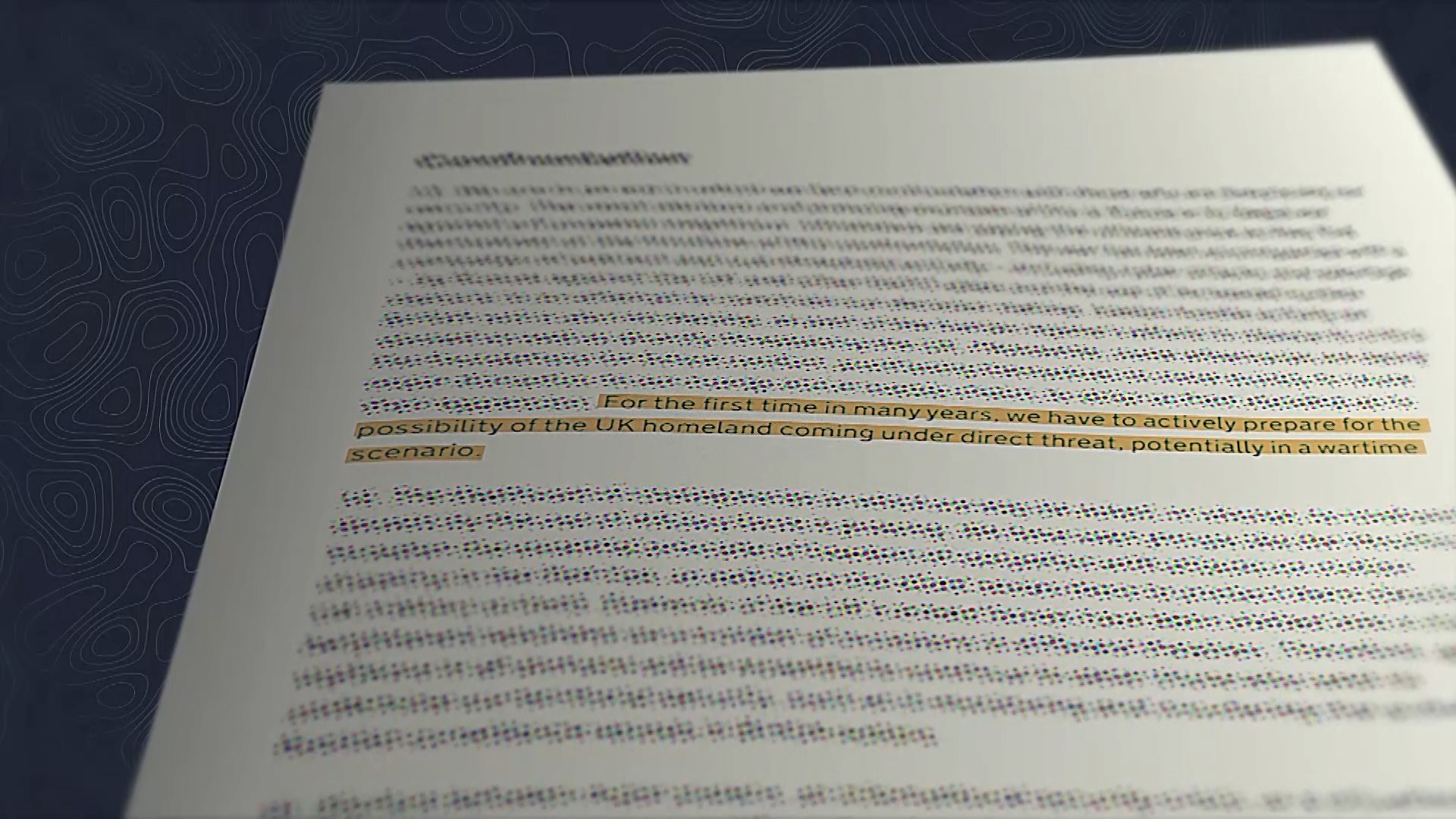
Published in August, the document says: "For the first time in many years, we have to actively prepare for the possibility of the UK homeland coming under direct threat, potentially in a wartime scenario".
The assessment is not new. When General Sir Roly Walker took on the job as head of the Army in July 2024, he warned the UK needs to be ready to deter or fight a war in the next three years – and the Prime Minister agreed.
How ready is the UK for a Long War?
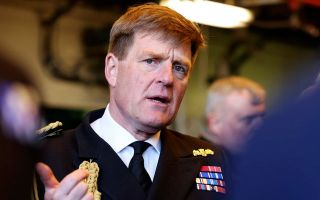
In a talk delivered at the UK Defence think-tank, the Royal United Services Institute (RUSI), General Sir Richard Barrons, the former Commander of Joint Forces Command, said we are only "about a quarter of the way there" in terms of preparedness.
He added that "we have to recognise the risk to the homeland" as war is "on the pitch again in a way that it frankly wasn't, for more than a generation".
Gen Sir Richard is the co-author of the Strategic Defence Review, which was published in June, and outlines in a 140-page report the challenges facing UK defence and national security.
With nearly 40 years of military service under his belt, he assessed the UK's readiness in several areas he deemed key to winning a Long War.
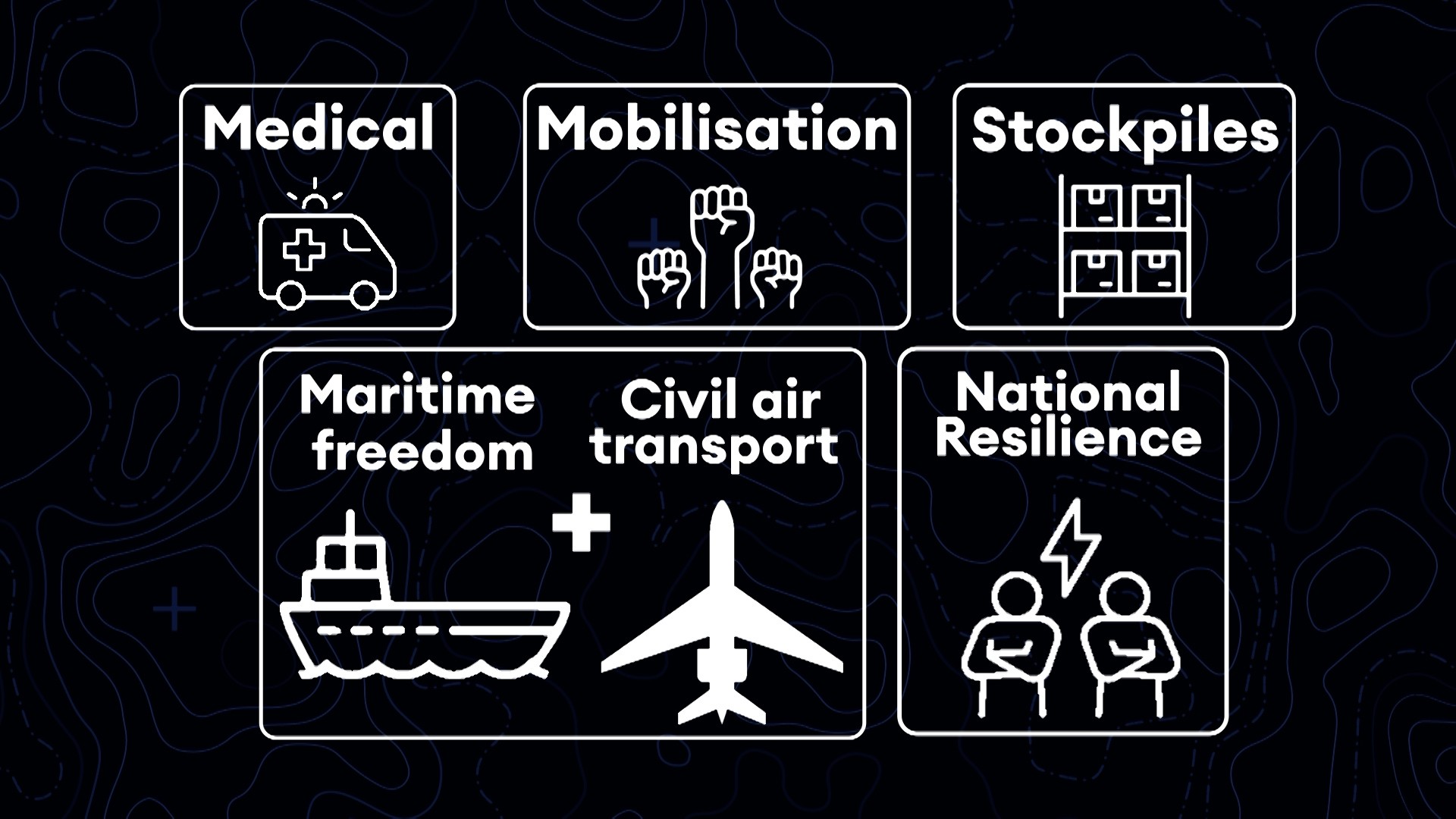
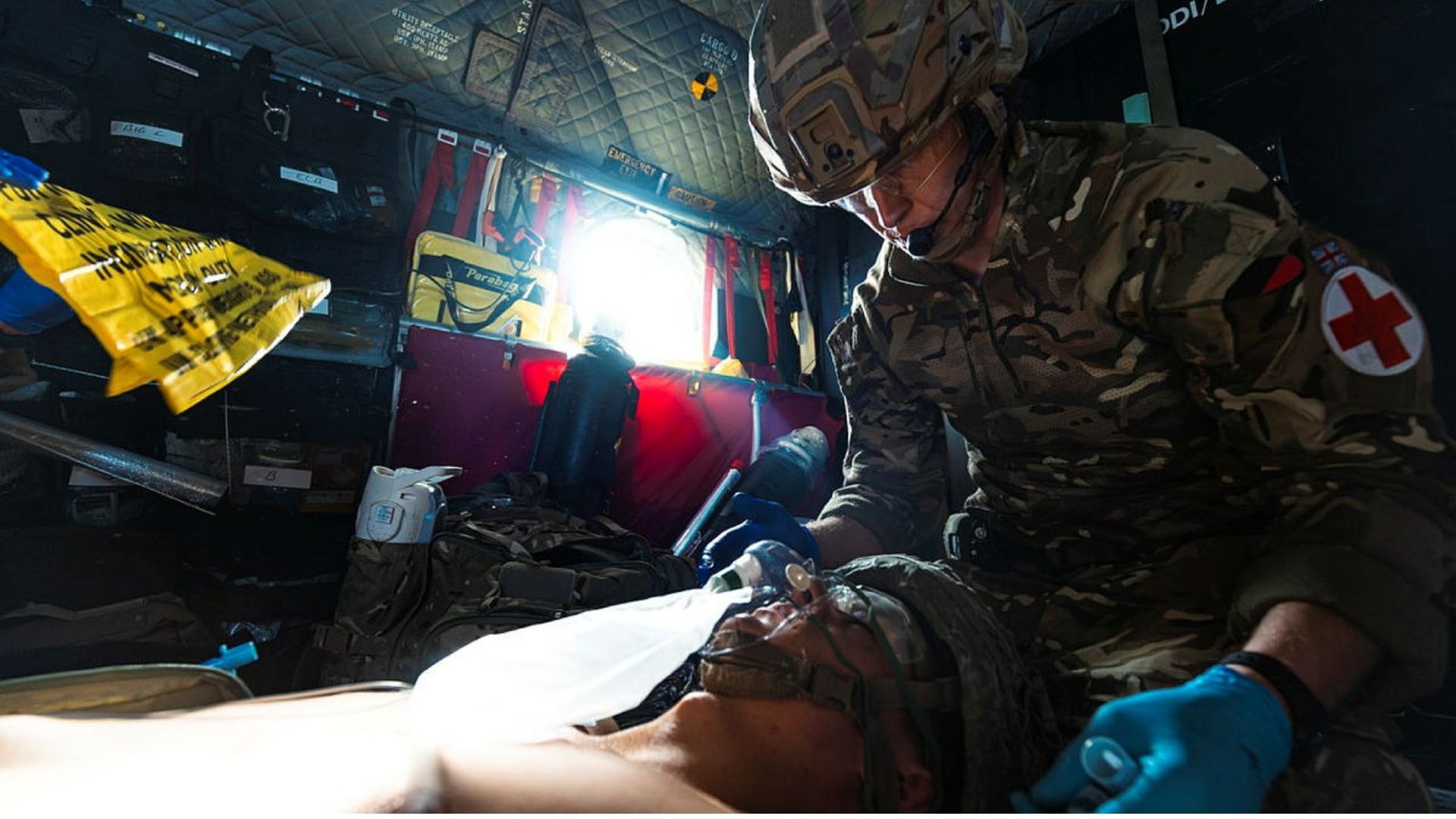
He referred to 'Medical' as the UK's biggest risk. How do you get from being wounded overseas to an NHS bed back in the UK? Six hundred casualties a day is the current planning figure.
'National Resilience' – a significant element which does not get talked about a lot in the context of war – was also highlighted. This means securing key infrastructure, cyber resilience, public safety, and maintaining the will of the people to endure a long war.
Gen Barrons scored them both a 2/10.
Even worse was his assessment on 'Protected Command and Control': referring to the protection of Permanent Joint Headquarters (PJHQ), the tri-service headquarters from where all overseas military operations are planned and controlled.
He referred to the control hub as "an office block, in a charming part of north west London. 0/10".
Whole of society approach
Air Chief Marshal Sir Rich Knighton has said the objective must be to "avoid war, but the price of maintaining peace is rising".
He said: "Sons and daughters, colleagues [and] veterans will all have a role to play. To build – to serve, and if necessary – to fight. And more families will know what sacrifice for our nation means."
Sir Rich said: "Unless we can explain the risks, we can't expect decision-makers in government or society more broadly to pay that price."
It comes as Blaise Metreweli, the new head of Britain's Secret Intelligence Service, MI6, said the "frontline is everywhere" in her first major public speech.
She said: "Alongside the grinding war, Russia is testing us in the grey zone with tactics that are just below the threshold of war."
How do we solve this?
The simple answer: money.
Following the publication of the Strategic Defence Review, the Government announced core defence spending would reach 3.5% of GDP by 2035.
However, that is a decade away, and the Office for Budget Responsibility (OBR) has warned that the commitment "would cost an additional £32 billion in today's money".
Gen Barrons suggests there needs to be a national discussion on defence and security to make it a higher priority topic among the general public.
"Frankly, we don't need much more analysis to tell us what we need to do," he said.
"The problem is we need to actually do it, and we have chosen not to do it at the speed our analysis tells us that we need to do it, and that's because civil society and our politics have many, many other things to worry about, and [that] most of our citizens believe is just more important."
How are other countries preparing for a Long War?
In an aim to boost national defences, France has announced it will gradually bring in a new "national service" from next summer. The plan will see young men and women volunteering for a paid 10 months of military training.
Germany's parliament, the Bundestag, has voted to introduce voluntary military service. The change means that all 18-year-olds in Germany will be sent a questionnaire from January 2026 asking if they are interested and willing to join the armed forces. The form will be mandatory for men and voluntary for women.
In Sweden, a government booklet, titled 'In case of crisis or war', has been sent to every Swedish household, which states "the security situation is the most serious since the Second World War".
Estonia, where British soldiers are currently based on Operation Cabrit, made defence training mandatory in all secondary schools since the 2023/2024 academic year.
Related topics
Join Our Newsletter