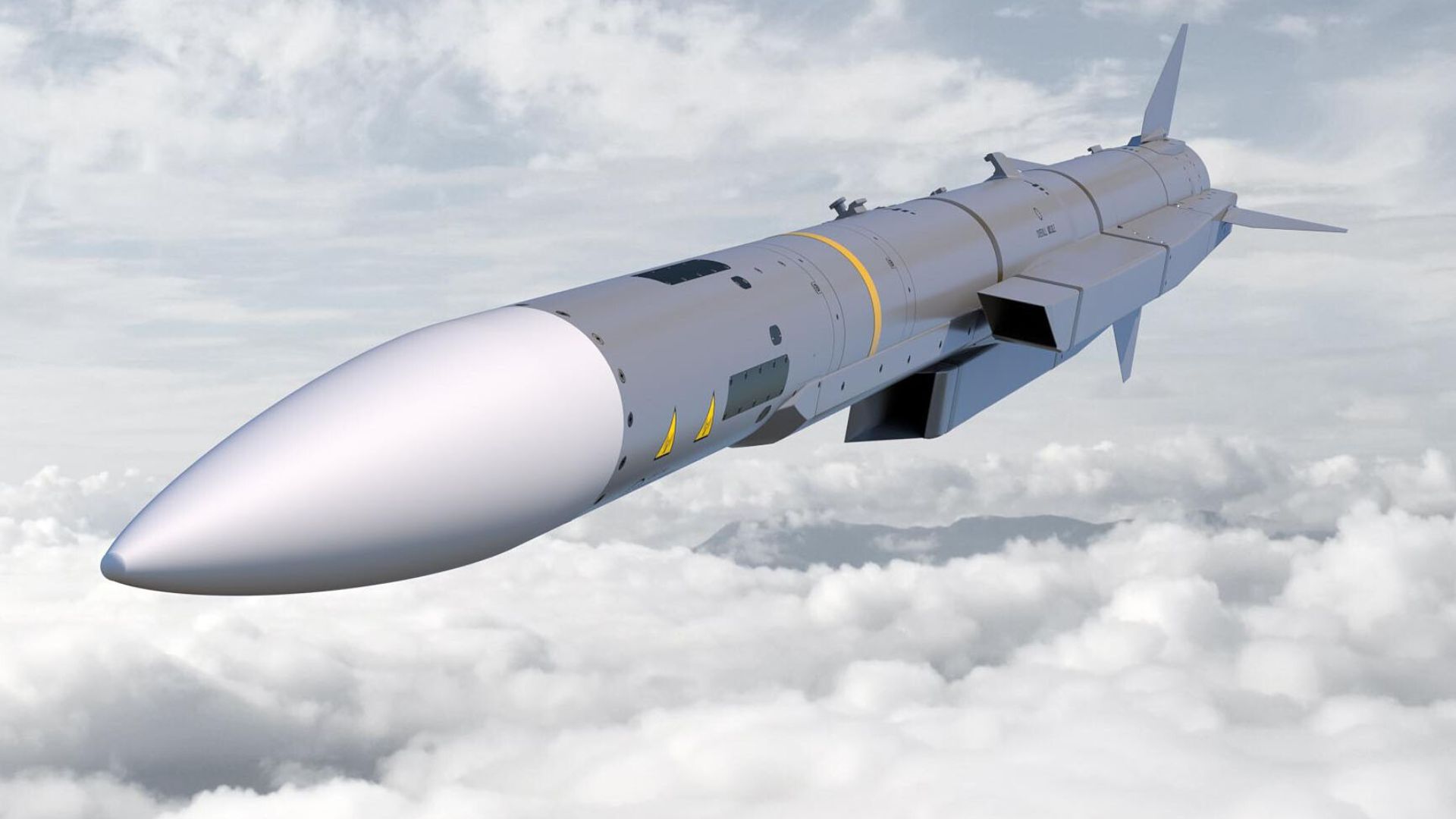
Germany has signed a contract for additional Meteor missiles to help support the Bundeswehr, its armed forces.
Regarded as one of the most capable and advanced beyond-visual-range air-to-air missiles in the world, it can engage enemy aircraft at approximately 40km or more, long before the pilots can see each other.
The contract was awarded to MBDA, which has operations in various sites around the UK, by the Meteor Integrated Joint Programme Office acting on behalf of Germany's Federal Office of Bundeswehr Equipment, Information Technology and In-Service Support.
The European defence company says Meteor harnesses cutting-edge technology from six European partner nations, and secured additional contracts last year following successful testing.
Eric Béranger, CEO of MBDA, said: "Meteor is a defining example of the strength of multinational collaboration in delivering world-leading defence capabilities.
"In 2025, we saw another successful year for Meteor, as nations continued to invest in its air dominance and secure the sovereignty of their airspaces."
As aerial combat shifts from visual, close-range dogfights to engagements driven by stealth, advanced technology and drones, Meteor represents the future of air dominance.
But what makes it so lethal?
Beyond visual, beyond escape
Weighing 190kg, it is considered a light to medium‑weight missile, allowing for improved speed, range and agility.
It offers a multi-shot capability and can engage highly manoeuvrable targets such as jet aircraft, as well as smaller targets including UAVs and cruise missiles.
According to MBDA, the missile's ramjet motor provides continuous thrust all the way to target intercept, giving it the largest No‑Escape Zone (NEZ) of any air‑to‑air missile system – significantly larger than those of current medium‑range air‑to‑air missiles.
The NEZ is the area in which a launched missile has a high probability of hitting its target and is calculated by assessing the missile's flight path against the target's evasive actions. Within this zone, the target will run out of space or time to escape before the missile reaches it.
Guided by an advanced radar seeker, the missile can operate effectively in all environments – no matter how austere – and is equipped with both impact and proximity fuses, as well as a blast‑fragmentation warhead to maximise lethality.
Meteor is the result of a collaborative consortium of European partners led by MBDA, which includes, alongside Germany, the UK, France, Italy, Spain and Sweden.
It has already been integrated on aircraft including RAF Typhoons, the French Rafale, Swedish Gripens and the KF-21 Boramae – South Korea's new, next-generation fighters.
Related topics
Join Our Newsletter