The B-1 Lancers return to RAF Fairford as an old bomber finds a new conflict
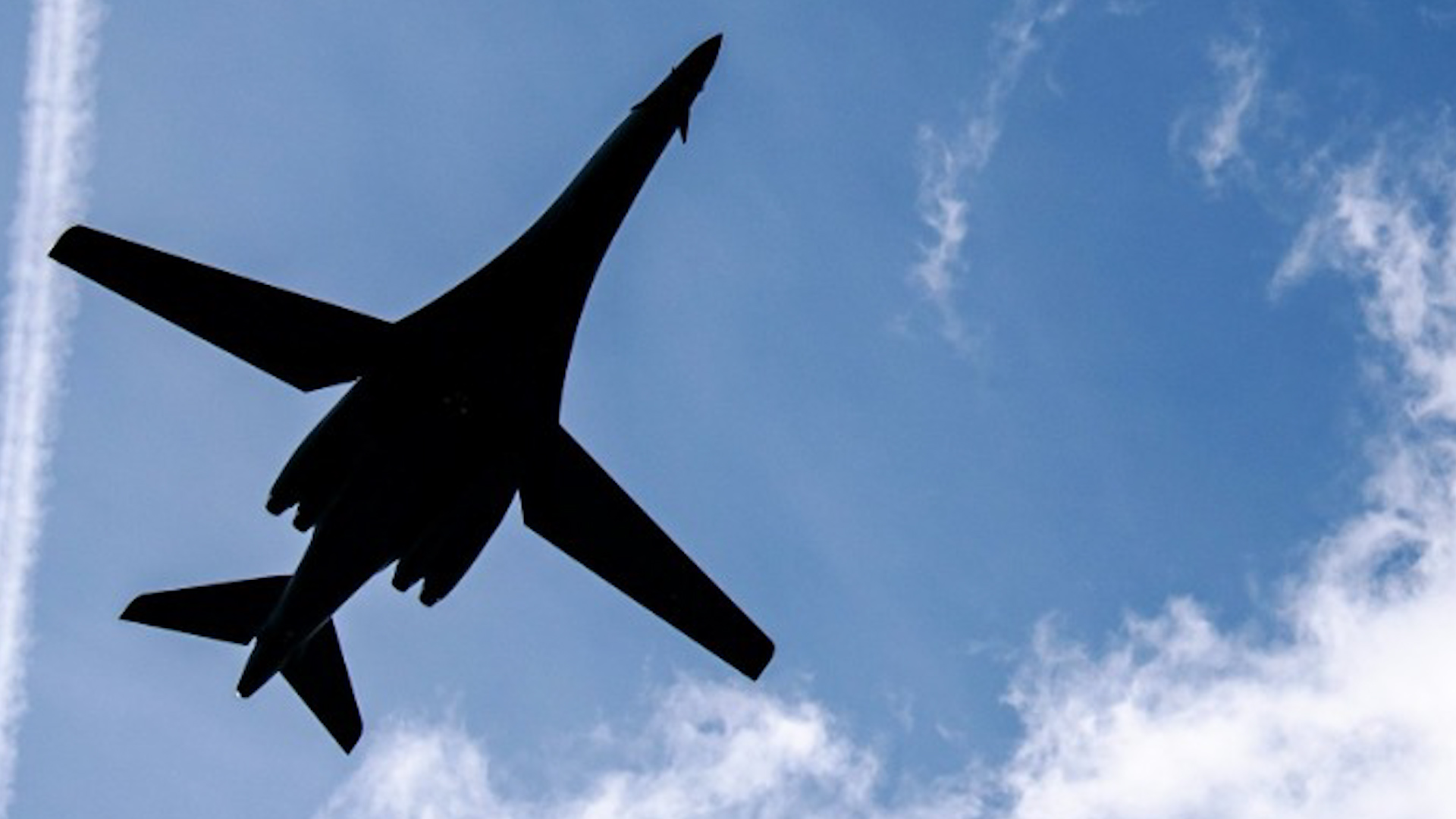
B-1 Lancer bombers are back at RAF Fairford in Gloucestershire, placing one of the US Air Force's most recognisable aircraft at a base long used for American bomber deployments.
Their arrival came as the UK allowed US use of British bases for specific defensive operations during the Israeli-US war on Iran.
The four US bombers that have landed at RAF Fairford are to carry out "specific defensive operations" to stop Iran firing missiles into the Middle East, the Ministry of Defence has said.
- RAF Fairford: The base built for D-Day that could prove crucial for the US against Iran
- Can Iran hit the UK? Country's weapons in spotlight after attack on Cyprus RAF base
- In pictures: The US military assets which are powering Operation Epic Fury
The B-1 bomber was conceived in the 1970s, entered service in the 1980s, lost its nuclear mission after the Cold War, and then built its later reputation in operations over Iraq, Kosovo and Afghanistan.
Mass and speed
The B-1 is defined first by payload, speed and range. It carries the largest conventional payload of guided and unguided weapons in the US bomber inventory: 75,000lb, with a top speed of more than 900mph and intercontinental range.
It was built to carry a large weapons load over long distances at high speed.
That gives the aircraft a distinct place in the bomber fleet.
Where some aircraft are built around stealth or endurance, the B-1 has long been associated with moving substantial conventional firepower quickly across theatre distances.
A shape with a purpose
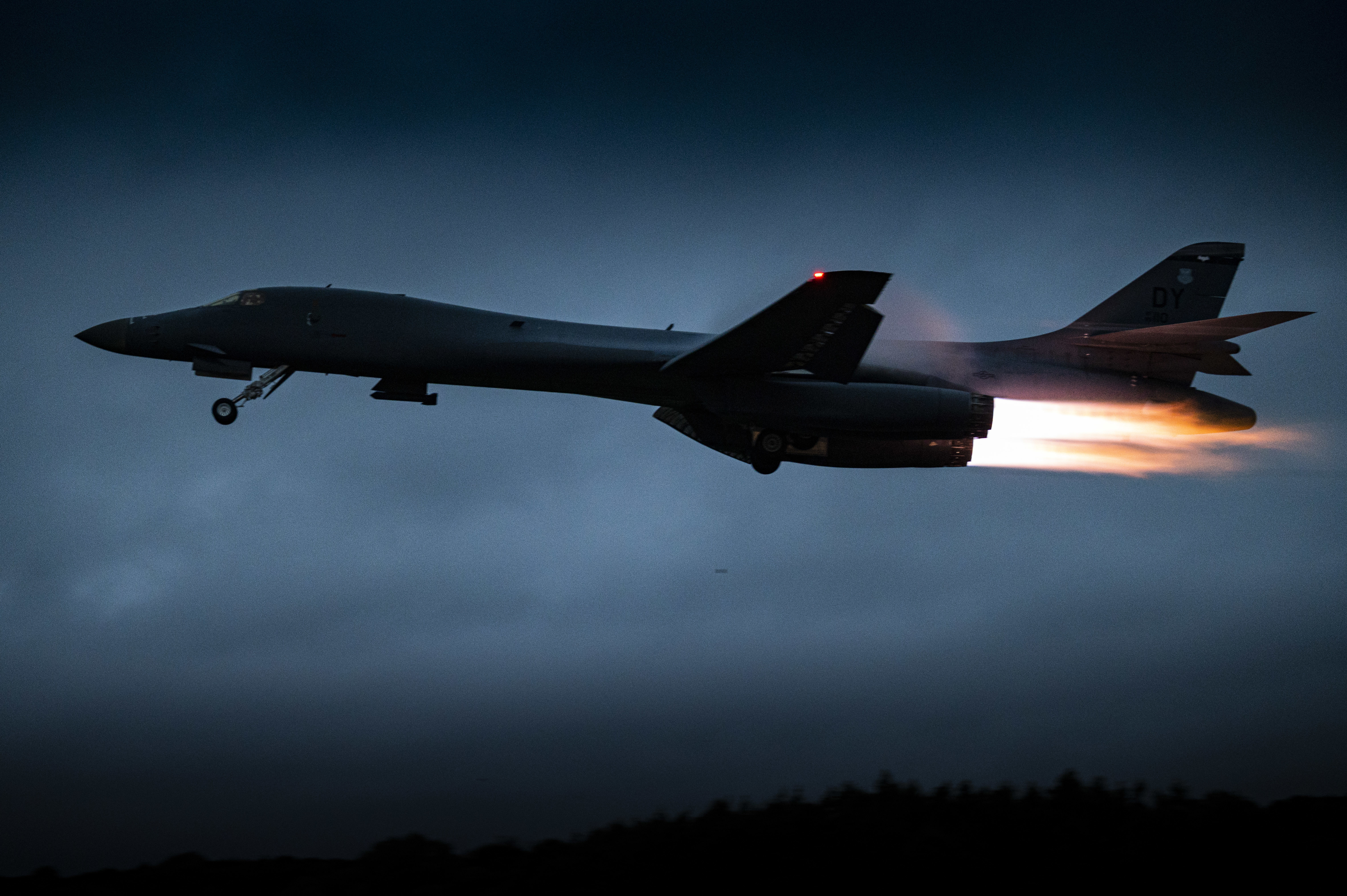
One of the B-1's defining features is its variable-sweep wing, mounted high on either side of the fuselage.
The wings can move backwards and forwards depending on the phase of flight.
Set further forward, they help provide the lift and control needed for take-off, landing and refuelling.
Swept back, they reduce drag and suit the aircraft for much faster flight.
The result is a bomber whose shape reflects its job: carrying a heavy weapons load over long distances while also being able to fly at high speed.
Cold War origins
The B-1 story begins in the 1970s, when the Air Force was developing a replacement for the B-52.
The B-1A was developed in that decade for that role, and four prototypes were built and tested in the mid-1970s.
The programme was cancelled in 1977 before production began, although flight testing continued through 1981.
It was restarted in 1981 as the B-1B. The redesign added structure to increase payload, improved the radar and reduced the aircraft's radar cross section, although this came with a lower maximum speed than the earlier B-1A.
The first B-1B was delivered in 1985, initial operational capability was achieved a year later, and deliveries were completed in 1988.
The B-1 was shaped by the Cold War, in which long-range strike, nuclear deterrence and the challenge of penetrating advanced air defences were central to US bomber planning.
From nuclear deterrent to conventional bomber
When the B-1B entered service, it did so as a nuclear-capable strategic bomber.
Three years after the end of the Cold War, the US eliminated the B-1's nuclear mission in 1994.
The B-1 was recast as a conventional strike aircraft and went on to build its operational reputation in later campaigns.
It saw combat in Operation Desert Fox against Iraq in December 1998.
In Operation Allied Force over Kosovo in 1999, six B-1s delivered more than 20% of the total ordnance while flying less than 2% of the combat sorties.
B-1 bombers have also been used in strikes on Syria, Libya and Afghanistan.
More recently, they flew patrols along the coast of Venezuela in the days before US forces captured the former president, Nicolas Maduro.
Where it sits in the bomber force
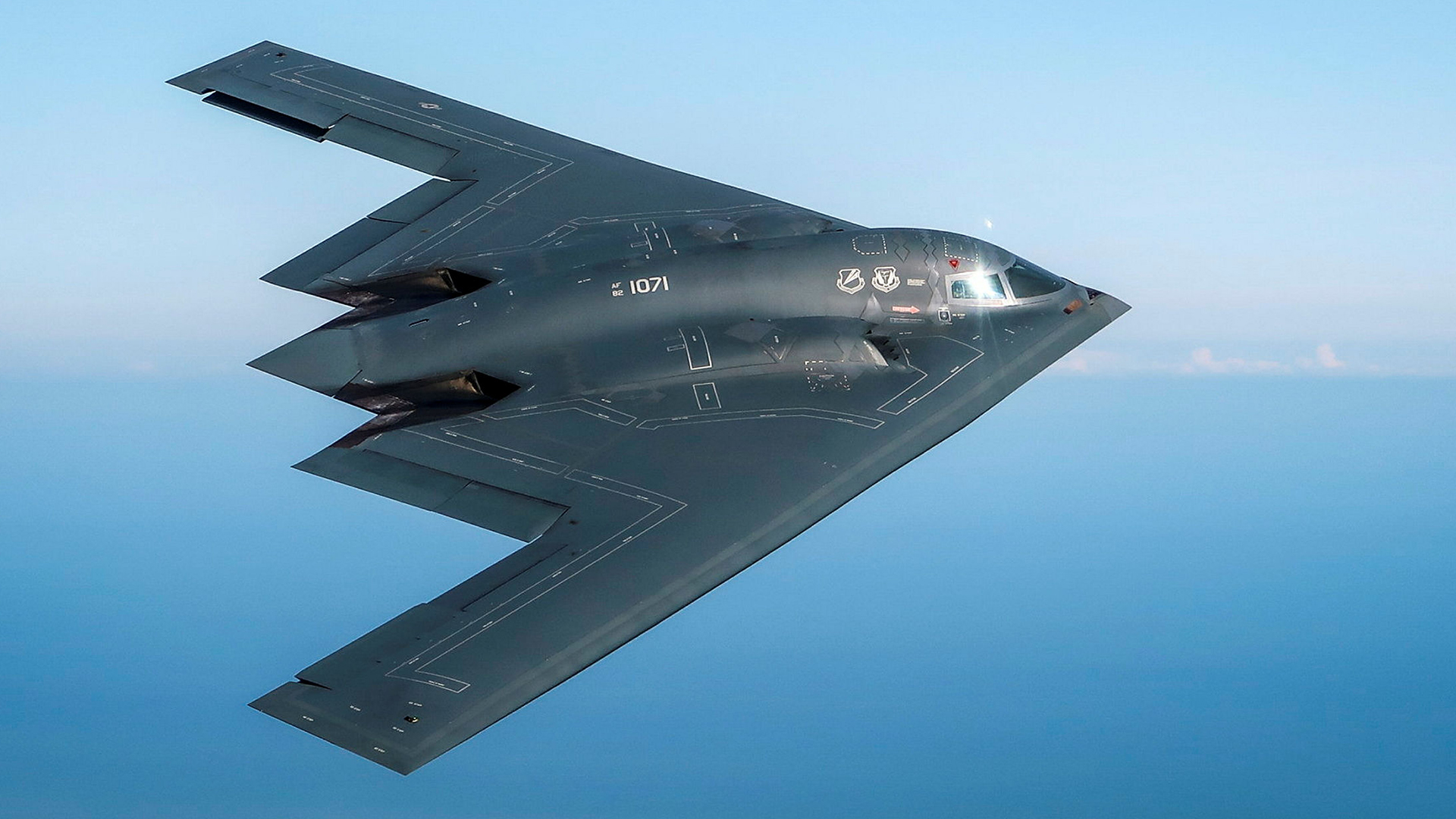
Alongside the rest of the US bomber fleet, the B-1 occupies a different role from the B-52 and the B-2.
The B-52, widely known as the BUFF (Big Ugly Fat Fella), is the oldest of the three and remains a long-range heavy bomber able to carry nuclear or precision-guided conventional ordnance.
The B-2 is a stealth bomber capable of delivering both conventional and nuclear munitions.
Often called the Bone, the B-1 fills a different niche: a fast, long-range bomber built around a very large conventional payload.
The B-21 Raider is set to incrementally replace the B-1 Lancer and B-2 Spirit and become the backbone of the future bomber force.
The B-21 programme has a production goal of at least 100 aircraft. Meanwhile, the Bone remains in frontline use.
Join Our Newsletter