The High North's security depends on our ability to act together, First Sea Lord says

The security of the High North and North Atlantic depends on our ability to act together with allies, permanently at pace, the First Sea Lord has said.
General Sir Gwyn Jenkins' remarks were made ahead of a meeting of the Joint Expeditionary Force's (JEF) naval chiefs in Whitehall as they look to confront the growing Russian threat and strengthen deterrence in the High North, North Atlantic and Baltic.
He will host his counterparts to discuss how they can significantly deepen the partnerships and co-operation between the UK and allied northern navies.
A much deeper partnership
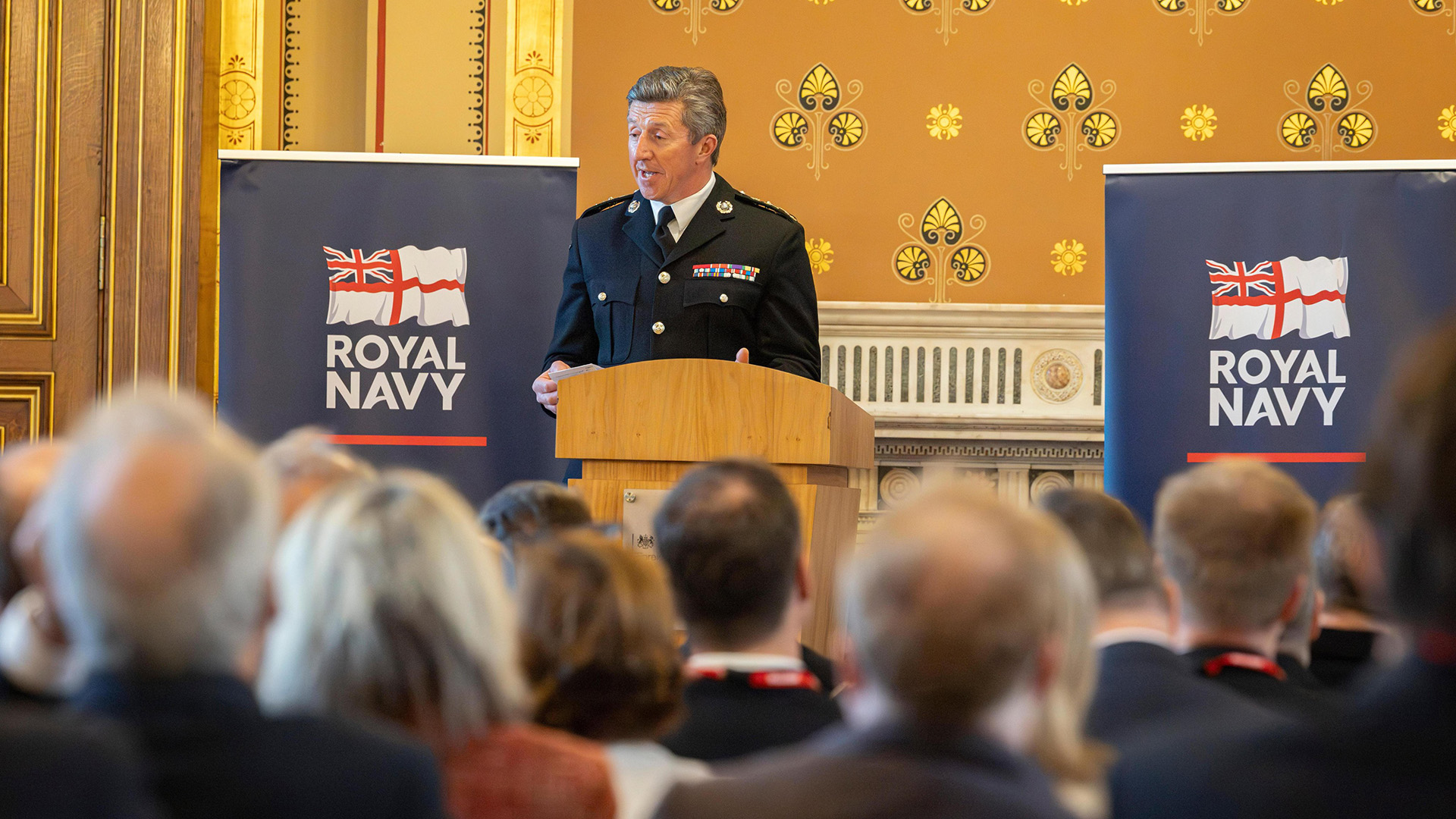
"The security of the High North depends on our ability to act together with allies, not occasionally, but permanently and at pace," Gen Sir Gwyn said at a memorial lecture in honour of former Admiral of the Fleet, Sir Henry Leach, who led the Royal Navy during the Falklands War.
"That is why we need to build on the work of the Joint Expeditionary Force and our closest naval partnerships, moving from irregular responses towards a much deeper partnership.
"This requires a joint force that is integrated, interoperable, and capable of providing meaningful deterrence. Like the JEF, it would be there to complement Nato."
The JEF, alongside Nato, has provided deterrence in the North as Moscow's aggression has grown both on the surface and undersea in recent years.
London has led the 10-nation partnership since it was established in 2014.
Air Chief Marshal Sir John Stringer, who was appointed Nato's Deputy Supreme Allied Commander Europe (DSACEUR), the most senior UK role in the alliance, delivered the Leach lecture as guest of honour.
Interchangeable force
The UK and its allies will look to go further than coalition activity by building a permanent joint force that is more ready to fight in light of the Kremlin's interference in shipping and its probing of critical national infrastructure.
The Royal Navy is looking to integrate interchangeability into the force, meaning it would be able to substitute, swap, or mix equipment, parts, ammunition, and personnel, given that member nations would be using common systems and platforms, shared digital networks, logistics, and stockpiles.
The UK is exporting its most advanced warship, the Type 26 frigate, to Norway and Canada, and has a naval partnership with Oslo through the Lunna House Agreement.
London and Oslo have been working together to counter Russian activity in the North Atlantic.
"By deepening trust, aligning our capabilities, and operating common platforms and systems, we will generate the collective combat power that can protect our people, our infrastructure, and our shared interests, and if required, fight as one from the very first moment," Gen Sir Gwyn added.
The JEF meeting
The discussions at the JEF meeting will focus on improving collective warfighting readiness and enhancing allied navies' ability to operate together.
Before the summit, senior Royal Navy leaders emphasised the importance of unity and practical cooperation among JEF navies, adding that close integration, common standards and regular combined training are key to maintaining deterrence and stability.
Related topics
Join Our Newsletter