An interceptor by year's end, an interception by July: The race to build Freyja
A Ukrainian interceptor, a German radar, a Norwegian command centre and guidance technology must be made to work as one weapon by the middle of next year.
That is the premise – and the formidable deadline – behind Freyja, an attempt to create a European ballistic missile defence system at an extraordinary pace.
Fire Point, the Ukrainian company leading the programme, says it has begun connecting its FP-7.X interceptor to European surveillance and tracking radars, seekers and command technology.
- UK joins 10-country push to develop new anti-ballistic missile shield for Ukraine
- Gen Z women v Putin: The young women fighting Russia on Ukraine's frontline
- Ex-British military in Ukraine to train responders in wake of Russian attacks
Fire Point's target is a successful interception of a ballistic missile by mid-2027.
"We're trying to squeeze a programme that usually takes 20 or 30 years into a matter of a couple of years," Fire Point CEO Iryna Terekh told Reuters.
What is Freyja?
Freyja is the flagship project of the Integrated Anti-Ballistic Missile Coalition, which was established at its first meeting in Paris on 13 July 2026.
The coalition comprises Ukraine and nine other European countries: the UK, Denmark, France, Germany, Italy, the Netherlands, Norway, Spain and Sweden.
For Ukraine, the programme offers a potential additional supply of interceptors at a time when Patriot ammunition is scarce.
Patriot remains the only weapon in Ukraine's arsenal considered capable of reliably destroying ballistic missiles.
Lengthy production cycles and the demands of the US-Israeli War with Iran have placed pressure on supplies.
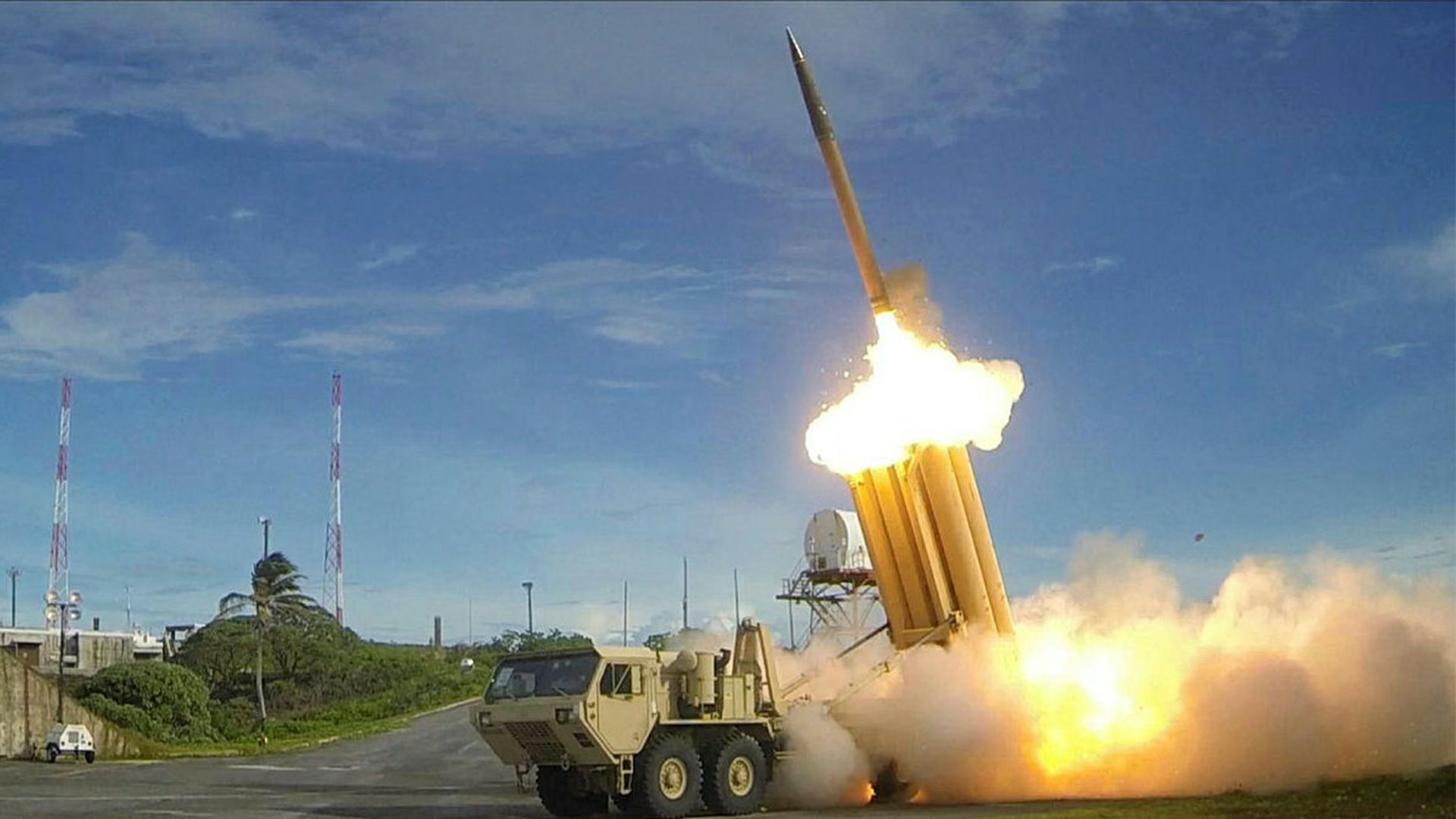
The US also fields THAAD, a higher-tier system designed to destroy short, medium, and intermediate-range ballistic missiles.
Freyja is being developed for interceptions at a lower altitude of approximately 20 to 25 kilometres.
Fire Point is aiming to produce each Freyja interceptor for less than €1m – between a quarter and a sixth of the price of a Patriot interceptor.
Building Freyja like Lego
President Zelensky compared Freyja to Lego, describing a project in which Ukraine and its partners each provide different pieces.
The programme is based on an open architecture which would allow countries to select compatible components from different manufacturers.
Davyd Aloian, the deputy secretary of Ukraine's National Security and Defence Council overseeing Freyja, told Reuters that one country could choose a radar made by Denmark's Weibel while another selected equipment from Sweden's Saab.
The integration task begins with surveillance radars detecting a ballistic missile and measuring its speed, direction and likely trajectory.
Tracking data then passes to a command centre, where the system identifies the threat, calculates an interception and sends a firing instruction to the launcher.
Once airborne, the interceptor requires updated target information as both weapons travel at very high speed.
Its seeker must acquire the incoming missile and guide the FP-7.X through the final stage of the engagement.
By early August, Fire Point had begun integrating the FP-7.X with surveillance and tracking radars and seekers.
Ms Terekh described this integration work as the most intense and complicated stage of the programme.
What is Ukraine contributing?
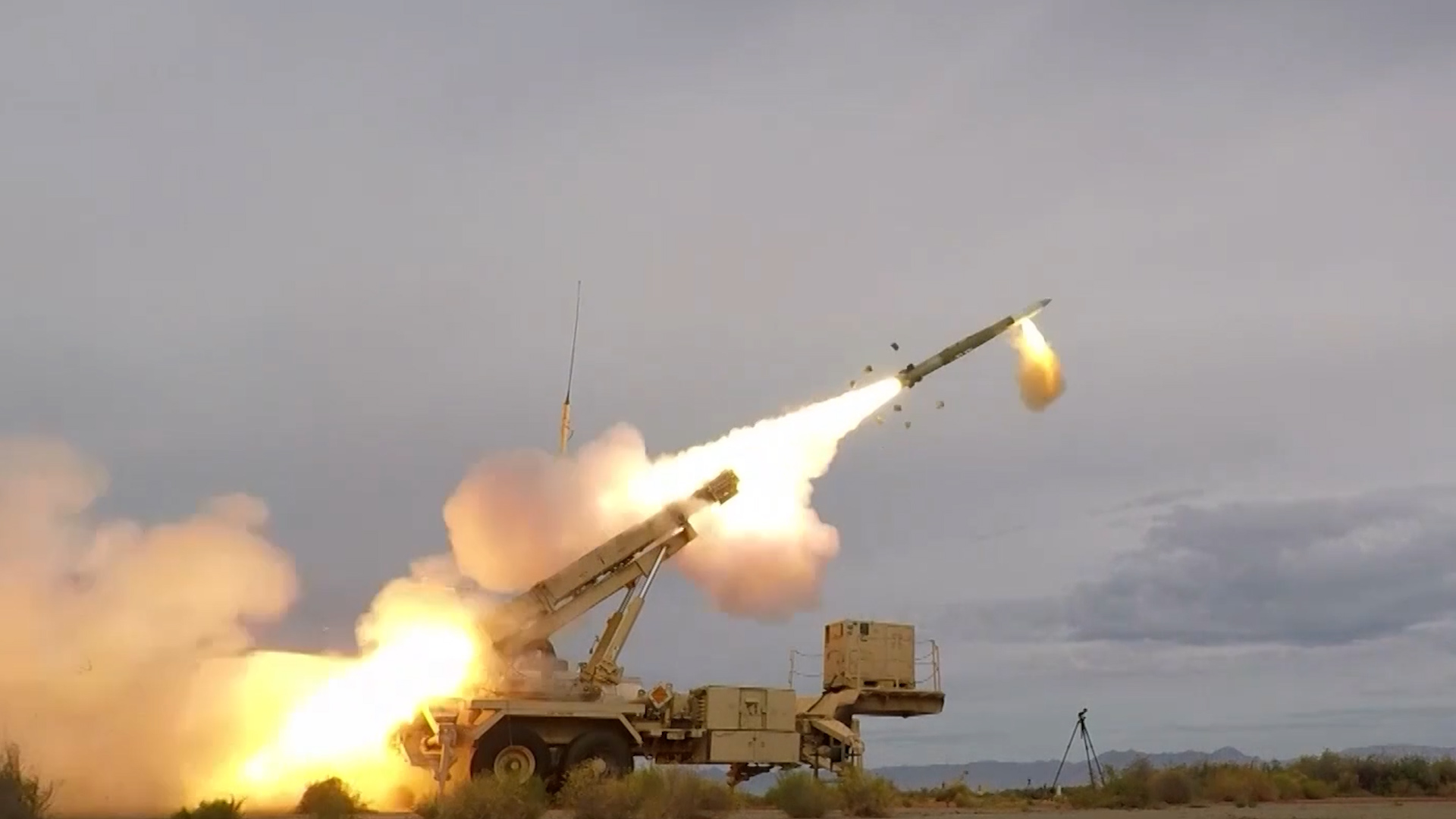
Ukraine is supplying the proposed missile interceptor and launcher.
Addressing Ukrainian diplomats on 3 August, Mr Zelensky said the country could manufacture both elements and that its European partners held the radars, sensors and other technology needed to assemble the wider system.
Fire Point is adapting its FP-7 missile into the FP-7.X surface-to-air interceptor.
The FP-7 was developed as a ground-launched ballistic missile.
The FP-7.X is a faster derivative designed to pursue and destroy an incoming ballistic weapon.
The interceptor had completed at least five tests by the end of July, Ms Terekh told Reuters.
The current FP-7.X design uses a blast-fragmentation warhead, which detonates close to its target and strikes it with fragments.
Ms Terekh said that the proposed launcher would carry between four and six FP-7.X interceptors – Fire Point is eventually aiming to manufacture 2,000 interceptors a year.
Who is responsible for each part?
Fire Point is expected to serve as prime contractor and hold overall design authority.
The company is responsible for producing and testing the FP-7.X, its launcher and launch-control equipment, as well as bringing the main components together.
German sensor manufacturer Hensoldt is responsible under a memorandum signed with Fire Point in June for producing, testing and delivering radars and supporting their integration. Its TRML-4D radar has been assigned a central role.
Norway's Kongsberg Defence & Aerospace is working on the command centre which will connect Freyja's sensors and weapons.
Germany's Diehl Defence is expected to provide guidance technology and other manufacturers represented at the coalition's first meeting included Thales, Saab, Weibel Scientific, Leonardo, Sener, MBDA, Eurosam, Safran and Destinus.
The UK's announced contribution currently covers its role as one of the coalition's 10 founding governments.
What is due – and when?
August 2026: Fryja completes its first international interrogation phase
Fire Point said that the FP-7.X could enter mass production before the end of the month.
End of 2026: first FP-7.X interceptors
Fire Point's published target is to have its first FP-7.X interceptors ready by the end of 2026.
The company's co-founder and chief designer Denys Shtilierman made that forecast conditional on European governments and manufacturers moving quickly enough to provide the technology Fire Point still required, including seekers, a real-time data link and a command-and-control centre.
First half of 2027: Freyja prototype
Ukraine is aiming to complete a Freyja prototype during the first half of 2027.
Mr Aloian, the deputy secretary of Ukraine's National Security and Defence Council who oversees the programme, described the objective as a minimum viable product (MVP) capable of demonstrating its first practical results.
July 2027: first ballistic-target interception
Fire Point plans to conduct Freyja's first interception of a ballistic target around July 2027.
It would be the first ballistic missile interception by the Ukrainian-built FP-7.X and the first result from the 10-country Freyja programme.
Can Ukraine make Europe move at wartime speed?
Fire Point was attempting to compress a development process which could ordinarily take between 20 and 30 years into a couple of years, Ms Terekh told Reuters.
Its approach begins with a Ukrainian missile already undergoing flight trials and draws on European technology in radar, guidance and command systems.
The programme also reverses the familiar hierarchy of a large European weapons project.
A Ukrainian company is expected to retain design authority and lead the integration, with established European manufacturers contributing individual components.
The technical challenge lies in making those components exchange information quickly and accurately enough to destroy a ballistic missile travelling at several times the speed of sound.
Freyja's first full test is scheduled for 2027, when its radars, command centre, launcher and FP-7.X are due to come together for an attempted interception.
Join Our Newsletter